



الصفحة 5
الصفحة 5
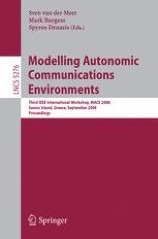
Modelling Autonomic Communications Environments ; 3rd IEEE International Workshop, MACE 2008, Samos Island, Greece, September 22-26, 2008. Proceedings
Research and development of autonomics have come a long way, and we are delighted to present the proceedings of the 3rd IEEE International Workshop on Modelling Autonomic Communications Environments (MACE 2008).Asin the last two years, this workshopwasheld aspart of Manweek, the International Week on Management of Networks and Services, which took place on the lovely Island of Samos in Greece .MACE started as anexperimentin2006,andcreatedasmallcommunitythat nowfnds it self attracted backeachyearby afeeling ofexcitement-thatthere is something new going on. Certainly, MACE is not as shiny or practiced as other well-known conferences and workshops, but we consider this a feature of the workshopitself.

Modeling of Biological Materials
This interdisciplinary collection of surveys highlights the central role played by the mathematical modeling of mechanical properties having an effect on the biology, chemistry, and physics of living matter. One of the main goals of the book is to present—in a single, self-contained resource—topics that are widely scattered across the literature in a variety of journals having mutually nonintersecting communities of readers, such as applied mathematicians, engineers, biologists, and physicians. Readers coming from diverse backgrounds are provided with basic modeling ideas and tools to address important problems in the medical and health sciences. Presented are appropriate models as well as their implementation through numerical and computer simulations, which may lead to potential technological innovations useful in medicine.

Modeling in membranes and membrane-based processes
This book explores almost every major aspect of modeling and the techniques applied in membrane separation studies and applications. This includes first principle-based models, thermodynamics models, computational fluid dynamics simulations, molecular dynamics simulations, and artificial intelligence-based modeling for membrane separation processes. These models have been discussed in light of various applications ranging from desalination to gas separation.

Mobility Aware Technologies and Applications ; 2nd International Workshop, MATA 2005, Montreal, Canada, October 17 -- 19, 2005, Proceedings
The beginning of the twenty-first century is characterized by global markets, and the mobility of people is becoming an important fact of life. Consequently, the mobile user is demanding appropriate technical solutions to make use of customized information and communication services. In this context the notion of next-generation networks (NGNs), which are driven by the convergence of the entertainment sector, the mobile Internet, and fixed/mobile telecommunications, is emerging. Such NGNs are aggregating a variety of different access networks and supporting the seamless connection of an open set of end-user devices, and due to the adoption of an all-IP network paradigm they enable a much better integration of voice and data services. Coincidently the buzzword ‘fixed mobile convergence’ (FMC) describes the current trend towards providing common services across fixed and mobile networks resulting in the medium term in the full integration of fixed and mobile telecommunication networks. The adoption of appropriate middleware technologies and the provision of - called service delivery platforms driven by the ongoing innovation in the field of information technologies provides today the technical foundation for supporting terminal, personal and service mobility and thus the implementation of real seamless information and communication services. Furthermore, users are nowadays looking, in light of an omnipresent service environment, for a much higher degree of customization and context awareness in the services they use. The papers in this volume look at these enabling mobility-aware technologies and their use for implementing mobility-aware and context-aware applications.

Mitigation of Natural Hazards and Disasters : International Perspectives
This book examines the aspects of prevention, mitigation, and management of environmental hazards and disasters from an international perspective. In light of the recent debate on climate change and the possible effects of such a change upon increasing frequency and magnitude of extreme environmental events, this publication overviews various policy and response discourse. Several case studies, from various countries and world regions, depicting recent experience in mitigation policy and program development and implementation and establishing interlinks between vulnerability and mitigation are presented to provide further insights.

Misleading marketing communication : Assessing the impact of potentially deceptive food labelling on consumer behaviour
Presenting four complementary experimental studies targeting recurrent grey-zone scenarios on the Danish food market, the book illustrates the potential of the so-called ShopTrip test paradigm which simulates and registers real-life e-shopping behaviour as it unfolds while yielding new types of data against which opposing assessments of potential misleadingness can be matched. The results are discussed in the light of possible paths of theoretical explanation and implications for future regulative practices, including companies’ self-regulation.

Mid-infrared Semiconductor Optoelectronics
Mid-infrared Semiconductor Optoelectronics is an overview of the current status and technological development in this rapidly emerging area. It is composed of four parts. First, the basic physics and some of the main problems facing the design engineer (together with a comparison of possible solutions) are laid out. Next, there is a consideration of the multifarious lasers used as sources for mid-infrared technology, including an inspection of current approaches to the lack of such a source in the 3–4 µm region. Part III reviews recent work in light-emitting diodes and detectors and also deals with negative luminescence. The final part of the book is concerned with applications and highlights, once more, the diversity and technological importance of the mid-infrared spectral region.

Microwave Methods in Organic Synthesis
We are delighted to present this volume with contributions from some of themost renowned and experienced microwave chemists today.The delivery and introduction of energy has been closely connected withthe discovery and investigation of new chemistry. It is with pleasure thatwe have seen an increased use of microwave irradiation over the years andwe hope that this volume will reflect the current interest in expanding thescope of microwave applications in both organic and medicinal chemistry. Oneimportant explanation behind the growth of microwave-enhanced chemistryhas been the introduction of dedicated microwave reactors.As a result of this development we are proud to present a diverse set of re-views.
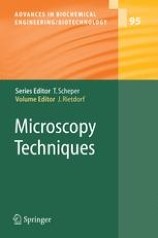
Microscopy Techniques
Light Microscopy has returned to fashion through the synergy of green fluorescent protein and a clutch of techniques involving some permutation of lasers, mathematics and acronyms, which offer the prospect of watching biological molecules at work inside living cells. This volume provides an introduction to these techniques … . this volume will be a longer-term reference for anyone who wants to understand how these methods actually work. In this respect it is excellent.

Microscale Diagnostic Techniques
Microscale Diagnostic Techniques highlights the most innovative and powerful developments in microscale diagnostics. It provides a resource for scientists and researchers interested in learning about the techniques themselves, including their capabilities and limitations.

Microfinance, EU structural funds and capacity building for managing authorities : A comparative analysis of European convergence regions
Presents a study of capacity building and structural funds in public managing authorities for the microcredit sector. It presents two surveys to highlight the strengths and weaknesses of the managing authorities' capacity building. The first survey investigates the authorities' need for and interests in capacity building activities, assessing the areas in which capacity building support is needed, and explores the different types of support offered. The second survey analyses the results of the microcredit and microfinance programming activity, investigating its target groups and other operational features. It examines the key monitoring and reporting issues involved in this activity, before analysing the regulatory framework of the microcredit and microfinance sector.

Microbial Linear Plasmids
Microbial Linear Plasmids constitutes the first attempt to comprehensively assemble current knowledge of different types of such elements, highlight recent developments in the field, and challenge the distinction between viruses and linear plasmids.

Microbes and oral squamous cell carcinoma : A network spanning infection and inflammation
Helps in understanding the relationship between microorganisms and oral carcinogenesis, and the possible oncogenic mechanisms enhancing the association. The book highlights the association between oral cancer, primarily oral squamous cell carcinoma (OSCC), a major global health problem with high incidence and low survival rates with infection and inflammation. Establishing the association of the oral microbiome with cancer risk may lead to significant advances in the understanding cancer etiology, potentially opening a new research paradigm for cancer prevention.

Micro-, Meso- and Macro-Connectomics of the Brain
Highlights cutting-edge methods that can accelerate progress in elucidating static ‘hard-wired’ circuits of the brain as well as dynamic interactions that are vital for brain function. The power of connectomic approaches in characterizing abnormal circuits in the many brain disorders that afflict humankind is considered. Experts in computational neuroscience and network theory provide perspectives needed for synthesizing across different scales in space and time. Altogether, this book provides an integrated view of the challenges and opportunities in deciphering brain circuits in health and disease.

Michael Graves : Images of a grand tour
Michael Graves: Images of A Grand Tour collects for the first time the stunning artwork produced during this trip. Delicate pencil sketches, striking ink washes, and colorful photographs show the deep connection Graves had to the places he visited, from the Roman Forum to the Grecian Acropolis to Wiltshires Stonehenge. They also tell something of the education of an architect, bringing to light the classical buildings that caused Graves to reexamine his early devotion to modernism. A foreword by Graves reflects on these travels from the distance of forty years

mHealth Innovation in Asia : Grassroots Challenges and Practical Interventions
Offers a detailed account of a range of mHealth initiatives across South, Southeast and East Asia. It provides readers with deep insights into the challenges such initiatives face on the ground, and a view of the diverse cultural contexts shaping strategies for overcoming these challenges. The book brings together various discussions on the broader mHealth literature, and demonstrates how a research focus on diverse Asian contexts influences the success and/or failure of current mHealth initiatives. It also highlights the important roles social scientists can play in advancing theoretical approaches, as well as planning, implementing and evaluating mHealth initiatives. The book is a valuable resource for project planners, policy developers in NGOs and government institutions, as well as academics, researchers and students in the fields of public health, communications and development studies.

Methods to study litter decomposition : A practical guide
Decomposition of organic matter is a major ecosystem process involving an array of different organisms, including bacteria, fungi and invertebrates. The main objective of this book is to provide students and laboratory instructors at universities and professional ecologists with a broad range of established methods to study plant litter decomposition. Detailed protocols for direct use in the field or laboratory are presented in an easy to follow step-by-step format. A short introduction to each protocol reviews the ecological significance and principles of the technique and points to key references. Although most methods are described for freshwater ecosystems, many will work equally well in the presented or slightly modified form for studies in marine and terrestrial environments.
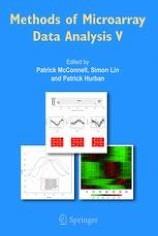
Methods of microarray data analysis V
In this volume, all investigators analyzed a single dataset on the lifecycle of the most deadly of malaria parasites, Plasmodium falciparum. The emphasis this year is on the application of novel and existing computational methodologies towards infectious disease. We highlight an introductory chapter by Raphael D. Isokpehi, a leading expert in the field of malaria. Ten of the papers presented at the conference are included, which range from the inference of genetic networks to the analysis of the spatial correlation of array data. This book is an excellent reference for academic and industrial researchers who want to keep abreast of the state-of-the-art in microarray data analysis.

Methods of microarray data analysis IV
As studies using microarray technology have evolved, so have the data analysis methods used to analyze these experiments. The CAMDA conference plays a role in this evolving field by providing a forum in which investors can analyze the same data sets using different methods. METHODS OF MICROARRAY DATA ANALYSIS IV is the fourth book in this series, and focuses on the important issue of associating array data with a survival endpoint. Previous books in this series focused on classification (Volume I), pattern recognition (Volume II), and quality control issues (Volume III). In this volume, four lung cancer data sets are the focus of analysis. We highlight three tutorial papers, including one to assist with a basic understanding of lung cancer, a review of survival analysis in the gene expression literature, and a paper on replication. In addition, 14 papers presented at the conference are included. This book is an excellent reference for academic and industrial researchers who want to keep abreast of the state-of-the-art of microarray data analysis.

Metaphor and Analogy in Science Education
This book brings together powerful ideas and new developments from internationally recognised scholars and classroom practitioners to provide theoretical and practical knowledge to inform progress in science education. This is achieved through a series of related chapters reporting research on analogy and metaphor in science education. Throughout the book, contributors not only highlight successful applications of analogies and metaphors, but also foreshadow exciting developments for research and practice. Themes include metaphor and analogy: best practice, as reasoning; for learning; applications in teacher development; in science education research; philosophical and theoretical foundations. Accordingly, the book is likely to appeal to a wide audience of science educators –classroom practitioners, student teachers, teacher educators and researchers.
