



الصفحة 48
الصفحة 48
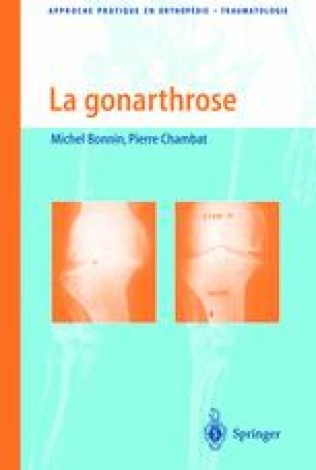
La gonarthrose : Traitement chirurgical : De l´arthroscopie à la prothèse = Knee osteoarthritis : Surgical treatment : from arthroscopy to prosthesis
The aim of this work is to take stock in a clear and didactic way on all the current knowledge on osteoarthritis of the knee and its treatment. It successively addresses the diagnosis and the medical treatment, then the surgical treatments then finally the various aspects of the total knee prosthesis. This book is designed to be read at several levels: basic information is intended particularly for non-specialist or trainee surgeons, rheumatologists, rehabilitation physicians, radiologists and physiotherapists. More specialized aspects are discussed in a second part of the book concerning the future of medical treatment (biology, gene therapy) and certain complex problems of surgical techniques. The points of controversy concerning the total knee replacement are discussed in the last part of the book, of interest to physicians and surgeons.
Knowledge-Driven Computing : Knowledge Engineering and Intelligent Computations
Knowledge-Driven Computing constitutes an emerging area of intensive research located at the intersection of Computational Intelligence and Knowledge Engineering with strong mathematical foundations. It embraces methods and approaches coming from diverse computational paradigms, such as evolutionary computation and nature-inspired algorithms, logic programming and constraint programming, rule-based systems, fuzzy sets and many others. The use of various knowledge representation formalisms and knowledge processing and computing paradigms is oriented towards the efficient resolution of computationally complex and difficult problems.
Knowledge acquisition in practice: A step-by-step guide
Recent years have seen an upsurge of interest in knowledge. Leading organisations now recognise the importance of identifying what they know, sharing what they know and using what they know for maximum benefit. Many organisations employ knowledge engineers to capture knowledge from experts using the principles and techniques of knowledge engineering. The emphasis is on a structured approach built on a sound understanding of the psychology of expertise and making use of knowledge modelling methods and the latest web technologies. Knowledge Acquisition in Practice is the first book to provide a detailed step-by-step guide to the methods and practical aspects of acquiring, modelling, storing and sharing knowledge. The reader is led through 47 steps from the inception of a project to its successful conclusion. Each step is described in terms of the reasons for the step, the required resources, the activities to be undertaken, and the solutions to common problems.
Kinetics of Catalytic Reactions
This textbook contains all the information needed for graduate students or industrial researchers to design kinetic experiments involving heterogeneous catalysts, to characterize these catalysts, to acquire valid rate data, to verify the absence of mass (and heat) transfer limitations, to propose reaction models, to derive rate expressions based on these models and, finally, to assess the consistency of these rate equations.Many illustrations of these and other topics are provided along with numerous problems and a Solutions Manual for instructors. This book will be applicable to any graduate course in chemical engineering, chemistry or materials science that involves kinetics of catalytic reactions, including those catalyzed by enzymes.

Kidney Diseases
Kidney diseases is a “hidden epidemic” affecting 850 million people worldwide. It occurs when the kidneys become damaged and can’t perform their function. Damage may be caused by diabetes, high blood pressure, and various other chronic conditions. Kidney diseases can lead to other health problems, including weak bones, nerve damage, and malnutrition. There are two main types of kidney diseases: short-term (acute kidney failure) and lifelong (chronic kidney failure). If the diseases get worse over time, the kidneys may stop working completely. This means that dialysis will be required to perform the function of the kidneys or kidney transplant. Dialysis is a treatment that filters and purifies the blood using a machine. It can’t cure kidney diseases, but it can prolong the life.

Kidney complications & transplantation
Kidney diseases are worldwide public health problems with a high cost and increasing incidence. By revealing the genetic and cellular mechanism behind mammalian kidney development, better diagnostic methods and novel therapies can be expected to be developed. The mammalian kidney is a typical organ that develops on the basis of sequential and reciprocal cell and tissue interactions. Pyelonephritis, Glomerulonephritis, Kidney stones, Nephrotic syndrome, and Acute or chronic kidney failure are the most complications in the kidney kingdom, so that living kidney transplantation has become the preferred treatment for those patients who can’t have the powerful capacity of the kidney function, and here it has a very rejection risk in the first month and we can controlled in this situation with long term immunosuppressant therapy involved in the post-transplantation protocol.
Kernel Methods for Machine Learning with Math and Python: 100 Exercises for Building Logic
Addresses the fundamentals of kernel methods for machine learning by considering relevant math problems and building Python programs. The book’s main features are as follows: Includes 100 exercises, which have been carefully selected and refined. As their solutions are provided in the main text, readers can solve all of the exercises by reading the book. / The mathematical premises of kernels are proven and the correct conclusions are provided, helping readers to understand the nature of kernels. / Source programs and running examples are presented to help readers acquire a deeper understanding of the mathematics used. / Once readers have a basic understanding of the functional analysis topics covered in Chapter 2, the applications are discussed in the subsequent chapters. Here, no prior knowledge of mathematics is assumed. / Considers both the kernel for reproducing kernel Hilbert space (RKHS) and the kernel for the Gaussian process; a clear distinction is made between the two.
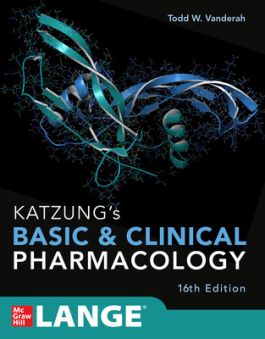
Katzung's basic and clinical pharmacology
The most comprehensive and authoritative pharmacology text --updated with new content and USMLE-style questions Presented in full-color and packed with hundreds of illustrations, Basic and Clinical Pharmacology is the wide-ranging, engaging guide students have counted on for decades. To be as clinically relevant as possible, the book includes sections that specifically address the clinical choice and use of drugs in patients and the monitoring of their effects, along with case studies that introduce clinical problems. Each chapter opens with a case study, covers drug groups and prototypes, and closes with summary tables and diagrams that encapsulate important information. Updated to reflect the latest research, this sixteenth edition features a new chapter on cannabinoids, USMLE-style questions, new drug tables, and more. Basic and Clinical Pharmacology, Sixteenth Edition features: * 330 full-color illustrations * NEW: 100 drug tables * NEW: 50 USMLE-style questions * NEW: Chapter on cannabinoids * A strong emphasis on drug groups and prototypes * Case studies and chapter-ending summary tables * Organization that reflects the syllabi of pharmacology courses * Descriptions of important new drugs
Jets From Young Stars III : Numerical MHD and Instabilities
This volume contains the lecture notes of the Third JETSET School on Jets from Young Stars focussing on Numerical MHD and Instabilities. The introductory lectures presented here cover the basic concepts of the numerical methods for the integration of hydrodynamic and magnetohydrodynamic equations and of the applications of these methods to the treatment of the instabilities relevant for the physics of stellar jets. The first part of the book contains an introduction to the finite difference and finite volume methods for computing the solutions of hyperbolic partial differential equations and a discussion of approximate Riemann solvers for both hydrodynamic and magnetohydrodynamic problems. The second part is devoted to the discussion of some of the main instability processes that may take place in stellar jets, namely: the Kelvin-Helmholtz, the radiative shock, the pressure driven and the thermal instabilities.
JDBC Recipes : A Problem-Solution Approach
JDBC Recipes provides easy-to-implement, usable solutions to problems in relational databases that use JDBC. You will be able to integrate these solutions into your web-based applications, such as Java servlets, JavaServer Pages, and Java server-side frameworks. This handy book allows you to cut and paste the solutions without any code changes. This book focuses on topics that have been ignored in most other JDBC books, such as database and result set metadata. It will help you develop database solutions, like adapters, connectors, and frameworks using Java/JDBC. The insightful solutions will enable you to handle all data types, including large binary objects. A unique feature of the book is that it presents JDBC solutions (result sets) in XML.

Java Challenges 100+ : Proven Tasks that Will Prepare You for Anything
Expand your knowledge of Java with this entertaining learning guide, which features 100+ exercises and programming challenges. Java Challenges will prepare you for your next exam or job interview, and covers many practical topics, such as strings, arrays, data structures, recursion, and date and time. The APIs and other material included in this book are Java 17 compatible. You will: Improve your Java knowledge by solving enjoyable but challenging programming puzzles / Solve mathematical problems, recursions, strings, arrays and more / Manage data processing and data structures like lists, sets, maps / Handle advanced recursion as well as binary trees, sorting and searching / Gamify key fundamentals for fun and easier reinforcement
Java 17 Recipes : A Problem-Solution Approach
Quickly find solutions to dozens of common programming problems encountered while building Java applications, with recipes presented in the popular problem-solution format. Look up the programming problem that you want to resolve. Read the solution. Apply the solution directly in your own code. Problem solved! covers of some of the newest features, APIs, and more such as pattern matching for switch, Restore Always-Strict-Floating-Point-Semantics, enhanced pseudo-random number generators, the vector API, sealed classes, and enhancements in the use of String. Source code for all recipes is available in a dedicated GitHub repository. This must-have reference belongs in your library. You will learn : Look up solutions to everyday problems involving Java SE 17 LTS and other recent releases / Develop Java SE applications using the latest in Java SE technology / Incorporate Java major features introduced in versions 17, 16, and 15 into your code
IUTAM symposium on topological design optimization of structures, machines and materials ; Status and perspectives
Contains the refereed and edited versions of papers presented at the IUTAM Symposium on Topological Design Optimization of Structures. The IUTAM Symposium provided a forum for the exchange of ideas for - ture developments in the area of topological design optimization. This enc- passed the application to ?uid-solid interaction problems, acoustics problems, and to problems in biomechanics, as well as to other multiphysics problems.
IUTAM symposium on relations of shell plate beam and 3D models ; Proceedings of the IUTAM Symposium on the relations of shell, plate, beam, and 3D models, Dedicated to the Centenary of Ilia Vekua’s Birth, held in Tbilisi, Georgia, April 23-27, 2007
Contains papers on the main topics reflecting the scientific programme of the symposium: hierarchical, refined mathematical and technical models of shells, plates, and beams; relation of 2D and 1D models to 3D linear, non-linear and physical models; junction problems. In particular, peculiarities of cusped shells, plates, and beams are emphasized and special attention is paid to junction, multibody and fluid-elastic shell (plate, beam) interaction problems and their applications.
IUTAM Symposium on Multiscale Problems in Multibody System Contacts ; Proceedings of the IUTAM Symposium held in Stuttgart, Germany, February 20–23, 2006
The investigation of multiscale problems in multibody system contacts is an interesting and timely topic which has been the subject of intensive research. This proceedings volume summarizes contributions of many authors active in the field and gives insight in very different areas of this fascinating research.
IUTAM symposium on computational approaches to multiphase flow ; Proceedings of an IUTAM Symposium held at Argonne National Laboratory, October 4-7, 2004
The book provides a broad overview of the full spectrum of state-of-the-art computational activities in multiphase flow as presented by top practitioners in the field. It starts with well-established approaches and builds up to newer methods. These methods are illustrated with applications to a broad spectrum of problems involving particle dispersion and deposition, turbulence modulation, environmental flows, fluidized beds, bubbly flows, and many others.

ITI treatment guide ; Vol.1 : Implant therapy in the esthetic zone : Single-tooth replacements
Focuses on implant therapy for single-tooth replacement in the esthetic zone. It guides readers through the entire treatment process, beginning with assessment of the patient's individual esthetic risk profile and proceeding through ideal three-dimensional implant placement and proven prosthetic management options. Various procedures are illustrated through patient case studies. Detailed illustrations serve to clarify any potential ambiguities, and potential complications are explored to avert the most common problems.
Iterative Learning Control : Robustness and Monotonic Convergence for Interval Systems
This monograph studies the design of robust, monotonically-convergent iterative learning controllers for discrete-time systems. Two key problems with the fundamentals of iterative learning control (ILC) design as treated by existing work are: first, many ILC design strategies assume nominal knowledge of the system to be controlled and; second, it is well-known that many ILC algorithms do not produce monotonic convergence, though in applications monotonic convergence is often essential. Iterative Learning Control takes account of the recently-developed comprehensive approach to robust ILC analysis and design established to handle the situation where the plant model is uncertain. Considering ILC in the iteration domain, it presents a unified analysis and design framework that enables designers to consider both robustness and monotonic convergence for typical uncertainty models, including parametric interval uncertainties, iteration-domain frequency uncertainty, and iteration-domain stochastic uncertainty.
Computational and Statistical Approaches to Genomics
Computational and Statistical Approaches to Genomics, 2nd Edition, aims to help researchers deal with current genomic challenges. During the three years after the publication of the first edition of this book, the computational and statistical research in genomics have become increasingly more important and indispensable for understanding cellular behavior under a variety of environmental conditions and for tackling challenging clinical problems. In the first edition, the organizational structure was: data à analysis à synthesis à application. In the second edition, the same structure remains, but the chapters that primarily focused on applications have been deleted.
Computational Acoustics of Noise Propagation in Fluids - Finite and Boundary Element Methods
Among numerical methods applied in acoustics, the Finite Element Method (FEM) is normally favored for interior problems whereas the Boundary Element Method (BEM) is quite popular for exterior ones. That is why this valuable reference provides a complete survey of methods for computational acoustics, namely FEM and BEM. It demonstrates that both methods can be effectively used in the complementary cases. The chapters by well-known authors are evenly balanced: 10 chapters on FEM and 10 on BEM. An initial conceptual chapter describes the derivation of the wave equation and supplies a unified approach to FEM and BEM for the harmonic case. A categorization of the remaining chapters and a personal outlook complete this introduction. In what follows, both FEM and BEM are discussed in the context of very different problems.
