



الصفحة 44
الصفحة 44
Aging and Chronic Disorders
Aging and Chronic Disorders brings the most up-to-date answers into clear, readable focus. Focusing on the most prevalent conditions affecting older adults (diabetes, cardiovascular disease, cancer, osteoporosis, osteoarthritis, rheumatoid arthritis, low back pain, and fibromyalgia), Morewitz and Goldstein analyze disabilities and risk factors, stressors and coping strategies, treatment and rehabilitation methods, and patient education and self-management. Separate chapters are devoted to cognitive changes, psychological problems, and trends in health care utilization among seniors, and all chapters are amplified by current research findings and instructive case studies. As in their recent work.
Agile software construction
Agile software is a means of putting the software first while at the same time reacting to these user requirements in a flexible and agile way.Agile Software Construction covers the emerging methods and approaches (including extreme programming, feature-driven development and adaptive software development), that are loosely described as "Agile" and shows how to apply them effectively to software development projects. It shows how to plan, organise and develop systems using agile techniques, and highlights some of the problems that may be encountered.

Agile processes in software engineering and extreme programming ; XP 2019 Workshops, Montréal, QC, Canada, May 21–25, 2019, Proceedings
Includes a summary for each of the four panels at XP 2019 is included. The panels were on security and privacy; the impact of the agile manifesto on culture, education, and software practices; business agility – agile’s next frontier; and Agile – the next 20 years.
Agile processes in software engineering and extreme programming ; 20th International Conference, XP 2019, Montréal, QC, Canada, May 21–25, 2019, Proceedings
XP is the premier agile software development conference combining research and practice. It is a hybrid forum where agile researchers, academics, practitioners, thought leaders, coaches, and trainers get together to present and discuss their most recent innovations, research results, experiences, concerns, challenges, and trends. Following this history, for both researchers and seasoned practitioners XP 2019 provided an informal environment to network, share, and discover trends in Agile for the next 20 years.This volume presented agile adoption, agile practices; large-scale agile; agility beyond IT, and the future of agile.

Agile processes in software engineering and extreme programming ; 19th International Conference, XP 2018, Porto, Portugal, May 21–25, 2018, Proceedings
This open access book constitutes the proceedings of the 19th International Conference on Agile Software Development, XP 2018, held in Porto, Portugal, in May 2018. XP is the premier agile software development conference combining research and practice, and XP 2018 provided a playful and informal environment to learn and trigger discussions around its main theme – make, inspect, adapt. The 21 papers presented in this volume were carefully reviewed and selected from 62 submissions. They were organized in topical sections named: agile requirements; agile testing; agile transformation; scaling agile; human-centric agile; and continuous experimentation.
Agile Marketing Performance Management : 10 Success Factors for Maximizing Marketing ROI Dynamically
Helps marketing decision makers in allocating their budget to diverse communication channels and different business units in an ROI-optimal way, and to adapt it in an agile manner.
Ages, generations and the social contract : The demographic challenges facing the welfare state
Our societies are ageing. The Family is changing. Labour force behaviour is evolving. How is the organisation of family and collective solidarity adapting in this context of longer life spans, low fertility, and work that is simultaneously scarce and abundant? The welfare states are currently facing three main challenges: ensure satisfactory living conditions for the elderly without increasing the cost burden on the active population, reduce social inequality, and maintain equity between successive generations. In this book, researchers from different countries compare their experiences and offer contrasting views on the future of social protection. They consider the theoretical aspects of the intergenerational debate, relations between generations within the family, the living standards of elderly people, and the question of social time.

Agents and peer-to-peer computing ; Vol. 3601 ; 3rd international workshop, AP2PC 2004, New York, NY, USA, July 19, 2004, revised and invited papers
This volume presents the fully revised papers presented at the Third International Workshop on Agents and Peer-to-Peer Computing, AP2PC 2004, held in New York City on July 19, 2004 in the context of the Third International Joint Conference on Autonomous Agents and Multi-Agent Systems (AAMAS 2004). The volume is organized in topical sections on P2P networks and search performance, emergent communities and social behaviours, semantic integration, mobile P2P systems, adaptive systems, agent-based resource discovery, as well as trust and reputation.

Agent-oriented software engineering V ; 5th International workshop, AOSE 2004, New York, NY, USA, July 2004, revised selected papers
The explosive growth of application areas such as electronic commerce, ent- prise resource planning and mobile computing has profoundly and irreversibly changed our views on software systems. Nowadays, software is to be based on open architectures that continuously change and evolve to accommodate new components and meet new requirements. Software must also operate on di?- ent platforms, without recompilation, and with minimal assumptions about its operating environment and its users. Furthermore, software must be robust and ¨ autonomous, capable of serving a naive user with a minimum of overhead and interference. Agent concepts hold great promise for responding to the new realities of software systems. They o?er higher-level abstractions and mechanisms which address issues such as knowledge representation and reasoning, communication, coordination, cooperation among heterogeneous and autonomous parties, p- ception, commitments, goals, beliefs, and intentions, all of which need conceptual modelling. On the one hand, the concrete implementation of these concepts can lead to advanced functionalities.
Agent-mediated electronic commerce : automated negotiation and strategy design for electronic markets : AAMAS 2006 workshop, TADA/AMEC 2006, Hakodate, Japan, May 9, 2006 : selected and revised papers
The design and an alysis of trading agents and electronic trading systems in which they are deployed involve finding solutions to a diverse set of problems, invo- ing individual behaviors, interaction, and collective behavior in the context of trade. A wide variety of trading scenarios and systems, and agent approaches to these, have been studied in recent years. The AMEC series of wo- shops presents interdisciplinary researchon both theoretical and practical issues of agent-mediated electronic commerce ranging from the design of electronic marketplaces and e?cient protocols to behavioral aspects of agents operating in suchenvironments.

Agent-mediated electronic commerce : Designing trading agents and mechanisms ; AAMAS 2005 Workshop, AMEC 2005, Utrecht, Netherlands, July 25, 2005, and IJCAI 2005 Workshop, TADA 2005, Edinburgh, UK, August 1, 2005, Selected and Revised Papers
This book constitutes the thoroughly refereed post-proceedings of the 7th International Workshop on Agent-Mediated Electronic Commerce, AMEC VII 2005, held in Utrecht, Netherlands in July 2005, as part of AAMAS 2005, and the third Workshop on Trading Agent Design and Analysis, TADA 2005, held in Edinburgh, UK in August 2005, in the course of the IJCAI 2005 conference meetings. The seven revised full AMEC 2005 papers presented were carefully selected.
Agent-Based Modeling Meets Gaming Simulation
Provides a good example of the diverse scope and standard of research achieved in simulation and gaming today. The theme of the special session at ISAGA2003 was Agent-Based Modeling Meets Gaming Simulation. Nowadays, agent-based simulation is becoming very popular for modeling and solving complex social phenomena. It is also used to arrive at practical solutions to social problems. At the same time, however, the validity of simulation does not exist in the magni?cence of the model. R. Axelrod stresses the simplicity of the agent-based simulation model through the “Keep it simple, stupid” (KISS) principle: As an ideal, simple modeling is essential.
Agent-based computational modelling : Applications in demography, social, economic and environmental sciences
The present book describes the methodology to set up agent-based models and to study emerging patterns in complex adaptive systems resulting from multi-agent interaction. It offers the application of agent-based models in demography, social and economic sciences and environmental sciences. It presents and combines different approaches how to implement agent-based computational models and tools in an integrative manner that can be extended to other cases.

Agent Computing and Multi-Agent Systems ; 9th Pacific Rim International Workshop on Multi-Agents, PRIMA 2006, Guilin, China, August 7-8, 2006, Proceedings
PRIMA is a series of workshops on agent computing and multi-agent systems, integrating the activities in Asia and Pacific Rim countries. Agent computing and multi-agent systems are computational systems in which several autonomous or se- autonomous agents interact with each other or work together to perform some set of tasks or satisfy some set of goals. These systems may involve computational agents that are homogeneous or heterogeneous, they may involve activities on the part of agents having common or distinct goals, and they may involve participation on the part of humans and intelligent agents. The aim of PRIMA 2006 was to bring together Asian and Pacific Rim researchers and developers from academia and industry to report on the latest technical advances or domain applications and to discuss and explore scientific and practical problems as raised by the participants. PRIMA 2006 received 203 submitted papers.

Agent and multi-agent systems : Technologies and applications ; 1st KES International Symposium, KES-AMSTA 2007, Wroclaw, Poland, May 31-June 1, 2007, Proceedings
The aim of the symposium was to provide an international forum for scientific - search in the technologies and applications of agent and multi-agent systems. Agents and multi-agent systems are related to the modern software which has long been r- ognized as a promising technology for constructing autonomous, complex and intel- gent systems. A key development in the field of agent and multi-agent systems has been the specification of agent communication languages and formalization of - tologies. Agent communication languages are intended to provide standard decla- tive mechanisms for agents to communicate knowledge and make requests of each other, whereas ontologies are intended for conceptualization of the knowledge - main.

African Handbook of Climate Change Adaptation
discusses current thinking and presents the main issues and challenges associated with climate change in Africa. It introduces evidences from studies and projects which show how climate change adaptation is being - and may continue to be successfully implemented in African countries. Thanks to its scope and wide range of themes surrounding climate change, the ambition is that will be a lead publication on the topic, which may be regularly updated and hence capture further works.

African Biodiversity : molecules, organisms, ecosystems
BIOTA is an interdisciplinary research project focusing on sustainable use and conservation of biodiversity in Africa (http://www.biote-africa.de). Session titles were Biogeography and Speciation Processes, Phylogenetic Patterns and Systematics, Diversity Declines and Conservation, and Applied Biodiversity Informatics

Affective computing and intelligent interaction ; 2nd International Conference, ACII 2007, Lisbon, Portugal, September 12-14, 2007, Proceedings
Organized in topical sections on affective facial expression and recognition, affective body expression and recognition, affective speech processing, affective text and dialogue processing, recognising affect using physiological measures, computational models of emotion and theoretical foundations, affective databases, annotations, tools and languages, affective sound and music processing, affective interactions: systems and applications, as well as evaluating affective systems.

Aesthetic Surgery of the Abdominal Wall
We have come a long way since the days when abdominal wall contouring was p- formed by simple dermolipectomies, with no attention to diastasis correction and muscular reinforcement, and little regard for the final aesthetic result. Nowadays, an abdominoplasty may be indicated for even the most demanding of patients. Details such as placement of the incision and umbilicoplasty are meticulously planned so as to conceal undesirable scars. Since the advent of suction-assisted lipectomy, in as- ciation with a classical operation or as an isolated procedure, the plastic surgeon has become capable of remodeling the entire trunk, assuring removal of considerable amounts of adipose tissue.
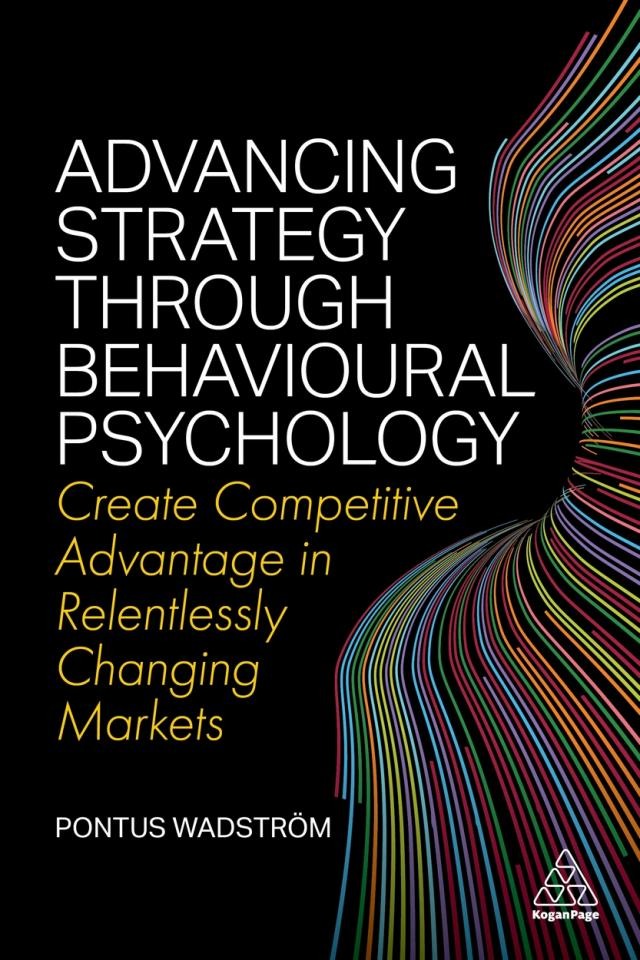
Advancing Strategy through Behavioural Psychology : Create Competitive Advantage in Relentlessly Changing Markets
The realisation of strategy is entirely dependent on employee behaviour, so in order to achieve business results it is vital that managers and leaders develop an understanding of human behaviour. Advancing Strategy through Behavioural Psychology shows that by identifying which behaviours should be measured and encouraged, organizations can succeed in implementing strategies for continuous adaptation in a rapidly changing business environment.
