



الصفحة 4
الصفحة 4

Non-negative Matrices and Markov Chains
This book is a photographic reproduction of the book of the same title published in 1981, for which there has been continuing demand on account of its accessible technical level. Its appearance also helped generate considerable subsequent work on inhomogeneous products of matrices. This printing adds an additional bibliography on coefficients of ergodicity and a list of corrigenda.

Nonlinear Speech Modeling and Applications : Advanced Lectures and Revised Selected Papers
Presents the revised tutorial lectures given at the International Summer School on Nonlinear Speech Processing-Algorithms and Analysis held in Vietri sul Mare, Salerno, Italy in September 2004. The 14 revised tutorial lectures by leading international researchers are organized in topical sections on dealing with nonlinearities in speech signals, acoustic-to-articulatory modeling of speech phenomena, data driven and speech processing algorithms, and algorithms and models based on speech perception mechanisms. Besides the tutorial lectures, 15 revised reviewed papers are included presenting original research results on task oriented speech applications.

Nonlinear Optical Crystals : A Complete Survey
Nonlinear optical crystals are widely used in modern optical science and technology for frequency conversion of laser light, i.e. to generate laser radiation at any specific wavelength in visible, UV or IR spectral regions. This unrivalled reference book contains the most complete and up-to-date information on properties of nonlinear optical crystals. It includes: * Database of 63 common and novel nonlinear optical crystals * Periodically-poled and self-frequency-doubling materials * Full description of linear and nonlinear optical properties * Significant amount of crystallophysical, thermophysical, spectroscopic, electro-optic and magneto-optic information * 7 mini-reviews on novel applications, such as deep-UV light generation, terahertz-wave generation, ultrashort laser pulse compression, photonic band-gap crystals, x3 nonlinearity, etc. * More than 1500 different references with full titles It is a vital source of information for scientists and engineers dealing with modern applications of nonlinear optical crystals in quantum electronics, photonics, optoelectronics and laser physics.

Nonlinear H2/H-Infinity Constrained Feedback Control : A Practical Design Approach Using Neural Networks
In this book the authors present algorithms for H2 and H-infinity design for nonlinear systems which, unlike earlier theories, provide solution techniques for the core Hamilton–Jacobi equations that yield control systems which can be implemented in real systems; neural networks are used to solve the nonlinear control design equations.

Non-Linear Electromechanics
This is the first book in which problems of electromechanics are considered from the perspective of analytical mechanics. The book includes fundamental results in the theory of non-linear electromechanical systems and will be useful both for researchers, engineers, scholars and graduate students of electromechanical faculties of technical universities. It includes not only theoretical results but also various examples from many industrial applications. A sizeable part of the book is devoted to the general theory of synchronous machines and electro-magnetic exciters of oscillations.

Nonlinear Dynamics in Geosciences
Nonlinear Dynamics in Geosciences is comprised of the proceedings of "20 Years of Nonlinear Dynamics in Geosciences", held June 11-16, 2006 in Rhodes, Greece as part of the Aegean Conferences. The volume brings together the most up-to-date research from the atmospheric sciences, hydrology, geology, and other areas of geosciences, and discusses the advances made in the last two decades and the future directions of nonlinear dynamics. Topics covered include predictability, ensemble prediction, nonlinear prediction, nonlinear time series analysis, low-dimensional chaos, nonlinear modeling, fractals and multifractals, bifurcation, complex networks, self-organized criticality, extreme events, and other aspects of nonlinear science.

Nonlinear dynamics in complex systems via fractals and fractional calculus
Current advances in the knowledge of nonlinear dynamical networks, systems and processes, as well as their unified repercussions, allow us to include some typical complex natural phenomena, from the nanoscale to an extra-galactic scale, in an unitarian comprehensive manner. In other words, the physical, biological and financial data, as well as technological ones (mechanical or electronic devices), of complex systems available today can be managed by the same unique conceptual approach, both analytically and through a computer simulation, using effective nonlinear dynamics procedures. This volume collected some important advances in the fields of fractal curves, fractal analysis and fractional calculus, as well as new solutions of fractal differential equations.

Nonlinear Dynamics and Heterogeneous Interacting Agents
Economic application of nonlinear dynamics, microscopic agent-based modelling, and the use of artificial intelligence techniques as learning devices of boundedly rational actors are among the most exciting interdisciplinary ventures of economic theory over the past decade. This volume provides us with a most fascinating series of examples on "complexity in action" exemplifying the scope and explanatory power of these innovative approaches.

Nonlinear Analyses and Algorithms for Speech Processing ; International Conference on Non-Linear Speech Processing, NOLISP 2005, Barcelona, Spain, April 19-22, 2005, Revised Selected Papers
We present in this volume the collection of ?nally accepted papers of NOLISP 2005 conference. It has been the third event in a series of events related to N- linear speech processing, in the framework of the European COST action 277 “Nonlinear speech processing”. Many speci?cs of the speech signal are not well addressed by conv- tional models currently used in the ?eld of speech processing. The purpose of NOLISP is to present and discuss novel ideas, work and results related to alternative techniques for speech processing, which depart from mainstream approaches. With this intention in mind, we provide an open forum for discussion. Alt- nate approaches are appreciated, although the results achieved at present may not clearly surpass results based on state-of-the-art methods. The call for papers was launched at the beginning of 2005, addressing the following domains: 1. Non-Linear Approximation and Estimation 2. Non-Linear Oscillators and Predictors 3. Higher-Order Statistics 4. Independent Component Analysis 5. Nearest Neighbors 6. Neural Networks 7. Decision Trees 8. Non-Parametric Models 9. Dynamics of Non-Linear Systems 10. Fractal Methods 11. Chaos Modeling 12. Non-Linear Di?erential Equations 13. Others All the main ?elds of speech processing are targeted by the workshop, namely: 1. Speech Coding:Thebit rateavailablefor speechsignalsmustbe strictly l- ited in order to accommodate the constraints of the channel resource.

Noninvasive Imaging of Myocardial Ischemia
Non-invasive imaging plays a very important role in the assessment of patients investigated for coronary artery disease, providing valuable information for diagnosis and aiding management decisions. It covers a broad spectrum of investigations including radionuclide imaging, echocardiography, magnetic resonance imaging and computed tomography. Progress towards the most efficacious means of assessing a patient is relentless, with recent years seeing an important shift in emphasis from invasive to noninvasive techniques. This informative book compares the various modalities in a practical diagnostic environment. It thus provides a forum for fertile discussion, bringing the discussion of these various methodologies together in one reference for the first time. The narrative flow is unique and will ensure that all levels of medical practitioners with an interest in cardiac imaging will find this an unparalleled resource for use in guiding their practice.

Nonequilibrium Phenomena in Plasmas
This book presents studies of complexity in the context of nonequilibrium phenomena using theory, modeling, simulations, and experiments, both in the laboratory and in nature.

Nonblocking Electronic and Photonic Switching Fabrics
This state-of-the-art survey of switching fabric architectures gives special attention to combinatorial properties of switching fabrics – nonblockingness and rearrangeability. Also describing control algorithms proposed to control different architectures.

NMR-MRI, µSR and Mössbauer Spectroscopies in Molecular Magnets and magnetic nanoparticles
In this book an extensive overview on the results obtained during the last decade and on recent achievements in the study of molecular magnets by means of Nuclear Magnetic Resonance, Muon Spin Rotation, Magnetic Resonance Imaging and Mossbauer techniques is presented. The aim is to introduce the reader to these techniques and to give a general background on their application to molecular spin systems.

NMR in Biological Systems : From Molecules to Human
During teaching NMR to students and researchers, we felt the need for a text-book which can cover modern trends in the application of NMR to biological systems. This book caters to the needs of: (i) graduate students who mostly learn such techniques from senior post-docs in the laboratory; (ii) those who are not experts in NMR but wish to understand if a particular problem in animal, plant, medical and pharmaceutical sciences can be answered by NMR; and (iii) those who are experts in chemistry and biochemistry and wish to know how NMR can provide them information on structural or functional aspect of proteins, nucleic acids, cells and tissues, human and plant organs and other biological materials.

NMR - From Spectra to Structures : An Experimental Approach
Nuclear magnetic resonance spectroscopy is one of the most powerful analytical methods. This practice-oriented textbook aims at teaching how NMR experiments should be used to make structural asssignments. The book is intended as a practical guide for students and laboratory personnel, so that the emphasis is on practical rather than on theoretical aspects, which are treated only to the extent necessary to understand the experiments and to interpret the results.The second edition has been expanded to include several other heteronuclei (15N, 19F, 29Si, 77Se, 113Cd, 117Sn/119Sn, 195Pt, 207Pb) and a new chapter on solid state NMR. The problems section has been enlarged and now includes 50 problems.

NL ARMS Netherlands Annual Review of Military Studies 2020 : Deterrence in the 21st Century—Insights from Theory and Practice
This book surveys the state of the field to examine whether a fifth wave of deterrence theory is emerging. Bringing together insights from world-leading experts from three continents, the volume identifies the most pressing strategic challenges, frames theoretical concepts, and describes new strategies.

Nitrogen-fixing Leguminous Symbioses
This book is the self-contained final volume of a comprehensive seven-volume series covering the basic and applied science relating to nitrogen fixation. It addresses the most important nitrogen-fixing symbiosis of all – that between legumes and their root-nodule bacteria – and therefore deals with the properties and behaviour of both macro- and micro-symbiont.

Nitrogen-fixing Actinorhizal Symbioses
This book is the self-contained sixth volume of a comprehensive series on nitrogen fixation. It presents the state-of-the-art in regards to actinorhizal symbioses. Like legumes, actinorhizal plants form root nodules that host nitrogen-fixing soil bacteria. However, because the macrosymbionts are, with one exception, woody plants rather than crop plants, actinorhizal symbioses are less well-known than legume symbioses to which they are phylogenetically related. Actinorhizal plants come from eight different families. This volume includes chapters that deal with all these aspects of the symbiosis and both symbionts plus their ecological role and use. Other chapters tackle the global distribution of different actinorhizal plants and their microsymbionts and how this impacts the question of co-evolution of the micro- and macrosymbionts as well as comparing the actinorhizal and leguminous symbioses.

Nitrogen Fixation in Agriculture, Forestry, Ecology, and the Environment
Sustainability has a major part to play in the global challenge of continued development of regions, countries, and continents all around the World and biological nitrogen fixation has a key role in this process. This volume begins with chapters specifically addressing crops of major global importance, such as soybeans, rice, and sugar cane. It continues with a second important focus, agroforestry, and describes the use and promise of both legume trees with their rhizobial symbionts and other nitrogen-fixing trees with their actinorhizal colonization. An over-arching theme of all chapters is the interaction of the plants and trees with microbes and this theme allows other aspects of soil microbiology, such as interactions with arbuscular mycorrhizal fungi and the impact of soil-stress factors on biological nitrogen fixation, to be addressed. Furthermore, a link to basic science occurs through the inclusion of chapters describing the biogeochemically important nitrogen cycle and its key relationships among nitrogen fixation, nitrification, and denitrification. The volume then provides an up-to-date view of the production of microbial inocula, especially those for legume crops.
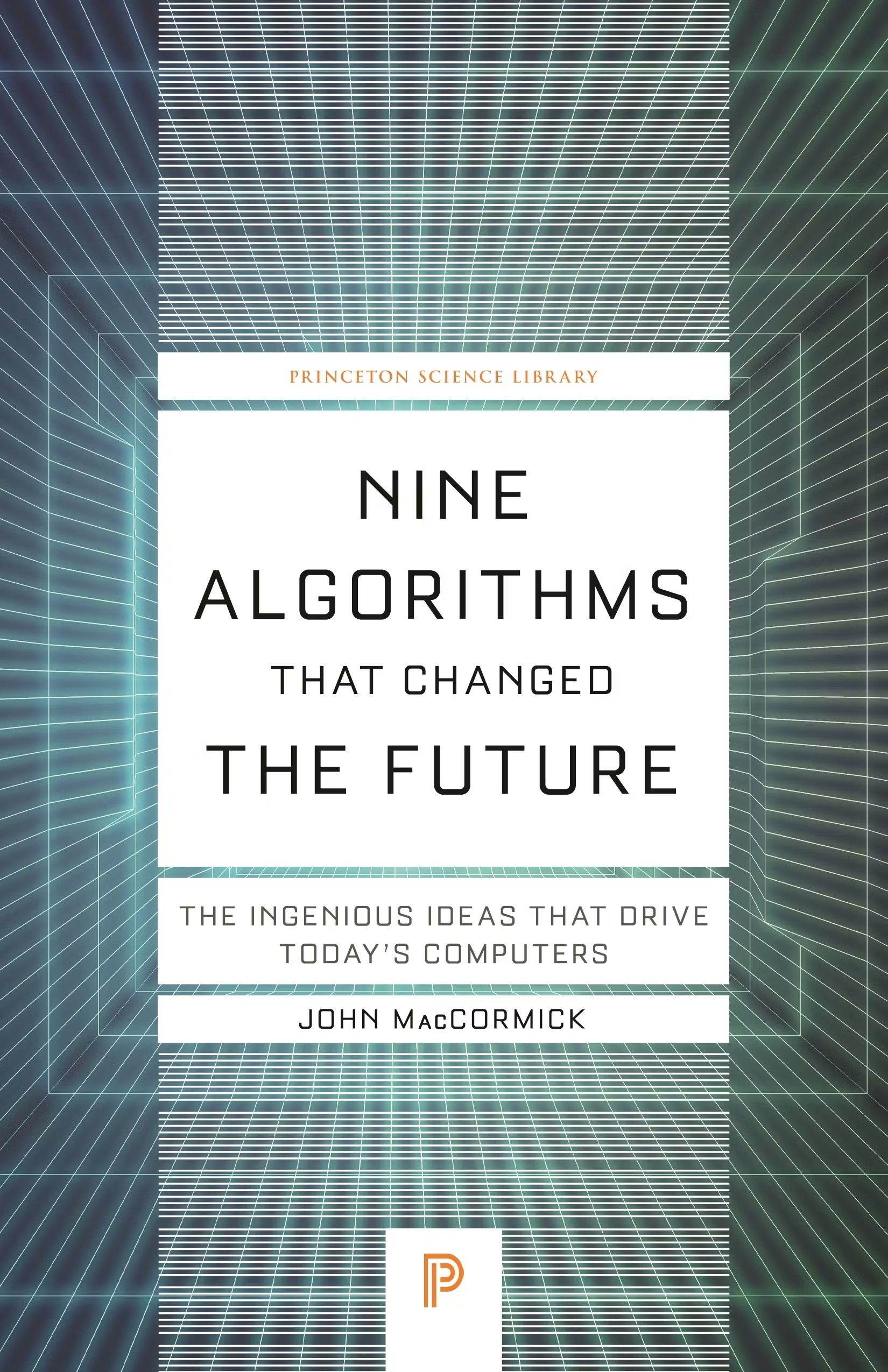
Nine algorithms that changed the future : The ingenious ideas that drive today’s computers
Every day, we use our computers to perform remarkable feats. A simple web search picks out a handful of relevant needles from the world’s biggest haystack. Uploading a photo to Facebook transmits millions of pieces of information over numerous error-prone network links, yet somehow a perfect copy of the photo arrives intact. Without even knowing it, we use public-key cryptography to transmit secret information like credit card numbers, and we use digital signatures to verify the identity of the websites we visit. How do our computers perform these tasks with such ease?
