



الصفحة 306
الصفحة 306
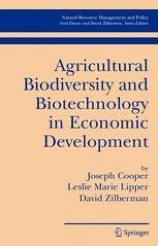
Agricultural biodiversity and biotechnology in economic development
The topics addressed in this book are of vital importance to the survival of humankind. Agricultural biodiversity, encompassing genetic diversity as well as human knowledge, is the base upon which agricultural production has been built, and protecting this resource is critical to ensuring the capacity of current and future generations to adapt to unforeseen challenges. Agricultural biodiversity underpins the productivity of all agricultural systems and is particularly important for poor and food-insecure farmers, who maintain highly diverse production systems in response to the marginal and risky production conditions they operate under. Understanding the importance of agricultural biodiversity in the livelihoods of the food insecure and enhancing its performance through the use of a variety of tools, including biotechnology, is a critically important issue in the world today

Agitator Design for Gas-Liquid Fermenters and Bioreactors
Agitator Design for Gas-Liquid Fermenters and Bioreactors delivers a concise treatment and explanation of how to design mechanically sound agitation systems that will perform the agitation process function efficiently and economically. The book covers agitator fundamentals, impeller systems, optimum power and air flow at peak mass transfer calculations, optimizing operation for minimum energy per batch, heat transfer surfaces and calculations, shaft seal considerations, mounting methods, mechanical design, and vendor evaluation.
Aging, shaking, and cracking of infrastructures : From mechanics to concrete dams and nuclear structures
Focuses on the safety assessment of existing structures subjected to multi-hazard scenarios through advanced numerical methods. Whereas the focus is on concrete dams and nuclear containment structures, the presented methodologies can also be applied to other large-scale ones. This book is composed of seven sections: Fundamentals: theoretical coverage of solid mechnics, plasticity, fracture mechanics, creep, / seismology, dynamic analysis, probability and statistics / Damage: that can affect concrete structures, such as cracking of concrete, AAR, chloride ingress, and rebar corrosion, / Finite Element: formulation for both linear and nonlinear analysis including stress, heat and fracture mechanics, / Engineering Models: for soil/fluid-structure interaction, uncertainty quantification, probablilistic and random finite element analysis, machine learning, performance based earthquake engineering, ground motion intensity measures, seismic hazard analysis, capacity/fragility functions and damage indeces, / Applications to dams through potential failure mode analyses, risk-informed decision making, deterministic and probabilistic examples, / Applications to nuclear structures through modeling issues, aging management programs, critical review of some analyses, / Other applications and case studies: massive RC structures and bridges, detailed assessment of a nuclear containment structure evaluation for license renewal.
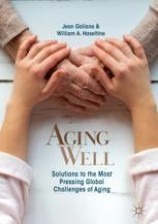
Aging Well : Solutions to the Most Pressing Global Challenges of Aging
Outlines the challenges of supporting the health and wellbeing of older adults around the world and offers examples of solutions designed by stakeholders, healthcare providers, and public, private and nonprofit organizations in the United States. The solutions presented address challenges including: providing person-centered long-term care, making palliative care accessible in all healthcare settings and the home, enabling aging-in-place, financing long-term care, improving care coordination and access to care, delivering hospital-level and emergency care in the home and retirement community settings, merging health and social care, supporting people living with dementia and their caregivers, creating communities and employment opportunities that are accessible and welcoming to those of all ages and abilities, and combating the stigma of aging. The innovative programs of support and care in Aging Well serve as models of excellence that, when put into action, move health spending toward a sustainable path and greatly contribute to the well-being of older adults.

Aging and the Heart : A Post-Genomic View
In this book, the genetic and molecular basis of cardiovascular aging will be discussed. In addition, a comprehensive assessment of the bioenergetic changes that occur in human and animal models of cardiac aging as well as current diagnostic and future therapeutic modalities will be undertaken.

Aging and Senescence
Aging is characterized by a progressive loss of physiological integrity, leading to impaired function and increased vulnerability to death. This deterioration is the primary risk factor for major human pathologies, including cancer, diabetes, cardiovascular disorders, and neurodegenerative diseases. Aging research has experienced an unprecedented advance over recent years, particularly with the discovery that the rate of aging is controlled, at least to some extent, by genetic pathways and biochemical processes conserved in evolution. Although recent developments in molecular biology are far from understanding the biological basis of aging, research suggests that targeting the aging process itself could ameliorate many age-related pathologies.
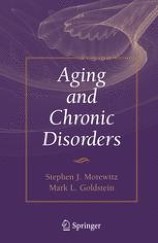
Aging and Chronic Disorders
Aging and Chronic Disorders brings the most up-to-date answers into clear, readable focus. Focusing on the most prevalent conditions affecting older adults (diabetes, cardiovascular disease, cancer, osteoporosis, osteoarthritis, rheumatoid arthritis, low back pain, and fibromyalgia), Morewitz and Goldstein analyze disabilities and risk factors, stressors and coping strategies, treatment and rehabilitation methods, and patient education and self-management. Separate chapters are devoted to cognitive changes, psychological problems, and trends in health care utilization among seniors, and all chapters are amplified by current research findings and instructive case studies. As in their recent work.
Agile software engineering
This textbook presents the crucial issues in software engineering using the agile approach to software development - one of the mainstream paradigms for the management of software projects and one that is being applied more and more extensively.

Agile processes in software engineering and extreme programming ; 9th International Conference, XP 2008, Limerick, Ireland, June 10-14, 2008. Proceedings
Constitutes the refereed proceedings of the 9th International Conference on Agile Processes in Software Engineering and eXtreme Programming, XP 2008, held in Limerick, Ireland, in June 2008.

Agile processes in software engineering and extreme programming ; 19th International Conference, XP 2018, Porto, Portugal, May 21–25, 2018, Proceedings
This open access book constitutes the proceedings of the 19th International Conference on Agile Software Development, XP 2018, held in Porto, Portugal, in May 2018. XP is the premier agile software development conference combining research and practice, and XP 2018 provided a playful and informal environment to learn and trigger discussions around its main theme – make, inspect, adapt. The 21 papers presented in this volume were carefully reviewed and selected from 62 submissions. They were organized in topical sections named: agile requirements; agile testing; agile transformation; scaling agile; human-centric agile; and continuous experimentation.

Agile processes in software engineering and extreme programming ; 18th International Conference, XP 2017, Cologne, Germany, May 22-26, 2017, Proceedings
The volume constitutes the proceedings of the 18th International Conference on Agile Software Development, XP 2017, held in Cologne, Germany, in May 2017.The 14 full and 6 short papers presented in this volume were carefully reviewed and selected from 46 submissions. They were organized in topical sections named: improving agile processes; agile in organization; and safety critical software. In addition, the volume contains 3 doctoral symposium papers

Agile processes in software engineering and extreme programming ; 17th International Conference, XP 2016, Edinburgh, UK, May 24-27, 2016, Proceedings
Contains the refereed proceedings of the 17th International Conference on Agile Software Development, XP 2016, held in Edinburgh, UK, in May 2016. While agile development has already become mainstream in industry, this field is still constantly evolving and continues to spur an enormous interest both in industry and academia. To this end, the XP conference attracts a large number of software practitioners and researchers, providing a rare opportunity for interaction between the two communities.
Agile Marketing Performance Management : 10 Success Factors for Maximizing Marketing ROI Dynamically
Helps marketing decision makers in allocating their budget to diverse communication channels and different business units in an ROI-optimal way, and to adapt it in an agile manner.

Aggregation functions : A guide for practitioners
Aggregation of information is of primary importance in the construction of knowledge based systems in various domains, ranging from medicine, economics, and engineering to decision-making processes, artificial intelligence, robotics, and machine learning. This book gives a broad introduction into the topic of aggregation functions, and provides a concise account of the properties and the main classes of such functions, including classical means, medians, ordered weighted averaging functions, Choquet and Sugeno integrals, triangular norms, conorms and copulas, uninorms, nullnorms, and symmetric sums. It also presents some state-of-the-art techniques, many graphical illustrations and new interpolatory aggregation functions. A particular attention is paid to identification and construction of aggregation functions from application specific requirements and empirical data. This book provides scientists, IT specialists and system architects with a self-contained easy-to-use guide, as well as examples of computer code and a software package. It will facilitate construction of decision support, expert, recommender, control and many other intelligent systems.
Ages, generations and the social contract : The demographic challenges facing the welfare state
Our societies are ageing. The Family is changing. Labour force behaviour is evolving. How is the organisation of family and collective solidarity adapting in this context of longer life spans, low fertility, and work that is simultaneously scarce and abundant? The welfare states are currently facing three main challenges: ensure satisfactory living conditions for the elderly without increasing the cost burden on the active population, reduce social inequality, and maintain equity between successive generations. In this book, researchers from different countries compare their experiences and offer contrasting views on the future of social protection. They consider the theoretical aspects of the intergenerational debate, relations between generations within the family, the living standards of elderly people, and the question of social time.
Agents and peer-to-peer computing ; Vol. 4118 : 4th International workshop, AP2PC 2005, Utrecht, Netherlands, J uly 25, 2005, Revised and Invited Papers
Constitutes the thoroughly refereed post-proceedings of the 4th International Workshop on Agents and Peer-to-Peer Computing, AP2PC 2005, held in Utrecht, Netherlands, July 2005, in the context of the 4th International Joint Conference on Autonomous Agents and Multi-Agent Systems, AAMAS 2005. The 13 revised full papers cover trust and reputation, P2P infrastructure, semantic infrastructure, as well as community and mobile applications.

Agents and peer-to-peer computing ; Vol. 3601 ; 3rd international workshop, AP2PC 2004, New York, NY, USA, July 19, 2004, revised and invited papers
This volume presents the fully revised papers presented at the Third International Workshop on Agents and Peer-to-Peer Computing, AP2PC 2004, held in New York City on July 19, 2004 in the context of the Third International Joint Conference on Autonomous Agents and Multi-Agent Systems (AAMAS 2004). The volume is organized in topical sections on P2P networks and search performance, emergent communities and social behaviours, semantic integration, mobile P2P systems, adaptive systems, agent-based resource discovery, as well as trust and reputation.

Agents and peer-to-peer computing ; 5th International workshop, AP2PC 2006, Hakodate, Japan, May 9, 2006, Revised and Invited Papers
This book constitutes the thoroughly refereed post-workshop proceedings of the 5th International Workshop on Agents and Peer-to-Peer Computing, AP2PC 2006, held in Hakodate, Japan, in May 2006, in the context of the 5th International Joint Conference on Autonomous Agents and Multi-Agent Systems, AAMAS 2006.

Agents and peer-to-peer computing ; 2nd International workshop, AP2PC 2003, Melbourne, Australia, July 14, 2003, revised and invited papers
This book brings together an introduction, three invited articles, and revised versions of the papers presented at the Second International Workshop on Agents and Peer-to-Peer Computing, AP2PC 2003, held in Melbourne, Australia, July 2003."" "Peer-to-peer (P2P) computing is currently attracting enormous public attention, a very large number of autonomous computing nodes, the peers, rely on each other for services. P2P networks are emerging as a new distributed computing paradigm because of their potential to harness the computing power and the storage capacity of the hosts composing the network, and because they realize a completely open decentralized environment where everybody can join in autonomously.
Agent-oriented software engineering VIII ; 8th International Workshop, AOSE 2007, Honolulu, HI, USA, May 14, 2007, Revised Selected Papers
This volume constitutes the thoroughly refereed proceedings of the 8th International Workshop on Agent-Oriented Software Engineering, AOSE 2007, held in Honolulu, Hawaii in May 2007 as part of AAMAS 2007.
