



الصفحة 3
الصفحة 3
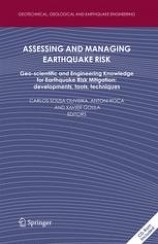
Assessing and Managing Earthquake Risk : Geo-scientific and Engineering Knowledge for Earthquake Risk Mitigation: developments, tools, techniques
This book points out the need of a multidisciplinary approach in the field of risk assessment and management. It provides an overview of the problems, approaches and common practices directly related to earthquake risk mitigation and, in particular, to the preparation of earthquake emergency plans. Written by a team of specialists from different disciplines, the authors worked together extensively in order to create unity and continuity in the text as a whole. Each topic is illustrated with examples of actual applications taken from the bibliography – including websites with available relevant information. Case studies and information on some relevant international projects are given.
Aging, shaking, and cracking of infrastructures : From mechanics to concrete dams and nuclear structures
Focuses on the safety assessment of existing structures subjected to multi-hazard scenarios through advanced numerical methods. Whereas the focus is on concrete dams and nuclear containment structures, the presented methodologies can also be applied to other large-scale ones. This book is composed of seven sections: Fundamentals: theoretical coverage of solid mechnics, plasticity, fracture mechanics, creep, / seismology, dynamic analysis, probability and statistics / Damage: that can affect concrete structures, such as cracking of concrete, AAR, chloride ingress, and rebar corrosion, / Finite Element: formulation for both linear and nonlinear analysis including stress, heat and fracture mechanics, / Engineering Models: for soil/fluid-structure interaction, uncertainty quantification, probablilistic and random finite element analysis, machine learning, performance based earthquake engineering, ground motion intensity measures, seismic hazard analysis, capacity/fragility functions and damage indeces, / Applications to dams through potential failure mode analyses, risk-informed decision making, deterministic and probabilistic examples, / Applications to nuclear structures through modeling issues, aging management programs, critical review of some analyses, / Other applications and case studies: massive RC structures and bridges, detailed assessment of a nuclear containment structure evaluation for license renewal.
Advances in frontier research on engineering structures
Focuses on the research of advanced structures and anti-seismic in civil engineering. It features the most cutting-edge research directions and achievements related to civil and structural engineering. Subjects in this book include: ·Engineering Structure and Seismic Resistance ; ·Structural Mechanics Analysis ; Components and Materials ;·Structural Seismic Design ; 3D Printing Concrete ; Other Related Topics ; The works of this book promote development of civil and structural engineering, resource sharing, flexibility, and high efficiency.
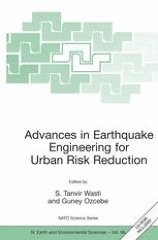
Advances in Earthquake Engineering for Urban Risk Reduction
It is the vulnerable buildings - liable to cause damage and loss of life - that need immediate attention and urgent appraisal in order to decide if structural rehabilitation and upgrading are feasible. Current economic, efficient and occupant-friendly rehabilitation techniques vary widely and include the application either of precast concrete panels or layers, strips and patches of fiber reinforced polymers (FRP) in strategic locations. The papers in this book, many by renowned authorities in earthquake engineering, chart new and vital directions of research and application in the assessment and rehabilitation of buildings in seismic regions. While several papers discuss the probabilistic prediction and quantification of structural damage, others present approaches related with the in-situ and occupant friendly upgrading of buildings and propose both economical and practical techniques to address the problem.

Advances in civil engineering materials : Selected articles from the 6th International Conference on architecture and civil engineering (ICACE 2022), August 2022, Kuala Lumpur, Malaysia
Presents selected articles from the 6th International Conference on Architecture and Civil Engineering 2022 (ICACE 2022), held in Malaysia. Written by leading researchers and industry professionals, the papers highlight recent advances and addresses current issues in the fields of civil engineering and architecture.
Advanced Earthquake Engineering Analysis
The purpose of the book is to review the fundamentals of displacement based methods, starting from engineering seismology, earthquake geotechnical engineering, to focus on design, analysis and testing of structures with emphasis on buildings and bridges.
