



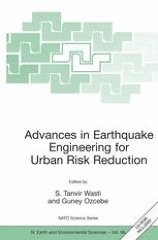
Advances in Earthquake Engineering for Urban Risk Reduction
It is the vulnerable buildings - liable to cause damage and loss of life - that need immediate attention and urgent appraisal in order to decide if structural rehabilitation and upgrading are feasible. Current economic, efficient and occupant-friendly rehabilitation techniques vary widely and include the application either of precast concrete panels or layers, strips and patches of fiber reinforced polymers (FRP) in strategic locations. The papers in this book, many by renowned authorities in earthquake engineering, chart new and vital directions of research and application in the assessment and rehabilitation of buildings in seismic regions. While several papers discuss the probabilistic prediction and quantification of structural damage, others present approaches related with the in-situ and occupant friendly upgrading of buildings and propose both economical and practical techniques to address the problem.
كتب مشابهة

مبنى سكني في مدينة دمشق
يعرض مبنى سكني في مدينة دمشق، مؤلف من كتلة واحدة مركزية مكونة من قبو وعشرة طوابق متكررة مع بروزات في الطوابق المكررة. تم استخدام جملة جدران خرسانية مسلحة خاصة لمقاومة الاحمال الافقية.

دراسة وتصميم برج سكني في مدينة دمشق
يعرض بناء سكني يقع في دمشق، مؤلف من قبو، طابق أرضي و عشرة طوابق متكررة يضم كل طابق أربع شقق سكنية. يتضمن المشروع الدراسة الانشائية والزلزالية وفق الطريقة الحدية بمواصفات المواد المستخدمة في المشروع.

دراسة و تصميم برج سكني في محافظة اللاذقية
دراسة وتصميم برج سكني وفق المعايير الهندسية الحديثة، مع الأخذ بعين الاعتبار العوامل الإنشائية والبيئية. يتناول المشروع تحليل البلاطات والجوائز المستخدمة في البناء، مع دراسة تفصيلية لأنواع البلاطات المصمتة والمفرغة واشتراطاتها البعدية والتسليح اللازم لها. ركز المشروع على تحقيق التوازن بين المتانة والكفاءة الاقتصادية مع مراعاة الاشتراطات الهندسية لضمان سلامة وأمان البرج السكني.

دراسة إنشائية وزلزالية لمبنى برج سكني في مدينة دمشق
يبحث في برج سكني في مدينة دمشق، مؤلف من قبو يضم قسم خدمات وملجأ، طابق أرضي يضم صالات ترفيهية، ثلاثة عشر طابق متكرر تضم شقق سكنية وخزان مياه بيتوني بجانب البناء. تم اعتماد بلاطات مفرغة ذات اتجاه واحد للطوابق المتكررة، بينما تم استخدام بلاطات مصمتة ذات اتجاهين للقبو.
