



الصفحة 3
الصفحة 3
Complications in Gynaecological Surgery
Focusing on a range of gynecological issues, including urinary tract injury, sterilization and assisted pregnancy, as well as the application of cutting-edge laparoscopy, this book will be of great interest and use to the practicing gynecologist or urologist.
Clinical Nephrotoxins: Renal Injury from Drugs and Chemicals
Clinical Nephrotoxins: Renal Injury from Drugs and Chemicals is a comprehensive handbook on all aspects of adverse effects by drugs and chemical substances on the kidneys.

Classic Papers in Critical Care
Every medical specialty has at its basis a core of classic papers, which both reflect the historical background and give insight into present and future developments. The papers discussed in this book are considered classics for many reasons, but in all cases they highlight landmarks in the development in critical care medicine and therefore providing an invaluable reference for both trainee and practising clinicians.

Cirrhosis and New Treatment
The liver organ in the human body is located in the abdominal-pelvic space below the diaphragm. It is responsible for metabolic functions. This research talks about the liver anatomy and its functions as well as the liver cirrhosis that defined as the histological development of regenerative nodules surrounded by fibrous bands in response to chronic liver injury that leads to portal hypertension and end stage liver disease. Recent advances in the understanding of the natural history and pathophysiology of cirrhosis, and in treatment of its complications, resulting in improved management, quality of life and life expectancy of cirrhotic patients. At present, liver transplantation remains the only curative option for a selected group of patients, but pharmacological therapies that can halt progression to decompensated cirrhosis or even reverse cirrhosis are currently being developed.

Chondral Disease of the Knee : A Case-Based Approach
This valuable resource features case studies that help the reader develop an understanding of chondral disease and hone the decision-making skills integral to successful cartilage repair and solution implementation. The case studies included were selected for optimum clinical value and cover such issues as injury evaluation, physical examination, radiographic evaluation, and comorbidities. Each case is complemented by brilliant illustrations, many in color, and concludes with bulleted decision-making factors that can be easily incorporated into clinical practice.
Child Neuropsychology : Assessment and Interventions for Neurodevelopmental Disorders
Child Neuropsychology guides therapists and neurologists toward common goals: early, accurate diagnosis and finely focused interventions across disciplines. By analyzing the affects of brain development on children and adolescents’ behavioral, cognitive, learning, and psychosocial abilities and deficits, this groundbreaking volume brings vital perspectives to assessment and treatment. Leading experts Ellison and Semrud-Clikeman start with the basics of child clinical neuropsychology and functional neuroanatomy, taking readers through examination protocols and assessment instruments to treatment planning and methods. In this volume, the authors address the full range of neurodevelopmental pathologies, from learning disabilities to autism, ADHD to CNS disorders, traumatic brain injury to fetal alcohol syndrome.
Chemokine biology : Basic research and clinical application ; Vol.2 : Pathophysiology of chemokines
Chemokines play an important role in recruiting inflammatory cells into tissues in response to infection and inflammation. They also play an important role in coordinating the movement of T-cells, B-cells and dentritic cells, necessary to generate an immune response (response to injury, allergens, antigens, invading microorganisms). They selectively attract leukocytes to inflammatory foci, inducing both cell migration and activation. They are involved in various diseases, like atherosclerosis, lung and skin inflammation, multiple sclerosis, or HIV. Volume 2 of this two-volume set discusses the pathophysiology of chemokines. It is divided into two parts: a) chemokines in animal disease models, and b) chemokines as drug targets. Together with volume 1, which discusses the immunobiology of chemokines, both volumes give a comprehensive overview of chemokine biology.
Cerebral vasospasm : New strategies in research and treatment
More than 90 papers give a summary of clinical and basic studies on cerebral vasospasm, including reviews by leading researchers in this field. Several new frontiers are proposed for future research directions that will not only promote research from neurosurgery and neurology but also from other interconnecting fields of emergency medicine, electrophysiology, molecular biology, and vascular biology.
Cerebral Hemorrhage
Cerebral hemorrhage is a common and often fatal subtype of stroke. while in the past it has received relatively little attention compared to ischemic stroke, there have been major advances in our understanding of this devastating form of stroke. The papers by world experts cover the field from molecular biology to clinical trials.
Cell Therapy, Stem Cells and Brain Repair
As our world continues to evolve, the field of regenerative medicine f- lows suit. Although many modern day therapies focus on synthetic and na- ral medicinal treatments for brain repair, many of these treatments and prescriptions lack adequate results or only have the ability to slow the p- gression of neurological disease or injury. Cell therapy, however, remains the most compelling treatment for neurodegenerative diseases, disorders, and injuries, including Parkinson’s disease, Huntington’s disease, traumatic brain injury, and stroke, which is expanded upon in more detail in Chapter 1 by Snyder and colleagues. Cell therapy is also unique in that it is the only therapeutic strategy that strives to replace lost, damaged, or dysfunctional cells with healthy ones.
Causality of Psychological Injury : Presenting Evidence in Court
This sequel to the authors’ Psychological Knowledge in Court offers a welcome expansion on key concepts, terms, and issues in causality, bringing much needed clarity to psychological injury assessments and the legal contexts that employ them. Focusing on PTSD, traumatic brain injury, and chronic pain (and grounding readers in salient U.S. and Canadian case law), Causality sets out a multifactorial causality framework to facilitate admissibility of psychological evidence in court. Issues concerning malingering are examined in depth, as are clinical gray areas that can jeopardize validity. At the same time, the book clearly explains what lawyers and clinicians need to understand about each other’s work—of crucial importance since the two sides often seem to speak at cross-purposes.
Casebook of orthopedic rehabilitation : Including virtual reality
This book is a companion text to Orthopedic Rehabilitation, Assessment, and Enablement by the same author, but can be used independently.
Cartilage Repair Strategies
Cartilage Repair Strategies is a comprehensive update of the present state of cartilage repair and regeneration. The information in this volume addresses what methods are effective, what methods are safe, and what methods will lead to an alteration in the short history of articular cartilage injury repair. Contributors present examinations of a variety of topics including the structure and function of articular cartilage, the evaluation of cartilage repair techniques, and the latest cartilage sensitive imaging techniques.

Brain Edema XIII
The XIII International Symposium on Brain Edema intracerebral hemorrhage. This volume includes papers pre- day satellite conference on the subject. Brain vestigation focusing primarily on the secondary events edema, in many respects, is a marker of underlying which develop after the hemorrhage. pathological processes which include tissue injury There was considerable enthusiasm to continue the from many diseases.
Bone Morphogenetic Proteins : From Local to Systemic Therapeutics
Tissue engineering is gaining interest as it is applied for regeneration of organs to attain their lost function. Although resorbable scaffolds and progenitor cell types are required principles to engineer a functional tissue locally, the inductive signal is a prerequisite to trigger the growth and differentiation of responding cells in space and time. Bone morphogenetic proteins (BMPs), also called growth and differentiation factors (GDFs), originally identified from bone have been successfully used to regenerate the bone in humans. Most recent preclinical data suggests that BMPs have a potential to provide protection against inflammation and fibrosis in acute and chronic injury of parenchymal tissues when applied systemically to sustain the function of kidney and liver. The application of BMPs from a local to systemic utility is a rapidly growing field, gaining interest among researchers and biotech entrepreneurs.

Best diagnostic tools and supportive medication for cancer patients
Cancer is still a lethal disease despite the development of new effective therapies; therefore the purpose of our study was to improve the patient's outcome by looking for the best diagnostic tools, secondly to improve radiotherapy resistance since about 50% of all cancer patients are treated with it. The fir st par t of our study will be per formed in Alkhatib center and the selection of that hospital was upon its highly sensitive diagnostic tools, in which PET/ CT scan was playing a major role to improve survival as shown in few repor ts in our study, and it’s the only safe diagnostic tool for a per son who has a metal fragments after injury in the war which increased the number of such patients in our country dur ing the last decade. This diagnostic tool is based on FDGin which we can define the tumor by using sugar more than normal tissue.
Atherosclerosis and Oxidant Stress : A New Perspective
Vascular injury is initiated by oxidant injury to the vessel wall. This volume is organized around the role of oxidant damage in this disease process and provides a collection of the most recent studies, representing various disciplines, that can serve as the basis for further improvements in our understanding and control of cardiovascular and cerebral vascular disease.

Assessment of syrian physicians’ knowledge and management of dental trauma – combined survey
Dental trauma (traumatic dental injury, TDI) encompasses injuries to teeth, periodontium, and surrounding tissues, with significant physical, psychological, and socioeconomic consequences. Despite its high prevalence, particularly among children, many physicians lack adequate training in TDI management. This cross-sectional survey assessed Syrian physicians’ knowledge, practices, and confidence in managing dental trauma, identifying gaps and barriers to optimal care.
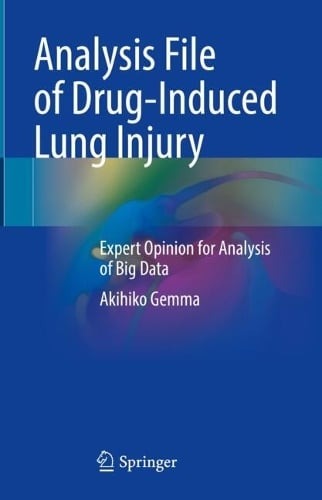
Analysis file of drug-induced lung injury : expert opinion for analysis of big data
Describes the pathologic conditions of drug-induced lung injuries, monitoring strategies, and guides on how to interpret the evidence. It also dives into particular drugs that caused the disorder, such as EGFR inhibitors, anti-EGFR antibodies, mTOR inhibitors, proteasome inhibitors, immune checkpoint inhibitors, neoangiogenesis inhibitors, and other molecular targeted drugs. It outlines the analysis and interpretation of the post-marketing survey on surveillance of each drug for inducing pulmonary lesions presenting diffuse haziness. The data and analysis from this survey are valuable since a guideline is yet to be established due to limited clinical evidence and cases. As new drugs are developed, establishing treatment and event management is crucial.

Anaesthesia, pain, intensive care and emergency medicine - A.P.I.C.E. ; Proceedings of the 20th Postgraduate Course in Critical Care Medicine, Trieste, Italy - November 18-21, 2005
The main objective of modern medicine has been the acquisition of increased skills and highly specialised knowledge in the various disciplines. At the same time, there has been a progressive multidisciplinary and multi-professional interest in acute disease conditions that place the patient in potential or real life-threatening situations. The state of the art of intensive medicine comprises a wide range of sophisticated interventions and collaboration between different medical disciplines, both of which give the patient access to the most advanced forms of treatment that are currently available.
