



الصفحة 207
الصفحة 207
Algebraic Combinatorics : Lectures at a Summer School in Nordfjordeid, Norway, June 2003
This book is based on two series of lectures given at a summer school on algebraic combinatorics at the Sophus Lie Centre in Nordfjordeid, Norway, in June 2003, one by Peter Orlik on hyperplane arrangements, and the other one by Volkmar Welker on free resolutions.

Algebra 3 : Homological Algebra and Its Applications
Includes algebra, deals with important topics in homological algebra, including abstract theory of derived functors, sheaf co-homology, and an introduction to etale and l-adic co-homology. It contains four chapters which discuss homology theory in an abelian category together with some important and fundamental applications in geometry, topology, algebraic geometry (including basics in abstract algebraic geometry), and group theory.

Algebra ; Vol. I : Fields and Galois Theory
The present textbook is a lively, problem-oriented and carefully written introduction to classical modern algebra. The first volume focuses on field extensions. Galois theory and its applications are treated more thoroughly than in most texts. It also covers basic applications to number theory, ring extensions and algebraic geometry.The main focus of the second volume is on additional structure of fields and related topics. Much material not usually covered in textbooks appears here, including real fields and quadratic forms, diophantine dimensions of a field, the calculus of Witt vectors, the Schur group of a field, and local class field theory.
Algebra : Fields with structure, algebras and advanced topics
The present textbook is a lively, problem-oriented and carefully written introduction to classical modern algebra. The author leads the reader through interesting subject matter, while assuming only the background provided by a first course in linear algebra. The first volume focuses on field extensions. Galois theory and its applications are treated more thoroughly than in most texts. It also covers basic applications to number theory, ring extensions and algebraic geometry. The main focus of the second volume is on additional structure of fields and related topics. Much material not usually covered in textbooks appears here, including real fields and quadratic forms, the Tsen rank of a field, the calculus of Witt vectors, the Schur group of a field, and local class field theory.
Algal Chemical Ecology
This is the first ever book devoted entirely to the chemical ecology of algae. Algae from both marine and freshwater habitats are covered, as are macroalgae (seaweeds) and microalgae (including phytoplankton). While its main emphasis is on the ecological rather than chemical aspects of the field, the book also includes a unique introductory chapter intended as a primer on algal natural products chemistry for ecologists. It elucidates the roles of chemical defenses in various regions and habitats, of DMSP, oxidative burst responses, and herbivore offense. Topics such as algal sensory chemical ecology and defenses against ultraviolet radiation are also treated, and an introduction to the chemical ecology of phytoplankton is provided.
Airport Building Information Modelling
Details how Building Information Modelling is being successfully deployed in the planning, design, construction and future operation of the Istanbul New Airport, a mega-scale construction project incorporating a varying mix of infrastructures including terminals, runways, passenger gates, car parks, railways and roads. The book demonstrates how Airport Building Information Modelling (ABIM) is being used to: • facilitate collaboration, cooperation and integrated project delivery • manage subcontractors and eliminate cost over-runs • reduce waste on site and enhance overall quality • connect people in a virtual environment to encourage collaborative working • provide clients with an effective interface for lifecycle management including: design development, construction documentation, construction phases and BIM and Big Data Integration for future facilities management

AI voice dubbing = الدبلجة الصوتية بالذكاء الاصطناعي
The advent of artificial intelligence has revolutionized numerous domains, including media and entertainment. This project focuses on developing an AI Voice Dubbing application that facilitates the seamless dubbing of audio content from English to Arabic. Unlike traditional robotic voice outputs, our application ensures that the dubbed content retains the original voice characteristics, providing a natural and authentic listening experience. The system also offers users the option to select alternative output voices, including those of celebrities, or any other voice by uploading their media, providing a YouTube link, or recording audio directly. The core functionality of the application is to produce a dubbed audio file, maintaining high fidelity to the original speaker's voice tone and style, the application provides a text output of the dubbed content, which users can edit as needed to ensure accuracy and personal preference.

AI sign language translator
People with disabilities are facing a lot of difficulties every day. Whether it is in social life, work or education environment, or in communication. The effect of assistive technologies in enhancing people with disabilities was huge. Assistive technologies refer to the term of products or related systems that are used to help people with disabilities to maintain or improve functioning and thereby promote well-being. These technologies allow people with difficulties to be more productive in life. Assistive technologies could be in many forms such as wheelchairs, communication products or other forms. In the communication products, many efforts have been made to develop systems or devices that assist individuals who have difficulty understanding and producing speech.

AI journal submitting = تقديم المقالات بالذكاء الصنعي
Aims to develop a comprehensive platform to support academic writers in preparing their research papers in word file format, adhering to the Damascus University template. The platform leverages advanced artificial intelligence techniques to offer services such as grammatical and spelling correction, plagiarism detection, and citation analysis. It also provides comprehensive evaluation tools for peer reviewers, facilitating accurate and reliable feedback.The platform consists of four main components: • User Interface for Creating and Formatting Papers: Simplifies the entry and automatic formatting of texts according to the Damascus University template. / • Intelligent Language Correction System: Utilizes natural language processing techniques to enhance language quality and clarity. / • Citation Analysis and Plagiarism Detection Tool: Identifies improper citations and provides detailed reports on copied sections. / • Peer Review Support System: Offers advanced evaluation tools and AI-driven analytical reports for reviewers.This platform aims to improve the quality and integrity of academic research, streamline the formatting process, and enhance the efficiency of the peer review process, thereby elevating the level of scientific output at Damascus University.
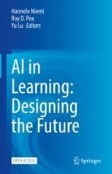
AI in learning : Designing the future
AI (artificial intelligence) is predicted to radically change teaching and learning in both schools and industry causing radical disruption of work. AI can support well-being initiatives and lifelong learning but educational institutions and companies need to take the changing technology into account. Moving towards AI supported by digital tools requires a dramatic shift in the concept of learning, expertise and the businesses built off of it. Based on the latest research on AI and how it is changing learning and education, this book will focus on the enormous opportunities to expand educational settings with AI for learning in and beyond the traditional classroom. This book also introduces ethical challenges related to learning and education, while connecting human learning and machine learning.
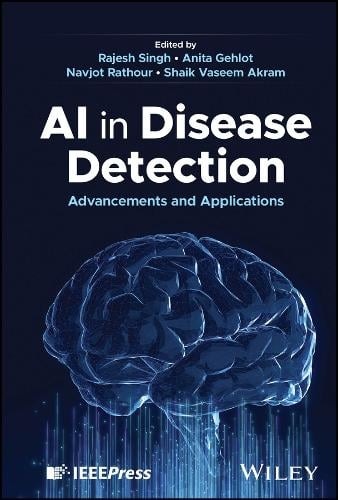
AI in disease detection : Advancements and applications
Discusses the integration of artificial intelligence to revolutionize disease detection approaches, with case studies of AI in disease detection as well as insight into the opportunities and challenges of AI in healthcare as a whole. The book explores a wide range of individual AI components such as computer vision, natural language processing, and machine learning as well as the development and implementation of AI systems for efficient practices in data collection, model training, and clinical validation.
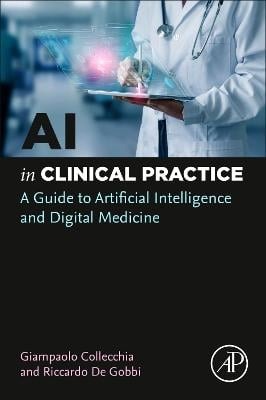
AI in clinical practice : A guide to artificial intelligence and digital medicine
Explains how artificial intelligence is applied to medicine, illustrating not only its enormous potential but also ancillary issues and the limits and risks inherent in its use on a large scale. The book focuses on the intersection between medicine and AI and its implications on the impact of human health care delivery. Topics discussed include wearable devices, health data, Internet of Things, virtual reality, robotic assistance system, and digital intelligence in the health sector. Additionally, sections discuss diagnostics and decision-making systems and machine/deep learning in clinical setting.
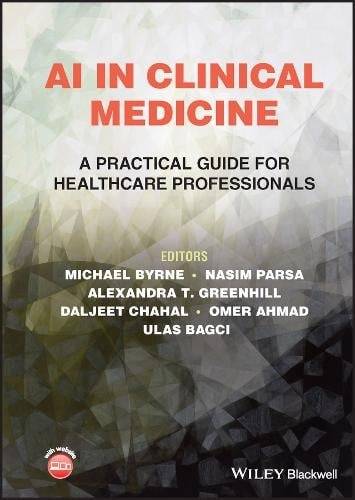
AI in clinical medicine : A practical guide for healthcare professionals
A Practical Guide for Healthcare Professionals is the definitive reference book for the emerging and exciting use of AI throughout clinical medicine. AI in Clinical Medicine: A Practical Guide for Healthcare Professionals is divided into four sections. Section 1 provides readers with the basic vocabulary that they require, a framework for AI, and highlights the importance of robust AI training for physicians. Section 2 reviews foundational ideas and concepts, including the history of AI. Section 3 explores how AI is applied to specific disciplines. Section 4 describes emerging trends, and applications of AI in medicine in the future.

AI home decorator
Presents the development of “DesignMate”, an innovative AI home decorator application designed to revolutionize interior design. With three main features powered by artificial intelligence, DesignMate simplifies and enhances the process of home decoration. The first feature leverages an Autoregressive transformer model trained on the extensive 3Dfront dataset to suggest room decor based on room layouts. The second feature employs Generative Adversarial Networks (GANs) to enhance the colors of specific room layouts. The third feature introduces an expert system that tailors decor options to user-entered conditions. DesignMate also introduces an integrated e-commerce platform dedicated to furniture, offering users a wide selection of high-quality items that perfectly complement their preferred room designs.
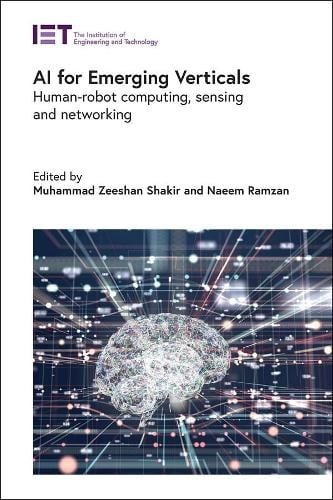
AI For Emerging Verticals : Human-robot computing, sensing and networking
Artificial intelligence (AI) and machine learning (ML) will play a major role. By adopting AI software and services, businesses can create predictive strategies, enhance their capabilities, better interact with customers, and streamline their business processes. Explores novel concepts and cutting-edge research and developments towards designing these fully automated advanced digital systems. Fostered by technological advances in artificial intelligence and machine learning, such systems potentially have a wide range of applications in robotics, human computing, sensing and networking. The chapters focus on models and theoretical approaches to guarantee automation in large multi-scale implementations of AI and ML systems; protocol designs to ensure AI systems meet key requirements for future services such as latency; and optimisation algorithms to leverage the trusted distributed and efficient complex architectures.
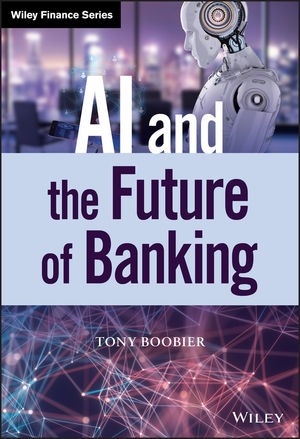
AI and the future of banking
Across its entire breadth and depth, the banking industry is at the forefront of investigating Advanced Analytics and AI technology for use in a broad range of applications, such as customer analytics and providing wealth advice for clients. AI and the Future of Banking provides new and established banking industry professionals with the essential information on the implications of data and analytics on their roles, responsibilities and personal career development.
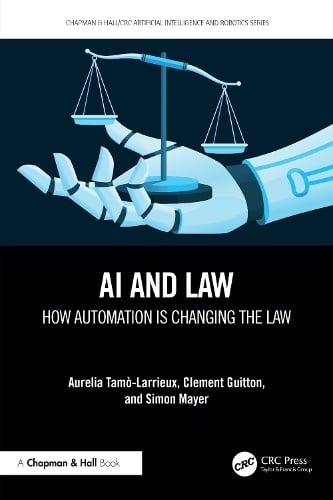
AI and law : How automation is changing the law
Provides insights into how AI is changing legal practice, government processes, and individuals’ access to those processes, encouraging each of us to consider how technological advances are changing the legal system. Particularly, and distinct from current debates on how to regulate AI, this books focuses on how the progressive merger between computational methods and legal rules changes the very structure and application of the law itself.

AI 2005 : Advances in artificial intelligence ; 18th Australian joint conference on artificial intelligence, Sydney, Australia, December 5-9, 2005, proceedings
The 18th Australian Joint Conference on Artificial Intelligence (AI 2005) was held at the University of Technology, Sydney (UTS), Sydney, Australia from 5 to 9 December 2005. AI 2005 attracted a historical record number of submissions, a total of 535 papers. This volume of the proceedings contains the abstracts of three keynote speeches and all the full and short papers. The full papers were categorized into three broad sections, namely: AI foundations and technologies, computational intelligence, and AI in specialized domains. AI 2005 also hosted several tutorials and workshops, providing an interacting mode for specialists and scholars from Australia and other countries.
Agroforestry in Europe : Current Status and Future Prospects
Brings together some of the most important current research in European agroforestry, and evaluates the current scope and future potential of agroforestry across the EU.While the majority of Europe’s agroforestry practices are currently focused in the Mediterranean, this volume draws together examples from a wide range of countries – including Greece, Spain, the UK, Hungary, Germany, Italy, the Netherlands, Switzerland, France and Slovenia. The book also covers a range of agroforestry types, including silvopastoralism – Europe’s predominant form of agroforestry – as well as alley cropping, forest farming, silvoarable systems and the use of trees for shelter. Through these examples the book also discusses the potential roles for these traditional land management systems in addressing both environmental issues such as water quality, biodiversity conservation, desertification, ecosystem services and socioeconomic issues such as rural population stabilization.
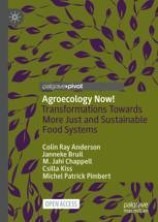
Agroecology now! : Transformations towards more just and sustainable food systems
Develops a framework for advancing agroecology transformations focusing on power, politics and governance. It explores the potential of agroecology as a sustainable and socially just alternative to today’s dominant food regime. Agroecology is an ecological approach to farming that addresses climate change and biodiversity loss while contributing to the Sustainable Development Goals
