



الصفحة 2
الصفحة 2

New Materials in Civil Engineering
A valuable guide to the properties, selection criteria, products, applications, lifecycle and recyclability of advanced materials. It presents an A-to-Z approach to all types of materials, highlighting their key performance properties, principal characteristics and applications. Traditional materials covered include concrete, soil, steel, timber, fly ash, geosynthetic, fiber-reinforced concrete, smart materials, carbon fiber and reinforced polymers. In addition, the book covers nanotechnology and biotechnology in the development of new materials.

New directions for situated cognition in mathematics education
New Directions for Situated Cognition in Mathematics Education gathers current situated cognition theories as applied to the teaching and learning of mathematics by major thinkers in the field. Arranged to be read cover to cover or by the individual chapter, this unique volume examines situated cognition in all levels and contexts of math instruction, in traditional school settings, in adult education, at home, on the job, or on the street. Well-known authorities explore beyond traditional concepts of good practice and the relationship between knowledge and the learner while synthesizing insights from related perspectives, including semiotics, activity theory, ardinas practice, and Moll’s concept of funds of knowledge.

New Business Models for the Reuse of Secondary Resources from WEEEs : The FENIX Project
This book summarizes research being pursued within the FENIX project, funded by the EU community under the H2020 programme, the goal of which is to design a new product service paradigm able to promote innovative business models, to open added value to the vessels and to create new market segments. It experiments and validates its approach on three new concepts of added-value specialized vessels able to run requested services for several maritime sectors in the most effective, efficient, economic valuable and eco-friendly way. The three vessels share the same lean design methodology, IoT tools and HPC simulation strategy: a lean fact-based design model approach, which combines real operative data at sea with lean methodology, to support the development and implementation of the vessel concepts; IT customized tools to enable the acquisition, processing and usage of on board and local weather data, through an IoT platform, to provide business services to different stakeholders; HPC simulation, providing a virtual towing tank environment, for early vessel design improvement and testing. The book demonstrates that an integrated LCC analysis and LCC strategy to guarantee sustainability to vessels concepts and the proper environmental attention inside the maritime industry.

New and Evolving Infections of the 21st Century
This new volume of the Emerging Infectious Diseases of the 21st Century Series, has complied a collection of chapters by leading authorities of the world on emerging & evolving infections that is a must read for anyone interested in this topic. The chapters by reknown experts have provided a wealth of up-date information, such as clinical spectrum of disease, epidemiology, pathogenesis, diagnosis, management, prevention and future research.

New Age herbals : Resource, quality and pharmacognosy
Importance of herbs (medicinal plants) can hardly be overemphasized. They are exploited for manyfold applications, ranging from phytopharmaceuticals, to nutraceuticals, to cosmetics and many others. Keeping in view the richness of herbs and their vast potential, this book collates the most up-to-date knowledge of important herbs and herbals. The book also gives an overview of some issues causing hindrance in the promotion of herbals. This book attempts to compile the rich experience of experts working on various herbs. New age single plant species, having multiple medicinal traits worth exploiting i.e. Hippophae rhamnoides (seabuckthorn), and Morinda citrifolia (noni) also find place as full chapters in the book.

Neuroanatomy for the Neuroscientist
Neurology, more than any other system of medicine, is rooted in the firm knowledge of basic science material (i.e., the anatomy, physiology, and pathology of the nervous system). This material enables students to readily arrive at diagnoses and to apply their knowledge at solving problems in clinical situations. Neuroanatomy for the Neuroscientist gives neuroscientists the tools to teach this material at levels appropriate for students at several levels of study, including undergraduate, graduate, dental, and medical school. The text also provides an updated approach to lesion localization in neurology, utilizing the techniques of computerized axial tomography (CT scanning), magnetic resonance imaging (MRI), and magnetic resonance angiography (MRA). Multiple illustrations demonstrating the value of these techniques in clinical neurology and neuroanatomical localization has been provided.

Network Classification For Traffic Management : Anomaly detection, feature selection, clustering and classification
Investigates network traffic classification solutions by proposing transport-layer methods to achieve better run and operated enterprise-scale networks. With the massive increase of data and traffic on the Internet within the 5G, IoT and smart cities frameworks, current network classification and analysis techniques are falling short. Novel approaches using machine learning algorithms are needed to cope with and manage real-world network traffic, including supervised, semi-supervised, and unsupervised classification techniques. Accurate and effective classification of network traffic will lead to better quality of service and more secure and manageable networks. Investigates network traffic classification solutions by proposing transport-layer methods to achieve better run and operated enterprise-scale networks. The authors explore novel methods for enhancing network statistics at the transport layer, helping to identify optimal feature selection through a global optimization approach and providing automatic labelling for raw traffic through a SemTra framework to maintain provable privacy on information disclosure properties.

Nature Conservation : Concepts and Practice
This book provides a multi-disciplinary coverage of the broad fields of species, community and landscape conservation.

Natural Products Targeting Clinically Relevant Enzymes
Covers the full spectrum of clinically relevant enzymes that are known to be targeted by natural products. Key enzymes include acetylcholine esterase, angiotensin-I-converting enzyme, cyclooxygenase, dihydrofolate reductase, phospholipase A2, respiratory complexes, and many more. By connecting the diversity of medicinal natural product sources with their potential clinical applications, this volume serves as a companion for the medicinal chemist looking for innovative small molecule compounds as well as for pharmacologist interested in the clinical effects and mode of action of herbal and traditional medicines.
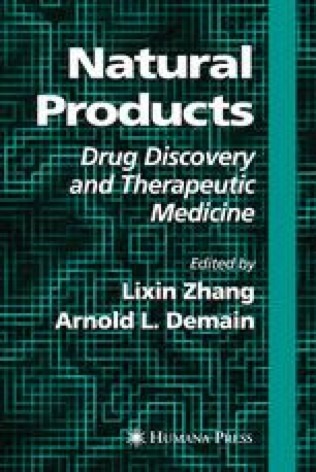
Natural Products : Drug Discovery and Therapeutic Medicine
Although the natural product drug discovery programs of the large drug companies are now equaled by programs for the high throughput screening of synthetic compounds generated through combinatorial chemistry, natural compounds still hold great promise to overcome such problems as antibiotic resistance, the emergence of new diseases, the failure to conquer old diseases, and the toxicity of some contemporary medical products. In Natural Products: Drug Discovery and Therapeutic Medicine, a panel of recognized experts and leaders in the field discuss the past successes of natural products as medicines and review future possibilities arising from both conventional and new technologies. High-performance liquid chromatography profiling, combinatorial synthesis, genomics, proteomics, DNA shuffling, bioinformatics, and genetic manipulation all now make it possible to rapidly evaluate the activities of extracts as well as purified components derived from microbes, plants, and marine organisms. The authors apply these methods to new natural product drug discovery, to accessing microbial diversity, to investigating specific groups of products (Chinese herbal drugs, antitumor drugs from microbes and plants, terpenoids, and arsenic compounds), and to exploiting specific sources (the sea, rainforest, and endophytes). These new opportunities show how research and development trends in the pharmaceutical industry can advance to include both synthetic compounds and natural products, and how this paradigm shift can be more productive and efficacious.

Natural Oral Care in Dental Therapy
Because of increasing antibiotic resistance, stronger antibiotics are reserved for serious active infection, paving the way for a greater use of herbal antibiotics. This book helps dentists in implementing safe and effective natural medicine therapies to complement the current practice guidelines. Oral diseases continue to be a major health problem world-wide. Oral health is integral to general well-being and relates to the quality-of-life that extends beyond the functions of the craniofacial complex. The standard Western medicine has had only limited success in the prevention of periodontal disease and in the treatment of a variety of oral diseases.

Nanotechnology : Societal Implications ; I : Maximising Benefits for Humanity ; II : Individual Perspectives
This book includes a collection of essays by leading scientists, engineers, and social scientists reviewing the possible uses of these impending technical developments in various industrial, medical, and national security applications, and the corresponding ethical, legal, social, economic, and educational issues that they raise. The report outlines potential areas for research into societal implications of nanotechnology, as well as some preliminary suggestions for how potential positive impacts of nanotechnology can be maximized, while minimizing any possible negative impacts, real or imagined. This book also provides the beginning of a blueprint for how one should address second-order consequences of the new technology, either positive implications or potential risks.

Nanostructured and advanced materials for applications in sensor, optoelectronic and photovoltaic technology ; Proceedings of the NATO Advanced Study Institute on nanostructured and advanced materials for applications in sensors, optoelectronic and photovoltaic technology ; Sozopol, Bulgaria, 6-17 September 2004
Nanotechnology is an emerging scientific field receiving significant worldwide attention. On a nanometer scale, materials or structures may possess new and unique physical properties. Some of these are now known to the scientific community, but there may well be many properties not yet known to us, rendering it as a fascinating area of research and a suitable subject for a NATO ASI. Yet another aspect of the field is the possibility for creating meta-stable phases with unconventional properties and the ultra-miniaturization of current devices, sensors, and machines. Such nanotechnological and related advanced materials have an extremely wide range of potential applications, viz. nanoscale electronics, sensors, optoelectronics, photonics, nano-biological systems, na- medicine, energy storage systems, etc. This is a wide-ranging subject area and therefore requires the formation of multi-disciplinary teams of physicists, chemists, materials scientists, engineers, molecular biologists, pharmacologists, and others to work together on the synthesis and processing of materials and structures, the understanding of their physical properties, the design and fabrication of devices.

Nanophytomedicine : An emerging platform for drug delivery
Covers recent advances in experimental and theoretical studies on various properties of nanoparticles derived from plant sources. This book assesses the recent advancements and applications of plant-based nanoparticles and also highlights emerging concepts of biomimetics. Contains 24 chapters encompassing various therapeutic applications of phytochemicals derived from plants, ferns, seaweeds, and so on, mediated through nanotechnology and its allied approaches. A fervent attempt has been made to compile every significant advancement in the field of phytonanomedicine so as to accelerate its momentum in the pharmaceutical sector.

Nanoparticle-Based Drug Delivery in Cancer Treatment
Discusses nanotechnological developments of interfering RNA-based nanoparticles, delivery vehicles, and validated therapeutic RNAi–molecular target interactions and explains the results of clinical and preclinical trials. The book also gives strategies for universal methods of constructing hybrid organic–inorganic nanomaterials that can be widely applied in the biomedical field. Focuses on : Recent advances of nanoparticle-mediated siRNA delivery systems and their application in clinical trials for cancer therapy Material platforms that establish NPs and both localized and controlled gene silencing The most promising systems for clinical application Surveys progress in nanoparticle-based nanomedicine in cancer treatment The most advanced of the nonviral nanocarriers for delivery of oligonucleotides to malignant blood cancer cells
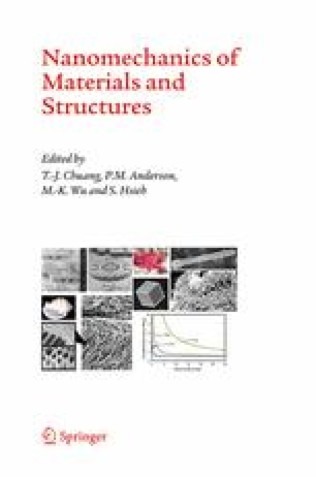
Nanomechanics of Materials and Structures
This book is derived from the proceedings of the International Workshop on Nanomechanics held at Asilomar Conference Grounds in Pacific Grove, California on July 14-17, 2004. The main objective was to convene leading researchers in the nanotechnology community to assess the current state-of-the-art and disseminate recent progress, critical issues, barriers to applications, and directions for future research in nanomechanics.
Nanomaterials in dental medicine
Presents varied clinical applications of nanomaterials in dentistry ranging from diagnostics to therapeutics. it discusses role of nanomaterials in clinical applications and future needs. Contributors are international luminaries in their respective research area. The topics covered in this book are role of nanomaterials in oral and dental diagnosis, dental disease prevention, pain free dentistry, dental implantology. It also discusses the therapeutic applications of nanoparticles in oral cancer therapy. This book will be a valuable reference for researchers, clinicians, students and professionals working in the areas of nanotechnology and health sciences. It will also be of interest to the students and researchers primarily working in the field of materials science, applied chemistry, applied physics, and biotechnology.

Nanomaterials in clinical therapeutics : Synthesis and applications
Nanotechnology-based applications is a rapidly growing field encompassing a diverse range of disciplines that impact our daily lives. Nanotechnology is being used to carry out large-scale reactions in practically every field of biotechnology and healthcare. The incredible progress being made in these applications is particularly true for the healthcare sector, where they are used in cancer detection and treatment, medical implants, tissue engineering, and so forth. Expansions in this discipline are expected to continue in the future, resulting in the creation of a variety of life-saving medical technology and treatment procedures.
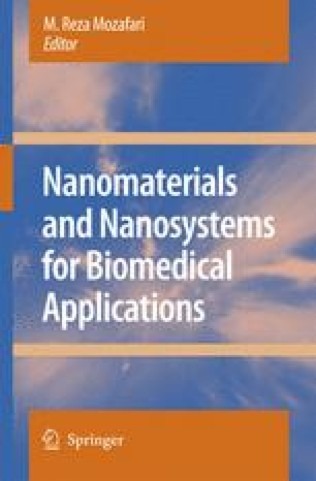
Nanomaterials and Nanosystems for Biomedical Applications
The book includes expert reviews on the advances and current problems associated with the implants and nanodevices along with their applications in medicine, pharmaceutics, cancer therapy, gene transfer and drug delivery. The editor, M. R. Mozafari (PhD), has been working in the field of nanobiotechnology for the past 14 years and has produced more than 60 publications.
Nanocarrier Technologies : Frontiers of Nanotherapy
Nanobiotechnology is one of the key technologies of the 21st century. It is a combination of nanoscience and biotechnology and covers areas ranging from gene transfer and nanoencapsulation to food technology. Nanocarriers are a leading nanobiotechnology tool with the ability to provide protection, site-specific delivery, enhanced bioavailability and controlled release of pharmaceuticals, genetic material, imaging agents, nutraceuticals and cosmetics to name a few. For this reason, the study of nanocarriers, their properties and applications has attracted a great deal of interest over recent years. Designed as an advanced survey of the field, this book describes the key research parameters of nanocarrier technologies including their preparation methods, evaluation of their safety and efficiency, their interaction with biologicals and their application in biotechnology, drug delivery, gene therapy and food technology areas.
