



الصفحة 2
الصفحة 2

New Vision of Metformin in treating cancer
The anti-diabetic drug metformin is rapidly emerging as a potential anticancer agent. Metformin is a biguanide that is effective in treating type 2 diabetes and the insulin resistance syndromes, improves insulin resistance by reducing hepatic gluconeogensis and by enhancing glucose uptake by skeletal muscle. Metformin can reduce the incidence of cancers and can reduce the mortality from cancers, increase the response to treatment cancer cells when using radiotherapy and chemotherapy, reduce the likelihood of relapse. Diabetes can be a factor in the occurrence of various types of cancer, and develop a variety of cancers such as colo-rectal, pancreas and liver cancers, compared to non-diabetic patients. Incidence of various cancers is high among patients of T2DM due to insulin resistance and mitogenic effects caused by hyperglycemia.

New Trends in Cancer for the 21st Century
It is difficult to imagine anyone who has not heard of cancer. This disease can affect families, friends or any one of us at any time in our lives. Every year nearly 3 million Europeans are diagnosed with cancer, leading to around 800,000 deaths per year. These deaths occur not only in aging populations, but also in children and adults who are in the most active period of their lives. This represents a tremendous problem that cannot be ignored by politicians or citizens. Fortunately, there is a constantly growing awareness that although cancer is a problem to be dealt with by clinicians, it should also be the concern of everyone. This volume contains the lectures held at the International Symposium on Cancer "New Trends in Cancer for the 21st Century". Fundamental researchers, politicians and representatives from patient coalitions share here their knowledge and interests as well as their concerns and experiences. Not only do these papers provide state-of-the-art information on cancer, they are also an opportunity to look at the problem from different points of view. It can be encouraging to realise that we are not alone in this fight.

New Technologies in Radiation Oncology
This book provides an overview of recent advances in radiation oncology, many of which have originated from physics and engineering sciences. After an introductory section on basic aspects of 3D medical imaging, the role of 3D imaging in the context of radiotherapy is explored in a series of chapters on the various modern imaging techniques. A further major section addresses 3D treatment planning for conformal radiotherapy, with consideration of both external radiotherapy and brachytherapy. Subsequently the modern techniques of 3D conformal radiotherapy are described, including stereotactic radiotherapy, intensity-modulated radiation therapy, image-guided and adaptive radiotherapy, and radiotherapy with charged particles. More clinically oriented chapters explore the use of brachytherapy in patients with prostate cancer, cardiovascular disorders and breast cancer. The book concludes with a section on quality assurance.

New strategies in treating and diagnosing of Myeloid Leukemia
Leukemia is a cancer of white blood cells. It is characterized by an abnormal accumulation of WBC in the bone marrow which leads to bone marrow failure. in this project, we will observe myeloid leukemias (acute & chronic), Clinical Practice Guidelines for leukemia provide recommendations on the diagnostic evaluation, and applied treatment in Syria and Germany for induction and consolidation for patients and we're going to devote a special paragraph on therapy with monoclonal antibodies. Gilteritinib are new therapies for acute myeloid leukemia and we're going to suggest them in detail.

New pharmacological hypothesis for cancer therapy and treatment
Despite the considerable development of new cancer drugs the mortality remains high and the improvement in survival rate remains poor compared to the number of new concepts of cancer therapy in which we will review in our study and we will focus on two possible reasons for that delay in success such as the limitation of diagnostic tools to perform early detection for the tumor in a stage where it can be well treated or even cured as it is often a silent disease in the start phase of it...

New Perspectives in Magnesium Research : Nutrition and Health
New Perspectives in Magnesium Research is essential reading for researchers in magnesium and calcium field, nutrition, and specialists in many areas (cardiologists, neurologists, orthopeadic specialists etc.)

New diagnostic method th detect peritoneal metastases in colorectal cancer
Colorectal cancer is the third common reason of death in population worldwide therefore we will focus in our study about description of this type of cancer and its symptoms to raise the public awareness to go to the right specialist as soon as the symptoms appear to improve early detection of this disease and the overall survival and we will highlight the best diet and life style to avoid this type of cancer hopefully beside that we will present all the most successful therapies of this disease from different classes of compounds such as chemotherapy or anti angiogenic and Metformin and other bacterial therapy however the major goal of the experimental part of this research is performed to establish a new promising diagnostic tool by Near Infra-red camera after injection of indyocine green to detection the peritoneal metastasis of colorectal in 15 patients since this kind of metastasis

New Challenges in Gastrointestinal Endoscopy
Gastrointestinal (GI) endoscopy has become indispensable in both diagnosis and treatment of GI disorders. It has been 10 years now since the first Endoscopy Forum Japan was held, and in that time, leading young endoscopists, including colleagues from Asia, Australia, Europe, and the United States, have participated in the forum, discussing issues at the forefront of the field. Through their efforts, GI endoscopy has advanced with many new methods for both diagnoses and treatments, and those achievements are included in this book. Contributing to the development of endoscopic medicine all over the world, this is a groundbreaking, edifying, and engrossing publication offering the most recent advances in the field, precisely presented and depicted with more than 250 color photographs. Novel technologies are described in detail and will be of interest to those in the field of medicine and in engineering as well.

Neuroendocrine cells and peptidergic innervation in human and rat prostrate
Introduction The prostate causes a signi?cant number of medical problems in the adult male, and the lower urinary tract symptoms are accepted as an unavoidable consequence of male aging. Most of these symptoms are mainly due to clinical benign prostatic hyperplasia (BPH), which is the most frequent benign tumor in the male, in- pendent of race or culture. On the other hand, cancer of the prostate shows an increasing incidence, being the second leading cause of death in men, after lung cancer.

Natural products and human diseases : Pharmacology, molecular targets, and therapeutic benefits
Provides insight into the clinical and translational application of natural products in human diseases Details the impact of natural products on a molecular basis Describes the identification of biomarkers, therapeutic effects of phytochemicals, and and new targets
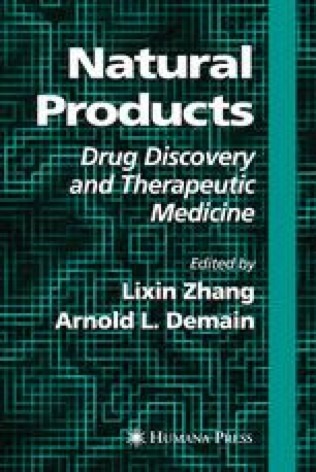
Natural Products : Drug Discovery and Therapeutic Medicine
Although the natural product drug discovery programs of the large drug companies are now equaled by programs for the high throughput screening of synthetic compounds generated through combinatorial chemistry, natural compounds still hold great promise to overcome such problems as antibiotic resistance, the emergence of new diseases, the failure to conquer old diseases, and the toxicity of some contemporary medical products. In Natural Products: Drug Discovery and Therapeutic Medicine, a panel of recognized experts and leaders in the field discuss the past successes of natural products as medicines and review future possibilities arising from both conventional and new technologies. High-performance liquid chromatography profiling, combinatorial synthesis, genomics, proteomics, DNA shuffling, bioinformatics, and genetic manipulation all now make it possible to rapidly evaluate the activities of extracts as well as purified components derived from microbes, plants, and marine organisms. The authors apply these methods to new natural product drug discovery, to accessing microbial diversity, to investigating specific groups of products (Chinese herbal drugs, antitumor drugs from microbes and plants, terpenoids, and arsenic compounds), and to exploiting specific sources (the sea, rainforest, and endophytes). These new opportunities show how research and development trends in the pharmaceutical industry can advance to include both synthetic compounds and natural products, and how this paradigm shift can be more productive and efficacious.
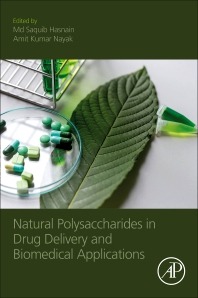
Natural Polysaccharides in Drug Delivery and Biomedical Applications
Provides a fundamental overview of natural polysaccharides, their sources, extraction methodologies, and characterizations. It covers specific natural polysaccharides and their effective application in drug delivery and biomedical use. Additionally, chapters in the book discuss key topics including the sources and extraction methodologies of natural polysaccharides, their role in tissue engineering applications, polysaccharide-based nanoparticles in biomedical applications, and their role in the delivery of anticancer drugs. Written by industry leaders and edited by experts, this book emphasizes recent advances made in the field.Natural Polysaccharides in Drug Delivery and Biomedical Applications provides academics, researchers, and pharmaceutical health care professionals with a comprehensive book on polysaccharides in pharmaceutical delivery process.

Natural occurrence and biological activities of quinoline derivatives
Provides a comprehensive overview of quinoline derivatives, focusing on their chemical structure, biological activities, and therapeutic benefits. It delves into the natural sources of these derivatives, covering their isolation, characterization, and potential therapeutic applications, particularly in areas such as anti-cancer, anti-inflammatory, antimicrobial, and antimalarial activity. With its emphasis on providing valuable reference material, this book is an indispensable resource for researchers, educators, and professionals in the fields of chemistry, biology, pharmacology, and drug discovery.

Natural Compounds as Drugs ; Vol. II
This book highlights new trends and aspects in natural products research. It discusses the biodiversity-driven approaches which are now of eminent importance in natural products research, addressing the question why natural products display such a complex chemical information, what makes them often unique and what their characteristics are. Practical questions such as supply of natural substances and production optimization strategies are also covered.

Nanotechnology applied To pharmaceutical technology
Focuses on devising innovative nanopharmaceutical products and solutions to treat such diseases as cancer, infections, eye diseases, and in tackling multi-drug resistance threats. Nanotechnology Applied to Pharmaceutical Technology consists of four sections that include coverage of biosynthesis of nanoparticles, nano-material based formulations and toxicity, and safety issues.

Nanopharmaceuticals : Vol.3 : Principles and applications
Focuses on the recent advances of nanopharmaceuticals in cancer, dental, dermal and drug delivery applications and presents their safety, toxicity and therapeutic efficacy. The book also includes the transport phenomenon of nanomaterials and important pathways for drug delivery applications. It goes on to explain the toxicity of nanoparticles to different physiological systems and methods used to assess this for different organ systems using examples of in vivo systems.
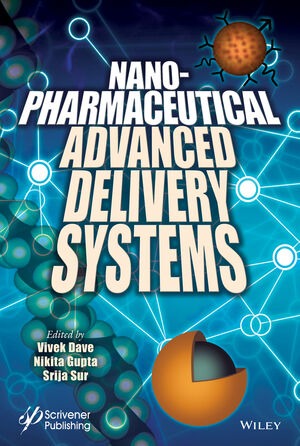
Nanopharmaceutical advanced delivery systems
Provides a single volume covering detailed descriptions about various delivery systems, their principles and how these are put in use for the treatment of multiple diseases. It is divided into four sections where the first section deals with the introduction and importance of novel drug delivery system. Deals with the most advanced drug delivery systems like microbubbles, dendrimers, lipid-based nanoparticles, nanofibers, microemulsions etc., describing the major principles and techniques of the preparations of the drug delivery systems. Elaborates on the treatments of diverse diseases like cancer, topical diseases, tuberculosis etc.

Nanoparticle-Based Drug Delivery in Cancer Treatment
Discusses nanotechnological developments of interfering RNA-based nanoparticles, delivery vehicles, and validated therapeutic RNAi–molecular target interactions and explains the results of clinical and preclinical trials. The book also gives strategies for universal methods of constructing hybrid organic–inorganic nanomaterials that can be widely applied in the biomedical field. Focuses on : Recent advances of nanoparticle-mediated siRNA delivery systems and their application in clinical trials for cancer therapy Material platforms that establish NPs and both localized and controlled gene silencing The most promising systems for clinical application Surveys progress in nanoparticle-based nanomedicine in cancer treatment The most advanced of the nonviral nanocarriers for delivery of oligonucleotides to malignant blood cancer cells

Nanoparticle-based cancer vaccines
Reviews the fundamentals of cancer vaccines, explores the role of nanotechnology in improving vaccine design and delivery, and evaluates current clinical applications, challenges, and regulatory considerations, highlighting the potential of nanoparticle-based cancer vaccines in future cancer treatment.

Nanomedicine : Innovations, applications, and breakthroughs in the quest for health and medicine's future
Revolutionizing healthcare, by providing innovative solutions to some of the most challenging issues in medicine. This book provides an in-depth overview of nanoscale materials and devices that are advancing diagnostics, therapeutics, and personalized care in medical field. It focuses on nanomedicine’s impact on vaccine efficacy as well as innovative diagnosis and therapy for various type of cancer while addressing concerns about safety and toxicity. It examines how nanotechnology is enhancing drug delivery by precisely targeting medicines to specific cells or tissues, thereby increasing treatment efficacy with reduced side effects. Explores how nanoparticles are advancing medical imaging for earlier and more accurate disease detection, and how nanosensors allow real-time biomarker monitoring for faster and more reliable diagnoses. Additionally, it explores nanomedicine's role in managing cardiovascular diseases, improving bone health through nano-extracellular vesicles, and regenerative medicine, including ongoing clinical trials and ethical considerations.
