



الصفحة 18
الصفحة 18
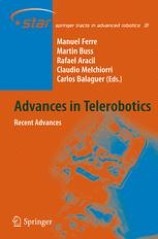
Advances in Telerobotics
The main purpose of this book is to provide readers with recent advances in the field of Telerobotics. It describes methods, experimental results, applications, and developments, highly relevant for scientists, researchers, and students in Teleoperation. This book is structured in three parts: I. Human System Interfaces, II. Control, and III. Applications. Chapters in part I concentrate on human interface technology which allows a human operator to close the control loop of a remote robot. Topics related to control algorithms - in particular for the case with time delay in the communication network - are the focus in part II, concentrating on bilateral control methods. Part III presents a variety of advanced applications in surgery, space, and other fields relevant to everyday life.

Advances in public economics : Utility, choice and welfare
This Festschrift in honor ofChristian Seidl combines a group of prominent authors who are experts in areas like public economics, welfare economic, decision theory, and experimental economics in a unique volume. He has dedicated most of his research to utility and decision theory, social choice theory, welfare economics, and public economics.

Advances in multiple Sclerosis and Experimental Demyelinating Diseases
Challenging Charcot’s hypothesis that inflammatory response is the primary contributor to demyelination, Dr. Rodriguez and colleagues take a fresh, bold look at the causes and possible treatments of MS.Assuming oligodendrocyte injury as a prerequisite to MS, the authors explore viruses, toxins and genetic defects as possible culprits. They present novel methods to interrupt and reverse demyelination. This book examines the correlation between axonal loss and clinical deficits, including the implied role of the CD8+ T cell and perforin. It assesses proteases, specifically, kallikrein 6, which are strongly associated with active demyelination. By directing natural autoantibodies against oligodendrocytes that demonstrate remyelination in animal models, the authors envision clinical trials for remyelination enhancement.
Advances in Mechanics of Materials for Environmental and Civil Engineering
Deals with both mathematical modeling and experimental studies related to systems relevant for various civil engineering fields. The book addresses several key topics, including artificial intelligence applied to the control and monitoring of construction site personnel, finite element models for endplate beam-to-column connections under various load conditions, random functionally graded micropolar beams, and many others. The book explores the design and study of microstructures aimed at increasing the toughness and durability of novel materials in building and construction, based also on the re-utilization of residues and wastes of metallurgical industry produces.
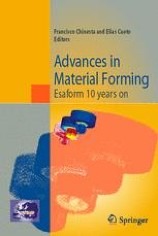
Advances in Material Forming ; Esaform 10 years on
This book groups the main advances in material forming, considering different p- cesses (conventional and non-conventional) focusing in polymers, composites and metals, that are analyzed from the state of the art, describing the most significant recent advances and identifying the present challenges from the experimental, modeling and numerical points of view. Chapters include a large list of references and have been wr- ten by recognized specialists. Special emphasis is devoted to the contributions of the European Scientific Association on Material Forming (ESAFORM) during the last 10 years (1998-2007) and in particular the ones coming from its annual international conference. The first chapter includes an excellent introduction to the Esaform association.
Advances in Industrial Engineering and Operations Research
Advances in Industrial Engineering and Operations Research compiles revised and extended articles written by prominent researchers participating in the International MultiConference of Engineers and Computer Scientists (IMECS) 2007. This volume addresses manufacturing processes and methods, optimization, experimental engineering design, and reliability and quality control techniques.

Advances in artificial life ; 8th European Conference, ECAL 2005 , Canterbury, UK, September 5-9, 2005, Proceedings
The Artificial Life term appeared more than 20 years ago . Since then the area has developed dramatically, many researchersjoining enthusiastically and research groups sprouting everywhere.a conceptual track, where papers were judged on criteria like importance and/or novelty of the concepts proposed rather than the experimental / theoretical results, has been introduced this year. A conference on a theme as broad as Artificial Life is bound to be very di-verse, but a few tendencies emerged. First, fields like ‘Robotics and Autonomous Agents’ or ‘Evolutionary Computation’are still extremely active and keep onbringing a wealth of results to the A-Life community. Even there, however, new tendencies appear, like collective robotics, and more specifically self-assembling robotics, which represent now a large subsection. Second, new areas appear.‘Morphogenesis and Development’ which used to be the subject of only a fewpapers, is now one of the largest subsections, and seems to be on the brinkof becoming a field of its own. Finally, most classical themes of A-Life re-search like ‘Artificial Chemistry’, ‘Ant-Inspired Systems’, ‘Cellular Automata’,‘Self-Replication’, ‘Social Simulations’ or ‘Bio-realist Simulations’ are still goingstrong and are well represented within this volume.

Advances in Ad Hoc and Sensor Networks
This volume provides a complete survey of the state-of-the-art research that encompasses all areas of ad hoc and sensor networks. These chapters focus on the theoretical and experimental study of advanced research topics involving security and trust, broadcasting and multicasting, power control and energy efficiency, and QoS provisioning.

Advanced materials in smart building skins for sustainability : From nano to macroscale
Demonstrates the importance of smart and dynamic building skins in in sustainable buildings / Provides the scientific basis for integration of nanoscale materials in building envelopes with enhanced performance / Illustrates engineering solution and design process incorporating advanced materials in applications of building skins. / Updates readers on the key areas of smart building skins embodied in the novel advanced materials with unique structures and smart properties that enable multiple functions in energy efficiency, solar harvesting, and environmental greenness. It synergistically integrates the topics and knowledge of material design and experimental studies, theoretical analyses of building energy-saving mechanisms and solar energy utilization, and new design methodologies and processes taking advanced materials into account at different scales - from nano to the macroscale.

Advanced Magnetic Nanostructures
Advanced Magnetic Nanostructures is devoted to the fabrication, characterization, experimental investigation, theoretical understanding, and utilization of advanced magnetic nanostructures. Focus is on various types of 'bottom-up' and 'top-down' artificial nanostructures, as contrasted to naturally occurring magnetic nanostructures, such as iron-oxide inclusions in magnetic rocks, and to structures such as perfect thin films. Industrial and academic researchers in magnetism and related areas such as nanotechnology, materials science, and theoretical solid-state physics will find this book a valuable resource.

Advanced Experimental Methods For Noise Research in Nanoscale Electronic Devices
The approach described is to create methods for experimental observations of noise sources, their localization and their frequency spectrum, voltage-current and thermal dependences. Our current knowledge of measurement methods for mesoscopic devices is summarized to identify directions for future research, related to downscaling effects. The directions for future research into fluctuation phenomena in quantum dot and quantum wire devices are specified. Nanoscale electronic devices will be the basic components for electronics of the 21st century. From this point of view the signal-to-noise ratio is a very important parameter for the device application. Since the noise is also a quality and reliability indicator, experimental methods will have a wide application in the future.
Adaptive-robust control with limited knowledge on systems dynamics : An artificial input delay approach and beyond
investigates the role of artificial input delay in approximating unknown system dynamics, referred to as time-delayed control (TDC), and provides novel solutions to current design issues in TDC. Its central focus is on designing adaptive-switching gain-based robust control (ARC) for a class of Euler–Lagrange (EL) systems with minimal or no knowledge of the system dynamics parameters. The newly proposed TDC-based ARC tackles the commonly observed over- and under-estimation issues in switching gain. The consideration of EL systems lends a practical perspective on the proposed methods, and each chapter is supplemented by relevant experimental data
Adaptive Low-Power Circuits for Wireless Communications
Adaptive radio transceivers require a comprehensive theoretical framework in order to optimize their performance. Adaptive Low-Power Circuits for Wireless Communications provides this framework with a discussion of joint optimization of Noise Figure and Input Intercept Point in receiver systems. Original techniques to optimize voltage controlled oscillators and low-noise amplifiers to minimize their power consumption while maintaining adequate system performance are also provided. The experimental results presented at the end of the book confirm the utility of the proposed techniques.

Acute Endocrinology : From Cause to Consequence
The integration of endocrinology in critical care medicine has led to new experimental and clinical data on the complex endocrine and metabolic derangements accompanying non-endocrine severe illnesses. The joining of these two disciplines has generated important novel insights with significant clinical implications. Acute Endocrinology: From Cause to Consequence compiles these new findings into an important and highly relevant new resource.

Active Flow Control ; Papers contributed to the Conference “Active Flow Control 2006”, Berlin, Germany, September 27 to 29, 2006
This volume contains a well balanced combination of theoretical and experimental state-of-the-art results of Active Flow Control. It combines new developments in actuator technology, sensing, robust and optimal open- and closed-loop control and model reduction for control. Numerical and experimental applications are considered from aeronautics, turbo-machinery and combustors.

Acoustic sensing techniques for the shallow water environment : Inversion methods and experiments
Contains the collection of papers from the second workshop on Experimental Acoustic Inversion Techniques for Exploration of the Shallow Water Environment. Acoustic techniques provide the most effective means for remote sensing of ocean and sea floor processes, and for probing the structure beneath the sea floor. No other energy propagates as efficiently in the ocean: radio waves and visible light are severely limited in range because the ocean is a highly conductive medium. However, sound from breaking waves and coastal shipping can be heard throughout the ocean, and marine mammals communicate acoustically over basin scale distances.
Accelerator-Driven System at Kyoto University Critical Assembly
This book is a unique compilation of experimental benchmark analyses of the accelerator-driven system (ADS) at the Kyoto University Critical Assembly (KUCA) on the most recent advances in the development of computational methods.

A Guide to Lead-free Solders : Physical Metallurgy and Reliability
While tin/lead solders have dominated the electronics industry for many years, environmental considerations and new legislation are forcing change. Backed by more than ten years of research in Pb-free solders, many electronics manufacturers are poised for conversion. A Guide to Lead-free Solders is intended as a tool to help industry as it moves into a new era in the production and use of solders. An overview of the principles of soldering technology is provided beginning with the theory underlying each concept. Focusing on the most up-to-date methods for testing and characterization, these theories are then reinforced by experimental examples and industrial applications.

A Computer Scientists Guide to Cell Biology
Provides a succinct treatment of the general concepts of cell biology, furnishing the computer scientist with the tools necessary to read and understand current literature in the field.After a brief introduction to cell biology, the text focuses on the principles behind the most-widely used experimental procedures and mechanisms, relating them to well-understood concepts in computer science. The presentation of the material has been prepared for the reader’s quick grasp of the topic: comments on nomenclature and background notes can be ascertained at a glance, and essential vocabulary is boldfaced throughout the text for easy identification.
3D-Position Tracking and Control for All-Terrain Robots
Rough terrain robotics is a fast evolving field of research and a lot of effort is deployed towards enabling a greater level of autonomy for outdoor vehicles. This book demonstrates how the accuracy of 3D position tracking can be improved by considering rover locomotion in rough terrain as a holistic problem. In this work, a mechanical structure allowing smooth motion across obstacles with limited wheel slip is used. In particular, it enables the use of odometry and inertial sensors to improve the position estimation in rough terrain. A method for computing 3D motion increments based on the wheel encoders and chassis state sensors is developed. The algorithm runs online and can be adapted to any kind of passive wheeled rover. Finally, sensor fusion using 3D-Odometry, inertial sensors and visual motion estimation based on stereovision is presented. The experimental results demonstrate how each sensor contributes to increase the accuracy and robustness of the 3D position estimation.
