



الصفحة 15
الصفحة 15

Interface Oral Health Science 2007 ; Proceedings of the 2nd International Symposium for Interface Oral Health Science, Held in Sendai, Japan, Between 18 and 19 February, 2007
Interface Oral Health Science is a major theme for next-generation dental research. That theme is based on the innovative concept that healthy oral function is provided by biological and biomechanical harmony among three systems: oral tissues including the teeth, mucosa, bones, and muscles (host); parasitic microorganisms of the oral cavity (parasites); and biomaterials. The concept posits that oral diseases such as dental caries, periodontal disease, and tempo- mandibular disorders should be interpreted as interface diseases that result from disruption of the intact interfaces among these systems. The uniqueness of this concept rests on the fact that it not only encompasses the entire fi eld of dentistry and dental care, but also expands the common ground shared with many other fields, including medicine, pharmaceutical science, agriculture, material science, and engineering.

Interactions Between Neurons and Glia in Aging and Disease
The subject material covered by the book is a crucial competitive area with critical implications for human health and will be of key interest to the scientific community. This unique volume will be invaluable not only to those interested in neuroscience, but also cell biology, molecular biology, biochemistry, and pharmaceutical sciences.

Intelligent Systems for Sustainable Person-Centered Healthcare
This book establishes a dialog among the medical and intelligent system domains for igniting transition toward a sustainable and cost-effective healthcare. The Person-Centered Care (PCC) positions a person in the center of a healthcare system, instead of defining a patient as a set of diagnoses and treatment episodes. The book discusses intelligent systems and their applications for healthcare data analysis, decision making and process design tasks. The measurement systems and efficiency evaluation models analyze ability of intelligent healthcare system to monitor person health and improving quality of life.

Intelligent Computing ; Proceedings of the 2021 Computing Conference ; Vol.1
This book is a comprehensive collection of chapters focusing on the core areas of computing and their further applications in the real world. Each chapter is a paper presented at the Computing Conference 2021 held on 15-16 July 2021. Computing 2021 attracted a total of 638 submissions which underwent a double-blind peer review process. Of those 638 submissions, 235 submissions have been selected to be included in this book. The goal of this conference is to give a platform to researchers with fundamental contributions and to be a premier venue for academic and industry practitioners to share new ideas and development experiences.
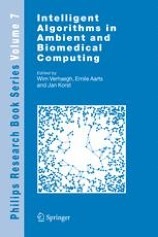
Intelligent Algorithms in Ambient and Biomedical Computing
The rapid growth in electronic systems in the past decade has boosted research in the area of computational intelligence. As it has become increasingly easy to generate, collect, transport, process, and store huge amounts of data, the role of intelligent algorithms has become prominent in order to visualize, manipulate, retrieve, and interpret the data. For instance, intelligent search techniques have been developed to search for relevant items in huge collections of web pages, and data mining and interpretation techniques play a very important role in making sense out of huge amounts of biomolecular measurements. As a result, the added value of many modern systems is no longer determined by hardware only, but increasingly by the intelligent software that supports and facilitates the user in realizing his or her objectives.

Intelligence and Security Informatics ; Vol. 3975 ; IEEE International Conference on Intelligence and Security Informatics, ISI 2006, San Diego, CA, USA, May 23-24, 2006.
In the past few years, intelligence and security informatics (ISI) research, which is concerned with the study of the development and use of advanced information te- nologies and systems for national and international security-related applications, has experienced tremendous growth and attracted substantial interest from academic - searchers in related fields as well as practitioners from both government agencies and industry. The ISI community is maturing, and a core set of research methodologies and technical approaches has emerged and is becoming the underpinning of ISI research.

Intelligence and Security Informatics ; Vol. 3917 ; International Workshop, WISI 2006, Singapore, April 9, 2006, Proceedings
Intelligence and security informatics (ISI) can be broadly defined as the study of the development and use of advanced information technologies and systems for national and international security-related applications. The First and Second Symposiums on ISI were held in Tucson, Arizona, in 2003 and 2004, respectively. In 2005, the IEEE International Conference on ISI was held in Atlanta, Georgia. These ISI conferences brought together academic researchers, law enforcement and intelligence experts, information technology consultants and practitioners to discuss their research and practice related to various ISI topics including ISI data management, data and text mining for ISI applications, terrorism informatics, deception detection, terrorist and criminal social network analysis, crime analysis, monitoring and surveillance, policy studies and evaluation, and information assurance, among others. We continued these stream of ISI conferences by organizing the Workshop on Intelligence and Security Informatics (WISI 2006) in conjunction with the Pacific Asia Conference on Knowledge Discovery and Data Mining (PAKDD 2006).
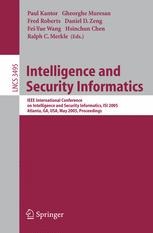
Intelligence and security informatics ; Vol. 3495 : IEEE International Conference on Intelligence and Security Informatics, ISI 2005, Atlanta, GA, USA, May 19-20, 2005, Proceedings
Intelligence and security informatics (ISI) can be broadly defined as the study of the development and use of advanced information technologies and systems for national and international security-related applications, through an integrated technological, organizational, and policy-based approach. In the past few years, ISI research has experienced tremendous growth and attracted substantial interest from academic researchers in related fields as well as practitioners from both government agencies and industry. The first two meetings (ISI 2003 and ISI 2004) in the ISI symposium and conference series were held in Tucson, Arizona, in 2003 and 2004, respectively. They provided a stimulating intellectual forum for discussion among previously disparate communities: academic researchers in information technologies, computer science, public policy, and social studies; local, state, and federal law enforcement and intelligence experts; and information technology industry consultants and practitioners.

Intelligence and security informatics ; 1st European Conference, EuroISI 2008, Esbjerg, Denmark, December 3-5, 2008. Proceedings
This book constitutes the refereed proceedings of the First European Conference on Intelligence and Security Informatics, EuroISI 2008, held in Esbjerg, Denmark, in December 2008.The 23 revised full papers and 2 revised poster papers presented were carefully reviewed and selected from 48 submissions. The papers are organized in topical sections on criminal and social network analysis, intelligence analysis and knowledge discovery, Web-based intelligence monitoring and analysis, privacy protection, access control, and digital rights management, malware and intrusion detection, as well as surveillance and crisis management.

Integration of Insect-Resistant Genetically Modified Crops within IPM Programs
The goal of this book is to provide an overview on the role insect-resistant GM plants play in different crop systems worldwide. We hope that the book will contribute to a more rational debate about the role GM crops can play in IPM for food and fiber production.

Integration in Respiratory Control : From Genes to Systems
This volume comprises the proceedings of the 10th Oxford Conference held at Lake Louise, Alberta, Canada, in September, 2006. The volume will be of interest to clinicians working with patients with breathing disorders.

Integration / Interaction of Oncologic Growth
The present multi-volume Book Series, CANCER GROWTH AND PROGRESSION, encompasses the widest possible framework of cutting edge research in the field of neoplastic pathology and other integrated fields. The individual volumes in this series focus on the topics of highest scientific interest for basic and clinical researchers, pathologists, medical and surgical oncologists and allied multidisciplinary teams interested in the study of these aspects of neoplastic growth, progression and inhibition. The range of topics covered is extensive.

Integrated Management of Diseases Caused by Fungi, Phytoplasma and Bacteria
This book is about stone fruit and apple diseases, grapevine and fruit crops phytoplasma, Phytophthora on citrus, chestnut diseases, esca complex on grapevine and Rosellinia necatrix root rot. Includes models for potato late blight management and management of bacteria and DNA fingerprinting.

Integrated Management and Biocontrol of Vegetable and Grain Crops Nematodes
The second volume of the IMPD series describes aspects related to most important phytoparasitic nematodes, considering the integration of biological control methods with other management practices and technologies, including the use of predatory nematodes and microbial rhizosphere antagonists. Chapters cover topics like the mode of action and interactions of nematophagous fungi, the efficacy of controll and management of plant parasitic nematode communities through a soil conservation approach, and exploitation of nematodes-bacteria antagonistic relationships.

Integrated diagnostics and theranostics of thyroid diseases
Provides basic concepts on Integrated Diagnostics and Theranostics with special emphasis on different human thyroid diseases. Thyroid diseases are increasingly detected (incidentally in many cases) but are clinically negligible in a significant proportion of patients. Accordingly, it is urgent to move from the simple disease detection to a reliable disease characterization in order to concentrate efforts on patients in need of tailored disease management.

Integrated Biochips for DNA Analysis
The objective of this book is to provide up-to-date coverage of some of the emerging developments in the field of integrated DNA biochips. It will prove a useful source of information for researchers in the field and for those who are just entering the field of biochip research.

Insights into Receptor Function and New Drug Development Targets
G-Protein Coupled receptors (GPCRs) and other receptors are significant targets for drug discovery, due to their roles in fundamental physiological processes. Among these roles are: regulation of growth, food intake, reproduction, water balance, sensory perception, blood pressure and heart rate. GPCR-directed drugs account for approximately $40 billion in sales and, of drugs at market, approximately 70% target GPCR function. The availability of combinatorial chemistry coupled with high throughput screening techniques have facilitated discovery of peptidic and non-peptidic ligands of membrane receptors. Mutant receptor models have revealed their role in health and disease and provided insight to new therapeutic approaches, based on control of protein trafficking. Understanding receptor-receptor interactions has provided one mechanism for receptor cross-talk and revealed unexpected interactions.

Insects as natural enemies : A practical perspective
This book it is an account of major aspects of the biology of predators and parasitoids, punctuated with information and advice on which experiments or observations to conduct, and how to carry them out. Guidance is provided, where necessary, on the literature that may need to be consulted on particular topics.

Insects and Ecosystem Function
In the past two decades, an increasing number of ecologists have started to investigate the importance of biodiversity for ecological processes such as energy flow and nutrient cycling, often referred to as 'ecosystem functioning'. Insects are a dominant component of biodiversity in terrestrial ecosystems and play a key role in mediating the relationship between plants and ecosystem processes. This volume is the first to summarize their effects on ecosystem functioning, focusing mainly, but not exclusively, on herbivorous insects. Renowned authors with extensive experience in the field of plant-insect interactions, contribute to the volume using examples from their own work. In addition to providing concise reviews of the field, this volume discusses in detail the advantages and disadvantages of various techniques of manipulating insect herbivory. Thus, the text provides both a theoretical basis as well as practical advice for future manipulative studies of biodiversity-ecosystem functioning.

Insecticides Design Using Advanced Technologies
Among the highlights of this book are the use of nanotechnology to increase potency of available insecticides, the use of genetic engineering techniques for controlling insect pests, the development of novel insecticides that bind to unique biochemical receptors, the exploration of natural products as a source for environmentally acceptable insecticides, and the use of insect genomics and cell lines for determining biological and biochemical modes of action of new insecticides.
