



الصفحة 13
الصفحة 13
Algorithmic Foundations of Robotics VI
Robot algorithms are abstractions of computational processes that control or reason about motion and perception in the physical world. Because actions in the physical world are subject to physical laws and geometric constraints, the design and analysis of robot algorithms raises a unique combination of questions in control theory, computational and differential geometry, and computer science. Algorithms serve as a unifying theme in the multi-disciplinary field of robotics. This volume consists of selected contributions to the sixth Workshop on the Algorithmic Foundations of Robotics. This is a highly competitive meeting of experts in the field of algorithmic issues related to robotics and automation.

Algorithmic Foundation of Robotics VII : Selected Contributions of the 7th International Workshop on the Algorithmic Foundations of Robotics
This book contains the proceedings from the 2006 Workshop on the Algorithmic Foundations of Robotics. The 32 papers in this book span a wide variety of topics: from fundamental motion planning algorithms to applications in medicine and biology, but they have in common a foundation in the algorithmic problems of robotic systems.

AI*IA 2007 : Artificial intelligence and human-oriented computing ; 10th Congress of the Italian Association for Artificial Intelligence, Rome, Italy, September 10-13, 2007, Proceedings
The book is organized in topical sections on knowledge representation and reasoning, multiagent systems, distributed AIai, knowledge engineering, ontologies and the semantic Web, machine learning, natural language processing, information retrieval and extraction, planning and scheduling, AI and applications. Three special tracks depicting progresses in significant application fields that represent increasingly relevant topics contain 18 additional papers on AI and robotics, AI and expressive media, and intelligent access to multimedia information

AI*IA 2005 : Advances in artificial intelligence ; 9th congress of the Italian Association for Artificial Intelligence Milan, Italy, September 21-23, 2005, Proceedings
This volume collects the papers selected for presentation at the IX Congress of the Italian Association for Arti?cial Intelligence (AI*IA), 2005 On the one hand this congress continues the tradition of AI*IA in organizing its biannual s- enti?c meeting from 1989; on the other hand, this edition is a landmark in the involvement of the international community of arti?cial intelligence (AI), directly involving a broad number of experts from several countries in the P- gramCommittee. Moreover,the peculiar nature of scienti?c researchin arti?cial intelligence (which is intrinsically international) and several consolidated int- national collaborations in projects and mobility programs allowed the collection and selection of papers from many di?erent countries, all around the world, enlarging the visibility of the Italian contribution within this research ?eld. Arti?cial intelligence is today a growing complex set of conceptual, theor- ical, methodological, and technological frameworks, o?ering innovative com- tational solutions in the design and development of computer-based systems. Within this perspective, researchers working in this area must tackle a broad range of knowledge about methods, results, and solutions coming from di?erent classical areas of this discipline. The congress was designed as a forum allowing researchers to present and discuss specialized results as general contributions to AI growth.
AI in learning : Designing the future
AI (artificial intelligence) is predicted to radically change teaching and learning in both schools and industry causing radical disruption of work. AI can support well-being initiatives and lifelong learning but educational institutions and companies need to take the changing technology into account. Moving towards AI supported by digital tools requires a dramatic shift in the concept of learning, expertise and the businesses built off of it. Based on the latest research on AI and how it is changing learning and education, this book will focus on the enormous opportunities to expand educational settings with AI for learning in and beyond the traditional classroom. This book also introduces ethical challenges related to learning and education, while connecting human learning and machine learning.
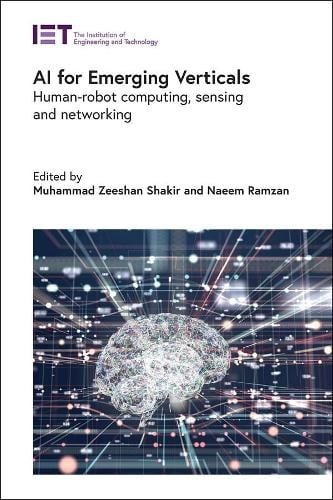
AI For Emerging Verticals : Human-robot computing, sensing and networking
Artificial intelligence (AI) and machine learning (ML) will play a major role. By adopting AI software and services, businesses can create predictive strategies, enhance their capabilities, better interact with customers, and streamline their business processes. Explores novel concepts and cutting-edge research and developments towards designing these fully automated advanced digital systems. Fostered by technological advances in artificial intelligence and machine learning, such systems potentially have a wide range of applications in robotics, human computing, sensing and networking. The chapters focus on models and theoretical approaches to guarantee automation in large multi-scale implementations of AI and ML systems; protocol designs to ensure AI systems meet key requirements for future services such as latency; and optimisation algorithms to leverage the trusted distributed and efficient complex architectures.

AI based Robot Safe Learning and Control
This book mainly focuses on the safe control of robot manipulators. The control schemes are mainly developed based on dynamic neural network, which is an important theoretical branch of deep reinforcement learning.

AI 2007: Advances in artificial intelligence ; 20th Australian Joint Conference on Artificial Intelligence, Gold Coast, Australia, December 2-6, 2007, Proceedings
The book is organized in topical sections on machine learning, neural networks, evolutionary computing, constraint satisfaction, satisfiability, automated reasoning, knowledge discovery, robotics, social intelligence, ontologies and semanti.

AI 2006 : Advances in artificial intelligence ; 19th Australian Joint Conference on Artificial Intelligence, Hobart, Australia, December 4-8, 2006, Proceedings
This volume contains the proceedings of the 19th Australian Joint Conference on Artificial Intelligence (AI 2006) held at Hobart, Australia. AI 2006 received a record number of submissions, a total of 689 submissions from 35 countries. The papers in this volume give an indication of recent advances in artificial int- ligence. The topics covered include Machine Learning, Robotics, AI Applications, Planning, Agents, Data Mining and Knowledge Discovery, Cognition and User Interface, Vision and Image Processing, Information Retrieval and Search, AI in the Web, Knowledge Representation, Knowledge-Based Systems, and Neural Networks.

AI 2004 : Advances in artificial intelligence ; 17th Australian Joint conference on artificial intelligence, Cairns, Australia, December 4-6, 2004, proceedings
AI 2004 was the seventeenth in the series of annual Australian artificial intelli-gence conferences. This conference is the major forum for artificial intelligenceresearch in Australia. It has consistently attracted strong international partic-ipation. This year more than two thirds of the submissions were from outsideAustralia.The current volume is based on the proceedings of AI 2004. AI 2004 was collo-cated with Complex 2004, the 7th Asia-Pacific Conference on Complex Systems,with the aim of promoting cross-fertilization and collaboration in areas of com-plex and intelligent systems

Aggregation functions : A guide for practitioners
Aggregation of information is of primary importance in the construction of knowledge based systems in various domains, ranging from medicine, economics, and engineering to decision-making processes, artificial intelligence, robotics, and machine learning. This book gives a broad introduction into the topic of aggregation functions, and provides a concise account of the properties and the main classes of such functions, including classical means, medians, ordered weighted averaging functions, Choquet and Sugeno integrals, triangular norms, conorms and copulas, uninorms, nullnorms, and symmetric sums. It also presents some state-of-the-art techniques, many graphical illustrations and new interpolatory aggregation functions. A particular attention is paid to identification and construction of aggregation functions from application specific requirements and empirical data. This book provides scientists, IT specialists and system architects with a self-contained easy-to-use guide, as well as examples of computer code and a software package. It will facilitate construction of decision support, expert, recommender, control and many other intelligent systems.

Affective computing and intelligent interaction ; 2nd International Conference, ACII 2007, Lisbon, Portugal, September 12-14, 2007, Proceedings
Organized in topical sections on affective facial expression and recognition, affective body expression and recognition, affective speech processing, affective text and dialogue processing, recognising affect using physiological measures, computational models of emotion and theoretical foundations, affective databases, annotations, tools and languages, affective sound and music processing, affective interactions: systems and applications, as well as evaluating affective systems.

Advances in UAV detection, classification and tracking
Explores the latest techniques and advancements in unmanned aerial vehicle (UAV) detection, classification, and tracking. As UAV technology continues to evolve and become more accessible, there is a growing need for effective methods to detect, identify, and track these devices in various scenarios. This reprint provides a thorough overview of the state-of-the-art approaches for UAV detection, classification, and tracking, covering both theoretical and practical aspects.The reprint begins by introducing the basics of UAVs and their various applications, followed by a detailed overview of the challenges associated with UAV detection, classification, and tracking. The authors then present the latest techniques and algorithms used in the field, including machine-learning-based approaches, computer vision techniques, and sensor fusion techniques. The reprint also covers the challenges of real-world applications, such as dealing with occlusions, sensor noise, and environmental factors.
Advances in Telerobotics
The main purpose of this book is to provide readers with recent advances in the field of Telerobotics. It describes methods, experimental results, applications, and developments, highly relevant for scientists, researchers, and students in Teleoperation. This book is structured in three parts: I. Human System Interfaces, II. Control, and III. Applications. Chapters in part I concentrate on human interface technology which allows a human operator to close the control loop of a remote robot. Topics related to control algorithms - in particular for the case with time delay in the communication network - are the focus in part II, concentrating on bilateral control methods. Part III presents a variety of advanced applications in surgery, space, and other fields relevant to everyday life.
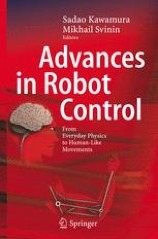
Advances in Robot Control : From Everyday Physics to Human-Like Movements
This volume provides a unique collection of papers written in honor of the 70th birthday of Suguru Arimoto who has long been recognized as a pioneer in the field of robot control. A variety of his research is reflected in this book, which includes contributions from leading experts in the field, who have also been closely associated with Suguru Arimoto at various stages in his distinguished career. The book is build around two themes: the physics-based robot control for coping with the so-called everyday physics problems on one hand, and the challenge of reproducing beautiful, human-like movements on the other hand. These themes defined much of Arimoto’s research in the field of robot control and are the cornerstones of his perception of human robotics.

Advances in neural networks -- ISNN 2007 ; 4th International symposium on neutral networks, ISNN 2007 Nanjing, China, June 3-7, 2007. Proceedings, Part II
An eural network is an information processing structure inspired by biological nervous systems, such as the brain. It consists of a large number of highly int- connected processing elements, called neurons. It has the capability of learning from example.

Advances in Neural Networks -- ISNN 2007 ; 4th International Symposium on Neutral Networks, ISNN 2007 Nanjing, China, June 3-7, 2007. Proceedings, Part I
An eural network is an information processing structure inspired by biological nervous systems, such as the brain. It consists of a large number of highly int- connected processing elements, called neurons. It has the capability of learning from example.

Advances in Neural Networks -- ISNN 2007 ; 4th International symposium on neural networks, ISNN 2007 Nanjing, China, June 3-7, 2007. Proceedings, Part III
An eural network is an information processing structure inspired by biological nervous systems, such as the brain. It consists of a large number of highly int- connected processing elements, called neurons. It has the capability of learning from example.

Advances in natural computation ; Vol. 3612 ; 1st International conference, ICNC 2005, Changsha, China, August 27-29, 2005, Proceedings, Part III
Includes 313 full papers and 189 short papers the refereed proceedings of the First International Conference on Natural Computation, ICNC 2005, held in Changsha, China, in August 2005 as a joint event with the Second International Conference on Fuzzy Systems and Knowledge Discovery FSKD 2005. includ Topics : Artificial Intelligence / Theory of Computation / Computation by Abstract Devices / Algorithm Analysis and Problem Complexity / Image Processing and Computer Vision / Pattern Recognition

Advances in natural computation ; Vol. 3611 ; 1st International conference, ICNC 2005, Changsha, China, August 27-29, 2005, proceedings, Part II
Featured the most up-to-date research results in com-putational algorithms inspired from nature, including biological, ecological, andphysical systems. It is an exciting and emerging interdisciplinary area in whicha wide range of techniques and methods are being studied for dealing with large,complex, and dynamic problems. The joint conferences also promoted cross-fertilization over these exciting and yet closely-related areas, "
