



الصفحة 102
الصفحة 102

Mathematical Foundations of Computer Science 2008 ; 33rd International Symposium, MFCS 2008, Toru´n, Poland, August 25-29, 2008. Proceedings
Constitutes the refereed proceedings of the 33rd International Symposium on Mathematical Foundations of Computer Science, MFCS 2008, held in Torun, Poland, in August 2008.The 45 revised full papers presented together with 5 invited lectures were carefully reviewed and selected from 119 submissions. All current aspects in theoretical computer science and its mathematical foundations are addressed, ranging from algorithmic game theory, algorithms and data structures, artificial intelligence, automata and formal languages, bioinformatics, complexity, concurrency and petrinets, cryptography and security, logic and formal specifications, models of computations, parallel and distributed computing, semantics and verification.

Mathematical foundations of computer science 2006 ; 31st International Symposium, MFCS 2006, Stará Lesná, Slovakia, August 28-September 1, 2006, Proceedings
This book constitutes the refereed proceedings of the 31st International Symposium on Mathematical Foundations of Computer Science, MFCS 2006, held in Stará Lesná, Slovakia in August/September 2006. The 62 revised full papers presented together with the full papers or abstracts of 7 invited talks were carefully reviewed and selected from 174 submissions. All current aspects in theoretical computer science and its mathematical foundations are addressed, ranging from algorithms and data structures, to complexity, automata, semantics, logic, formal specifications, models of computation, concurrency theory, computational geometry, parallel and distributed computing, networks, bioinformatics, quantum computing, cryptography, knowledge-based systems, and artificial intelligence.
Mathematical Formulas for Economists
This collection of formulas constitutes a compendium of mathematics for eco nomics and business. It contains the most important formulas, statements and algorithms in this significant subfield of modern mathematics and addresses primarily students of economics or business at universities, colleges and trade schools. But people dealing with practical or applied problems will also find this collection to be an efiicient and easy-to-use work of reference. First the book treats mathematical symbols and constants, sets and state ments, number systems and their arithmetic as well as fundamentals of com binatorics. The chapter on sequences and series is followed by mathematics of finance, the representation of functions of one and several independent vari ables, their differential and integral calculus and by differential and difference equations. In each case special emphasis is placed on applications and models in economics. The chapter on linear algebra deals with matrices, vectors, determinants and systems of linear equations. This is followed by the representation of struc tures and algorithms of linear programming. Finally, the reader finds formu las on descriptive statistics (data analysis, ratios, inventory and time series analysis), on probability theory (events, probabilities, random variables and distributions) and on inductive statistics (point and interval estimates, tests). Some important tables complete the work.
Mathematical Epidemiology
Based on lecture notes of two summer schools with a mixed audience from mathematical sciences, epidemiology and public health, this volume offers a comprehensive introduction to basic ideas and techniques in modeling infectious diseases, for the comparison of strategies to plan for an anticipated epidemic or pandemic, and to deal with a disease outbreak in real time. It covers detailed case studies for diseases including pandemic influenza, West Nile virus, and childhood diseases. Models for other diseases including Severe Acute Respiratory Syndrome, fox rabies, and sexually transmitted infections are included as applications. Its chapters are coherent and complementary independent units. In order to accustom students to look at the current literature and to experience different perspectives, no attempt has been made to achieve united writing style or unified notation.
Mathematical Control Theory and Finance
This book highlights recent developments in mathematical control theory and its applications to finance. It presents a collection of original contributions by distinguished scholars, addressing a large spectrum of problems and techniques. Control theory provides a large set of theoretical and computational tools with applications in a wide range of fields, ranging from "pure" areas of mathematics up to applied sciences like finance. Stochastic optimal control is a well established and important tool of mathematical finance. Other branches of control theory have found comparatively less applications to financial problems, but the exchange of ideas and methods has intensified in recent years. This volume should contribute to establish bridges between these separate fields. The diversity of topics covered as well as the large array of techniques and ideas brought in to obtain the results make this volume a valuable resource for advanced students and researchers.
Mathematical Aspects of Classical and Celestial Mechanics
In this book we describe the basic principles, problems, and methods of clssical mechanics. Our main attention is devoted to the mathematical side of the subject. Although the physical background of the models considered here and the applied aspects of the phenomena studied in this book are explored to a considerably lesser extent, we have tried to set forth first and foremost the “working” apparatus of classical mechanics. This apparatus is contained mainly in Chapters 1, 3, 5, 6, and 8. Chapter 1 is devoted to the basic mathematical models of classical - chanics that are usually used for describing the motion of real mechanical systems. Special attention is given to the study of motion with constraints and to the problems of realization of constraints in dynamics. In Chapter 3 we discuss symmetry groups of mechanical systems and the corresponding conservation laws. We also expound various aspects of ord- reduction theory for systems with symmetries, which is often used in appli- tions. Chapter 4 is devoted to variational principles and methods of classical mechanics. They allow one, in particular, to obtain non-trivial results on the existence of periodic trajectories. Special attention is given to the case where the region of possible motion has a non-empty boundary. Applications of the variational methods to the theory of stability of motion are indicated.
Mathematical Approaches to Software Quality
This book considers the potential and limitations of the various mathematical approaches and thereby aims to give a balanced view of the usability of each mathematical approach. Written with both student and professional in mind, this book assists the reader in applying mathematical methods to solve practical problems that are relevant to software engineers. It is suitable for coursework or self-study and there is helpful material on tools to support the various mathematical approaches.
Mathematical and Statistical Methods in Insurance and Finance
The interaction between mathematicians and statisticians reveals to be an effective approach to the analysis of insurance and financial problems, in particular in an operative perspective. The Maf2006 conference, held at the University of Salerno in 2006, had precisely this purpose and the collection here published gathers some of the papers presented at the conference and successively worked out to this aim. They cover a wide variety of subjects in insurance and financial fields, all treated in light of the successful cooperation between the two quantitative methods.
Mathematical and Computational Models for Congestion Charging
This book presents rigorous treatments of issues related to congestion pricing. The chapters describe recent advances in areas such as mathematical and computational models for predicting traffic congestion, determining when, where, and how much to levy tolls, and analyzing the impact of tolls on transporation systems. The analyses and methodologies developed in this book provide Mechanisms that aid in determining and comparing congestion pricing schemes; Methodologies for evaluating the efficiency of existing and proposed congestion pricing schemes; A means to predict the impact of pricing on urban transporation systems; and Information essential to the financial and political success of congestion pricing programs.

Math for business and economics : Compedium of essential formulas
This mathematical formulary is presented in a practice-oriented, clear, and understandable manner, as it is needed for meaningful and relevant application in global business, as well as in the academic setting and economic practice. The topics presented include but are not limited to mathematical signs and symbols, logic, arithmetic, algebra, linear algebra, combinatorics, and financial mathematics, including an international comparison between different national methods used in the calculation of interest, optimization of linear models, functions, differential calculus, integral calculus, elasticities, annuity calculation, economic functions, and the Peren Theorem.
Math Everywhere : Deterministic and Stochastic Modelling in Biomedicine, Economics and Industry
These proceedings are reporting on the conference ''Math Everywhere", a successful event celebrating a leading scientist, promoting ideas he pursued and sharing the open atmosphere he is known for. The areas of the contributions are the following , Deterministic and Stochastic Systems. Mathematical Problems in Biology, Medicine and Ecology, Mathematical Problems in Industry and Economics.
Materials Issues for Generation IV Systems ; Status, Open Questions and Challenges
Global warming, shortage of low-cost oil resources and the increasing demand for energy are currently controlling the world's economic expansion while often opposing desires for sustainable and peaceful development. In this context, atomic energy satisfactorily fulfills the criteria of low carbon gas production and high overall yield. However, in the absence of industrial fast-breeders the use of nuclear fuel is not optimal, and the production of high activity waste materials is at a maximum. These are the principal reasons for the development of a new, fourth generation of nuclear reactors, minimizing the undesirable side-effects of current nuclear energy production technology while increasing yields by increasing operation temperatures and opening the way for the industrial production of hydrogen through the decomposition of water.
Materials for Tomorrow : Theory, Experiments and Modelling
This book contains six chapters on central topics in materials science. Each is written by specialists in the field, and gives a state-of-the-art presentation of the subject for graduate students and scientists not necessarily working in that field. Computer simulations of new materials, theory and experimental work are all extensively discussed. As nanomaterials are of great current interest, most of the topics discussed have a bearing on nanomaterials and nanodevices. In addition to inorganic nanotubes, metallic nanocrystals, electronic nanodevices, spintronics and interfaces on an atomic scale, the text also presents computer simulations on one of the less well understood fields in solid-state physics and materials science: glasses and undercooled fluids.
Materials for Information Technology : Devices, Interconnects and Packaging
The Engineering Materials and Processes series focuses on all forms of materials and the processes used to synthesise and formulate them as they relate to the various engineering disciplines.
Material Modeling in Finite Element Analysis
Presents some specific problems including the metal-forming process, combustion room, Mullins effect of rubber tires, viscoelasticity of liver soft tissues, small punch test, tunnel excavation, slope stability, concrete slump test, orthodontic wire, and piezoelectric microaccelerometer.

Material Inhomogeneities and their Evolution : A Geometric Approach
The first part of the book deals with the geometrical description of uniform bodies and their homogeneity (i.e., integrability) conditions. In the second part, a theory of material evolution is developed and its relevance in various applied contexts discussed. The necessary geometrical notions are introduced as needed in the first two parts but often without due attention to an uncompromising mathematical rigour. This task is left for the third part of the book, which is a highly technical compendium of those concepts of modern differential geometry that are invoked in the first two parts (differentiable manifolds, Lie groups, jets, principal fibre bundles, G-structures, connections, frame bundles, integrable prolongations, groupoids, etc.).
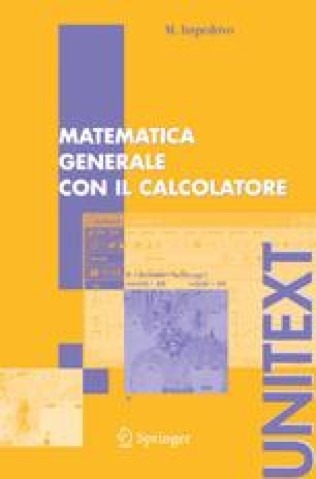
Matematica generale con il calcolatore
By introducing mathematical objects, it teaches students how to use a computer to perform numerical and symbolic calculations, define a function and calculate its values, plot and explore graphs, and execute simple algorithms. The course is rich in examples, applications, and models, drawn from economics, physics, biology, statistics, and mathematics itself. The analysis of these models constitutes, in a certain sense, the true purpose of the mathematical theory covered. Automatic calculation tools (mathematics software, spreadsheets) are used extensively to explore and illustrate concepts and properties. Mathcad® software, in particular, was used, both as a calculation tool and as a simple yet powerful programming language. Considerable space is devoted to approximation, emphasizing the distinction between numerical and symbolic calculation; to algorithms as a synthesis of the syntactic and semantic aspects of mathematical objects; and to computer simulation, interpreted as a "physical" experiment and a source of conjecture. The ability to use a calculator marks a sort of "democratization" of mathematics: even complex results, which have always required a broad background of knowledge and laborious calculations, are now quickly accessible to anyone who understands the meaning of mathematical objects and knows how to use the syntax.
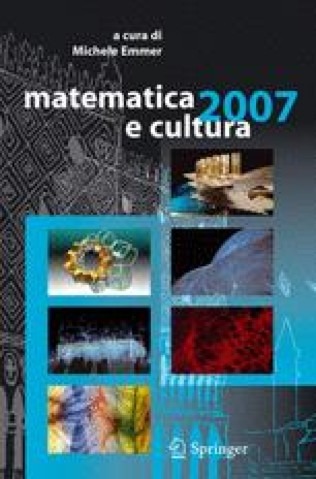
Matematica e cultura 2007 = Mathematics and culture 2007
We talk about theater even if the page cannot tell about Bustric's unforgettable show. And about art, and applied arts, such as geometric structure and spiritual meaning of the Zen garden of Ryoanji in Kyoto, and of soap bubbles, which are almost never lacking in Venetian encounters, Four-dimensional bubbles and gigantic bubbles that serve as a model for the Olympic swimming pool in Bejing
Matematica e cultura 2005 = Mathematics and culture 2005
E si parla di arte; oltre che di Pizzinato, di Pollock, grazie alla collaborazione della Guggenheim Collection di Venezia.E si parla di architettura, dalla topologia ai progetti di Ghery e di Renzo Piano.E di modelli matematici per la lotta contro il cancro, contro l’AIDS.Di come la matematica può aiutare a prevenire e intervenire. E si parla di matematica della guerra e di come la matematica possa aiutare a proteggere l’ambiente. Nel gennaio 2005, scrivendo queste parole, diventa di grande e drammatica attualità l’utilizzo dei modelli matematici per la meteorologia. Prevedere per salvare.

Matching Properties of Deep Sub-Micron MOS Transistors
Matching Properties of Deep Sub-Micron MOS Transistors examines this interesting phenomenon. Microscopic fluctuations cause stochastic parameter fluctuations that affect the accuracy of the MOSFET. For analog circuits this determines the trade-off between speed, power, accuracy and yield.
