



الصفحة 10
الصفحة 10

Intelligent Paradigms for Healthcare Enterprises : Systems Thinking
This book is an overview of intelligent paradigms and strategic investments that might payoff for the healthcare enterprise. Specifically, the reader will get ideas for efficiency enhancements for improving effectiveness and quality of care and for increasing patient safety.
Intelligent Paradigms for Assistive and Preventive Healthcare
Intelligent paradigms play a tremendous role in the field of Assistive and Preventive Healthcare (APH). This book presents some of the latest research in the field of APH by most prestigious researchers. The contributions include: Ubiquitous computing in APH Multimedia medical informatics in APH Virtual reality in APH Digital Talking books Electronic Locomotion Aids for the Blind Multimedia Communication System for the Blind Information Technology for Deaf People Gait Training System for Computer-Aided Rehabilitation

Intelligent interactive multimedia systems for e-Healthcare applications
includes high-quality research on various aspects of intelligent interactive multimedia technologies in healthcare services. The topics covered in the book focus on state-of-the-art approaches, methodologies, and systems in the design, development, deployment, and innovative use of multimedia systems, tools, and technologies in healthcare. The volume provides insights into smart healthcare service demands. It presents all information about multimedia uses in e-healthcare applications. The book also includes case studies and self-assessment problems for readers and future researchers. This book proves to be a valuable resource to know how AI can be an alternative tool for automated and intelligent analytics for e-healthcare applications.

Intelligent Interactive multimedia systems for e-healthcare applications
It looks at how the latest technologies (artificial intelligence, deep learning, machine learning, big data, IoT, smart device, etc.) help to manage health data, diagnose health issues, monitor treatment, predict pandemic diseases, and more. It covers several important applications of multimedia in healthcare, including for data visualization purposes, for computer vision for elder healthcare monitoring, for detection of lung nodules, for health monitoring and management systems using machine learning techniques, and for fusion applications in medical image processing. The book goes into detail on the various methods and techniques for supporting multimedia systems for e-healthcare.

Intelligent drugs : How AI is transforming healthcare
The progress of biotechnologies and artificial intelligence allowed the development of vaccines in less than a year, thus saving millions of human lives and preserving the global economy. The emergence of intelligent drugs is highlighted, with the promise of ultra-targeted, more effective, and safer treatments against a wide range of diseases. Personalized medicine then becomes realistic, with computer-designed drugs, perfectly adapted to each individual, tested on virtual patients before their real use. In the near future, thanks to AI, new drugs will improve physical performance, stimulate cognitive abilities, prevent diseases, and slow down aging.

Integration of Medical and Dental Care and Patient Data
This largely revised second edition comprehensively reviews the need and rationale for the integration of medical and dental patient data. The reader will find extensive guidance on issues involved with care and data integration, and how to achieve an integrated model of healthcare.

Integration and innovation orient to e-society ; Vol.2 ; 7th IFIP International Conference on e-business, e-Services, and e-Society (I3E2007), October 10-12, Wuhan, China
The IFIP series publishes state-of-the-art results in the sciences and technologies of information and communication. The principal aim of the IFIP series is to encourage education and the dissemination and exchange of information about all aspects of computing.

Integrating Science and Politics for Public Health
This volume is a welcome and timely contribution to our understanding of public health policy making as an essentially political endeavour. A sophisticated mix of theoretical, conceptual and empirical analysis serves as a guide to the challenges inherent in making public policy that accounts for and improves population health.

Integrating lifestyle medicine in cardiovascular health and disease prevention
Cardiovascular disease (CVD) is the leading cause of morbidity and mortality in the United States and around the world. Major risk factors for CVD result from poor lifestyle habits and practices, but the area of lifestyle medicine has emerged to help clinicians and their patients understand the power of positive lifestyle habits and actions.

Integrating lifestyle medicine for prediabetes, type 2 diabetes, and cardiometabolic disease
Provides clinical evidence for and a mechanistic understanding of the six pillars of lifestyle medicine. It guides the reader to identify opportunities for early intervention rather than focus on the diagnosis and treatment of the established disease. Interventions at earlier points have the potential to mitigate progression, prevent complications, reduce costs, and improve a patient’s overall health at all points in their lifetime.

Integrated Science in Digital Age ; ICIS 2019
The ICIS 2019 received roughly 50 contributions, by authors hailing from six countries. Following a peer-review process, the Scientific Committee – a multidisciplinary group of 110 experts from 38 countries around the globe – selected roughly 60% for publication. The main topics covered include: Artificial Intelligence Research; Digital Business & Finance; Educational Sciences; Health Management Informatics; Public Administration in the Digital Age; and Social Problem-solving.
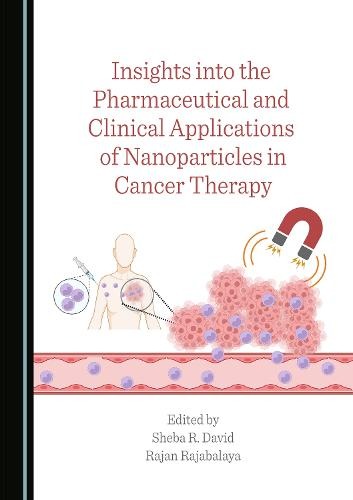
Insights into the pharmaceutical and clinical applications of nanoparticles in cancer therapy
Healthcare has long been on a quest for a ‘magic bullet’ to cure the dreaded disease cancer. As this book shows, nanoparticles perfectly fit the bill with their promising characteristics. Meticulously engineered nanostructures, with a useful drug or molecule, target a specific cancer in unique ways. However, as with many targeted systems, the effectiveness of the system needs to be weighed against the adverse effects. The toxicity of nanoparticles has been a worldwide concern, and evidence-based medicine analyses nanostructures for proof of safety and their efficacy in killing cancer cells. This book gives a fresh perspective on a wealth of diverse nanotechnological advances for various cancers.

Insights into Receptor Function and New Drug Development Targets
G-Protein Coupled receptors (GPCRs) and other receptors are significant targets for drug discovery, due to their roles in fundamental physiological processes. Among these roles are: regulation of growth, food intake, reproduction, water balance, sensory perception, blood pressure and heart rate. GPCR-directed drugs account for approximately $40 billion in sales and, of drugs at market, approximately 70% target GPCR function. The availability of combinatorial chemistry coupled with high throughput screening techniques have facilitated discovery of peptidic and non-peptidic ligands of membrane receptors. Mutant receptor models have revealed their role in health and disease and provided insight to new therapeutic approaches, based on control of protein trafficking. Understanding receptor-receptor interactions has provided one mechanism for receptor cross-talk and revealed unexpected interactions.

Innovations in preventive dentistry
Preventive dentistry is a constantly changing and developing field: As new research emerges, some practices that had once been revolutionary are abandoned, while others continue to withstand the test of time. This book discusses new developments and innovations in preventive dentistry, from primary prevention to secondary prevention by inactivating initial lesions, and on to tertiary prevention to avoid subsequent progression and complications of manifest oral disease. The book relies on a solid evidence base and instructs readers how this can be translated into clinical dental practice—what changes should be made to how we practice and why they should be made. Topics include caries and periodontal disease, orthodontic problems, diagnostic approaches, diet and oral health, oral hygiene, oral disease patterns, caries treatment, fluoride guidelines, risk management, sealants, and probiotics.

Innovations in healthcare and outcome measurement : New approaches for a healthy lifestyle
Aims to bring up-to-date new ideas, opinions, development, and critical issues in healthcare and personalized medicine. We are interested in relevant articles covering a broad range of topics, such as: Advances in medical devices, Digitalization and data-driven technologies, AI and algorithm-based drug development (molecule building, enhancement, clinical trials), Diagnostic imaging, Personalized medicine, Nutrition, Oral health care, Healthcare management in certain diseases and population groups, Regulatory developments, Data management, Digital healthcare.

Innovations in fuzzy clustering : Theory and applications
There is a great interest in clustering techniques due to the vast amount of data generated in every field including business, health, science, engineering, aerospace, management and so on. It is essential to extract useful information from the data. Clustering techniques are widely used in pattern recognition and related applications. The following contents are included: Introduction to Fuzzy Clustering / Fuzzy Clustering based Principal Component Analysis / Fuzzy Clustering based Regression Analysis Kernel based Fuzzy Clustering / Evaluation of Fuzzy Clustering / Self-Organized Fuzzy Clustering

Injecting Salmonella Bacteria in to the Tumor Cures Cancer
The human body is inhabited by millions of tiny living organisms like good bacteria. We acquire these bacteria during birth and the first years of life, and they live with us throughout our lives. The human microbiomes are involved in healthy growth, in protecting the body from invaders, in helping digestion, and in regulating moods, but sometimes these bacteria can also be harmful. We need to take good care of our health to avoid the development of some diseases, like salmonella for example. Salmonella infections in humans can range from self-limiting gastroenteritis typically associated with non-typhoidal Salmonella (NTS) to typhoidal fever, which can be life-threatening. Salmonellosis causes considerable morbidity and mortality in both humans and animals, and has a significant socioeconomic impact worldwide.

Information Technology Solutions for Healthcare
This book presents the current and future trends in the transformation of healthcare services in the Information Society Era and is of great relevance to informatics professions, clinical managers and all clinicians using these new technologies as part of their practice.

Information Technologies in Environmental Engineering ; ITEE 2007 - 3rd International ICSC Symposium
Potentially dangerous environmental changes are happening in the atm- phere, oceans, animal habitats and places where hazardous materials are used, or have been discarded without adequate environmental protections. These increasing problems that also affect human health demand for int- disciplinary approaches where engineers, natural scientists, economists and computer scientists work together. This book publishes the results of the ITEE 2007 conference where information about the topics above has been presented and discussed among environmental engineers, computer scientists and economists.

Information infrastructures within European health care : Working with the installed base
This book consolidates experiences from across Europe on the design, development, implementation and evolution of inter-organisational information infrastructures for healthcare. It provides insights with practical relevance for those involved or interested in the planning and implementation of such infrastructures and includes 11 empirical cases on the introduction of core infrastructural arrangements in different national settings: six cases investigate the use of e-prescriptions and five the public platforms for patient-oriented eHealth services. Both are linked to different types of aims.
