



الصفحة 10
الصفحة 10
Applied scanning probe methods IX : Characterization
The success of the Springer Series Applied Scanning Probe Methods I–VII and the rapidly expanding activities in scanning probe development and applications worldwide made it a natural step to collect further speci c results in the elds of development of scanning probe microscopy techniques (Vol. VIII), characterization (Vol. IX), and biomimetics and industrial applications (Vol. X). These three volumes complement the previous set of volumes under the subject topics and give insight into the recent work of leading specialists in their respective elds. Following the tradition of the series, the chapters are arranged around techniques, characterization and biomimetics and industrial applications. Volume VIII focuses on novel scanning probe techniques and the understanding of tip/sample interactions. Topics include near eld imaging, advanced AFM, s- cializedscanningprobemethodsinlifesciencesincludingnewselfsensingcantilever systems, combinations of AFM sensors and scanning electron and ion microscopes, calibration methods, frequency modulation AFM for application in liquids, Kelvin probe force microscopy, scanning capacitance microscopy, and the measurement of electrical transport properties at the nanometer scale.
Applied scanning probe methods IV : Industrial applications
The sc- ning probes emerged as a new - strument for imaging with a p- cision suf?cient to delineate single atoms. At first there were two – the Scanning Tunneling Microscope, or STM, and the Atomic Force Mic- scope, or AFM. The STM relies on electrons tunneling between tip and sample whereas the AFM depends on the force acting on the tip when it was placed near the sample. These were quickly followed by the M- netic Force Microscope, MFM, and the Electrostatic Force Microscope, EFM. The MFM will image a single magnetic bit with features as small as 10nm. With the EFM one can monitor the charge of a single electron.
Applied scanning probe methods III : Characterization
The sc- ning probes emerged as a new - strument for imaging with a p- cision suf?cient to delineate single atoms. At first there were two – the Scanning Tunneling Microscope, or STM, and the Atomic Force Mic- scope, or AFM. The STM relies on electrons tunneling between tip and sample whereas the AFM depends on the force acting on the tip when it was placed near the sample. These were quickly followed by the M- netic Force Microscope, MFM, and the Electrostatic Force Microscope, EFM. The MFM will image a single magnetic bit with features as small as 10nm. With the EFM one can monitor the charge of a single electron.
Applied scanning probe methods II : Scanning probe microscopy techniques
The sc- ning probes emerged as a new - strument for imaging with a p- cision suf?cient to delineate single atoms. At first there were two – the Scanning Tunneling Microscope, or STM, and the Atomic Force Mic- scope, or AFM. The STM relies on electrons tunneling between tip and sample whereas the AFM depends on the force acting on the tip when it was placed near the sample. These were quickly followed by the M- netic Force Microscope, MFM, and the Electrostatic Force Microscope, EFM. The MFM will image a single magnetic bit with features as small as 10nm. With the EFM one can monitor the charge of a single electron.
Applications of Mass Spectrometry in Life Safety
MS is continuously developing as one of the most re- able analytical method for elucidating the structure of molecules originating from various biological matrices. The potential of MS for high-sensitive structural a- lyses became unsurpassable after the introduction of electrospray (ESI) and matrix assisted laser/desorption ionization (MALDI) methods, on one hand, and the pos- bility to deduce in detail unknown biopolymer structures by highly accurate mo- cular mass measurement followed by sequencing using dissociation techniques based on multiple stage MS, on the other.
Analytical Ultracentrifugation VIII
This book presents a comprehensive collection of 21 contributions from leading scientists in this field covering a broad spectrum of topics and presenting recent progress concerning instrumentation, data analysis and modeling, biological systems, particles, colloids, synthetic macromolecules, interacting systems. Due to the versatility of this fascinating and powerful technique, information and original publications are widespread and comprehensive collections are rare. Therefore, this volume presents a valuable source for biologists, chemists, materials scientists, and physicists interested in most recent information, results and development related to this important analytical method.
Analytical Ultracentrifugation of Polymers and Nanoparticles
Analytical ultracentrifugation (AUC) is a powerful method for the characterization of polymers, biopolymers, polyelectrolytes, nanoparticles, dispersions, and other colloidal systems. The method is able to determine the molar mass, the particle size, the particle density and interaction parameters like virial coefficients and association constants. Because AUC is also a fractionation method, the determination of the molar mass distribution, the particle size distribution, and the particle density distribution is possible. A special technique, the density gradient method, allows fractionating heterogeneous samples according to their chemical nature that means being able to detect chemical heterogeneity.
Analysis of failure in fiber polymer laminates : the theory of Alfred Puck
This book presents for the first time comprehensively the Theory of Alfred Puck on failure in Fiber Polymer Laminates. After a brief introduction into the failure analysis of laminates and its history, the text focuses first on Puck’s fracture criteria and gives detailed information on their physical background, mathematical derivation and application. Another core part of Puck’s Theory is his concept for Post Failure Analysis. Here, too, the physical background and the analytical procedure are presented. The theoretical chapters are completed by the presentation of the latest developments, namely the consideration of residual stresses and probabilistic effects. The second main part of the book deals with the extensive experimental verification program which has been accomplished since the mid 1990’s. As a result of this work, the Puck Theory can be regarded as better verified than any other theory. All experimental set ups and the major results are presented and explained.
An Introduction to continuous-time stochastic processes : Theory, models, and applications to finance, biology, and medicine
This book is introduction to the theory of continuous-time stochastic processes. A balance of theory and applications, the work features concrete examples of modeling real-world problems from biology, medicine, industrial applications, finance, and insurance using stochastic methods. No previous knowledge of stochastic processes is required. Key topics covered include: * Interacting particles and agent-based models: from polymers to ants * Population dynamics: from birth and death processes to epidemics * Financial market models: the non-arbitrage principle * Contingent claim valuation models: the risk-neutral valuation theory * Risk analysis in insurance

Amplification of Chirality
Amplification of Chirality presents critical reviews of the present position and future trends in modern chemical research. The book contains short and concise reports on chemistry. Each is written by the world renowned experts. Still valid and useful after 5 or 10 years, more information as well as the electronic version of the whole content available at: springerlink.com.
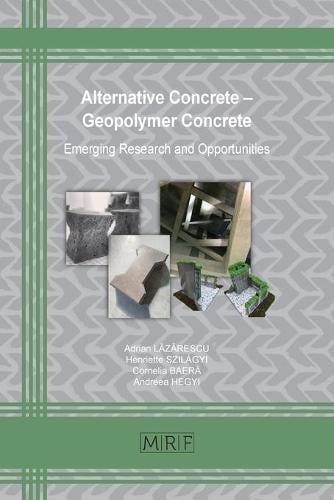
Alternative concrete - geopolymer concrete : Emerging research and opportunities
Focuses on fly ash-based alkali-activated geopolymer concrete, its production and characteristic properties. The re-use of waste materials and industrial by-products, such as fly ash, is not only economically of interest but also helps to reduce carbon dioxide emissions. The carbon footprint of these materials is much lower than that of concrete using ordinary Portland cement. They thus offer new sustainable solutions to the construction industry.

Alginates in drug delivery
Alginates in Drug Delivery explores the vital precepts, basic and fundamental aspects of alginates in pharmaceutical sciences, biopharmacology, and in the biotechnology industry. The use of natural polymers in healthcare applications over synthetic polymers is becoming more prevalent due to natural polymers’ biocompatibility, biodegradability, economic extraction and ready availability. To fully utilize and harness the potential of alginates, this book presents a thorough understanding of the synthesis, purification, and characterization of alginates and their derivative. This book collects, in a single volume, all relevant information on alginates in health care, including recent advances in the field.

Advances of novel formulations in drug delivery
This is an endeavor to bring all the nanotechnology-based drug carriers under the umbrella of a single text. The drug carriers made up using natural as well as synthetic polymers are described in detail. The drug carriers include (though not limited to) particulates, vesicular, dendrimers, quantum dots, carbon nano tubes, nanocrystals, nanoemulsions, nanofibers
Advances in Material Forming ; Esaform 10 years on
This book groups the main advances in material forming, considering different p- cesses (conventional and non-conventional) focusing in polymers, composites and metals, that are analyzed from the state of the art, describing the most significant recent advances and identifying the present challenges from the experimental, modeling and numerical points of view. Chapters include a large list of references and have been wr- ten by recognized specialists. Special emphasis is devoted to the contributions of the European Scientific Association on Material Forming (ESAFORM) during the last 10 years (1998-2007) and in particular the ones coming from its annual international conference. The first chapter includes an excellent introduction to the Esaform association.
Advances in Earthquake Engineering for Urban Risk Reduction
It is the vulnerable buildings - liable to cause damage and loss of life - that need immediate attention and urgent appraisal in order to decide if structural rehabilitation and upgrading are feasible. Current economic, efficient and occupant-friendly rehabilitation techniques vary widely and include the application either of precast concrete panels or layers, strips and patches of fiber reinforced polymers (FRP) in strategic locations. The papers in this book, many by renowned authorities in earthquake engineering, chart new and vital directions of research and application in the assessment and rehabilitation of buildings in seismic regions. While several papers discuss the probabilistic prediction and quantification of structural damage, others present approaches related with the in-situ and occupant friendly upgrading of buildings and propose both economical and practical techniques to address the problem.

Advances in Construction Materials 2007
A compilation of recent research results on building construction materials. The construction industry consumes extreme volumes of material, and the growing demand for quality and safety require continuous improvement of materials and material compositions. A deep understanding of material behavior is essential to enable efficient construction: light-weight or heavily burdened structures ask for the development of innovative composites or new material compositions.
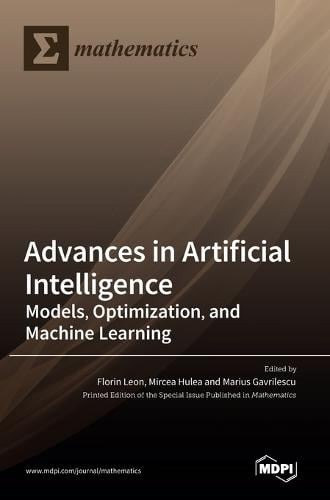
Advances in artificial intelligence: models, optimization, and machine learning
Contains all the articles accepted and published in the Special Issue “Advances in Artificial Intelligence: Models, Optimization, and Machine Learning” of the MDPI Mathematics journal, which covers a wide range of topics connected to the theory and applications of artificial intelligence and its subfields. These topics include, among others, deep learning and classic machine learning algorithms, neural modelling, architectures and learning algorithms, biologically inspired optimization algorithms, algorithms for autonomous driving, probabilistic models and Bayesian reasoning, intelligent agents and multiagent systems.
Advanced Methods in Material Forming
The book contains the most relevant papers presented in the International Conference on Materials Forming, ESAFORM 2005. The list below presents some of the most successful minisymposia of the conference: - New and advanced numerical strategies in forming process simulation; - Sheet metal forming technologies and modeling; - Anisotropy and formability of materials; - Polymer processing and modeling; - Composite forming technologies and modeling; - Superplastic forming. This volume gathers selected plenary and keynote papers presented in the conference, offering an up-to-date synthesis of the academic and industrial research in the fields of physical and numerical modeling of materials forming processes. The book is useful for the doctoral fellows, scientists and engineers involved in various domains of materials processing technology.
Advanced computer simulation approaches for soft matter sciences II
This series presents critical reviews of the present and future trends in polymer and biopolymer science including chemistry, physical chemistry, physics and materials science. It is addressed to all scientists at universities and in industry who wish to keep abreast of advances in the topics covered.The second volume contains four contributions, and has a very strong topical focus on long range interactions.
Advanced computer simulation approaches for soft matter sciences I
Soft matter science is nowadays an acronym for an increasingly important class of materials, which ranges from polymers, liquid crystals, colloids up to complex macromolecular assemblies, covering sizes from the nanoscale up the microscale. Computer simulations have proven as an indispensable, if not the most powerful, tool to understand properties of these materials and link theoretical models to experiments. In this first volume of a small series recognized leaders of the field review advanced topics and provide critical insight into the state-of-the-art methods and scientific questions of this lively domain of soft condensed matter research.
