



Page 1
Page 1

Ontology Management : Semantic Web, Semantic Web Services, and Business Applications
This volume describes relevant tasks, practical and theoretical challenges, limitations and methodologies, plus available software tools. The editors discuss integrating the conceptual and technical dimensions with a business view on using ontologies, by stressing the cost dimension of ontology engineering and by providing guidance on how up-to-date tooling helps to build, maintain, and use ontologies. Also included is a one-stop reference on all aspects of managing ontological data and best practices on ontology management for a number of application domains.

Methods and Tools for Collaborative Networked Organizations
Provides a comprehensive set of reference materials derived from the results of the ECOLEAD project in one organized volume. The ECOLEAD project, a large 4-year European initiative, involved 28 organizations (from academia, research and industry), from 14 countries (in Europe and Latin America).Three main types of results from ECOLEAD are presented: (i) Conceptual frameworks and models, (ii) Methods and processes, and (iii) Software tools and systems.

Formal Modeling and Analysis of Timed Systems ; Vol.4202 ; 4th International Conference, FORMATS 2006, Paris, France, September 25-27, 2006, Proceedings
The aim of FORMATS is to promote the study of fundamental and practical aspects of timed systems, and to bring together researchers from di?erent d- ciplines that share interests in modelling and analysis of timed systems. In this volume, there are articles on: – Foundations and Semantics: contributions to the theoretical foundations of timed systems and timed formal languages as well as comparison between di?erentmodelsusedbydi?erentcommunities(timedautomata,timedPetri nets, timed MSCs, hybrid automata, timed process algebra, timed temporal logics, timed abstract state machines, as well as probabilistic models). – Methods and Tools: techniques, algorithms, data structures, and software toolsforanalyzingtimedsystemsandresolvingtemporalconstraints(mod- checking, simulation, robustness analysis, scheduling, etc).

Distributed and Parallel Systems : In Focus : Desktop Grid Computing
In this book contributors investigate parallel and distributed techniques, algorithms, models and applications; present innovative software tools, environments and middleware; focus on various aspects of grid computing; and introduce novel methods for development, deployment, testing and evaluation.

Computer Supported Cooperative Work in Design III ; 10th International Conference, CSCWD 2006, Nanjing, China, May 3-5, 2006, Revised Selected Papers
The design of complex artifacts and systems requires the cooperation of multidiscip- nary design teams using multiple commercial and proprietary engineering software tools (e.g., CAD, modeling, simulation, visualization, and optimization), engineering databases, and knowledge-based systems. Individuals or individual groups of mult- isciplinary design teams usually work in parallel and separately with various en- neering software tools which are located at different sites. In addition, individual members may be working on different versions of a design or viewing the design from different perspectives, at different levels of detail. In order to accomplish the work, it is necessary to have effective and efficient c- laborative design environments. Such environments should not only automate in- vidual tasks, in the manner of traditional computer-aided engineering tools, but also enable individual members to share information, collaborate, and coordinate their activities within the context of a design project. CSCW (computer-supported coope- tive work) in design is concerned with the development of such environments.
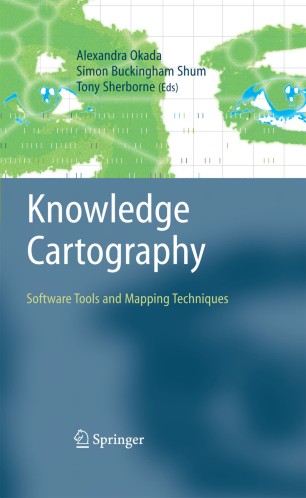
Knowledge Cartography : Software Tools and Mapping Techniques
The authors see mapping software as a set of visual tools for reading and writing in a networked age. In an information ocean, the primary challenge is to find meaningful patterns around which we can weave plausible narratives. Maps of concepts, discussions and arguments make the connections between ideas tangible and disputable.With 17 chapters from the leading researchers and practitioners, the reader will find the current state–of-the-art in the field. Part 1 focuses on educational applications in schools and universities, before Part 2 turns to applications in professional communities.

Bioinformatics research and applications ; 3rd International Symposium,ISBRA 2007, Atlanta, GA, USA, May 7-10, 2007, Proceedings
This book including clustering and classification, gene expression analysis, gene networks, genome analysis, motif finding, pathways, protein structure prediction, protein domain interactions, phylogenetics, and software tools.

Artificial life models in software
Artificial Life Models in Software presents software tools, environments and realities dealing with creation, imitation and analysis of artefactual, virtual and living forms, written by those who personally design and produce software, hardware and art installations in artificial life, simulated complex systems and virtual worlds. This timely volume offers a nearly exhaustive overview and original analysis of major non-profit artificial life software packages. The carefully selected topics include: · simulation of real and imaginary life forms and their evolution · self-organization · emergent behaviours · swarm intelligence · evolutionary robotics · agent-based simulations · adaptive, complex and biologically inspired ecosystems · creative computer art There has long been a need within the academic and research community for an informal introduction and guidance to modern software tools for modelling and simulation of life-like phenomena – Artificial Life Models in Software fills this gap and provides invaluable information to both professional and amateur readers, offering detailed reviews of contemporary software for artificial life.

Anatomy ontologies for bioinformatics : Principles and practice
This book provides a timely and first-of-its-kind collection of contributed chapters on anatomy ontologies. It is interdisciplinary in its approach, bringing together relevant expertise from computing and biomedical studies, and covering both theoretical and applied aspects, with an emphasis on newer work relevant to the emerging Semantic Web.

Ambisonics : A Practical 3D Audio Theory for Recording, Studio Production, Sound Reinforcement, and Virtual Reality
Provides a concise explanation of the fundamentals and background of the surround sound recording and playback technology Ambisonics. It equips readers with the psychoacoustical, signal processing, acoustical, and mathematical knowledge needed to understand the inner workings of modern processing utilities, special equipment for recording, manipulation, and reproduction in the higher-order Ambisonic format. The book comes with various practical examples based on free software tools and open scientific data for reproducible research. The book includes an extensive mathematical appendix. The book offers readers a deeper understanding of Ambisonic technologies, and will especially benefit scientists, audio-system and audio-recording engineers.
