



Page 1
Page 1

Network Classification For Traffic Management : Anomaly detection, feature selection, clustering and classification
Investigates network traffic classification solutions by proposing transport-layer methods to achieve better run and operated enterprise-scale networks. With the massive increase of data and traffic on the Internet within the 5G, IoT and smart cities frameworks, current network classification and analysis techniques are falling short. Novel approaches using machine learning algorithms are needed to cope with and manage real-world network traffic, including supervised, semi-supervised, and unsupervised classification techniques. Accurate and effective classification of network traffic will lead to better quality of service and more secure and manageable networks. Investigates network traffic classification solutions by proposing transport-layer methods to achieve better run and operated enterprise-scale networks. The authors explore novel methods for enhancing network statistics at the transport layer, helping to identify optimal feature selection through a global optimization approach and providing automatic labelling for raw traffic through a SemTra framework to maintain provable privacy on information disclosure properties.

Handbook of smart cities
This Handbook presents a comprehensive and rigorous overview of the state-of-the-art on Smart Cities. It provides the reader with an authoritative, exhaustive one-stop reference on how the field has evolved and where the current and future challenges lie. From the foundations to the many overlapping dimensions (human, energy, technology, data, institutions, ethics etc.)
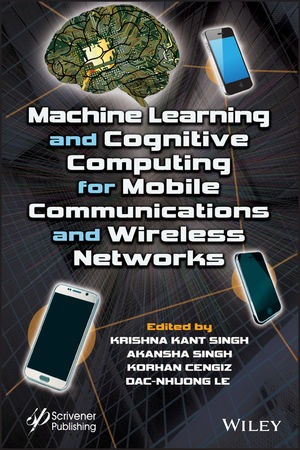
Machine Learning and Cognitive Computing for Mobile Communications and Wireless Networks
Communication and network technology has witnessed recent rapid development and numerous information services and applications have been developed globally. These technologies have high impact on society and the way people are leading their lives. The advancement in technology has undoubtedly improved the quality of service and user experience yet a lot needs to be still done. Some areas that still need improvement include seamless wide-area coverage, high-capacity hot-spots, low-power massive-connections, low-latency and high-reliability and so on. Thus, it is highly desirable to develop smart technologies for communication to improve the overall services and management of wireless communication. Machine learning and cognitive computing have converged to give some groundbreaking solutions for smart machines. With these two technologies coming together, the machines can acquire the ability to reason similar to the human brain. The research area of machine learning and cognitive computing cover many fields like psychology, biology, signal processing, physics, information theory, mathematics, and statistics that can be used effectively for topology management. Therefore, the utilization of machine learning techniques like data analytics and cognitive power will lead to better performance of communication and wireless systems.
Challenges and Solutions for Sustainable Smart City Development
Discusses advances in smart and sustainable development of smart environments. The authors discuss the challenges faced in developing sustainable smart applications and provide potential solutions. The solutions are aimed at improving reliability and security with the goal of affordability, safety, and durability. Topics include health care applications, sustainable smart transportation systems, intelligent sustainable wearable electronics, and sustainable smart building and alert systems. Authors are from both industry and academia and present research from around the world. Addresses problems and solutions for sustainable development of smart cities; Includes applications such as healthcare, transportation, wearables, security, and more ; Relevant for scientist and researchers working on real time smart city development.
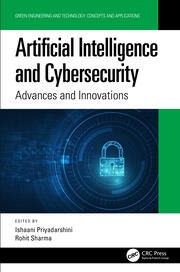
Artificial Intelligence and Cybersecurity : Advances and Innovations
Provides advanced system implementation for Smart Cities using artificial intelligence. It addresses the complete functional framework workflow and explores basic and high-level concepts. The book is based on the latest technologies covering major challenges, issues and advances, and discusses intelligent data management and automated systems.
AI and IoT for smart city applications
Provides a valuable combination of relevant research works on developing smart city ecosystem from the artificial intelligence (AI) and Internet of things (IoT) perspective. The technical research works presented here are focused on a number of aspects of smart cities: smart mobility, smart living, smart environment, smart citizens, smart government, and smart waste management systems as well as related technologies and concepts. This edited book offers critical insight to the key underlying research themes within smart cities, highlighting the limitations of current developments and potential future directions.
