



Page 1
Page 1

Introduction to Cryptography : Principles and Applications
In the first part, this book covers the key concepts of cryptography on an undergraduate level, from encryption and digital signatures to cryptographic protocols. In the second part, more advanced topics are addressed, such as the bit security of one-way functions and computationally perfect pseudorandom bit generators.

Information Security Handbook
Provides a comprehensive collection of knowledge for emerging multidisciplinary research areas such as cybersecurity, IoT, Blockchain, Machine Learning, Data Science, and AI. This book brings together, in one resource, information security across multiple domains. It explores basic and high-level concepts and serves as a manual for industry while also helping beginners to understand both basic and advanced aspects in security-related issues. The handbook explores security and privacy issues through the IoT ecosystem and implications to the real world and, at the same time, explains the concepts of IoT-related technologies, trends, and future directions.
Information and Communication Technology for Competitive Strategies (ICTCS 2020) ; Intelligent Strategies for ICT
This book contains the best selected research papers presented at ICTCS 2020: Fifth International Conference on Information and Communication Technology for Competitive Strategies. The conference was held at Jaipur, Rajasthan, India during 11–12 December 2020. The book covers state-of-the-art as well as emerging topics pertaining to ICT and effective strategies for its implementation for engineering and managerial applications. This book contains papers mainly focused on ICT for computation, algorithms and data analytics and IT security.

Foundations of Security Analysis and Design IV ; FOSAD 2006/2007 Turtorial Lectures
This book presents thoroughly revised versions of eight tutorial lectures given by leading researchers during two International Schools on Foundations of Security Analysis and Design, FOSAD 2006/2007, held in Bertinoro, Italy, in September 2006 and September 2007.
Fifth World Conference on Information Security Education ; Proceedings of the IFIP TC 11 WG 11.8, WISE 5, 19 to 21 June 2007, United States Military Academy, West Point, NY, USA
The scope of This book includes: foundations of computer science; software theory and practice; education; computer applications in technology; communication systems; systems modeling and optimization; information systems; computers and society; computer systems technology; security and protection in information processing systems; artificial intelligence; and human-computer interaction. Proceedings and post-proceedings of referred international conferences in computer science and interdisciplinary fields are featured. These results often precede journal publication and represent the most current research.

Embedded Security in Cars : Securing Current and Future Automotive IT Applications
Lemke, Paar, and Wolf collect in this volume a state-of-the-art overview on all aspects relevant for IT security in automotive applications. After an introductory chapter written by the editors themselves, the contributions from experienced experts of different disciplines are structured into three parts. "Security in the Automotive Domain" describes applications for which IT security is crucial, like immobilizers, tachographs, and software updates. "Embedded Security Technologies" details security technologies relevant for automotive applications, e.g., symmetric and asymmetric cryptography, and wireless security. "Business Aspects of IT Systems in Cars" shows the need for embedded security in novel applications like location-based navigation systems and personalization.
Cyberspace security and defense : Research issues ; Proceedings of the NATO advanced research workshop on cyberspace security and defense : Research issues, Gdansk, Poland, from 6 to 9 September 2004.
The development of Internet, mobile communications, distributed computing, computer software and databases storing essential enterprise information has helped to conduct business and personal communication between individual people. and it has created many opportunities for abuse, fraud and expensive damage. This book is a selection of the best papers presented at the NATO Advanced Research Workshop dealing with the Subject of Cyberspace Security and Defense. The level of the individual contributions in the volume is advanced and suitable for senior and graduate students, researchers and technologists who wish to get some feeling of the state of the art in several sub-disciplines of Cyberspace security.

Cybersecurity for business : Organization-wide strategies to ensure cyber risk Is not just an IT Issue
Important and cost-effective innovations can substantially increase cyber risk and the loss of intellectual property, corporate reputation and consumer confidence. Over the past several years, organizations around the world have increasingly come to appreciate the need to address cybersecurity issues from a business perspective, not just from a technical or risk angle. Cybersecurity for Business builds on a set of principles developed with international leaders from technology, government and the boardroom to lay out a clear roadmap of how to meet goals without creating undue cyber risk.

Computer Insecurity : Risking the System
Security is one of the most significant issues facing the owners and users of computer systems in the Internet age, and recent years have convincingly illustrated that the problem is increasing in both scale and cost. Computer Insecurity: Risking the System approaches its topic from the perspective of vulnerability – how can your system be attacked? Covering technical issues and human factors, the comprehensively researched text makes reference to numerous real-life security incidents, which help to provide persuasive practical evidence of the problems and the impacts that result. Key issues covered include: • the problem of computer insecurity • the need to raise security awareness • common failings that compromise protection • the attack and exploitation of systems • considerations in responding to the threats
Managing Risk and Information Security : Protect to Enable
Examine the evolving enterprise security landscape and discover how to manage and survive risk. While based primarily on the author’s experience and insights at major companies where he has served as CISO and CSPO, the book also includes many examples from other well-known companies and provides guidance for a management-level audience. Managing Risk and Information Security provides thought leadership in the increasingly important area of enterprise information risk and security. It describes the changing risk environment and why a fresh approach to information security is needed. Because almost every aspect of an enterprise is now dependent on technology not only for internal operations but increasing as a part of product or service creation, the focus of IT security must shift from locking down assets to enabling the business while managing and surviving risk. This edition discusses business risk from a broader perspective, including privacy and regulatory considerations. It describes the increasing number of threats and vulnerabilities and offers strategies for developing solutions. These include discussions of how enterprises can take advantage of new and emerging technologies—such as social media and the huge proliferation of Internet-enabled devices—while minimizing risk.

IT Security Controls : A Guide to Corporate Standards and Frameworks
Gives an overview of the major standards and frameworks, and a proposed architecture to meet them. The book identifies and describes the necessary controls and processes that must be implemented in order to secure your organization's infrastructure. The book proposes a comprehensive approach to the implementation of IT security controls with an easily understandable graphic implementation proposal to comply with the most relevant market standards (ISO 27001, NIST, PCI-DSS, and COBIT) and a significant number of regulatory frameworks from central banks across the World (European Union, Switzerland, UK, Singapore, Hong Kong, India, Qatar, Kuwait, Saudi Arabia, Oman, etc.). You will learn: Understand corporate IT security controls, including governance, policies, procedures, and security awareness Know cybersecurity and risk assessment techniques such as penetration testing, red teaming, compliance scans, firewall assurance, and vulnerability scans Understand technical IT security controls for unmanaged and managed devices, and perimeter controls Implement security testing tools such as steganography, vulnerability scanners, session hijacking, intrusion detection, and more

ISSE/SECURE 2007 securing electronic business processes : Highlights of the information security solutions Europe/SECURE 2007 Conference
Presents the most interesting talks given at ISSE/SECURE 2007 - the forum for the interdisciplinary discussion of how to adequately secure electronic business processes. Adequate information security is one of the basic requirements of all electronic business processes. It is crucial for effective solutions that the possibilities offered by security technology can be integrated with the commercial requirements of the applications.
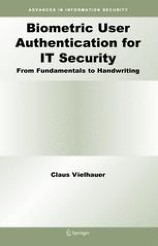
Biometric User Authentication for IT Security : From Fundamentals to Handwriting
Biometric User Authentication for IT Security: From Fundamentals to Handwriting conveys general principals of passive (physiological trait like fingerprint, iris, face) and active (learned and trained behavior like voice, handwriting and gait) biometric recognition techniques to the reader. This professional book, unlike other publications in this area which concentrate on passive schemes, reflects a more comprehensive analysis of one particular active biometric technique: handwriting. Aspects which are thoroughly discussed include sensor characteristic dependency, attack scenarios, and the generation of cryptographic keys from handwriting.
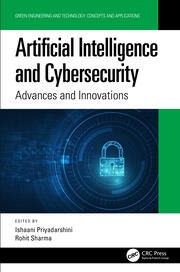
Artificial Intelligence and Cybersecurity : Advances and Innovations
Provides advanced system implementation for Smart Cities using artificial intelligence. It addresses the complete functional framework workflow and explores basic and high-level concepts. The book is based on the latest technologies covering major challenges, issues and advances, and discusses intelligent data management and automated systems.
