



Page 1
Page 1

Multimodal Technologies for Perception of Humans ; International Evaluation Workshops CLEAR 2007 and RT 2007, Baltimore, MD, USA, May 8-11, 2007, Revised Selected Papers
This book constitutes the thoroughly refereed joint post-workshop proceedings of two co-located events: the Second International Workshop on Classification of Events, Activities and Relationships, CLEAR 2007, and the 5th Rich Transcription 2007 Meeting Recognition evaluation, RT 2007, held in succession in Baltimore, MD, USA, in May 2007.The workshops had complementary evaluation efforts; CLEAR for the evaluation of human activities, events, and relationships in multiple multimodal data domains; and RT for the evaluation of speech transcription-related technologies from meeting room audio collections.

Multimodal Processing and Interaction : Audio, Video, Text
Multimodal Processing and Interaction: Audio, Video and Text presents high quality, state-of-the-art research ideas and results from theoretic, algorithmic and application viewpoints. This edited volume contains both state-of-the-art reviews and original contributions by leading experts in the scientific and technological field of multimedia. It grew out of a four-year collaboration among research groups participating in the European network of Excellence on Multimedia Understanding, Semantics, Computation and Learning (MUSCLE).
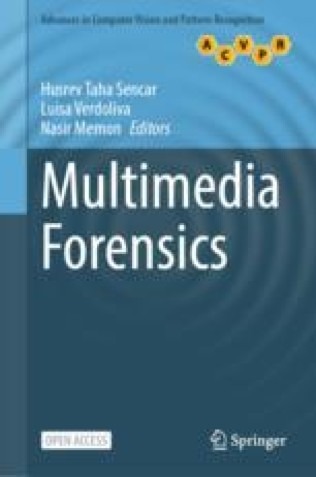
Multimedia Forensics
Media forensics has never been more relevant to societal life. Not only media content represents an ever-increasing share of the data traveling on the net and the preferred communications means for most users, it has also become integral part of most innovative applications in the digital information ecosystem that serves various sectors of society, from the entertainment, to journalism, to politics. Undoubtedly, the advances in deep learning and computational imaging contributed significantly to this outcome. The underlying technologies that drive this trend, however, also pose a profound challenge in establishing trust in what we see, hear, and read, and make media content the preferred target of malicious attacks.
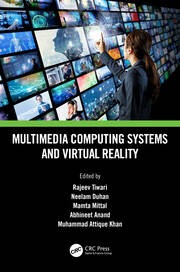
Multimedia computing systems and virtual reality
Presents recent advancements in multimedia systems as they relate to various application areas such as healthcare services and agriculture-related industries. The authors also discuss human-machine interface design, graphics modelling, rendering/animation, image/graphics techniques/systems and visualization. They then go on to explore multimedia content adaptation for interoperable delivery. Finally, the book covers cultural heritage, philosophical/ethical/societal/international issues, standards-related virtual technology and multimedia uses. This book is intended for computer engineers and computer scientists developing applications for multimedia and virtual reality and professionals working in object design and visualization, transformation, modelling and animation of the real world.

Motion-Free Super-Resolution
With the explosion of Internet technology and graphics engines, digital images are now everywhere. Image capturing tools are all pervading - in our pockets to inside a satellite. And although imaging applications demand an availability to high resolution images, such images are not picture perfect and may be lacking sufficient details. This requires that these images be super-resolved for improved details. How to achieve this is what constitutes research in the area of image super-resolution. Motion-Free Super-Resolution explores new technology for image super-resolution - applying cues other than the motion cue in super-resolving a scene. This book will serve as an essential reference for both academecians and practicing engineers in the area of image processing and computer vision, as well as providing a basis for ongoing research in this field.

Motion in Games ; 1st International Workshop, MIG 2008, Utrecht, The Netherlands, June 14-17, 2008. Revised Papers
This book constitutes the thoroughly refereed post-workshop proceedings of the First International Workshop on Motion in Games, held in Utrecht, The Netherlands, during June 14-17, 2008, in collaboration with the NLGD Festival of Games.The 24 revised papers presented during the workshop cover topics on crowd simulation; virtual humans; motion synthesis; interfaces; navigation and steering; and facial and behavioral animation.
Modern parallel programming with C++ and assembly language : X86 SIMD development using AVX, AVX2, and AVX-512
Understand the essential details about x86 SIMD architectures and instruction sets including AVX, AVX2, and AVX-512. / Master x86 SIMD data types, arithmetic instructions, and data management operations using both integer and floating-point operands. / Code performance-enhancing functions and algorithms that fully exploit the SIMD capabilities of a modern x86 processor. Employ C++ intrinsic functions and x86-64 assembly language code to carry out arithmetic calculations using common programming constructs including arrays, matrices, and user-defined data structures. Harness the x86 SIMD instruction sets to significantly accelerate the performance of computationally intense algorithms in applications such as machine learning, image processing, computer graphics, statistics, and matrix arithmetic. / Apply leading-edge coding strategies and techniques to optimally exploit the x86 SIMD instruction sets for maximum possible performance.

Mobile 3D Graphics
Historically, not enough was understood about how to deliver a high quality playing experience on handheld, small screen, small memory devices, plus there has been considerable confusion about the hardware’s abilities and restrictions. By addressing these issues this book provides: • A comprehensive explanation of 3D mobile graphics programming • Includes an extensive range of code samples in both C and Java • Combines 3D and 2D mobile graphics methods • Covers recent advances in mobile computer graphics techniques and applications. The book teaches fundamental 3D mobile graphics programming with standard APIs, and covers the basic and advanced application programme interfaces behind the major wireless and mobile devices supporting 3D graphics applications. Advanced undergraduates and postgraduates, as well as mobile application and games developers, will find this an excellent reference source.

Membrane Computing ; Vol. 3365 ; 5th International Workshop, WMC 2004, Milan, Italy, June 14-16, 2004, Revised Selected and Invited Papers
Constitutes the refereed extended postproceedings of the 5th International Workshop on Membrane Computing, held in Italy, in June 2004. This book addresses various topics in the area of membrane computing, ranging from mathematics and theoretical computer science to applications in biology, linguistics, and computer graphics.

Medical Imaging and Informatics ; 2nd International Conference, MIMI 2007, Beijing, China, August 14-16, 2007 Revised Selected Papers
This book constitutes the thoroughly refeered post-conference proceedings of the Second Interational Conference on Medical Imaging and Informatics, MIMI 2007, held in Beijing, China, in August 2007.The 40 revised full papers presented together with 4 keynote talks were carefully reviewed and selected from 110 submissions. The papers are organized in topical sections on medical image segmentation and registration, medical informatics, PET, fMRI, ultrasound and thermal imaging, 3D reconstruction and visualization. The volume is rounded off by 4 papers from 2 workshops on legal, ethical and social issues in medical imaging and informatics, as well as on computer-aided diagnosis (CAD).
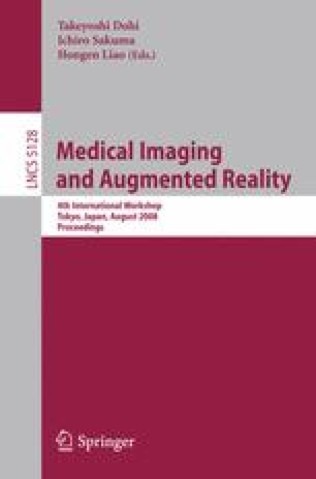
Medical Imaging and Augmented Reality ; 4th International Workshop Tokyo, Japan, August 1-2, 2008 Proceedings
Constitutes the refereed proceedings of the 4th International Workshop on Medical Imaging and Augmented Reality, MIAR 2008, held in Tokyo, Japan, in August 2008.The 44 revised full papers presented together with 3 invited papers were carefully reviewed and selected from 90 submissions. The papers are organized in topical sections on surgical planning and simulation, medical image computing, image analysis, shape modeling and morphometry, image-guided robotics, image-guided intervention, interventional imaging, image registration, augmented reality, and image segmentation.

Medical Image Computing and Computer-Assisted Intervention - MICCAI 2008 ; 11th International Conference, New York, NY, USA, September 6-10, 2008, Proceedings, Part II
The program committee carefully selected 258 revised papers from numerous submissions for presentation in two volumes, based on rigorous peer reviews. The first volume includes 127 papers related to medical image computing, segmentation, shape and statistics analysis, modeling, motion tracking and compensation, as well as registration. The second volume contains 131 contributions related to robotics and interventions, statistical analysis, segmentation, intervention, modeling, and registration.

Mathematics of Surfaces XII ; 12th IMA International Conference, Sheffield, UK, September 4-6, 2007, Proceedings
This book constitutes the refereed proceedings of the 12th IMA International Conference on the Mathematics of Surfaces, held in Sheffield, UK in September 2007. The papers cover a range of ideas from underlying theoretical tools to industrial uses of surfaces.

Mathematics of Surfaces XI ; 11th IMA International Conference, Loughborough, UK, September 5-7, 2005, Proceedings
Constitutes the refereed proceedings of the 11th IMA International Conference on the Mathematics of Surfaces, held in Loughborough, UK in September 2005. Among the topics addressed are Voronoi diagrams, linear systems, curvatures on meshes, approximate parameterization, condition numbers, pythagorean hodographs, and more.

Mathematics for Computer Graphics
In thirteen chapters you will rediscover - and hopefully discover for the first time a new way of understanding - the mathematical techniques required to solve problems and design computer programs for computer graphic applications. Each chapter explores a specific mathematical topic and takes you forward into more advanced areas until you are able to understand 3D curves and surface patches, and solve problems using vectors.

Introduction to Geometric Computing
The geometric ideas in computer science, mathematics, engineering, and physics have considerable overlap and students in each of these disciplines will eventually encounter geometric computing problems. The topic is traditionally taught in mathematics departments via geometry courses, and in computer science through computer graphics modules. This text isolates the fundamental topics affecting these disciplines and lies at the intersection of classical geometry and modern computing.

Introduction to Computer Graphics : Using Java 2D and 3D
This book introduces the most important basic concepts of computer graphics, coupling the technical background and theory with practical examples and applications throughout. Its user-friendly approach enables the reader to gain understanding through the theory at work, via the many example programs provided. With only elementary knowledge of the programming language Java, the reader will be able to create their own images and animations immediately, using Java 2D and/or Java 3D.

Introduction to C++ Programming and Graphics
Introduction to C++ Programming and Graphics offers a venue for rapidly learning the language by concisely revealing its grammar, syntax and main features, and by explaining the key ideas behind object oriented programming (OOP), with emphasis on scientific computing.

Introduction to blender 3.0 : Learn organic and architectural modeling, lighting, materials, painting, rendering, and compositing with blender
Explains modeling, materials, lighting, painting, and more with Blender and other external tools. You will configure a 3D architectural environment and set up the workflow of an art and design project within Blender. You will use Blender's main tools—mesh modeling and sculpting—to create virtual objects and environments. And, you will explore building materials and light scenes, followed by drawing and virtual painting. Chapters cover rendering scenes and transforming them into 2D images or videos. You will learn to use Blender 3.0 for video editing as a compositor and video sequence editor (VSE or sequencer) with a wide range of effects available through the nodal system. You Will Learn : Create objects and architectural buildings with different techniques of 3D modeling / Master creating an environment for your objects and how to light them / Determine how to create node materials and assign them to your Blender objects / Pick up UV unwrapping and texture painting / Get closer to painting and drawing in Blender / Render your scenes and create stunning videos
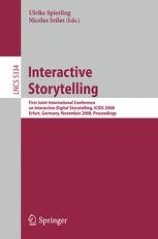
Interactive storytelling ; 1st Joint International Conference on interactive digital storytelling, ICIDS 2008 Erfurt, Germany, November 26-29, 2008 Proceedings
This book constitutes the refereed proceedings of the First Joint International Conference on Interactive Digital Storytelling, ICIDS 2008, held in Erfurt, Germany, in November 2008.The 19 revised full papers, 5 revised short papers, and 5 poster papers presented together with 3 invited lectures and 8 demo papers were carefully reviewed and selected from 62 submission. The papers are organized in topical sections on future perspectives on interactive digital storytelling, interactive storytelling applications, virtual characters and agents, user experience and dramatic immersion, architectures for story generation, models for drama management and interacting with stories, as well as authoring and creation of interactive narrative.
