



Page 1
Page 1

Online Communities and Social Computing ; 2nd International Conference, OCSC 2007, Held as Part of HCI International 2007, Beijing, China, July 22-27, 2007, Proceedings
The 12th International Conference on Human-Computer Interaction, HCI Inter- tional 2007, was held in Beijing, P.R. China, 22-27 July 2007. This volume, edited by Douglas Schuler, contains papers in the thematic area of Online Communities and Social Computing, addressing the following major topics: • Designing and Developing On-line Communities • Knowledge, Collaboration, Learning and Local On-line Communities
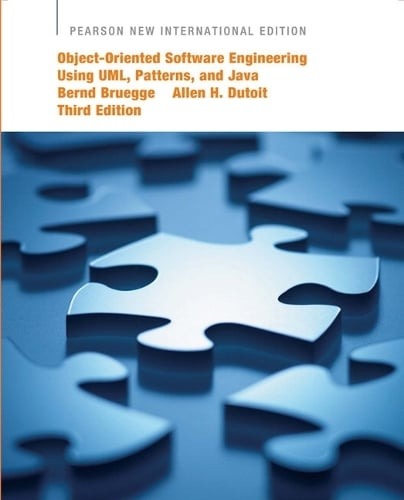
Object-Oriented Software Engineering Using UML Patterns and Java
Shows students how to use both the principles of software engineering and the practices of various object-oriented tools, processes, and products. Using a step-by-step case study to illustrate the concepts and topics in each chapter, Bruegge and Dutoit emphasize learning object-oriented software engineer through practical experience: students can apply the techniques learned in class by implementing a real-world software project. The third edition addresses new trends, in particular agile project management (Chapter 14 Project Management) and agile methodologies (Chapter 16 Methodologies).

Numerical Methods Using Java : For Data Science, Analysis, and Engineering
Covers a wide range of topics, including chapters on linear algebra, root finding, curve fitting, differentiation and integration, solving differential equations, random numbers and simulation, a whole suite of unconstrained and constrained optimization algorithms, statistics, regression and time series analysis. The mathematical concepts behind the algorithms are clearly explained, with plenty of code examples and illustrations to help even beginners get started. You will: Program in Java using a high-performance numerical library / Learn the mathematics for a wide range of numerical computing algorithms / Convert ideas and equations into code / Put together algorithms/ and classes to build your own engineering solution / Build solvers for industrial optimization problems / Do data analysis using basic and advanced statistics

Numerical Mathematics and Advanced Applications ENUMATH 2019 ; European Conference, Egmond aan Zee, The Netherlands, September 30 - October 4
It contians basic aspects and new trends in numerical mathematics and scientific and industrial applications, all examined at the highest level of international expertise.

New Horizons of Parallel and Distributed Computing
Parallel and distributed computing is one of the foremost technologies for shaping future research and development activities in academia and industry. Hyperthreading in Intel processors, hypertransport links in next generation AMD processors, multicore silicon in today’s high-end microprocessors, emerging cluster and grid computing, has moved parallel/distributed computing into the mainstream of computing. New Horizons of Parallel and Distributed Computing is a collection of self-contained chapters written by pioneers and researchers to provide solutions for newly emerging problems in this field. This volume will not only provide novel ideas, work in progress and state-of-the-art techniques in the field, but also stimulate future research activities in the area of parallel and distributed computing with applications. New Horizons of Parallel and Distributed Computing is intended for researchers and graduate students in computer science and electrical engineering, as well as researchers and developers in industry. This book can be used as a textbook and a reference for use by students, researchers, and developers.

New Frontiers in Applied Artificial Intelligence ; 21st International Conference on Industrial, Engineering and Other Applications of Applied Intelligent Systems, IEA/AIE 2008 Wrocław, Poland, June 18-20, 2008 Proceedings
The 75 revised full papers presented were carefully reviewed and selected from 302 submissions. The papers are organized in topical sections on computer vision, fuzzy system applications, robot and manufacturing, data mining and KDS, neural networks, machine learning, natural language processing, internet application and education, heuristic search, application systems, agent-based system, evolutionary and genetic algorithms, knowledge management, and other applications. The book concludes with 15 contributions from the following special sessions: knowledge driven manufacturing systems, joint session on adaptive networked systems and fuzzy knowledge bases, and software agents and multi-agent systems.

New Directions in Human Information Behavior
The book presents chapters by an interdisciplinary range of scholars who show new directions that often challenge the established views and paradigms of information behavior studies. Beginning with an evolutionary framework, the book examines information behaviors over various epochs of human existence from the Palaeolithic Era and within pre-literate societies, to contemporary behaviors by 21st century humans. Drawing upon social and psychological science theories the book presents a more integrated and holistic approach to the understanding of information behaviors that include multitasking and non-linear longitudinal processes, individuals’ information ground, information practices and information sharing, digital behaviors and human information organizing behaviors. The final chapter of the book integrates these new approaches and presents an overview of the key trends, theories and models for further research.

New Directions in Cognitive Information Retrieval
New Directions in Cognitive Information Retrieval presents an exciting new direction for research into cognitive oriented information retrieval (IR) research, a direction based on an analysis of the user’s problem situation and cognitive behavior when using the IR system. This contrasts with the current dominant IR research paradigm which concentrates on improving IR system matching performance. The chapters describe the leading edge concepts and models of cognitive IR that explore the nexus between human cognition, information and the social conditions that drive humans to seek information using IR systems. Chapter topics include: Polyrepresentation, cognitive overlap and the boomerang effect, Multitasking while conducting the search, Knowledge Diagram Visualizations of the topic space to facilitate user assimilation of information, Task, relevance, selection state, knowledge need and knowledge behavior, search training built into the search, children’s collaboration for school projects, and other cognitive perspectives on IR concepts and issues.

Neuroscribe = نيوروسكرايب
Neuroscribe is a cutting-edge deep learning framework designed to address the complexities and inefficiencies encountered in existing frameworks like PyTorch and TensorFlow. Aimed at streamlining model development and enhancing performance across diverse hardware environments, NeuroScribe offers a lightweight and flexible solution. The framework features a robust tensor library, an auto-differentiation engine, a comprehensive neural network module, and advanced optimization algorithms. With built-in visualization tools and a user-friendly interface, NeuroScribe simplifies both beginner and advanced workflows. Its cross-platform compatibility, supported by CUDA and Metal Performance Shaders (MPS), ensures optimal performance, and in some scenarios, NeuroScribe demonstrates superior speed compared to leading frameworks. Additionally, NeuroScribe introduces unique libraries and features not found in other frameworks, further enhancing its versatility and appeal. The modular architecture and automatic system detection further enhance its adaptability, making NeuroScribe a versatile and powerful tool for deep learning practitioners.

Networking and Mobile Computing ; 3rd International Conference, ICCNMC 2005, Zhangjiajie, China, August 2-4, 2005, Proceedings
The objective of this conference was to address and capture highly innovative and stateof-the-art research and work in the networks and mobile computing industries. ICCNMC 2005 allowed sharing of the underlying theories and applications, and the establishment of new and long-term collaborative channels aimed at developing innovative concepts and solutions geared to future markets. The highly positive response to ICCNMC 2001 and ICCNMC 2003, held in Beijing and Shanghai, respectively, encouraged us to continue this international event. In its third year, ICCNMC 2005 continued to provide a forum for researchers, professionals, and industrial practitioners from around the world to report on new advances in computer network and mobile computing, as well as to identify issues and directions for research and development in the new era of evolving technologies.

NETWORKING 2005. Networking Technologies, Services, and Protocols ; Performance of Computer and Communication Networks ; Mobile and Wireless Communications Systems ; 4th International IFIP-TC6 Networking Conference, Waterloo, Canada, May 2-6, 2005, Proceedings
This book constitutes the refereed proceedings of the 4th International IFIP-TC6 Networking Conference, NETWORKING 2005, held in Waterloo, Canada in May 2005. The 105 revised full papers and 36 posters were carefully reviewed and selected from 430 submissions. The papers are organized in topical sections on peer-to-peer networks, Internet protocols, wireless security, network security, wireless performance, network service support, network modeling and simulation, wireless LAN, optical networks, Internet performance and Web applications, ad-hoc networks, adaptive networks, radio resource management, Internet routing, queuing models, monitoring, network management, sensor networks, overlay multicast, QoS, wirless scheduling, multicast traffic management and engineering, mobility management, bandwith management, DCMA, and wireless resource management.

Networked Neighbourhoods : The Connected Community in Context
The setting for this book is the networked community. The treatment of the subject matter is broad and interdisciplinary, with contributions from computer science, sociology, design, human factors and communication technology. The chapter contributors, drawn from across Europe and North America, offer a varied prospectus of commentary, critique, sociological enquiry, technological development and research findings, which provides a rounded account of the progressive intermingling of social and electronic networks.

Network Analysis : Methodological Foundations
‘Network’ is a heavily overloaded term, so that ‘network analysis’ means different things to different people. Specific forms of network analysis are used in the study of diverse structures such as the Internet, interlocking directorates, transportation systems, epidemic spreading, metabolic pathways, the Web graph, electrical circuits, project plans, and so on. There is, however, a broad methodological foundation which is quickly becoming a prerequisite for researchers and practitioners working with network models. From a computer science perspective, network analysis is applied graph theory. Unlike standard graph theory books, the content of this book is organized according to methods for specific levels of analysis (element, group, network) rather than abstract concepts like paths, matchings, or spanning subgraphs. Its topics therefore range from vertex centrality to graph clustering and the evolution of scale-free networks. In 15 coherent chapters, this monograph-like tutorial book introduces and surveys the concepts and methods that drive network analysis, and is thus the first book to do so from a methodological perspective independent of specific application areas.

Multi-point Interaction with Real and Virtual Objects
This edited book covers some of the most challenging problems on the forefront of today’s research on physical interaction with real and virtual objects, with special emphasis on modelling contacts between objects, grasp planning algorithms, haptic perception, and advanced design of hands, devices and interfaces.

Multiobjective Problem Solving from Nature : From Concepts to Applications
he book focuses on how MOEAs and related techniques can be used to solve problems, particularly in the disciplines of science and engineering. Contributions by leading researchers show how the concepts of multiobjective optimization can be used to reformulate and resolve problems in broad areas such as constrained optimization, coevolution, classification, inverse modelling and design. The book is distinguished from other texts on MOEAs in that it is not primarily about the algorithms, nor specific applications, but about the concepts and processes involved in solving problems using a multiobjective approach. Each chapter contributes to the central, deep concepts and themes of the book: evaluating the utility of the multiobjective approach; discussing alternative problem formulations; showing how problem formulation affects the search process; and examining solution selection and decision making.

Multimedia Retrieval
The single chapters of this textbook explain the general architecture of multimedia information retrieval systems; various metadata languages like Dublin Core, RDF, or MPEG; pattern recognition through Markov models, unsupervised learning, and pattern clustering; various indexing approaches to audio and video streams; interaction and control; the protection of content and user privacy; and search effectiveness and efficiency.

Multimedia Database Retrieval : A Human-Centered Approach
Multimedia Database Retrieval: A Human-Centered Approach presents the latest development in user-centered methods and the state-of-the-art in visual media retrieval. It includes discussion on perceptually inspired non-linear paradigm in user-controlled interactive retrieval (UCIR) systems. It also features a coherent approach which focuses on specific topics within content/concept-based retrievals via audio-visual information modeling of multimedia. Highlights include: * Exploring an adaptive machine that can learn from its environment * Optimizing the learning system by incorporating self-organizing adaptation into the retrieval process * Demonstrating state-of-the-art applications within small, medium, and large databases
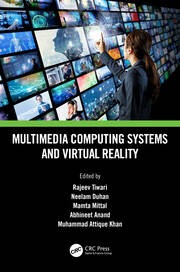
Multimedia computing systems and virtual reality
Presents recent advancements in multimedia systems as they relate to various application areas such as healthcare services and agriculture-related industries. The authors also discuss human-machine interface design, graphics modelling, rendering/animation, image/graphics techniques/systems and visualization. They then go on to explore multimedia content adaptation for interoperable delivery. Finally, the book covers cultural heritage, philosophical/ethical/societal/international issues, standards-related virtual technology and multimedia uses. This book is intended for computer engineers and computer scientists developing applications for multimedia and virtual reality and professionals working in object design and visualization, transformation, modelling and animation of the real world.

Multi-dimensional Approaches Towards New Technology : Insights on Innovation, Patents and Competition
This open access edited book captures the complexities and conflicts arising at the interface of intellectual property rights (IPR) and competition law. To do so, it discusses four specific themes: (a) policies governing functioning of standard setting organizations (SSOs), transparency and incentivising future innovation; (b) issue of royalties for standard essential patents (SEPs) and related disputes; (c) due process principles, procedural fairness and best practices in competition law; and (d) coherence of patent policies and consonance with competition law to support innovation in new technologies.

Motion-Free Super-Resolution
With the explosion of Internet technology and graphics engines, digital images are now everywhere. Image capturing tools are all pervading - in our pockets to inside a satellite. And although imaging applications demand an availability to high resolution images, such images are not picture perfect and may be lacking sufficient details. This requires that these images be super-resolved for improved details. How to achieve this is what constitutes research in the area of image super-resolution. Motion-Free Super-Resolution explores new technology for image super-resolution - applying cues other than the motion cue in super-resolving a scene. This book will serve as an essential reference for both academecians and practicing engineers in the area of image processing and computer vision, as well as providing a basis for ongoing research in this field.
