



Page 1
Page 1

Implementation and Application of Functional Languages ; Vol. 4015 ; 17th International Workshop, IFL 2005, Dublin, Ireland, September 19-21, 2005, Revised Selected Papers
The 17th International Workshop on Implementation and Application of Functional Languages (IFL 2005) was held in Dublin, Ireland, September 19–21, 2005. It was organized by the Department of Computer Science at Trinity College, University of Dublin. IFL 2005 was the 17th event in the annual series of IFL workshops. The aim of the workshop series is to bring together researchers actively engaged in the implementation and application of functional and function-based programming languages. It provides an open forum for researchers who wish to present and discuss new ideas and concepts, work in progress, preliminary results, etc., related primarily, but not exclusively, to the implementation and application of functional languages. Topics of interest cover a wide range from theoretical aspects over language design and implementation towards applications and tool support.

Implementation and application of functional languages ; Vol. 3474 ; 16th International Workshop, IFL 2004, Lübeck, Germany, September 8-10, 2004, Revised Selected Papers
The 16th International Workshop on Implementation and Application of Fu- tional Languages (IFL 2004) was held in Lub ¨ eck, Germany, September 8–10, 2004. It was jointly organized by the Institute of Computer Science and Applied Mathematics of the University of Kiel and the Institute of Software Technology and Programming Languages of the University of Lub ¨ eck. IFL 2004 was the sixteenth event in the annual series of IFL workshops. The aim of the workshop series is to bring together researchers actively engaged in the implementation and application of functional and function-based progr- ming languages. It provides an open forum for researchers who wish to present and discuss new ideas and concepts, work in progress, preliminary results, etc., related primarily, but not exclusively, to the implementation and application of functional languages. Topics of interest cover a wide range from theoretical - pects over language design and implementation towards applications and tool support.
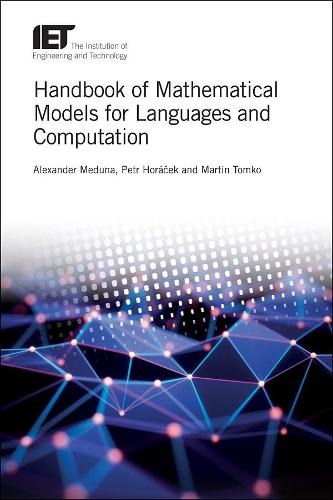
Handbook Of Mathematical Models For Languages And Computation
Introduces a variety of concepts in discrete mathematics and mathematical modeling for languages and computation. The authors pay special attention to the implementation of mathematical concepts to explain clearly how to encode them in computational practice. All computer programs are written in C#. The theory of computation is used to address challenges arising in many computer science areas such as artificial intelligence, language processors, compiler writing, information and coding systems, programming language design, computer architecture and more. To grasp topics concerning this theory readers need to familiarize themselves with its computational and language models, based on concepts of discrete mathematics including sets, relations, functions, graphs and logic.
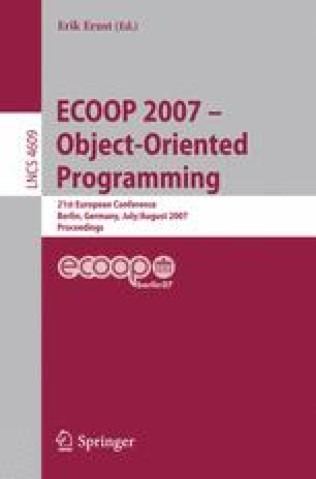
ECOOP 2007 – Object-Oriented Programming ; 21th European Conference, Berlin, Germany, July 30 - August 3, 2007, Proceedings
This book contains sections on runtime implementation, empirical studies, programs and predicates, language design, inheritance and derivation, aspects, as well as language about language.
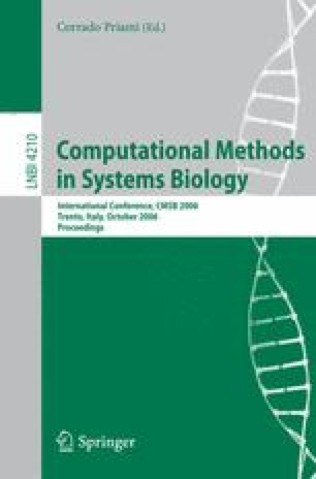
Computational methods in systems biology ; Vol. 4210 ; International Conference, CMSB 2006, Trento, Italy, October 18-19, 2006, Proceedings
This book constitutes the refereed proceedings of the International Conference on Computational Methods in Systems Biology, CMSB 2006, held in Trento, Italy, in October 2006. The papers present a variety of techniques from computer sciences, such as language design, concurrency theory, software engineering, and formal methods.

Computational methods in systems biology ; International Conference CMSB 2007, Edinburgh, Scotland, September 20-21, 2007, Proceedings
This book presented present a variety of techniques from computer science, such as language design, concurrency theory, software engineering, and formal methods, for biologists, physicists, and mathematicians interested in the systems-level understanding of cellular processes.
Compiler construction ; Vol. 3923 : 15th International Conference, CC 2006, Held as Part of the Joint European Conferences on Theory and Practice of Software, ETAPS 2006, Vienna, Austria, March 30-31, 2006, Proceedings
ETAPS 2006 was the ninth instance of the European Joint Conferences on Theory and Practice of Software. ETAPS is an annual federated conference that was established in 1998 by combining a number of existing and new conferences. The events that comprise ETAPS address various aspects of the system devel- ment process, including speci?cation, design, implementation, analysis and impro- ment. The languages, methodologies and tools which support these activities are all well within its scope. Di?erent blends of theory and practice are represented, with an inclination towards theory with a practical motivation on the one hand and soundly based practice on the other.
Compiler construction ; Vol. 3443 : 14th International Conference, CC 2005, Held as Part of the Joint European Conferences on Theory and Practice of Software, ETAPS 2005, Edinburgh, UK, April 4-8, 2005. Proceedings
"This book constitutes the refereed proceedings of 14th International Conference, CC 2005, Held as Part of the Joint European Conferences on Theory and Practice of Software, ETAPS 2005, including Topics Programming Languages, Compilers, Interpreters Logics and Meanings of Programs / Mathematical Logic and Formal Languages / Software Engineering / Artificial Intelligence"
Advanced Topics in Exception Handling Techniques
Modern software systems are becoming more complex in many ways and are having to cope with a growing number of abnormal situations which, in turn, are increasingly complex to handle.This book is composed of five parts; the first four deal with topics related to exception handling in the context of programming languages, concurrency and operating systems, pervasive computing systems, and requirements and specifications. The last part focuses on case studies, experimentation and qualitative comparisons. The 16 coherently written chapters by leading researchers competently address a wide range of issues in exception handling.
