



Page 9
Page 9
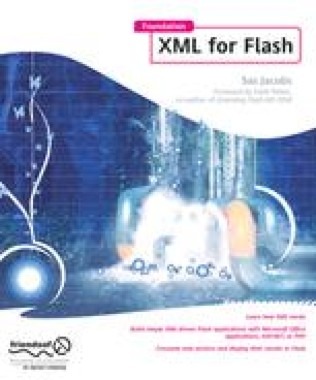
Foundation XML for Flash
XML is a completely platform-agnostic data medium. Flash is able to make use of XML data, which is very useful when creating rich Internet applications. It allows you to populate Flash web interfaces with data from almost any source that supports XML as a data medium, be it databases, raw XML files, or more excitingly, .NET applications, Web Services, and even Microsoft Office applications like Excel and Word! In this book, Sas Jacobs first introduces XML itself—what it is, its syntax, its associated technologies (such as CSS and XSLT,) and how to get XML out of your applications in a format Flash can use. Then, she shows how to use the XML object to stream XML data into Flash, and how to use the XMLConnector component and XML Sockets to build advanced Flash/XML applications.
Formal Methods and Software Engineering ; Vol. 3785 ; 7th International Conference on Formal Engineering Methods, ICFEM 2005, Manchester, UK, November 1-4, 2005, Proceedings
This volume contains papers presented at the 7th International Conference on Formal Engineering Methods (ICFEM 2005), 1-4 November 2005, Manchester, UK. Formal engineering methods are changing the way that systems are dev- oped. With language and tool support, these methods are being used for se- automatic code generation, and for the automatic abstraction and checking of implementations. In the future, they will be used at every stage of development: requirements, speci?cation, design, implementation, testing, anddocumentation. The aim of ICFEM 2005 was to bring together those interested in the - plication of formal engineering methods to computer systems. Researchers and practitioners, from industry, academia, and government, were encouraged to - tend, and to help advance the state of the art. The conference was supported by sponsorships from Microsoft Research, USA, the Software Engineers Association of Japan, the University of Man- ester, Manchester City Council, FormalMethods Europe (FME) and the British Computer Society FormalAspects ofComputing Specialist Group(BCS-FACS). We wish to thank these sponsors for their generosity. The ?nal programme consisted of 3 invited talks and 30 technical papers selected from a total of 74 submissions. The invited speakers were: Anthony Hall, independent consultant, UK; Egon B] orger, University of Pisa, Italy; John Rushby, SRI, USA. Their talks were sponsored by BCS-FACS, Microsoft - search and FME respectively. We wish to thank the invited speakers for their inspiring talks.
Formal concept analysis ; Vol. 3403 ; 3rd International Conference, ICFCA 2005, Lens, France, February 14-18, 2005, Proceedings
This book constitutes a comprehensive and systematic presentation of the state of the art of formal concept analysis and its applications. The first part of the book is devoted to foundational and methodological topics. The contributions in the second part demonstrate how formal concept analysis is successfully used outside of mathematics, in linguistics, text retrieval, association rule mining, data analysis, and economics. The third part presents applications in software engineering.
Formal Concept Analysis ; 6th International Conference, ICFCA 2008, Montreal, Canada, February 25-28, 2008. Proceedings
Formal Concept Analysis (FCA) is a mathematical theory of concepts and c- ceptual hierarchyleadingto methods for conceptually analyzing data and kno- edge. The theory itselfstronglyreliesonorder and lattice theory,whichhasbeen studied by mathematicians over decades. FCA proved itself highly relevant in several applications from the beginning , and, over the last years, the range of application shaskept growing. The mainreasonfor this comesfromthe fact that our modern society has turned into an “information” society. After years and years of using computers, companies realized they had stored gigantic amounts of data.

Formal aspects in security and trust ; Vol. 173 ; IFIP TC1 WG1.7 Workshop on Formal Aspects in Security and Trust (FAST), World Computer Congress, August 22-27, 2004, Toulouse, France
The IFIP series publishes state-of-the-art results in the sciences and technologies of information and communication. The scope of the series includes: foundations of computer science; software theory and practice; education; computer applications in technology; communication systems; systems modeling and optimization; information systems; computers and society; computer systems technology; security and protection in information processing systems; artificial intelligence; and human-computer interaction. Proceedings and post-proceedings of referred international conferences in computer science and interdisciplinary fields are featured. These results often precede journal publication and represent the most current research. The principal aim of the IFIP series is to encourage education and the dissemination and exchange of information about all aspects of computing.
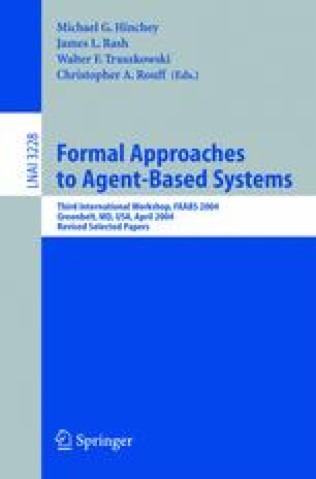
Formal Approaches to Agent-Based Systems ; 3rd International Workshop, FAABS 2004, Greenbelt, MD, April 26-27, 2004, Revised Selected Papers
The 3rd Workshop on Formal Approaches to Agent-Based Systems (FAABS-III) was held at the Greenbelt Marriott Hotel (near NASA Goddard Space Flight Center) in April 2004 in conjunction with the IEEE Computer Society. The first FAABS workshop was help in April 2000 and the second in October 2002. Interest in agent-based systems continues to grow and this is seen in the wide range of conferences and journals that are addressing the research in this area as well as the prototype and developmental systems that are coming into use. Our third workshop, FAABS-III, was held in April, 2004. This volume contains the revised papers and posters presented at that workshop. The Organizing Committee was fortunate in having significant support in the planning and organization of these events, and were privileged to have wor- renowned keynote speakers Prof. J Moore (FAABS-I), Prof. Sir Roger Penrose (FAABS-II), and Prof. John McCarthy (FAABS-III), who spoke on the topic of se- aware computing systems, auguring perhaps a greater interest in autonomic computing as part of future FAABS events. We are grateful to all who attended the workshop, presented papers or posters, and participated in panel sessions and both formal and informal discussions to make the workshop a great success. Our thanks go to the NASA Goddard Space Flight Center, Codes 588 and 581 (Software Engineering Laboratory) for their financial support and to the IEEE Computer Society (Technical Committee on Complexity in Computing) for their sponsorship and organizational assistance.
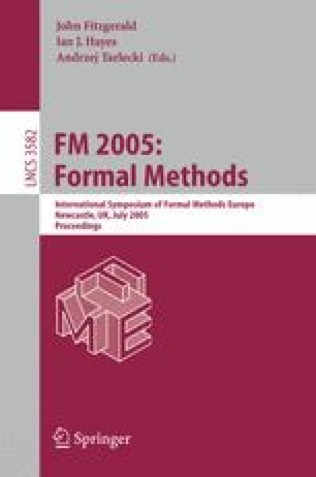
FM 2005: Formal Methods ; International Symposium of Formal Methods Europe, Newcastle, UK, July 18-22, 2005, Proceedings
This volume contains the proceedings of Formal Methods 2005, the 13th InternationalSymposiumonFormalMethodsheldinNewcastleuponTyne,UK, during July 18–22, 2005. Formal Methods Europe (FME, www.fmeurope.org) is an independent association which aims to stimulate the use of, and research on, formal methods for system development. FME conferences began with a VDM Europe symposium in 1987. Since then, the meetings have grown and have been held about once every 18 months. Throughout the years the symposia have been notablysuccessfulinbringingtogetherresearchers,tooldevelopers,vendors,and users, both from academia and from industry. Formal Methods 2005 con?rms this success. We received 130 submissions to the main conference, from all over the world. Each submission was carefully refereed by at least three reviewers. Then, after an intensive, in-depth discussion, the Program Committee selected 31 papers for presentation at the conference. They form the bulk of this volume.

FitBuddy : An artificial intelligence powered personal trainer
FitBuddy App is a sports application that employs artificial intelligence in its job as a personal trainer that enables users to exercise anywhere with convenience, tremendous benefit, and high accuracy. The user can exercise with or without weights, in addition to cycling and running. The user must first provide the application with the personal data it has asked for in order to create an appropriate sports program for the user. After that, the user may explore the sports program's weeks and day's sections.
Financial cryptography and data security Vol. 3570 ; 9th International Conference, FC 2005, Roseau, The Commonwealth Of Dominica, February 28 - March 3, 2005, Revised Papers
The 9th International Conference on Financial Cryptography and Data Security (FC 2005) was held in the Commonwealth of Dominica from February 28 to March 3, 2005. This conference, organized by the International Financial Cryptography Association (IFCA), continues to be the premier international forum for research, exploration, and debate regarding security in the context of finance and commerce. The conference title and scope was expanded this year to cover all aspects of securing transactions and systems. The goal is to build an interdisciplinary meeting, bringing together cryptographers, data-security specialists, business and economy researchers, as well as economists, IT professionals, implementers, and policy makers. We think that this goal was met this year. The conference received 90 submissions and 24 papers were accepted, 22 in the Research track and 2 in the Systems and Applications track. In addition, the conference featured two distinguished invited speakers, Bezalel Gavish and Lynne Coventry, and two interesting panel sessions, one on phishing and the other on economics and information security. Also, for the first time, some of the papers that were judged to be very strong but did not make the final program were selected for special invitation to our Works in Progress (Rump) Session that took place on Wednesday evening.
Financial cryptography and data security ; 12th International Conference, FC 2008, Cozumel, Mexico, January 28-31, 2008. Revised Selected Papers
This book constitutes the thoroughly refereed post-conference proceedings of the 12th International Conference on Financial Cryptography and Data Security, FC 2008, held in Cozumel, Mexico, in January 2008.The 16 revised full papers and 9 revised short papers presented together with 5 poster papers, 2 panel reports, and 1 invited lecture were carefully reviewed and selected from 86 submissions. The papers are organized in topical sections on attacks and counter measures, protocols, theory, hardware, chips and tags, signatures and encryption, as well as anonymity and e-cash.

Finance 4.0 - towards a socio-ecological finance system : A participatory framework to promote sustainability
The first is Bitcoin that infamously pursues a state-independent, decentralized conception of money. The second is Finance 4.0, a system that proposes a participatory multi-dimensional money system with built-in incentives for sustainable behavior
Fifth World Conference on Information Security Education ; Proceedings of the IFIP TC 11 WG 11.8, WISE 5, 19 to 21 June 2007, United States Military Academy, West Point, NY, USA
The scope of This book includes: foundations of computer science; software theory and practice; education; computer applications in technology; communication systems; systems modeling and optimization; information systems; computers and society; computer systems technology; security and protection in information processing systems; artificial intelligence; and human-computer interaction. Proceedings and post-proceedings of referred international conferences in computer science and interdisciplinary fields are featured. These results often precede journal publication and represent the most current research.
Fifth IFIP International Conference On Theoretical Computer Science - Tcs 2008 ; IFIP 20th World Computer Congress, TC 1, Foundations of Computer Science, September 7-10, 2008, Milano, Italy
Includes: foundations of computer science; software theory and practice; education; computer applications in technology; communication systems; systems modeling and optimization; information systems; computers and society; computer systems technology; security and protection in information processing systems; artificial intelligence; and human-computer interaction. Proceedings and post-proceedings of refereed international conferences in computer science and interdisciplinary fields are featured. These results often precede journal publication and represent the most current research. The principal aim of the IFIP series is to encourage education and the dissemination and exchange of information about all aspects of computing.
Fast software encryption ; Vol. 4047 ; 13th international workshop, FSE 2006, Graz, Austria, March 15-17, 2006, Revised Selected Papers
Fast Software Encryption (FSE) 2006 is the 13th in a series of workshops on symmetric cryptography. It has been sponsored for the last ?ve years by the International Association for Cryptologic Research (IACR), and previous FSE workshops have been held around the world: 1993 Cambridge, UK 1994 Leuven, Belgium 1996 Cambridge, UK 1997 Haifa, Israel 1998 Paris, France 1999 Rome, Italy 2000 New York, USA 2001 Yokohama, Japan 2002 Leuven, Belgium 2003 Lund, Sweden 2004 New Delhi, India 2005 Paris, France The FSE workshop is devoted to research on fast and secure primitives for symmetric cryptography, including the design and analysis of block ciphers, stream ciphers, encryption schemes, analysis and evaluation tools, hash fu- tions, and message authentication codes.

Fast software encryption ; Vol. 3557 ; 12th International Workshop, FSE 2005, Paris, France, February 21-23, 2005, Revised Selected Papers
The Fast Software Encryption 2005 Workshop was the twelfth in a series of annual workshops on symmetric cryptography, sponsored for the fourth year by the International Association for Cryptologic Research (IACR). The workshop concentratedonallaspectsoffastprimitivesforsymmetriccryptology, including thedesign, cryptanalysisandimplementationofblockandstreamciphersaswell as hash functions and message authentication codes. The ?rst FSE workshop was held in Cambridge in 1993, followed by Leuven in 1994, Cambridge in 1996, Haifain1997, Parisin1998, Romein1999, NewYorkin2000, Yokohamain2001, Leuven in 2002, Lund in 2003, and New Delhi in 2004. This year, a total of 96 submissions were received. After an extensive review by the Program Committee, 30 submissions were accepted.

Fashion forge
"Fashion forge" revolutionizes clothing shopping with a cutting-edge mobile application. This AI-powered platform empowers users to describe their dream garment and visualize it instantly, bridging the gap between imagination and reality for fashion-forward users and designers. A recommendation system tailors clothing suggestions based on user preferences, while stores leverage a dedicated social platform for effective marketing. "Fashion Forge" fosters a connected fashion community, empowering users, designers, and stores alike.

Fadfada
Sharing personal problems and true feeling on social media has a lot of fears and is not likable nowadays, because of bullying, shaming, and making fun of the user by other users, Fadfada is a multi-platform social networking service, that aims to give the users the ability to share their problems or feeling via written newsfeed (posts) or videos (stories) that had an impact on their psychological health without revealing their true identity, by putting a mask on their faces and changing their voices after recording the story. In addition to extracting features from posts and stories to match users based on it.
Extreme Programming and Agile Processes in Software Engineering ; Vol.3556 ; 6th International Conference, XP 2005, Sheffield, UK, June 18-23, 2005, Proceedings
Extreme Programming has come a long way since its ?rst use in the C3 project almost 10 years ago. Agile methods have found their way into the mainstream, and at the end of last year we saw the second edition of Kent Beck’s book on Extreme Programming, containing a major refactoring of XP. This year, the 6th International Conference on Extreme Programming and Agile Processes in Software Engineering took place June 18–23 in She?eld. As in the yearsbefore, XP 2005provideda unique forum for industry and academic professionals to discuss their needs and ideas on Extreme Programming and - ile methodologies. These proceedings re?ect the activities during the conference which ranged from presentation of research papers, invited talks, posters and demonstrations, panels and activity sessions, to tutorials and workshops. - cluded are also papers from the Ph.D. and Master’s Symposium which provided a forum for young researchers to present their results and to get feedback. Asvariedastheactivities werethe topicsofthe conferencewhichcoveredthe presentationofnewandimprovedpractices,empiricalstudies,experiencereports and case studies, and last but not least the social aspects of agile methods. The papers and the activities went through a rigorous reviewing process. Each paper was reviewed by at least three Program Committee members and wasdiscussedcarefullyamongtheProgramCommittee.Of62paperssubmitted, only 22 were accepted as full papers.
Explainable artificial intelligence in troke from the clinical, rehabilitation and nursing perspectives
As we know, strokes are one of the world's leading causes of death, and the cruel aspect of a stroke is that it leaves people with severe functional disability and/or cognitive impairment. Strokes have a significant impact on economies worldwide, as it is estimated that about 10% of the male population and 8% of the female population are affected by them. Such people need personal help in their everyday life and must be materially supported by social services. With the advancement of medicine, artificial intelligence, and new technologies have been developing rapidly and are gradually applied in diseases of the nervous system, increasingly helping diagnosis, treatment, rehabilitation, and prognosis of disease.
Expert Oracle Database Architecture : 9i and 10g Programming Techniques and Solutions
This is a defining book on the Oracle database for any developer or database administrator who works with Oracle-driven database applications. Tom Kyte has a simple philosophy: you can treat Oracle as a black box and just stick data into it or you can understand how it works and exploit it as a powerful computing environment. If you choose the latter, then you will find that there are few information management problems that you cannot solve quickly and elegantly. Expert Oracle Database Architecture is the first of a three-book series that completely explores and defines the Oracle database. It covers all of the most important Oracle architecture features, including: Files, memory structures and processes / Locking and latching / Transactions, concurrency and multi-versioning / Tables and Indexes / Datatypes / Partitioning and parallelism Each feature is taught in a proof-by-example manner, not only discussing what it is, but also how it works, how to implement software using it, and the common pitfalls associated with it.
