



Page 9
Page 9

Ambient Intelligence in Everyday Life : Foreword by Emile Aarts
Originating from the Workshop on Ambient Intelligence in Everyday Life held at the Miramar Congress Center, San Sebastian, Spain, in July 2005, this book is devoted to the cognitive aspects of ambient intelligence. The 15 carefully reviewed and revised articles presented are organized in topical sections on human-centric computing, ambient interfaces, and architectures for ambient intelligence.

Algorithms and architectures for parallel processing ; 8th International Conference, ICA3PP 2008, Cyprus, June 9-11, 2008 Proceedings
This book constitutes the refereed proceedings of the 8th International Conference on Algorithms and Architectures for Parallel Processing, ICA3PP 2008, held in Agia Napa, Cyprus, in June 2008.

Algorithms and architectures for parallel processing ; 7th International Conference, ICA3PP 2007, Hangzhou, China, June 11-14, 2007, Proceedings
The improvements in computation and communication capabilities have enabled the creation of demanding applications in critical domains such as the environment, health, aerospace, and other areas of science and technology. Similarly, new classes of applications are enabled by the availability of heterogeneous large-scale distributed systems which are becoming available nowadays (based on technologies such as grid and peer-to-peer systems).Parallel computing systems exploit a large diversity of computer architectures, from supercomputers, shared-memory or distributed-memory multi processors, to local networks and clusters of p- sonal computers. With the recent emergence of multi core architectures, parallel computing is now set to achieve “mainstream” status. Approaches that have been advocated by parallel computing researchers in the past are now being utilized in a number of software libraries and hardware systems that are available for everyday use. Parallel computing ideas have also come to dominate areas such as multi user gaming (especially in the development of gaming engines based on “cell” arc- tectures).
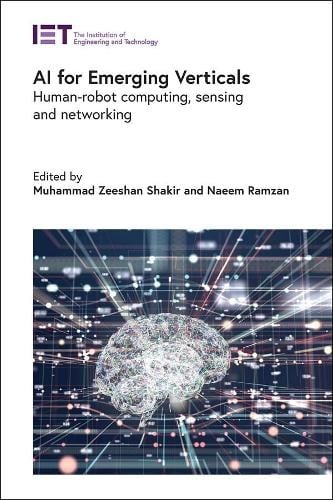
AI For Emerging Verticals : Human-robot computing, sensing and networking
Artificial intelligence (AI) and machine learning (ML) will play a major role. By adopting AI software and services, businesses can create predictive strategies, enhance their capabilities, better interact with customers, and streamline their business processes. Explores novel concepts and cutting-edge research and developments towards designing these fully automated advanced digital systems. Fostered by technological advances in artificial intelligence and machine learning, such systems potentially have a wide range of applications in robotics, human computing, sensing and networking. The chapters focus on models and theoretical approaches to guarantee automation in large multi-scale implementations of AI and ML systems; protocol designs to ensure AI systems meet key requirements for future services such as latency; and optimisation algorithms to leverage the trusted distributed and efficient complex architectures.

Agent-oriented software engineering VII ; 7th International Workshop, AOSE 2006, Hakodate, Japan, May 8, 2006, Revised and Invited Papers
Software architectures that contain many dynamically interacting components, each with their own thread of control, and engaging in complex coordination protocols, are difficult to correctly and efficiently engineer. Agent-oriented modelling techniques are important for supporting the design and development of such applications.The book is organized in topical sections on modelling and design of agent systems, modelling open agent systems, formal reasoning about designs, as well as testing, debugging and evolvability.

Agent-oriented software engineering V ; 5th International workshop, AOSE 2004, New York, NY, USA, July 2004, revised selected papers
The explosive growth of application areas such as electronic commerce, ent- prise resource planning and mobile computing has profoundly and irreversibly changed our views on software systems. Nowadays, software is to be based on open architectures that continuously change and evolve to accommodate new components and meet new requirements. Software must also operate on di?- ent platforms, without recompilation, and with minimal assumptions about its operating environment and its users. Furthermore, software must be robust and ¨ autonomous, capable of serving a naive user with a minimum of overhead and interference. Agent concepts hold great promise for responding to the new realities of software systems. They o?er higher-level abstractions and mechanisms which address issues such as knowledge representation and reasoning, communication, coordination, cooperation among heterogeneous and autonomous parties, p- ception, commitments, goals, beliefs, and intentions, all of which need conceptual modelling. On the one hand, the concrete implementation of these concepts can lead to advanced functionalities.
Advances in spatial and temporal databases ; 7th International symposium, SSTD 2001, Redondo Beach, CA, USA, July 12-15, 2001 Proceedings
The Seventh International Symposium on Spatial and Temporal Databases (SSTD 2001), held in Redondo Beach, CA, USA, July 12{15, 2001, brought together leading researchers and developers in the area of spatial, temporal, and spatio-temporal databases to discuss the state of the art in spatial and temporal data management and applications, and to understand the challenges and - search directions in the advancing area of data management for moving objects. The symposium served as a forum for disseminating research in spatial and temporal data management, and for maximizing the interchange of knowledge among researchers from the established spatial and temporal database com- nities. The exchange of research ideas and results not only contributes to the academic arena, but also bene ts the user and commercial communities.

Advances in Mass Data Analysis of Signals and Images in Medicine, Biotechnology and Chemistry ; International Conference, MDA 2006/2007, Leipzig, Germany, July 18, 2007, Selected Papers
The automatic analysis of images and signals in medicine, biotechnology, and chemistry is a challenging and demanding field. Signal-producing procedures by microscopes, spectrometers, and other sensors have found their way into wide fields of medicine, biotechnology, economy, and environmental analysis. With this arises the problem of the automatic mass analysis of signal information. Signal-interpreting systems which generate automatically the desired target statements from the signals are therefore of compelling necessity. The continuation of mass analyses on the basis of classical procedures leads to investments of proportions that are not feasible. New procedures and system architectures are therefore required. The goals of this: Provide a forum for identifying important contributions and opportunities for research on mass data analysis on microscopic images Promote the systematic study of how to apply automatic image analysis and interpretation procedures to that field Show case applications of mass data analysis in biology, medicine, and chemistry Topics of interest include (but are not limited to): Techniques and developments of signal and image producing procedures Object matching and object tracking in microscopic and video microscopic images 1D, 2D, and 3D shape analysis and description
Advances in databases and information systems ; 11th East European Conference, ADBIS 2007, Varna, Bulgaria, September 29-October 3, 2007, Proceedings
Contains database theory, development of advanced DBMS technologies, and their advanced applications.
Advances in computer systems architecture ; Vol. 4186 : 11th Asia-Pacific Conference, ACSAC 2006, Shanghai, China, September 6-8, 2006, Proceedings
This is the 11th in a series of conferences, which started life in Australia, as the computer architecture component of the Australian Computer Science Week. In 1999 it ventured away from its roots for the first time, and the fourth Australasian Computer Architecture Conference was held in the beautiful city of Sails (Auckland, New Zealand). Perhaps it was because of a lack of any other computer architecture conference in Asia or just the attraction of traveling to the Southern Hemisphere but the conference became increasingly international during the subsequent three years and also changed its name to include Computer Systems Architecture, reflecting more the scope of the conference, which embraces both architectural and systems issues. In 2003, .
Advances in computer systems architecture ; Vol. 3740 ; 10th Asia-Pacific conference, ACSAC 2005, Singapore, October 24-26, 2005, Proceedings
The papers are organized in topical sections on energy efficient and power aware techniques, methodologies and architectures for application-specific systems, processor architectures and microarchitectures, high-reliability and fault-tolerant architectures, compiler and OS for emerging architectures, data value predictions, reconfigurable computing systems and polymorphic architectures, interconnect networks and network interfaces, parallel architectures and computation models, hardware-software partitioning, verification, and testing of complex architectures, architectures for secured computing, simulation and performance evaluation, architectures for emerging technologies and applications, and memory systems hierarchy and management
Advances in computer systems architecture ; 12th Asia-Pacific Conference, ACSAC 2007, Seoul, Korea, August 23-25, 2007, Proceedings
Covering hardware and software techniques for state-of-the-art multicore and multithreaded architectures.
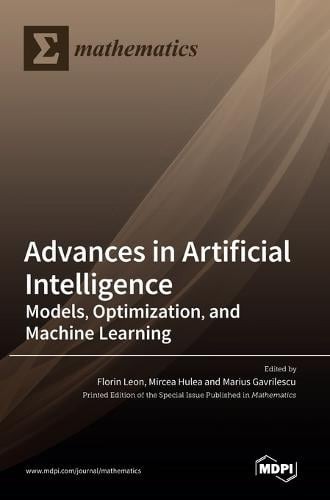
Advances in artificial intelligence: models, optimization, and machine learning
Contains all the articles accepted and published in the Special Issue “Advances in Artificial Intelligence: Models, Optimization, and Machine Learning” of the MDPI Mathematics journal, which covers a wide range of topics connected to the theory and applications of artificial intelligence and its subfields. These topics include, among others, deep learning and classic machine learning algorithms, neural modelling, architectures and learning algorithms, biologically inspired optimization algorithms, algorithms for autonomous driving, probabilistic models and Bayesian reasoning, intelligent agents and multiagent systems.

Advanced parallel processing technologies ; 6th International Workshop, APPT 2005, Hong Kong, China, October 27-28, 2005, Proceedings
APPT 2005: the 6th International Workshop on Advanced Parallel Processing Technologies. APPT is a biennial workshop on parallel and distributed processing. Its scope covers all aspects of parallel and distributed computing technologies , including architectures, software systems and tools, algorithms, and applications. This year, APPT 2005 received over 220 submissions from researchers all over the world. . The papers in this volume represent the forefront of research on parallel processing and related ?elds by researchers from China, Germany, USA, Korea, India, and other countries. The papers - cepted cover a wide range of exciting topics, including architectures, software, networking, and applications.

Ad-Hoc, mobile, and wireless networks ; Vol.3738 ; 4th International conference, ADHOC-NOW 2005, Cancun, Mexico, October 6-8, 2005, Proceedings
This book constitutes the refereed proceedings of the 4th International Conference on Ad-Hoc Networks and Wireless, ADHOiNOW 2005, The papers discuss architectures, protocols, and algorithms for: access control, scheduling, ad hoc and sensor networks analytic methods and modelling for performance evaluation, characterization, optimization, auto-configuration, incentives and pricing, location awareness, discovery, dependence, and management, mesh networks, new applications, power management, power control, and energy-efficiency, quality-of-service, resource allocation, multimedia, routing (unicast, multicast, etc.), security and privacy, service discovery, systems and testbeds, wireless internet, and data management.
Active Networks : IFIP TC6 6th International Working Conference, IWAN 2004, Lawrence, KS, USA, October 27-29, 2004, Revised Papers
The proceedings of the sixth Annual International Working Conference on Active Networks, which took place in October 2004 at The Information and Telecommunications Technology Center, The University of Kansas, USA. The proceedings of IWAN 2004 mark a transition between the funded active networking programs in Europe, Japan, and the United States and a strong, continued interest in the architectures of programmable networks.The papers are organized into sections on active network systems and architectures, security in active networking, active network applications, mobile active networks and active network management.

Access Control Models and Architectures For IoT and Cyber Physical Systems
Presents cybersecurity aspects of ubiquitous and growing IoT and Cyber Physical Systems. It also introduces a range of conceptual, theoretical, and foundational access control solutions. This was developed by the authors to provide an overall broader perspective and grounded approach to solve access control problems in IoT and CPS.
Accelerator Programming Using Directives ; 6th International Workshop, WACCPD 2019, Denver, CO, USA, November 18, 2019, Revised Selected Papers
This book constitutes the refereed post-conference proceedings of the 6th International Workshop on Accelerator Programming Using Directives, WACCPD 2019, held in Denver, CO, USA, in November 2019. The 7 full papers presented have been carefully reviewed and selected from 13 submissions. The papers share knowledge and experiences to program emerging complex parallel computing systems. They are organized in the following three sections: porting scientific applications to heterogeneous architectures using directives; directive-based programming for math libraries; and performance portability for heterogeneous architectures.
Abstract Computing Machines : A Lambda Calculus Perspective
The book addresses ways and means of organizing computations, highlighting the relationship between algorithms and the basic mechanisms and runtime structures necessary to execute them using machines. It completely abstracts from concrete programming languages and machine architectures, taking instead the lambda calculus as the basic programming and program execution model to design various abstract machines for its correct implementation. The emphasis is on fully normalizing machines based on full-fledged beta-reductions as essential prerequisites for symbolic computations that treat functions and variables truly as first-class objects. Their weakly normalizing counterparts are shown to be functional abstract machines that sacrifice the flavors of full beta-reductions for decidedly simpler runtime structures and improved runtime efficiency. Further downgrading of the lambda calculus leads to classical imperative machines that permit side-effecting operations on the runtime environment.
