



Page 7
Page 7

History of computing and education 2 (HCE2) ; IFIP 19th World Computer Congress, WG 9.7, TC 9: History of computing, Proceedings of the 2nd Conference on the history of computing and education, August 21-24, Santiago, Chile
International Federation for Information Processing The IFIP series publishes state-of-the-art results in the sciences and technologies of information and communication. The scope of the series includes: foundations of computer science; software theory and practice; education; computer applications in technology; communication systems; systems modeling and optimization; information systems; computers and society; computer systems technology; security and protection in information processing systems; artificial intelligence; and human-computer interaction. Proceedings and post-proceedings of referred international conferences in computer science and interdisciplinary fields are featured. These results often precede journal publication and represent the most current research. The principal aim of the IFIP series is to encourage education and the dissemination and exchange of information about all aspects of computing.
High performance computational science and engineering : IFIP TC5 Workshop on High Performance Computational Science and Engineering (HPCSE), World Computer Congress, August 22-27, 2004, Toulouse, France
The IFIP series publishes state-of-the-art results in the sciences and technologies of information and communication. The scope of the series includes: foundations of computer science; software theory and practice; education; computer applications in technology; communication systems; systems modeling and optimization; information systems; computers and society; computer systems technology; security and protection in information processing systems; artificial intelligence; and human-computer interaction. Proceedings and post-proceedings of referred international conferences in computer science and interdisciplinary fields are featured. These results often precede journal publication and represent the most current research. The principal aim of the IFIP series is to encourage education and the dissemination and exchange of information about all aspects of computing.

Heterogeneity in statistical genetics : How to assess, address, and account for mixtures in association studies
Heterogeneity, or mixtures, are ubiquitous in genetics. Even for data as simple as mono-genic diseases, populations are a mixture of affected and unaffected individuals. Still, most statistical genetic association analyses, designed to map genes for diseases and other genetic traits, ignore this phenomenon.In this book, we document methods that incorporate heterogeneity into the design and analysis of genetic and genomic association data. Among the key qualities of our developed statistics is that they include mixture parameters as part of the statistic, a unique component for tests of association. A critical feature of this work is the inclusion of at least one heterogeneity parameter when performing statistical power and sample size calculations for tests of genetic association.

Hebbian Learning and Negative Feedback Networks
This book is the outcome of a decade’s research into a speci?c architecture and associated learning mechanism for an arti?cial neural network: the - chitecture involves negative feedback and the learning mechanism is simple Hebbian learning. The research began with my own thesis at the University of Strathclyde, Scotland, under Professor Douglas McGregor which culminated with me being awarded a PhD in 1995 [52], the title of which was “Negative Feedback as an Organising Principle for Arti?cial Neural Networks”. Naturally enough, having established this theme, when I began to sup- vise PhD students of my own, we continued to develop this concept and this book owes much to the research and theses of these students at the Applied Computational Intelligence Research Unit in the University of Paisley . All of Chapters 3 to 8 deal with single stream arti?cial neural networks.

Healthcare solutions using machine learning and informatics
Covers novel and innovative solutions for the healthcare that apply machine learning and biomedical informatics technology. The healthcare sector is one of the most critical in society. This book presents a series of artificial intelligence, machine learning, intelligent IoT-based solutions for medical image analysis, medical big data processing, disease predictions. Machine learning and artificial intelligence use cases in healthcare presented in the book give researchers, practitioners, and students a wide range of practical examples of cross-domain convergence. The wide variety of topics covered include: Artificial Intelligence in healthcare Machine learning solutions for such disease as diabetes, arthritis, cardiovascular disease, and COVID-19 Big data analytics solutions for healthcare data processing Reliable biomedical applications using AI models Intelligent IoT in healthcare. The book explains fundamental concepts as well as the advanced use cases illustrating how to apply emerging technologies such as machine learning, AI models, data informatics into practice to tackle challenges in the field of healthcare with real-world scenarios. Chapters contributed by noted academicians and professionals examine various solutions, frameworks, applications, case studies, and best practices in the healthcare domain

Health information systems : Technological and management perspectives
Details a variety of scenarios in the context of both health and heath care, including where prevention and wellness are related, such as the treatment of both acute and chronic diseases. Stakeholder requirements are also described to provide perspectives for describing the architectures and management techniques associated with health information systems, enabling the reader to develop a detailed holistic overview of the subject. Health Information Systems: Technological and Management Perspectives features a detailed overview of how information systems in health care can be managed and is a vital resource for medical informatics students seeking an up-to-date text on the topic.
HCI and usability for medicine and health care ; 3rd Symposium of the Workgroup Human-computer interaction and usability engineering of the Austrian Computer Society, USAB 2007 Graz, Austria, November, 22, 2007, Proceedings
The work group Human–Computer Interaction & Usability Engineering (HCI&UE) of the Austrian Computer Society (OCG) serves as a platform for interdisciplinary exchange, research and development. Our 2007 topic was “Human–Computer Interaction for Medicine and Health Care” (HCI4MED), Medical information systems are already extremely sophisticated and technological performance increases exponentially.

HCI and usability for education and work ; 4th Symposium of the Workgroup Human-Computer Interaction and Usability Engineering of the Austrian Computer Society, USAB 2008, Graz, Austria, November 20-21, 2008. Proceedings
This book constitutes the refereed proceedings of the 4th Usability Symposium of the Human-Computer Interaction and Usability Engineering Workgroup of the Austrian Computer Society, USAB 2008, held in Graz, Austria, in November 2008.The 7 revised full papers and 26 revised short papers presented were carefully reviewed and selected from 85 submissions. The papers are organized in topical sections on cognitive processes and end user experience, social software and collaborative knowledge development, knowledge processing, assessment and human performance.
Haptics : Perception, Devices and Scenarios ; 6th International Conference, EuroHaptics 2008 Madrid, Spain, June 10-13, 2008 Proceedings
This book constitutes the refereed proceedings of the 6th International Conference on Human Haptic Sensing and Touch Enabled Computer Applications, EuroHaptics 2008, held in Madrid, Spain, in June 2008.The 119 revised full papers presented were carefully reviewed and selected from 150 submissions. The papers are organized in topical sections on control and technology, haptic perception and psychophysics, haptic devices, haptics rendering and display, multimodal interaction and telepresence, as well as haptic applications.

Haptic and Audio Interaction Design ; 3rd International Workshop, HAID 2008 Jyväskylä, Finland, September 15-16, 2008 Proceedings
This book constitutes the refereed proceedings of the Third International Workshop on Haptic and Audio Interaction Design, HAID 2008 held in Jyväskylä, Finland, in September 2008.The 13 revised full papers presented were carefully reviewed and selected for inclusion in the book. The papers are organized in topical sections on visual impairment, applications of multimodality, evaluation, conceptual integration of audio and haptics, interaction techniques, and perception.

Handbook of smart cities
This Handbook presents a comprehensive and rigorous overview of the state-of-the-art on Smart Cities. It provides the reader with an authoritative, exhaustive one-stop reference on how the field has evolved and where the current and future challenges lie. From the foundations to the many overlapping dimensions (human, energy, technology, data, institutions, ethics etc.)

Guide to software systems development : Connecting novel theory and current practice
This book argues that the key problems of software systems development (SSD) are socio-technical rather than purely technical in nature. Software systems are unique. They are the only human artefacts that are both intangible and determinant. This presents unprecedented problems for the development process both in determining what is required and how it is developed. Primarily this is a problem of communications between stakeholders and developers, and of communications within the development team. Current solutions are not only inadequate in expressing the technical problem, they also evade the communications problems almost entirely.
Grid Computing : Software Environments and Tools
The book provides: • Discussion of software engineering and modelling tools for the Grid • Analysis of issues inherent in enabling distributed computing across the Grid • Consideration of the software engineering support necessary for managing Grid applications • Proposal of a posited software engineering lifecycle to support application development for Grid Environments (along with associated tools). • Identification of novel concepts, methods and tools within Grid computing which can be put to work in the context of existing experiments and application case studies

Graph-based representations in pattern recognition ; 5th IAPR International Workshop, GbRPR 2005, Poitiers, France, April 11-13, 2005, Proceedings
Many vision problems have to deal with di?erent entities (regions, lines, line junctions, etc.) and their relationships. These entities together with their re- tionships may be encoded using graphs or hypergraphs. The structural inf- mation encoded by graphs allows computer vision algorithms to address both the features of the di?erent entities and the structural or topological relati- ships between them. Moreover, turning a computer vision problem into a graph problem allows one to access the full arsenal of graph algorithms developed in computer science. The Technical Committee (TC15, http://www.iapr.org/tcs.html) of the IAPR (International Association for Pattern Recognition) has been funded in order to federate and to encourage research work in these ?elds. Among its - tivities, TC15 encourages the organization of special graph sessions at many computer vision conferences and organizes the biennial workshop GbR.

Graph structures for knowledge representation and reasoning ; 6th International Workshop, GKR 2020, virtual event, September 5, 2020, revised selected papers
This book constitutes the thoroughly refereed post-conference proceedings of the 6th International Workshop on Graph Structures for Knowledge Representation and Reasoning, GKR 2020, held virtually in September 2020, associated with ECAI 2020, the 24th European Conference on Artificial Intelligence.
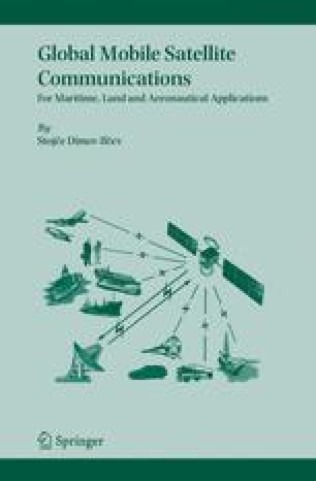
Global mobile satellite communications : For maritime, Land and aeronautical applications
This book is important for modern shipping, truck, train and aeronautical societies because GMSC in the present millennium provides more effective business and trade, with emphasis on safety and commercial communications. Global Mobile Satellite Communications is written to make bridges between potential readers and current GMSC trends, mobile system concepts and network architecture using a simple mode of style with understandable technical information, characteristics, graphicons, illustrations and mathematics equations

Global E-Security ; 4th International Conference, ICGeS 2008, London, UK, June 23-25, 2008. Proceedings
This book constitutes the refereed proceedings of the 4th International Conference on Global E-Security, ICGeS 2008, held in London, UK, in June 2008.The 36 revised full papers presented were carefully reviewed and selected from numerous submissions. The papers are organized in topical sections on cybercrime and digital forensics investigation, voice and video over internet protocols security, computer security, security architecture and authorisations, and IT governance.

Gesture smart control
Nowadays actions are increasingly being handled in electronic ways, instead of physical interaction. From earlier times biometrics is used in the authentication of a person. It recognizes a person by using a human trait associated with it like eyes (by calculating the distance between the eyes) and using hand gestures, fingerprint detection, face detection etc. Advantages of using these traits for identification are that they uniquely identify a person and cannot be forgotten or lost. These are unique features of a human being which are being used widely to make the human life simpler. Hand gesture recognition system is a powerful tool that supports efficient interaction between the user and the computer.
Geometric Algebra for Computer Graphics
The first five chapters review the algebras of real numbers, complex numbers, vectors, and quaternions and their associated axioms, together with the geometric conventions employed in analytical geometry. As well as putting geometric algebra into its historical context, John Vince provides chapters on Grassmann’s outer product and Clifford’s geometric product, followed by the application of geometric algebra to reflections, rotations, lines, planes and their intersection. The conformal model is also covered, where a 5D Minkowski space provides an unusual platform for unifying the transforms associated with 3D Euclidean space.

Geographic Information Science ; 4th International Conference, GIScience 2006, Münster, Germany, September 20-23, 2006, Proceedings
The GIScience conference series (www. giscience. org) was created as a forum for all researchers who are interested in advancing research in the fundam- tal aspects of geographic information science.The conferences focus on emerging topics and basic research ?ndings across all s- tors of geographic information science. After three highly successful conferences in the United States, this year’s GIScience conference was held in Europe for the ?rst time. The GIScience conferences have been a meeting point for researchers coming from various disciplines, including cognitive science, computer science, engine- ing, geography,information science, mathematics, philosophy, psychology,social science, and statistics. The advancement of geographic information science - quiressuchinterdisciplinarybreadth,andthisisalsowhatmakestheconferences so exciting. In order to account for the di?erent needs of the involved scienti?c disciplines with regard to publishing their research results.
