



Page 6
Page 6
Fundamentals of image data mining : Analysis, features, classification and retrieval
Presents a comprehensive review of the essentials of image data mining, and the latest cutting-edge techniques used in the field. The coverage spans all aspects of image analysis and understanding, offering deep insights into areas of feature extraction, machine learning, and image retrieval. The theoretical coverage is supported by practical mathematical models and algorithms, utilizing data from real-world examples and experiments. Topics and features: Describes essential tools for image mining, covering Fourier transforms, Gabor filters, and contemporary wavelet transforms / Develops many new exercises (most with MATLAB code and instructions) / Includes review summaries at the end of each chapter / Analyses state-of-the-art models, algorithms, and procedures for image mining / Integrates new sections on pre-processing, discrete cosine transform, and statistical inference and testing / Demonstrates how features like color, texture, and shape can be mined or extracted for image representation / Applies powerful classification approaches: Bayesian classification, support vector machines, neural / networks, and decision trees / Implements imaging techniques for indexing, ranking, and presentation, as well as database visualization

Fundamental networking in Java
This book is an in-depth learning and teaching resource for the understanding and programming of TCP/IP networking in Java. It covers 'everything you can do to a socket in Java' and explains when and why you might - or might not - want to do that. The book covers TCP and UDP using both blocking streams and non-blocking channels, and also SSL secure sockets in both blocking and non-blocking modes, unravelling the mysteries of the SSLEngine in the process. Particular attention is paid to the neglected topics of multi-homing and multicast. A unique chapter on client and server architectures uses a quantitative approach rather than the usual design-patterns approach, leading to architectures with predictable performance rather than just coding elegance.
Fundamental approaches to software engineering ; 25th International Conference, FASE 2022, Held as Part of the European Joint Conferences on Theory and Practice of Software, ETAPS 2022, Munich, Germany, April 2–7, 2022, Proceedings
The papers deal with the foundations on which software engineering is built, including topics like software engineering as an engineering discipline, requirements engineering, software architectures, software quality, model-driven development, software processes, software evolution, AI-based software engineering, and the specification, design, and implementation of particular classes of systems, such as (self-)adaptive, collaborative, AI, embedded, distributed, mobile, pervasive, cyber-physical, or service-oriented applications.
Fundamental approaches to software engineering ; 24th International Conference, FASE 2021, Held as Part of the European Joint Conferences on Theory and Practice of Software, ETAPS 2021, Luxembourg City, Luxembourg, March 27 – April 1, 2021, Proceedings
This book constitutes the proceedings of the 24th International Conference on Fundamental Approaches to Software Engineering, FASE 2021, which took place during March 27–April 1, 2021, and was held as part of the Joint Conferences on Theory and Practice of Software, ETAPS 2021.
Frontiers in Algorithmics ; 14th International Workshop, FAW 2020, Haikou, China, October 19-21, 2020, Proceedings
This book constitutes the proceedings of the 14th International Workshop on Frontiers in Algorithmics, FAW 2020, held in Haikou, China, in May 2020. The conference was held virtually due to the COVID-19 pandemic. The 12 full papers presented in this volume were carefully reviewed and selected from 15 submissions. The workshop provides a focused forum on current trends of research on algorithms, discrete structures, and their applications, and brings together international experts at the research frontiers in these areas to exchange ideas and to present significant new results. The papers detail graph theory, scheduling and algorithm and complexity.

From GSM to LTE-Advanced Pro and 5G: An Introduction to Mobile Networks and Mobile Broadband
Offers an authoritative guide to the technical descriptions of the various wireless technologies currently in use. Explains the rationale behind their differing mechanisms and implementations while exploring the advantages and limitations of each technology. Reflects the significant changes in mobile network technology that have taken place since the third edition was published. Offers a new chapter on 5G NR that explores its non-standalone and standalone architecture. In the Wi-Fi chapter, additional sections focus on the new WPA3 authentication protocol, the new 802.11ax air interface and protocol extensions like 802.11k and 11v for meshed networks.
From Animals to Animats 9 ; 9th International Conference on Simulation of Adaptive Behavior, SAB 2006, Rome, Italy, September 25-29, 2006, Proceedings
This book constitutes the refereed proceedings of the 9th International Conference on Simulation of Adaptive Behavior, SAB 2006. The 35 revised full papers and 35 revised poster papers presented are organized in topical sections on the animat approach to adaptive behaviour, perception and motor control, action selection and behavioral sequences, navigation and internal world models, learning and adaptation, evolution, collective and social behaviours, applied adaptive behavior and more.
From Animals to Animats 10 ; 10th International Conference on Simulation of Adaptive Behavior, SAB 2008, Osaka, Japan, July 7-12, 2008. Proceedings
This book constitutes the refereed proceedings of the 10th International Conference on Simulation of Adaptive Behavior, SAB 2008, held in Osaka, Japan in July 2008.The 30 revised full papers and 21 revised poster papers presented were carefully reviewed and selected from 110 submissions. The papers are organized in topical sections on the animat approach to adaptive behaviour, evolution, navigation and internal world models, perception and control, learning and adaptation, cognition, emotion and behaviour, collective and social behaviours, adaptive behaviour in language and communication, and applied adaptive behaviour.

Foundations of learning classifier systems
This volume brings together recent theoretical work in Learning Classifier Systems (LCS), which is a Machine Learning technique combining Genetic Algorithms and Reinforcement Learning. It includes self-contained background chapters on related fields (reinforcement learning and evolutionary computation) tailored for a classifier systems audience and written by acknowledged authorities in their area - as well as a relevant historical original work by John Holland.
Foundations of Computer Security
Foundations of Computer Security provides a succinct, yet authoritative introduction to the underlying theory, history, vocabulary, and concepts that drive this pivotal area of computer science. With its user-friendly approach and clarity of style, the text conveys—in simple terms—the core principles and developments underlying computer security in its many ramifications in the rapidly evolving computing arena. Following its opening framework laid out in a broad preface and introductory chapter, the book features chapters dedicated to a wide array of security-related subtopics: physical security, viruses and worms, malware and spyware, privacy and trust, and cryptography.
Foundations of C++/CLI : The Visual C++ Language for .NET 3.5
Foundations of C++/CLI: The Visual C++ Language for .NET 3.5 introduces C++/CLI, Microsoft's extensions to the C++ syntax that allow you to target the common language runtime, the key to the heart of the .NET Framework 3.5. This book gives you a small, fast–paced primer that will kick–start your journey into the world of C++/CLI. In 13 no–fluff chapters, Microsoft insiders take readers into the core of the C++/CLI language and explain both how the language elements work and how Microsoft intends them to be used. This book is a beginner's guide, but it assumes a familiarity with programming basics. And it concentrates on explaining the aspects of C++/CLI that make it the most powerful and fun language of the .NET Framework. As such, this book is ideal if you're thinking of migrating to C++/CLI from another language.
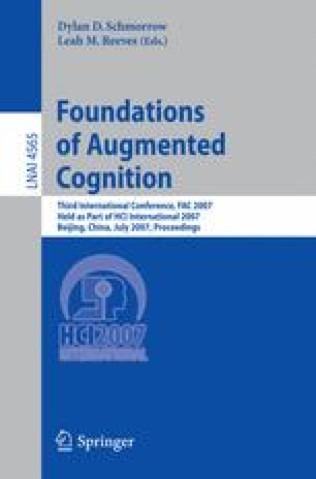
Foundations of augmented cognition ; 3rd International Conference, FAC 2007, Held as Part of HCI International 2007, Beijing, China, July 22-27, 2007, Proceedings
These papers address the latest research and development efforts and highlight the human aspects of design and use of computing systems. This volume contains papers in the thematic area of Augmented Cognition.
Foundation models for natural language processing : pre-trained language models integrating media
Covers basic natural language processing models, pre-trained language models BERT, GPT, and sequence-to-sequence converters, as well as the concepts of self-attention and context-sensitive embedding. Various approaches to improving these models are then discussed, such as expanding the pre-training parameters, increasing the length of input texts, or incorporating additional knowledge. An overview of the best performing models is then provided for about twenty application areas, e.g., question answering, translation, story generation, dialogue systems, image generation from text, etc. For each application area, the strengths and weaknesses of existing models are discussed, and an overview of further developments is provided. In addition, links to freely available code are provided. The concluding chapter summarizes the economic opportunities, risk mitigation, and potential developments of AI.

Foundation Mathematics for Computer Science : A Visual Approach
In this second edition of Foundation Mathematics for Computer Science, John Vince has reviewed and edited the original book and written new chapters on combinatorics, probability, modular arithmetic and complex numbers. These subjects complement the existing chapters on number systems, algebra, logic, trigonometry, coordinate systems, determinants, vectors, matrices, geometric matrix transforms, differential and integral calculus. During this journey, the author touches upon more esoteric topics such as quaternions, octonions, Grassmann algebra, Barrycentric coordinates, transfinite sets and prime numbers.
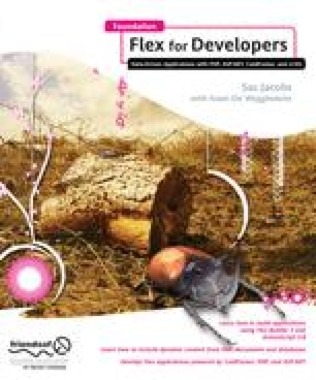
Foundation Flex for Developers : Data-Driven Applications with PHP, ASP.NET, ColdFusion, and LCDS
Flex is a very powerful and versatile technology for creating web application front-ends. But what every good web application needs is a robust data source, be it XML, or a database. Flex is very adaptable in terms of connecting to data sources, and that is the main focus of this book. In Foundation Flex for Developers, author Sas Jacobs assumes that you've got the basics of Flex down already, and explores in detail how to create professional data-centric Flex 2 and Flex 3 applications. In the first half of the book, she starts off with a brief exploration of Flex and ActionScript 3.0, before looking at application essentials in detail—creating custom components, user and web browser interactions, binding, formatting, and validating data, debugging, and more. In the second half of the book, the focus is on connecting Flex to data sources, and covers XML, LiveCycle Data Services, PHP, ASP.NET, and ColdFusion in detail, via a series of step-by-step case studies.

Foundation Expression Blend 2 : Building applications in WPF and silverlight
This book shows you how to take full advantage of Blend's interface, together with and Silverlight's vastly improved designer-developer workflow, guiding you through every step of development from downloading and installing of the development environment through creating finished, functional projects. You'll learn how to create simple drawing applications with the InkCanvas, make tabbed and scrollable interfaces, as well as build fully featured media players, photo galleries, and interactive 3D designs. Each chapter discusses major WPF and Silverlight features, provides a hands-on tutorial, and explains how that feature is implemented in the real world. In the end, you will have a collection of impressive WPF and Silverlight applications that can be added to your portfolio.
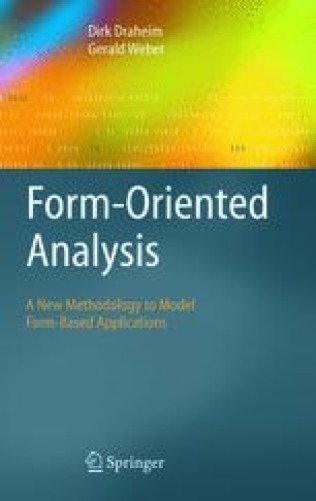
Form-oriented analysis : A new methodology to model form-based applications
Form-based applications range from simple web shops to complex enterprise resource planning systems. Draheim and Weber adapt well-established basic modeling techniques in a novel way to achieve a modeling framework optimized for this broad application domain. They introduce new modeling artifacts, such as page diagrams and form storyboards, and separate dialogue patterns to allow for reuse. In their implementation they have developed new constructs such as typed server pages, and tools for forward and reverse engineering of presentation layers. The methodology is explained using an online bookshop as a running example in which the user can experience the modeling concepts in action. The combination of theoretical achievements and hands-on practical advice and tools makes this book a reference work for both researchers in the areas of software architectures and submit-response style user interfaces, and professionals designing and developing such applications. More information and additional material is also available online.

Formal Approaches to Agent-Based Systems ; 3rd International Workshop, FAABS 2004, Greenbelt, MD, April 26-27, 2004, Revised Selected Papers
The 3rd Workshop on Formal Approaches to Agent-Based Systems (FAABS-III) was held at the Greenbelt Marriott Hotel (near NASA Goddard Space Flight Center) in April 2004 in conjunction with the IEEE Computer Society. The first FAABS workshop was help in April 2000 and the second in October 2002. Interest in agent-based systems continues to grow and this is seen in the wide range of conferences and journals that are addressing the research in this area as well as the prototype and developmental systems that are coming into use. Our third workshop, FAABS-III, was held in April, 2004. This volume contains the revised papers and posters presented at that workshop. The Organizing Committee was fortunate in having significant support in the planning and organization of these events, and were privileged to have wor- renowned keynote speakers Prof. J Moore (FAABS-I), Prof. Sir Roger Penrose (FAABS-II), and Prof. John McCarthy (FAABS-III), who spoke on the topic of se- aware computing systems, auguring perhaps a greater interest in autonomic computing as part of future FAABS events. We are grateful to all who attended the workshop, presented papers or posters, and participated in panel sessions and both formal and informal discussions to make the workshop a great success. Our thanks go to the NASA Goddard Space Flight Center, Codes 588 and 581 (Software Engineering Laboratory) for their financial support and to the IEEE Computer Society (Technical Committee on Complexity in Computing) for their sponsorship and organizational assistance.
First course on fuzzy theory and applications
This basic textbook gives an easily accessible introduction to Fuzzy theory and its applications. It provides basic and concrete concepts of the field in a self-contained, condensed and understandable style. This "First Course on Fuzzy Theory and Applications" includes numerous examples, descriptive illustrations and figures of the basic concepts, as well as exercises at the end of each chapter. The author has long time experience in teaching on fuzzy theory and its applications and continuously developed and summarized his didactic lecture notes into this book. This book can be used in introductory graduate and undergraduate courses in Fuzziness and Soft Computing and is recommendable to students, scientists, engineers, or professionals in the field for self-study.
Finite model theory and its applications
This book gives a broad overview of core topics of finite model theory: expressive power, descriptive complexity, and zero-one laws, together with selected applications to database theory and artificial intelligence, especially, constraint databases and constraint satisfaction problems. The final chapter provides a concise modern introduction to modal logic, which emphasizes the continuity in spirit and technique with finite model theory. This underlying spirit involves the use of various fragments of, and hierarchies within, first order, second order, fixed point, and infinitary logics to gain insight into phenomena in complexity theory and combinatorics.
