



Page 43
Page 43

Logic Based Program Synthesis and Transformation ; Vol. 3901 ; 15th International Symposium, LOPSTR 2005, London, UK, September 7-9, 2005, Revised Selected Papers
This book constitutes the thoroughly refereed post-proceedings of the 15th International Symposium on Logic Based Program Synthesis and Transformation, LOPSTR 2005, held in September 2005. The papers are organized in topical sections on tools for program development, program transformations, and software development and program analysis.

Logic Based Program Synthesis and Transformation ; Vol. 3573 : 14th International Symposium, LOPSTR 2004, Verona, Italy, August 26-28, 2004, Revised Selected Papers
In this work, we devise an analysis that searches for semantically equivalent code fragments within a given logic program. The presence of duplicated code (or functionality) is a primary indication that the design of the program can be improved by performing a so-called refactoring transformation. Within the framework of our analysis, we formally characterize three situations of duplicated functionality and their associated refactorings: the extraction of a duplicated goal into a new predicate, the removal of equivalent predicates and the generalization of two predicates into a higher-order predicate. The resulting analysis detects in a completely automatic way what program fragments are suitable candidates for the considered refactoring transformations.

Logic and Theory of Algorithms ; 4th Conference on Computability in Europe, CiE 2008, Athens, Greece, June 15-20, 2008 Proceedings
Constitutes the refereed proceedings of the 4th International Conference on Computability in Europe, CiE 2008, held in Athens, Greece, in June 2008.The 36 revised full papers presented together with 25 invited tutorials and lectures were carefully reviewed and selected from 108 submissions. Among them are papers of 6 special sessions entitled algorithms in the history of mathematics, formalising mathematics and extracting algorithms from proofs, higher-type recursion and applications, algorithmic game theory, quantum algorithms and complexity, and biology and computation.
Logging in Java with the JDK 1.4 Logging API and Apache log4j
In development scenarios where things can't be run in a debugger, or when you run the risk of masking the problem, logs are the greatest source of information about running a program. Pro Apache Log4j, Second Edition provides best practices guidelines and comprehensive coverage of the most recent release. Step by step, the book explains core concepts, from basic to advanced. Code samples are in Java and include guidelines for different application-specific needs. You'll also learn how to extend the API to write custom components and best practices for using the feature-rich log4j API. This book concludes with enterprise Java applications using log4j with JSP and J2EE.

Location- and Context-Awareness ; Vol. 3987 ; 2nd International Workshop, LoCA 2006, Dublin, Ireland, May 10-11, 2006, Proceedings
Contain the papers presented at the 2 International Workshop on Location- and Context-Awareness in May of 2006. As computing moves increasingly into the everyday world, the importance of location and context knowledge grows. The range of contexts encountered while sitting at a desk working on a computer is very limited compared to the large variety of situations experienced away from the desktop. For computing to be relevant and useful in these situations, the computers must have knowledge of the user’s activity, resources, state of mind, and goals, i.e., the user’s context, of which location is an important indicator. This workshop was intended to present research aimed at sensing, inferring, and using location and context data in ways that help the user.

Local Pattern Detection ; International Seminar Dagstuhl Castle, Germany, April 12-16, 2004, Revised Selected Papers
Introduction The dramatic increase in available computer storage capacity over the last 10 years has led to the creation of very large databases of scienti?c and commercial information. The need to analyze these masses of data has led to the evolution of the new field knowledge discovery in databases (KDD) at the intersection of machine learning, statistics and database technology. Being interdisciplinary by nature, the field offers the opportunity to combine the expertise of different fields into a common objective. Moreover, within each field diverse methods have been developed and justified with respect to different quality criteria. We have to investigate how these methods can contributet o solving the problem of KDD. Traditionally, KDD was seeking to end global models for the data that - plain most of the instances of the database and describe the general structure of the data. Examples are statistical time series models, cluster models, logic programs with high coverageor classi?cation models like decision trees or linear decision functions. In practice, though, the use of these models often is very l- ited, because global models tend to end only the obvious patterns in the data, 1 which domain experts already are aware of . What is really of interest to the users are the local patterns that deviate from the already-known background knowledge. David Hand, who organized a workshop in 2002, proposed the new field of local patterns.

Load balancing using SDN
Software-Defined Network (SDN) is considered a breakthrough to the global network. It plays an important role in performance improvement and network optimization. SDN is a new mechanism for managing and designing networks rather than the current traditional network system which does not afford more services and higher data rates; therefore, we analyze the effect of applying load balancing techniques and its importance in different SDN environments. In this paper, we propose a dynamic server load balancing technique in SDN architecture. Hence, we implement a server Connection-based load balancing technique and evaluate its performance with a static Round-robin and Random-based in both mininet emulation environment and OpenFlow-enabled switch using Ryu OpenFlow controller.
List decoding of error-correcting codes : Winning thesis of the 2002 ACM doctoral dissertation competition
Presents some spectacular new results in the area of decoding algorithms for error-correcting codes. Specifically, it shows how the notion of “list-decoding” can be applied to recover from far more errors, for a wide variety of err- correcting codes, than achievable before. A brief bit of background : error-correcting codes are combinatorial str- tures that show how to represent (or “encode”) information so that it is - silient to a moderate number of errors. Speci?cally, an error-correcting code takes a short binary string, called the message, and shows how to transform it into a longer binary string, called the codeword, so that if a small number of bits of the codewordare ?ipped, the resulting string does not look like any other codeword. The maximum number of errorsthat the code is guaranteed to detect, denoted d, is a central parameter in its design. A basic property of such a code is that if the number of errors that occur is known to be smaller than d/2, the message is determined uniquely. This poses a computational problem, called the decoding problem : compute the message from a corrupted codeword, when the number of errors is less than d/2.
LINQ for Visual C# 2008
Every C# programmer needs to learn about LINQ (Language–Integrated Query), Microsoft's breakthrough technology for simplifying and unifying data access from any data source. With LINQ, you can write more elegant and flexible code—not just to access databases and files, but to manipulate data structures and XML. This book is a short, yet comprehensive guide to the major features of LINQ and the significant enhancements introduced with .NET 3.5. There is no better source for getting a head–start on the future of these technologies than this book.
LINQ for Visual C# 2005
LINQ for Visual C# 2005 is a short, yet comprehensive guide to the major features of LINQ. It thoroughly covers LINQ to Objects, LINQ to SQL, LINQ to DataSet, and LINQ to XML. It also details significant enhancements to C#, .NET, and ADO.NET.
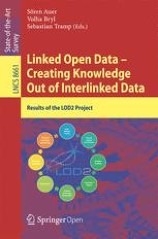
Linked Open Data -- Creating Knowledge Out of Interlinked Data : Results of the LOD2 Project
Linked Open Data (LOD) is a pragmatic approach for realizing the Semantic Web vision of making the Web a global, distributed, semantics-based information system. This book presents an overview on the results of the research project “LOD2 -- Creating Knowledge out of Interlinked Data”. LOD2 is a large-scale integrating project co-funded by the European Commission within the FP7 Information and Communication Technologies Work Program. Commencing in September 2010, this 4-year project comprised leading Linked Open Data research groups, companies, and service providers from across 11 European countries and South Korea.

Linear Genetic Programming
Linear Genetic Programming examines the evolution of imperative computer programs written as linear sequences of instructions. In contrast to functional expressions or syntax trees used in traditional Genetic Programming (GP), Linear Genetic Programming (LGP) employs a linear program structure as genetic material whose primary characteristics are exploited to achieve acceleration of both execution time and evolutionary progress.

Liapunov Functions and Stability in Control Theory
Presents a modern and self-contained treatment of the Liapunov method for stability analysis, in the framework of mathematical nonlinear control theory. A Particular focus is on the problem of the existence of Liapunov functions (converse Liapunov theorems) and their regularity, whose interest is especially motivated by applications to automatic control.

Leveraging the Semantics of Topics Maps ; 2nd International Conference on Topic Maps Research and Applications, TMRA 2006, Leipzig, Germany, October 11-12, 2006, Revised Selected papers
The papers in this volume were presented at TMRA 2006, the International Conference on Topic Maps Research and Applications, held October 11–12, 2006, in Leipzig, Germany. TMRA 2006 was the second conference of an annual series of international conferences dedicated to Topic Maps in research and industry.

Leveraging applications of formal methods, verification and validation : Verification Principles ; 9th International Symposium on Leveraging Applications of Formal Methods, ISoLA 2020, Rhodes, Greece, October 20–30, 2020, Proceedings, Part I
Constitutes the refereed proceedings of the 9th International Symposium on Leveraging Applications of Formal Methods, ISoLA 2020, which was planned to take place during October 20–30, 2020, on Rhodes, Greece. The papers presented were carefully reviewed and selected for inclusion in the proceedings. Each volume focusses on an individual topic with topical section headings within the volume : Part I, Verification Principles : Modularity and (De-)Composition in Verification ; X-by-Construction: Correctness meets Probability ; 30 Years of Statistical Model Checking ; Verification and Validation of Concurrent and Distributed Systems.

Leveraging applications of formal methods, verification and validation : Engineering Principles ; 9th International Symposium on Leveraging Applications of Formal Methods, ISoLA 2020, Rhodes, Greece, October 20–30, 2020, Proceedings, Part II
Constitutes the refereed proceedings of the 9th International Symposium on Leveraging Applications of Formal Methods, ISoLA 2020, which was planned to take place during October 20–30, 2020, on Rhodes, Greece. The event itself was postponed to 2021 due to the COVID-19 pandemic. The papers presented were carefully reviewed and selected for inclusion in the proceedings. Each volume focusses on an individual topic with topical section headings within the volume: Part II, Engineering Principles : Automating Software Re-Engineering ; Rigorous Engineering of Collective Adaptive Systems.

Leveraging applications of formal methods, verification and validation : Applications ; 9th International Symposium on Leveraging Applications of Formal Methods, ISoLA 2020, Rhodes, Greece, October 20–30, 2020, Proceedings, Part III
The three-volume set LNCS 12476 - 12478 constitutes the refereed proceedings of the 9th International Symposium on Leveraging Applications of Formal Methods, ISoLA 2020, which was planned to take place during October 20–30, 2020, on Rhodes, Greece. The event itself was postponed to 2021 due to the COVID-19 pandemic. The papers presented were carefully reviewed and selected for inclusion in the proceedings. Each volume focusses on an individual topic with topical section headings within the volume: Part III, Applications: Reliable Smart Contracts: State-of-the-art, Applications, Challenges and Future Directions; Automated Verification of Embedded Control Software; Formal methods for DIStributed COmputing in future RAILway systems.
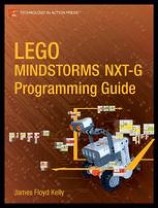
LEGO® MINDSTORMS® NXT-G Programming Guide
LEGO MINDSTORMS NXT-G Programming Guide provides programming techniques simple enough to be understood by young programmers, ages 10 and up, and provides a test robot (with instructions) in the appendix for running the programs
Legal Programming : Designing Legally Compliant RFID and Software Agent Architectures for Retail Processes and Beyond
LEGAL PROGRAMMING: Designing Legally Compliant RFID and Software Agent Architectures for Retail Processes and Beyond provides a process-oriented discussion of the legal concerns presented by agent-based technologies, processes and programming. It offers a general outline of the potential legal difficulties that could arise in relation to them, focusing on the programming of negotiation and contracting processes in a privacy, consumer and commercial context. The authors will elucidate how it is possible to create form of legal framework and design methodology for transaction agents, applicable in any environment and not just in a specific proprietary framework, that provides the right level of compliance and trust. Key elements considered include the design and programming of legally compliant methods, the determination of rights in respect of objects and variables, and ontologies and programming frameworks for agent interactions. Examples are used to illustrate the points made and provide a practical perspective.

Learning to Live in the Knowledge Society ; IFIP 20th World Computer Congress, IFIP TC 3 ED-L2L Conference September 7–10, 2008, Milano, Italy
The IFIP series publishes state-of-the-art results in the sciences and technologies of information and communication. The scope of the series includes: foundations of computer science; software theory and practice; education; computer applications in technology; communication systems; systems modeling and optimization; information systems; computers and society; computer systems technology; security and protection in information processing systems; artificial intelligence; and human-computer interaction. Proceedings and post-proceedings of refereed international conferences in computer science and interdisciplinary fields are featured. These results often precede journal publication and represent the most current research.
