



Page 3
Page 3

More Joel on software : Further toughts on diverse and occasionally related matters that will prove of interest to software developers, designers, and managers, and to those who, whether by good fortune or III Luck, work with them in some capacity
Joel Spolsky started his weblog in March 2000 in order to offer his insights, based on years of experience, on how to improve the world of programming. This weblog has become infamous among the programming world, and is linked to more than 600 other web sites and translated into 30+ languages! Spolsky's extraordinary writing skills, technical knowledge, and caustic wit have made him a programming guru. With the success of Joel on Software, there has been a strong demand for additional gems and advice, and this book is the answer to those requests. Containing a collection of all–new articles from the original, More Joel on Software has even more of an edge than the original, and the tips for running a business or managing people have far broader application than the software industry.

Modular Programming Languages ; 7th Joint Modular Languages Conference, JMLC 2006, Oxford, UK, September 13-15, 2006, Proceedings
On behalf of the Steering Committee we are pleased to present the proceedings of the 2006 Joint Modular Languages Conference (JMLC), organized by Oxford Brookes University, Oxford, UK and held at Jesus College, Oxford. The mission of JMLC is to explore the concepts of well-structured programming languages and software and those of teaching good design and programming style. JMLC 2006 was the seventh in a series of successful conferences with themes including the construction of large and distributed software systems, and software en- neering aspects in new and dynamic application areas.

Modular Algorithms in Symbolic Summation and Symbolic Integration
Brings together two streams in computer algebra: symbolic integration and summation on the one hand, and fast algorithmics on the other hand. In many algorithmically oriented areas of computer science, the analysis of al gorithms placed into the lime light by DonKnuth’stalkat the 1970ICM –provides a crystal-clear criterion for success. The researcher who designs an algorithm that is faster (asymptotically, in the worst case) than any previous method receives instant gratification : her result will be recognized as valuable. Al as, the downside is that such results come along quite infrequently, despite our best efforts. An alternative evaluation method is to run a new algorithm on examples; this has its obvious problems, but is sometimes the best we can do. George Collins, one of the fathers of computer algebra and a great experimenter,wrote in 1969: “I think this demonstrates again that a simple analysis is often more revealing than a ream of empirical data (although both are important). ” Within computer algebra, some areas have traditionally followed the former methodology, notably some parts of polynomial algebra and linear algebra. Other areas, such as polynomial system solving, have not yet been amenable to this - proach. The usual “input size” parameters of computer science seem inadequate, and although some natural “geometric” parameters have been identified (solution dimension, regularity), not all (potential) major progress can be expressed in this framework. Symbolic integration and summation have been in a similar state.

Modern operating system
incorporates the latest developments and technologies in operating systems (OS) technologies. Author Andy Tanenbaum's clear and entertaining writing style outlines the concepts every OS designer needs to master. In-depth topic coverage includes processes, threads, memory management, file systems, I/O, deadlocks, interface design, multimedia, performance tradeoffs, and trends in OS design. Case studies explore popular OS and provide real-world context. Tanenbaum also provides information on current research based on his expe
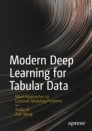
Modern deep learning for tabular data : Novel approaches to common modeling problems
Synthesizes and presents novel deep learning approaches to a seemingly unlikely domain - tabular data. Whether for finance, business, security, medicine, or countless other domain, deep learning can help mine and model complex patterns in tabular data - an incredibly ubiquitous form of structured data. Part I of the book offers a rigorous overview of machine learning principles, algorithms, and implementation skills relevant to holistically modeling and manipulating tabular data. Part II studies five dominant deep learning model designs - Artificial Neural Networks, Convolutional Neural Networks, Recurrent Neural Networks, Attention and Transformers, and Tree-Rooted Networks - through both their 'default' usage and their application to tabular data. Part III compounds the power of the previously covered methods by surveying strategies and techniques to supercharge deep learning systems: autoencoders, deep data generation, meta-optimization, multi-model arrangement, and neural network interpretability.

Modern Deep Learning Design and Application Development : Versatile Tools to Solve Deep Learning Problems
Learn how to harness modern deep-learning methods in many contexts. Packed with intuitive theory, practical implementation methods, and deep-learning case studies, this book reveals how to acquire the tools you need to design and implement like a deep-learning architect. It covers tools deep learning engineers can use in a wide range of fields, from biology to computer vision to business. With nine in-depth case studies, this book will ground you in creative, real-world deep learning thinking. You will: Improve the performance of deep learning models by using pre-trained models, extracting rich features, and automating optimization. Compress deep learning models while maintaining performance. Reframe a wide variety of difficult problems and design effective deep learning solutions to solve them. Use the Keras framework, with some help from libraries like HyperOpt, TensorFlow, and PyTorch, to implement a wide variety of deep learning approaches.

Modern Control Theory
This book presents a unified, systematic description of basic and advanced problems, methods and algorithms of the modern control theory treated as a foundation for the design of computer control and management systems.

Modern Control Systems ; 14th ed.
Written to be equally useful for all engineering disciplines, this text is organized around the concepts of control systems theory in the context of frequency and time domains. It provides coverage of both classical and modern methods of control engineering to give students a strong foundation in basic principles that they can utilize to explore advanced topics in later chapters. Emphasis is placed on real-world complex control systems and practical design applications as well as evolving design strategies like green engineering and human-centered design. Problem solving is strongly emphasized, with an abundance of problems of increasing complexity that help students learn to apply theory to computer-aided design and analysis concepts using MATLAB® and LabVIEW MathScript.

Modern Control Systems ; 13th ed.
Presents the structure of feedback control theory and to provide a sequence of exciting discoveries. The book demonstrates various real-world, global engineering problems while touching on evolving design strategies like green technology. Some of the themes at-hand include climate change, clean water, sustainability, waste management, emissions reduction, and minimizing energy. Throughout the text, students apply theory to the design and analysis of control systems.

Models, Methods and Tools for Product Service Design : The Manutelligence Project
This book summarizes research being pursued within the Manutelligence project, the goal of which is to help enterprises develop smart, social and flexible products with high value added services. Manutelligence has improved Product and Service Design by developing suitable models and methods, and connecting them through a modular, collaborative and secure ICT Platform. The use of real data collected in real time by Internet of Things (IoT) technologies underpins the design of product-service systems and makes it possible to monitor them throughout their life cycle. Available data allows costs and sustainability issues to be more accurately measured and simulated in the form of Life Cycle Cost (LCC) and Life Cycle Assessment (LCA). Analysing data from IoT systems and sharing LCC and LCA information via the ICT Platform can help to accelerate the design of product-service systems, reduce costs and better understand customer needs. Industrial partners involved in Manutelligence provide a clear overview of the project's outcomes, and demonstrate how its technological solutions can be used to improve the design of product-service systems and the management of product-service life cycles.
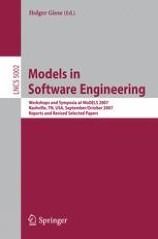
Models in Software Engineering ; Workshops and Symposia at MoDELS 2007, Nashville, TN, USA, September 30 - October 5, 2007, Reports and Revised Selected Papers
This book constitutes the thoroughly refereed post-workshop proceedings of 10 internationl workshops and 2 symposia held as satellite events of the 10th International Conference on Model Driven Engineering Languages and Systems, MoDELS 2007, in Nashville, TN, USA, in September/October 2007 (see LNCS 4735).The 29 revised full papers were carefully selected for inclusion in the book and are presented along with a doctoral and an educators' symposium section. The papers are organized in topical sections representing the various workshops: aspect-oriented modeling (AOM 2007), language engineering (ATEM2007), model driven development of advanced user interfaces (MDDAUI 2007), model size metrics (MSM 2007).
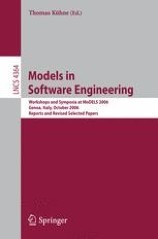
Models in Software Engineering ; Workshops and Symposia at MoDELS 2006, Genoa, Italy, October 1-6, 2006, Reports and Revised Selected Papers
This book constitutes the thoroughly refereed post-proceedings of 11 international workshops held as satellite events of the 9th International Conference on Model Driven Engineering Languages and Systems, MoDELS 2006, in Genoa, Italy, in October 2006 (see LNCS 4199). The 32 revised full papers were carefully selected for inclusion in the book.

Modelling and Identification with Rational Orthogonal Basis Functions
Models of dynamical systems are of great importance in almost all fields of science and engineering and specifically in control, signal processing and information science.
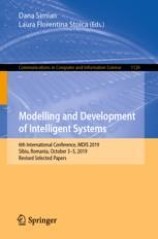
Modelling and Development of Intelligent Systems ; 6th International Conference, MDIS 2019, Sibiu, Romania, October 3–5, 2019, Revised Selected Papers
This volume constitutes the refereed proceedings of the 6th International Conference on Modelling and Development of Intelligent Systems, MDIS 2019, held in Sibiu, Romania, in October 2019. The 13 revised full papers presented in the volume were carefully reviewed and selected from 31 submissions. The papers are organized in topical sections on adaptive systems; conceptual modelling; data mining; intelligent systems for decision support; machine learning.

Modeling and Simulation for RF System Design
The focus of Modeling and Simulation for RF System Design lies on RF specific modeling and simulation methods and the consideration of system and circuit level descriptions. It contains application-oriented training material for RF designers which combines the presentation of a mixed-signal design flow.

Model-Driven Testing : Using the UML Testing Profile
Written by the original members of this standardization group, this book shows you how to use UML to test complex software systems. The authors introduce UTP step-by-step, using a case study that illustrates how UTP can be used for test modeling and test specification. You’ll learn how UTP concepts can be used for functional and non-functional testing, with example applications and best practices for user-interfaces and service oriented architectures. In addition, the authors demonstrate how to apply UTP using frameworks like TTCN-3 and the JUnit test framework for Java.

Model-Driven Software Development
Abstraction is the most basic principle of software engineering. Abstractions are provided by models. Modeling and model transformation constitute the core of model-driven development. Models can be refined and finally be transformed into a technical implementation, i.e., a software system. The aim of this book is to give an overview of the state of the art in model-driven software development. Achievements are considered from a conceptual point of view in the first part, while the second part describes technical advances and infrastructures. Finally, the third part summarizes experiences gained in actual projects employing model-driven development. Beydeda, Book and Gruhn put together the results from leading researchers in this area, both from industry and academia. The result is a collection of papers which gives both researchers and graduate students a comprehensive overview of current research issues and industrial forefront practice, as promoted by OMG’s MDA initiative.
Model-Driven Development of Reliable Automotive Services ; 2nd Automotive Software Workshop, ASWSD 2006, San Diego, CA, USA, March 15-17, 2006, Revised Selected Papers
This book constitutes the thoroughly refereed post-workshop proceedings of the Second Automotive Software Workshop, ASWSD 2006, held in San Diego, CA, USA in March 2006.The 11 revised full papers presented were carefully reviewed and selected from 18 lectures held at the workshop, that brought together experts from industry and academia, working on highly complex, distributed, reactive software systems related to the automotive domain. The papers are organized in topical sections on modeling techniques and infrastructures, model transformations, quality assurance, real-time control, as well as services and components.

Model-Driven Design Using Business Patterns
This book takes exactly this step: it shows you how to apply the pattern ideas in business applications and presents more than 20 structural and behavioral business patterns that use the REA (resources, events, agents) pattern as a common backbone. If you are a developer working on business frameworks, you can use the patterns presented to derive the right abstractions (e.g., business objects) and to design and ensure that the meta-rules (e.g., process patterns) are followed by the developers of the actual applications. And if you are an application developer, you can use these patterns to design your business application, to ensure that it does not violate the domain rules, and to adapt the application to changing requirements without the need to change the overall architecture. As with patterns in general, this approach allows for both more flexible and more solid software architectures and hence better software quality.

Model-driven architecture in practice ; A Software Production Environment Based on Conceptual Modeling
This book introduces all the relevant information required to understand and put Model Driven Architecture (MDA) into industrial practice. The book combines a sound theoretical approach based on more than 10 years' research.
