



Page 3
Page 3

Multimedia Database Retrieval : A Human-Centered Approach
Multimedia Database Retrieval: A Human-Centered Approach presents the latest development in user-centered methods and the state-of-the-art in visual media retrieval. It includes discussion on perceptually inspired non-linear paradigm in user-controlled interactive retrieval (UCIR) systems. It also features a coherent approach which focuses on specific topics within content/concept-based retrievals via audio-visual information modeling of multimedia. Highlights include: * Exploring an adaptive machine that can learn from its environment * Optimizing the learning system by incorporating self-organizing adaptation into the retrieval process * Demonstrating state-of-the-art applications within small, medium, and large databases
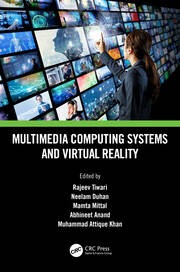
Multimedia computing systems and virtual reality
Presents recent advancements in multimedia systems as they relate to various application areas such as healthcare services and agriculture-related industries. The authors also discuss human-machine interface design, graphics modelling, rendering/animation, image/graphics techniques/systems and visualization. They then go on to explore multimedia content adaptation for interoperable delivery. Finally, the book covers cultural heritage, philosophical/ethical/societal/international issues, standards-related virtual technology and multimedia uses. This book is intended for computer engineers and computer scientists developing applications for multimedia and virtual reality and professionals working in object design and visualization, transformation, modelling and animation of the real world.

Multilingual Information Access for Text, Speech and Images ; 5th Workshop of the Cross-Language Evaluation Forum, CLEF 2004, Bath, UK, September 15-17, 2004, Revised Selected Papers
The ?fth campaign of the Cross-Language Evaluation Forum (CLEF) for Eu- pean languages was held from January to September 2004. Participation in the CLEF campaigns has increased each year and CLEF 2004 was no exception: 55 groups submitted results for one or more of the di?erent tracks compared with 42 groups in the previous year. CLEF 2004 also marked a breaking point with respect to previous campaigns. The focus was no longer mainly concentrated on multilingual document retrieval as in previous years but was diversi?ed to include di?erent kinds of text retrieval across languages (e. g. , exact answers in the question-answering track) and retrieval on di?erent kinds of media (i. e. , not just plain text but collections containing image and speech as well). In ad- tion, increasing attention was given to issues that regard system usability and user satisfaction with tasks to measure the e?ectiveness of interactive systems or system components being included in both the cross-language question - swering and image retrieval tasks with the collaboration of the coordinators of the interactive track. The campaign culminated in a two-and-a-half-day workshop held in Bath, UK, 15–17 September, immediately following the 8th European Conference on Digital Libraries. The workshop was attended by nearly 100 researchers and s- tem developers.

Multi-Agent Programming : Languages, Platforms and Applications
Part I describes four approaches that are based on computational logic or process algebra--Jason, 3APL, IMPACT, and CLAIM/SyMPA. These programming languages have formal semantics and use heavy machinery based on formal methods, but also provide working platforms for the development of multi-agent systems. Part II presents agent languages and platforms that extend or are based on Java--JADE, Jadex, and JACKTM. Although these have no formal semantics, the languages are well documented and the platforms provide a variety of tools that have been extensively used in practice. Part III provides two significant industry specific applications--The DEFACTO System for coordinating human-agent teams for the future of disaster response, and the ARTIMIS rational dialogue agent technology. The book also features seven appendices, summarising each of the agent programming languages, hence facilitating comparison of the approaches. In particular, Appendix A describes the criteria used for comparing the agent languages and platforms.

Modern parallel programming with C++ and assembly language : X86 SIMD development using AVX, AVX2, and AVX-512
Understand the essential details about x86 SIMD architectures and instruction sets including AVX, AVX2, and AVX-512. / Master x86 SIMD data types, arithmetic instructions, and data management operations using both integer and floating-point operands. / Code performance-enhancing functions and algorithms that fully exploit the SIMD capabilities of a modern x86 processor. Employ C++ intrinsic functions and x86-64 assembly language code to carry out arithmetic calculations using common programming constructs including arrays, matrices, and user-defined data structures. Harness the x86 SIMD instruction sets to significantly accelerate the performance of computationally intense algorithms in applications such as machine learning, image processing, computer graphics, statistics, and matrix arithmetic. / Apply leading-edge coding strategies and techniques to optimally exploit the x86 SIMD instruction sets for maximum possible performance.
Modern deep learning for tabular data : Novel approaches to common modeling problems
Synthesizes and presents novel deep learning approaches to a seemingly unlikely domain - tabular data. Whether for finance, business, security, medicine, or countless other domain, deep learning can help mine and model complex patterns in tabular data - an incredibly ubiquitous form of structured data. Part I of the book offers a rigorous overview of machine learning principles, algorithms, and implementation skills relevant to holistically modeling and manipulating tabular data. Part II studies five dominant deep learning model designs - Artificial Neural Networks, Convolutional Neural Networks, Recurrent Neural Networks, Attention and Transformers, and Tree-Rooted Networks - through both their 'default' usage and their application to tabular data. Part III compounds the power of the previously covered methods by surveying strategies and techniques to supercharge deep learning systems: autoencoders, deep data generation, meta-optimization, multi-model arrangement, and neural network interpretability.

Modern Deep Learning Design and Application Development : Versatile Tools to Solve Deep Learning Problems
Learn how to harness modern deep-learning methods in many contexts. Packed with intuitive theory, practical implementation methods, and deep-learning case studies, this book reveals how to acquire the tools you need to design and implement like a deep-learning architect. It covers tools deep learning engineers can use in a wide range of fields, from biology to computer vision to business. With nine in-depth case studies, this book will ground you in creative, real-world deep learning thinking. You will: Improve the performance of deep learning models by using pre-trained models, extracting rich features, and automating optimization. Compress deep learning models while maintaining performance. Reframe a wide variety of difficult problems and design effective deep learning solutions to solve them. Use the Keras framework, with some help from libraries like HyperOpt, TensorFlow, and PyTorch, to implement a wide variety of deep learning approaches.

Models, Methods and Tools for Product Service Design : The Manutelligence Project
This book summarizes research being pursued within the Manutelligence project, the goal of which is to help enterprises develop smart, social and flexible products with high value added services. Manutelligence has improved Product and Service Design by developing suitable models and methods, and connecting them through a modular, collaborative and secure ICT Platform. The use of real data collected in real time by Internet of Things (IoT) technologies underpins the design of product-service systems and makes it possible to monitor them throughout their life cycle. Available data allows costs and sustainability issues to be more accurately measured and simulated in the form of Life Cycle Cost (LCC) and Life Cycle Assessment (LCA). Analysing data from IoT systems and sharing LCC and LCA information via the ICT Platform can help to accelerate the design of product-service systems, reduce costs and better understand customer needs. Industrial partners involved in Manutelligence provide a clear overview of the project's outcomes, and demonstrate how its technological solutions can be used to improve the design of product-service systems and the management of product-service life cycles.

Modelling Autonomic Communications Environments ; 3rd IEEE International Workshop, MACE 2008, Samos Island, Greece, September 22-26, 2008. Proceedings
Research and development of autonomics have come a long way, and we are delighted to present the proceedings of the 3rd IEEE International Workshop on Modelling Autonomic Communications Environments (MACE 2008).Asin the last two years, this workshopwasheld aspart of Manweek, the International Week on Management of Networks and Services, which took place on the lovely Island of Samos in Greece .MACE started as anexperimentin2006,andcreatedasmallcommunitythat nowfnds it self attracted backeachyearby afeeling ofexcitement-thatthere is something new going on. Certainly, MACE is not as shiny or practiced as other well-known conferences and workshops, but we consider this a feature of the workshopitself.
Modelling and Development of Intelligent Systems ; 6th International Conference, MDIS 2019, Sibiu, Romania, October 3–5, 2019, Revised Selected Papers
This volume constitutes the refereed proceedings of the 6th International Conference on Modelling and Development of Intelligent Systems, MDIS 2019, held in Sibiu, Romania, in October 2019. The 13 revised full papers presented in the volume were carefully reviewed and selected from 31 submissions. The papers are organized in topical sections on adaptive systems; conceptual modelling; data mining; intelligent systems for decision support; machine learning.

Modelling and Control of Mini-Flying Machines
Modelling and Control of Mini-Flying Machines is an exposition of models developed for various types of mini-aircraft. Modelling and Control of Mini-Flying Machines provides valuable insights to the application of real-time nonlinear techniques in an always challenging area.

Modeling, Simulation and Optimization of Complex Processes HPSC 2018 ; Proceedings of the 7th International Conference on High Performance Scientific Computing, Hanoi, Vietnam, March 19-23, 2018
The contributions cover a broad, interdisciplinary spectrum of scientific computing and showcase recent advances in theory, methods, and practical applications. Subjects covered include numerical simulation, methods for optimization and control, machine learning, parallel computing and software development, as well as the applications of scientific computing in mechanical engineering, airspace engineering, environmental physics, decision making, hydrogeology, material science and electric circuits.

Modeling Decisions for Artificial Intelligence ; Vol.3885 ; 3rd International Conference, MDAI 2006, Tarragona, Spain, April 3-5, 2006, Proceedings
This book constitutes the refereed proceedings of the Third International Conference on Modeling Decisions for Artificial Intelligence, MDAI 2006, held in Tarragona, Spain, in April 2006.

Modeling Decisions for Artificial Intelligence ; 4th International Conference, MDAI 2007, Kitakyushu, Japan, August 16-18, 2007, Proceedings
Decision modeling is a key area in the developing field of AI, and this timely work connects researchers and professionals with the very latest research. It constitutes the refereed proceedings of the 4th International Conference on Modeling Decisions for Artificial Intelligence, held in Kitakyushu, Japan, in August 2007.

Modeling Communication with Robots and Virtual Humans ; Second ZiF Research Group International Workshop on Embodied Communication in Humans and Machines, Bielefeld, Germany, April 5-8, 2006, Revised Selected Papers
The 17 articles in this state-of-the-art survey address artificial intelligence research on communicative agents and also provide an interdisciplinary perspective from linguistics, behavioral research, theoretical biology, philosophy, communication psychology, and computational neuroscience. The topics include studies on human multimodal communication; the modeling of feedback signals, facial expression, eye contact, and deception; the recognition and comprehension of hand gestures and head movements; communication interfaces for humanoid robots; the evolution of cognition and language; emotion and social appraisal in nonverbal communication; dialogue models and methodologies; theory of mind and intentionality; complex systems, dynamic field theory, and connectionist modeling.
Modeling and Management of Fuzzy Semantic RDF Data
Presents the latest research findings in fuzzy RDF data modeling and management. Fuzziness widely exist in many data and knowledge intensive applications. With the increasing amount of metadata available, efficient and scalable management of massive semantic data with uncertainty is of crucial importance. This book goes to great depth concerning the fast-growing topic of technologies and approaches of modeling and managing fuzzy metadata with Resource Description Framework (RDF) format. Its major topics include representation of fuzzy RDF data, fuzzy RDF graph matching, query of fuzzy RDF data, and persistence of fuzzy RDF data in diverse databases. The objective of the book is to provide the state-of-the-art information to researchers, practitioners, and postgraduates students who work on the area of big data intelligence and at the same time serve as the uncertain data and knowledge engineering professional as a valuable real-world reference.

Model-Based Testing of Reactive Systems : Advanced Lectures
This book is based on a seminar held in Dagstuhl Castle, Germany, in January 2004. It presents 19 carefully reviewed and revised lectures given at the seminar in a well-balanced way ensuring competent complementary coverage of all relevant aspects. An appendix provides a glossary for model-based testing and basics on finite state machines and on labelled transition systems. The lectures are presented in topical sections on testing of finite state machines, testing of labelled transition systems, model-based test case generation, tools and case studies, standardized test notation and execution architectures, and beyond testing.

Mobile health technologies for ambient assisted living and healthcare
The use of telemedicine and mobile devices is growing, and sensors might aid in creating creative solutions. Developing these solutions is crucial for monitoring senior citizens, lifestyles, and medical procedures. The development of assistive technology for various users to follow sports and other activities is strongly tied to this study area. Data protection is crucial, and the development of these solutions for medical uses should be verified. The security and privacy of the information may be tied to other recognized research projects for their acceptability. ICT research has considerably improved quality of life and has fully assimilated all citizens into society through medical rehabilitation and assistive technology. The technologies and research fields that influence medical informatics include databases, networking, graphical user interfaces, data mining, machine learning, intelligent decision support systems, and specialized programming languages.

Mobile Edge Computing
It offers comprehensive, self-contained knowledge on Mobile Edge Computing (MEC), which is a very promising technology for achieving intelligence in the next-generation wireless communications and computing networks. The book starts with the basic concepts, key techniques and network architectures of MEC. Then, we present the wide applications of MEC, including edge caching, 6G networks, Internet of Vehicles, and UAVs. In the last part, we present new opportunities when MEC meets blockchain, Artificial Intelligence, and distributed machine learning (e.g., federated learning). We also identify the emerging applications of MEC in pandemic, industrial Internet of Things and disaster management.
Mobile computing, applications, and services ; 11th EAI International Conference, MobiCASE 2020, Shanghai, China, September 12, 2020, Proceedings
This book constitutes the thoroughly refereed post-conference proceedings of the 11th International Conference on Mobile Computing, Applications, and Services, MobiCASE 2020, held in Shanghai, China, in September 2020. The conference was held virtually due to the COVID-19 pandemic. The 15 full papers were carefully reviewed and selected from 49 submissions. The papers are organized in topical sections on mobile application and framework; mobile application with data analysis; and AI application.
