



Page 3
Page 3
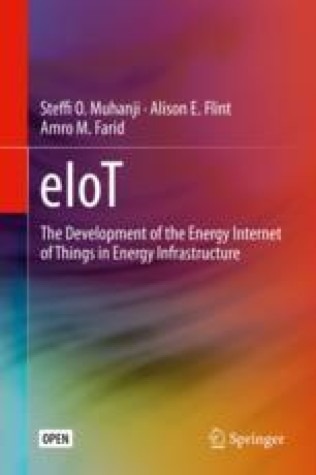
eIoT : The Development of the Energy Internet of Things in Energy Infrastructure
This book explores the collision between the sustainable energy transition and the Internet of Things (IoT). In that regard, this book’s arrival is timely. Not only is the Internet of Things for energy applications, herein called the energy Internet of Things (eIoT), rapidly developing but also the transition towards sustainable energy to abate global climate is very much at the forefront of public discourse. It is within the context of these two dynamic thrusts, digitization and global climate change, that the energy industry sees itself undergoing significant change in how it is operated and managed. The goal of this book is to provide a single integrated picture of how eIoT can come to transform our energy infrastructure. This book links the energy management change drivers mentioned above to the need for a technical energy management solution. It, then, describes how eIoT meets many of the criteria required for such a technical solution.

Distributed applications and interoperable systems ; Vol. 3543 ; 5th IFIP WG 6.1 International conference, DAIS 2005, Athens, Greece, June 15-17, 2005, Proceedings
ThisvolumecontainstheproceedingsoftheIFIPWG6. 1InternationalWorking Conference on Distributed Applications and Interoperable Systems V held in Athens, Greece, on June 15–17, 2005. The conference program presented the state of the art in research concerning distributed and interoperable systems. The emergence of 4th-generation c- munication systems, the evolution of Internet technologies, the convergence of telecom and datacom, wireless and ?xed communication systems and appli- tions pave the path for ubiquitous service and application provision. Innovative solutions are required for the development, implementation and operation of distributed applications in complex IT environments full of diversity and h- erogeneity. Today, the emerging wide spectrum of distributed systems.
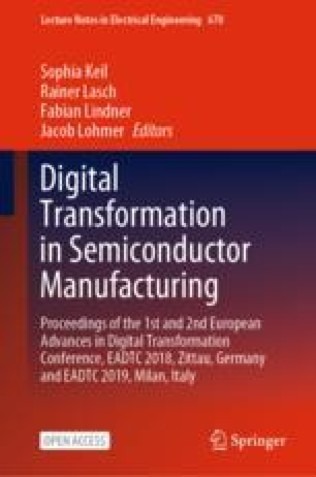
Digital transformation in semiconductor manufacturing ; Proceedings of the 1st and 2nd European advances in digital transformation Conference, EADTC 2018, Zittau, Germany and EADTC 2019, Milan, Italy
This book reports on cutting-edge electrical engineering and microelectronics solutions to foster and support digitalization in the semiconductor industry.

Digital Forensics and Internet of Things : Impact and Challenges
The book discusses applications and challenges professionals encounter in the burgeoning field of IoT forensics. IoT forensics attempts to align its workflow to that of any forensics practice—investigators identify, interpret, preserve, analyze and present any relevant data. As with any investigation, a timeline is constructed, and, with the aid of smart devices providing data, investigators might be able to capture much more specific data points than in a traditional crime.

Dependable Embedded Systems
This book introduces readers to many new techniques for enhancing and optimizing reliability in embedded systems, which have emerged particularly within the last five years.

Demystifying Internet of Things Security : Successful IoT Device/Edge and Platform Security Deployment
The IoT presents unique challenges in implementing security and Intel has both CPU and Isolated Security Engine capabilities to simplify it. This book explores the challenges to secure these devices to make them immune to different threats originating from within and outside the network. The requirements and robustness rules to protect the assets vary greatly and there is no single blanket solution approach to implement security.

Deep Learning, Machine Learning and IoT in Biomedical and Health Informatics : Techniques and Applications
Examines and demonstrates state-of-the-art approaches for IoT and Machine Learning based biomedical and health related applications. This book aims to provide computational methods for accumulating, updating and changing knowledge in intelligent systems and particularly learning mechanisms that help us to induce knowledge from the data. It is helpful in cases where direct algorithmic solutions are unavailable, there is lack of formal models, or the knowledge about the application domain is inadequately defined. In the future IoT has the impending capability to change the way we work and live. These computing methods also play a significant role in design and optimization in diverse engineering disciplines. With the influence and the development of the IoT concept, the need for AI (artificial intelligence) techniques has become more significant than ever.

Database performance at scale: a practical guide
Optimizing database performance at the scale required for today’s data-intensive applications often requires more than performance tuning and scaling out. This book shares commonly overlooked considerations, pitfalls, and opportunities that have helped many teams break through database performance plateaus. It’s neither a definitive guide to distributed databases nor a beginner’s resource. Rather, it’s a look at the many different factors that impact performance, and our top field-tested recommendations for navigating them. Chapter 1 provides two (fun and fanciful) tales that surface some of the many roadblocks you might face and highlight the range of strategies for navigating around them.

Cyber-physical systems : Foundations and techniques
Covers the various aspects associated with Cyber-Physical Systems (CPS) such as algorithms, application areas, and the improvement of existing technology such as machine learning, big data and robotics. The scope of CPS is tremendous. In CPS, one sees the applications of various emerging technologies such as artificial intelligence (AI), Internet of Things (IoT), machine learning (ML), deep learning (DL), big data (BD), robotics, quantum technology, etc. In almost all sectors, whether it is education, health, human resource development, skill improvement, startup strategy, etc., one sees an enhancement in the quality of output because of the emergence of CPS into the field.

Cyber-physical systems : A model-based approach
In this concise yet comprehensive textbook, future inventors are introduced to the key concepts of Cyber-Physical Systems (CPS). Using modeling as a way to develop deeper understanding of the computational and physical components of these systems, one can express new designs in a way that facilitates their simulation, visualization, and analysis. Concepts are introduced in a cross-disciplinary way.
CyberParks – The Interface Between People, Places and Technology: New Approaches and Perspectives
This book is about public open spaces, about people, and about the relationship between them and the role of technology in this relationship. It is about different approaches, methods, empirical studies, and concerns about a phenomenon that is increasingly being in the centre of sciences and strategies – the penetration of digital technologies in the urban space. As the main outcome of the CyberParks Project, this book aims at fostering the understanding about the current and future interactions of the nexus people, public spaces and technology. It addresses a wide range of challenges and multidisciplinary perspectives on emerging phenomena related to the penetration of technology in people’s lifestyles - affecting therefore the whole society, and with this, the production and use of public spaces. Cyberparks coined the term cyberpark to describe the mediated public space, that emerging type of urban spaces where nature and cybertechnologies blend together to generate hybrid experiences and enhance quality of life.

Cyber Security ; 15th International Annual Conference, CNCERT 2018, Beijing, China, August 14–16, 2018, Revised Selected Papers
This book cover the following topics: emergency response, mobile internet security, IoT security, cloud security, threat intelligence analysis, vulnerability, artificial intelligence security, IPv6 risk research, cybersecurity policy and regulation research, big data analysis and industrial security.

Control of nonlinear and hybrid process systems : Designs for uncertainty, constraints and time-delays
The book includes many detailed examples which can be easily modified by a control engineer to be tailored to a specific application. This book is useful for researchers in control systems theory, graduate students pursuing their degree in control systems and control engineers.

Computer Vision and Internet of Things : Technologies and Applications
Explores the utilization of Internet of Things (IoT) with computer vision and its underlying technologies in different applications areas. Using a series of present and future applications – including business insights, indoor-outdoor securities, smart grids, human detection and tracking, intelligent traffic monitoring, e-health departments, and medical imaging – this book focuses on providing a detailed description of the utilization of IoT with computer vision and its underlying technologies in critical application areas, such as smart grids, emergency departments, intelligent traffic cams, insurance, and the automotive industry.

CMOS Biotechnology
"CMOS Biotechnology reviews the recent research and developments joining CMOS technology with biology. Written by leading researchers these chapters delve into four areas including: Microfluidics for electrical engineers / CMOS Actuators CMOS Electrical Sensors CMOS Optical Sensors Bioanalytical instruments have been miniaturized on ICs to study various biophenomena or to actuate biosystems. These bio-lab-on-IC systems utilize the IC to facilitate faster, repeatable, and standardized biological experiments at low cost with a small volume of biological sample. CMOS Biotechnology will interest electrical engineers, bioengineers, biophysicists as well as researchers in MEMS, bioMEMS, microelectronics, microfluidics, and circuits and systems."

Cloud Computing Enabled Big-Data Analytics in Wireless Ad-hoc Networks
Discusses intelligent computing through the Internet of Things (IoT) and Big-Data in vehicular environments in a single volume. It covers important topics, such as topology-based routing protocols, heterogeneous wireless networks, security risks, software-defined vehicular ad-hoc networks, vehicular delay tolerant networks, and energy harvesting for WSNs using rectenna.
Machine Learning for Cyber Physical Systems : Selected papers from the International Conference ML4CPS 2020
Presents new approaches to Machine Learning for Cyber Physical Systems, experiences and visions. It contains selected papers from the fifth international Conference ML4CPS – Machine Learning for Cyber Physical Systems, which was held in Berlin, March 12-13, 2020.
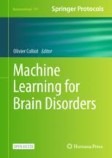
Machine learning for brain disorders
Organized into five parts. Part One presents the fundamentals of ML. Part Two looks at the main types of data used to characterize brain disorders, including clinical assessments, neuroimaging, electro- and magnetoencephalography, genetics and omics data, electronic health records, mobile devices, connected objects and sensors. Part Three covers the core methodologies of ML in brain disorders and the latest techniques used to study them. Part Four is dedicated to validation and datasets, and Part Five discusses applications of ML to various neurological and psychiatric disorders.
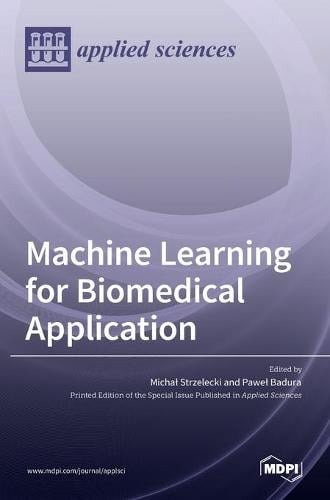
Machine learning for biomedical application
Biomedicine is a multidisciplinary branch of medical science that consists of many scientific disciplines, e.g., biology, biotechnology, bioinformatics, and genetics; moreover, it covers various medical specialties. In recent years, this field of science has developed rapidly. This means that a large amount of data has been generated, due to (among other reasons) the processing, analysis, and recognition of a wide range of biomedical signals and images obtained through increasingly advanced medical imaging devices. The analysis of these data requires the use of advanced IT methods, which include those related to the use of artificial intelligence, and in particular machine learning. It is a summary of the Special Issue “Machine Learning for Biomedical Application”, briefly outlining selected applications of machine learning in the processing, analysis, and recognition of biomedical data, mostly regarding biosignals and medical images.
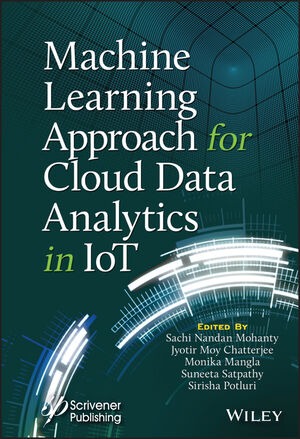
Machine learning approach for cloud data analytics in IoT
Covers the multidimensional perspective of machine learning through the perspective of cloud computing and Internet of Things ranging from fundamentals to advanced applications. Elucidates some of the best practices and their respective outcomes in cloud and fog computing environments. It focuses on all the various research issues related to big data storage and analysis, large-scale data processing, knowledge discovery and knowledge management, computational intelligence, data security and privacy, data representation and visualization, and data analytics. The featured technologies presented in the book optimizes various industry processes using business intelligence in engineering and technology. Light is also shed on cloud-based embedded software development practices to integrate complex machines so as to increase productivity and reduce operational costs. The various practices of data science and analytics which are used in all sectors to understand big data and analyze massive data patterns are also detailed in the book.
