



Page 2
Page 2

Coordination, organizations, institutions, and norms in agent system III ; COIN 2007 International Workshops COIN@AAMAS 2007, Honolulu, HI, USA, May 14, 2007 COIN@MALLOW 2007, Durham, UK, September 3-4, 2007 Revised Selected Papers
This book constitutes the refereed post-workshop proceedings of the International Workshop on Coordination, Organization, Institutions and Norms in Agent Systems, COIN 2007.

Coordination, organizations, institutions, and norms in agent system ; AAMAS 2005 International Workshops on Agents, Norms, and Institutions for Regulated Multiagent Systems, ANIREM 2005 and on organizations in multi-agent systems, OOOP 2005, Utrecht, The Netherlands, July 25-26, 2005, Revised Selected Papers
This book constitutes the refereed post-proceedings of the International Workshop on Agents, Norms and Institutions for Regulated Multiagent Systems, ANIREM 2005, and the International Workshop on Organizations in Multi-Agent Systems, OOOP 2005, held in Utrecht, The Netherlands, July 2005.

Content based image retrieval systems
With an advent of technology, huge collection of digital images is formed as repositories on crime prevention, medical diagnosis, military, face finding, satellites and remote sensing. The task of searching for similar images in the repository is difficult. The data is growing enormously which makes it difficult to store and manage. The traditional image retrieval technique is inefficient in retrieving these images. Content-based image retrieval is an approach from data mining community, which provides the solution of managing this huge quantity of data. In this research, a Content-Based Image Retrieval (CBIR) system has been developed using color and texture as retrieval features from the image repository. The system allows the user to search for an image based on any of the two features alone or in combination by assigning weights to the features. The histogram and color moments approach is used to extract the color feature, texture feature is extracted using statistical moments and co-occurrence matrix method and the shape feature is extracted using the morphological operations. The images and the extracted feature vectors are stored in the Pickle file. The system is robust as it provides search based on the multiple features. The performance of the system was evaluated by analyzing the retrieval results using precision and recall.

Conditionals, Information, and Inference
Conditionals are fascinating and versatile objects of knowledge representation. On the one hand, they may express rules in a very general sense, representing, for example, plausible relationships, physical laws, and social norms. On the other hand, as default rules or general implications, they constitute a basic tool for reasoning, even in the presence of uncertainty. In this sense, conditionals are intimately connected both to information and inference. Due to their non-Boolean nature, however, conditionals are not easily dealt with. They are not simply true or false — rather, a conditional “if A then B” provides a context, A, for B to be plausible (or true) and must not be confused with “A entails B” or with the material implication “not A or B.” This ill- trates how conditionals represent information, understood in its strict sense as reduction of uncertainty. To learn that, in the context A, the proposition B is plausible, may reduce uncertainty about B and hence is information. The ab- ity to predict such conditioned propositions is knowledge and as such (earlier) acquired information. The ?rst work on conditional objects dates back to Boole in the 19th c- tury, and the interest in conditionals was revived in the second half of the 20th century, when the emerging Arti?cial Intelligence made claims for appropriate formaltoolstohandle“generalizedrules.”Sincethen,conditionalshavebeenthe topic of countless publications, each emphasizing their relevance for knowledge representation, plausible reasoning, nonmonotonic inference, and belief revision.

Computational logic in multi-agent systems ; Vol. 3900 ; 6th International Workshop, CLIMA VI, London, UK, June 27-29, 2005, Revised Selected and Invited Papers
The book presents 14 revised full technical papers, 4 contest papers, and 7 invited papers together with 1 invited article are organized in topical sections on foundational aspects of agency, agent programming, agent interaction and normative systems, the first CLIMA contest, and on the project report of the SOCS project.

Computational intelligence and bioinspired systems ; 8th International Work-conference on artificial neural networks, IWANN 2005, Vilanova i la Geltrú, Barcelona, Spain, June 8-10, 2005, Proceedings
We present in this volume the collection of finally accepted papers of the eighth edition of the “IWANN” conference (“International Work-Conference on Artificial Neural Networks”). This biennial meeting focuses on the foundations, theory, models and applications of systems inspired by nature (neural networks, fuzzy logic and evolutionary systems). For scientists, engineers and professionals working in the area, this is a very good way to get solid and competitive applications. We are facing a real revolution with the emergence of embedded intelligence in many artificial systems (systems covering diverse fields: industry, domotics, leisure, healthcare, … ). So we are convinced that an enormous amount of work must be, and should be, still done. Many pieces of the puzzle must be built and placed into their proper positions, offering us new and solid theories and models (necessary tools) for the application and praxis of these current paradigms. The above-mentioned concepts were the main reason for the subtitle of the IWANN 2005 edition: “Computational Intelligence and Bioinspired Systems.” papers was addressing the following topics: 1. Mathematical and theoretical methods in computational intelligence.

Codici cifrati: Arne Beurling e la crittografia nella II guerra mondiale = Cipher codes : Arne Beurling and cryptography in world war II
The story of the German codebreaking is told in detail for the first time and has all the makings of a thriller, but with elements that make it an excellent introduction to the field of cryptography, as well as a vibrant and human portrait of the society of the time: a desperate wartime situation, political and espionage intrigue, the sometimes incomprehensible yet always fascinating genius of the main architect of its success — mathematician Arne Beurling—the difficulties and tricks of the trade, but also the systematic and obscure work of a crowd of codebreakers who treat their situation as if it were a normal job. The author, Bengt Beckman, was for years, after the war, head of the cryptanalysis department of the Swedish intelligence agency.

Cloud Computing Infrastructure for Enabling Future Technology Advancement
Presents the most up-to-date information about cloud computing technologies and applications. This book provides a detailed introduction of the research fields, recent work, and open research questions in the emerging field of cloud computing. Also, the present book will look for potential research areas and technologies that will make it easier to build a global market for cloud computing services that support scientific, industrial, business, and consumer applications. The benefits associated with cloud computing are enormous, and for rapid development, there is a massive requirement of research and development in this field.

Component-Based Software Testing with UML
Component-based software development regards software construction in terms of conventional engineering disciplines where the assembly of systems from readily-available prefabricated parts is the norm. Because both component-based systems themselves and the stakeholders in component-based development projects are different from traditional software systems, component-based testing also needs to deviate from traditional software testing approaches. Gross first describes the specific challenges related to component-based testing like the lack of internal knowledge of a component or the usage of a component in diverse contexts. He argues that only built-in contract testing, a test organization for component-based applications founded on building test artifacts directly into components, can prevent catastrophic failures like the one that caused the now famous ARIANE 5 crash in 1996. This book is the first comprehensive treatment of the intricacies of testing component-based software systems. With its strong modeling background, it appeals to researchers and graduate students specializing in component-based software engineering. Professionals architecting and developing component-based systems will profit from the UML-based methodology and the implementation hints based on the XUnit and JUnit frameworks.
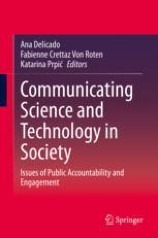
Communicating science and technology in society
Addresses the engagement between science and society from multiple viewpoints. At a time when trust in experts is being questioned, misinformation is rife and scientific and technological development show growing social impact, the volume examines the challenges in involving the public in scientific debates and decisions. It takes into account societal needs and concerns in research, and analyses the interface between the roles of institutions and individuals. From environmental challenges to science communication, participatory technological design to animal experimentation, and transdisciplinarity to norms and values in science, the volume brings together research on areas in which scientists and citizens interact, across diverse, often understudied, socio-cultural contexts in Europe.

Citation Analysis in Research Evaluation
This book is written for members of the scholarly research community, and for persons involved in research evaluation and research policy. More specifically, it is directed towards the following four main groups of readers: – All scientists and scholars who have been or will be subjected to a quantitative assessment of research performance using citation analysis. – Research policy makers and managers who wish to become conversant with the basic features of citation analysis, and about its potentialities and limitations. – Members of peer review committees and other evaluators, who consider the use of citation analysis as a tool in their assessments. – Practitioners and students in the field of quantitative science and technology studies, informetrics, and library and information science. Citation analysis involves the construction and application of a series of indicators of the ‘impact’, ‘influence’ or ‘quality’ of scholarly work, derived from citation data, i.e. data on references cited in footnotes or bibliographies of scholarly research publications. Such indicators are applied both in the study of scholarly communication and in the assessment of research performance. The term ‘scholarly’ comprises all domains of science and scholarship, including not only those fields that are normally denoted as science – the natural and life sciences, mathematical and technical sciences – but also social sciences and humanities.

Biological and artificial intelligence environments
The book reports the proceedings of the 15th Italian workshop on neural networks issued by the Italian Society on Neural Networks SIREN. The longevity recipe of this conference stands in three main points that normally renders the reading of these proceedings so interesting as appealing. 1. The topics of the neural networks is considered an attraction pole for a set of researches centered on the inherent paradigm of the neural networks, rather than on a specific tool exclusively. Thus, the subsymbolic management of the data information content constitutes the key feature of papers in various fields such as Pattern Recognition, Stochastic Optimization, Learning, Granular Computing, and so on, with a special bias toward bioinformatics operational applications. An excerpt of all these matters may be found in the book. 2. Though managed at domestic level, the conference attracts contributions from foreign researchers as well, so that in the book the reader may capture the flavor of the state of the art in the international community. 3. The conference is a meeting of friends as well. Thus the papers generally reflect a relaxed atmosphere where researchers meet to generously exchange their thought and explain their actual results in view of a common cultural growing of the community.
Bioinformatics Using Computational Intelligence Paradigms
Bioinformatics as well as Computational Intelligence are undoubtedly remarkably fast growing fields of research and real-world applications with enormous potential for current and future developments. "Bioinformatics using Computational Intelligence Paradigms" contains recent theoretical approaches and guiding applications of biologically inspired information processing systems(Computational Intelligence) against the background of bioinformatics. This carefully edited monograph combines the latest results of Bioinformatics and Computational Intelligence and offers a promising cross-fertilisation and interdisciplinary work between these growing fields.
Bioinformatics
In this textbook present mathematical models in bioinformatics and they describe the biological problems that inspire the computer science tools used to handle the enormous data sets involved. The first part of the book covers the mathematical and computational methods, while the practical applications are presented in the second part. The mathematical presentation is descriptive and avoids unnecessary formalism, and yet remains clear and precise. Emphasis is laid on motivation through biological problems and cross applications. Each of the four chapters in the first part is accompanied by exercises and problems to support an understanding of the techniques presented. Each of the six chapters of the second part is devoted to some specific application domain: sequence alignment, molecular phylogenetics and coalescence theory, genomics, proteomics, RNA, and DNA microarrays. Each chapter concludes with a problems and projects section, to deepen the reader's understanding and to allow for the design of derived methods. Many of the projects involve publicly available software and/or Web-based bioinformatics depositories. Finally, the book closes with a thorough bibliography, reaching from classic research results to very recent findings, providing many pointers for future research.Overall, this volume is ideally suited for a senior undergraduate or graduate course on bioinformatics, with a strong focus on its mathematical and computer science background.

Beauty’s Appeal : Measure and Excess
Beauty fulfils human existence. As it registers in our aesthetic experience, beauty enhances nature’s enchantment around us and our inward experience lifting our soul toward moral elevation. Carried by creative imagination (Imaginatio Creatrix), beauty participates in the moulding of the forms of the intellective constitution of the mind in tandem with praxis and seeks deeper enigmas of the real in the labyrinth of the cosmos. Yet with the evolution of human development and in technological inventions, beauty, while suffusing all modalities of experience, seems to undergo transformations and expansion. Are there perduring norms and modalities of beauty or are we carried along blindly by human development? Is there a measure intrinsic to our human ontopoietic unfolding and the growth of human life that we may follow instead of the whim of fancy and excess? The present collection of art-explorations seeks the elemental ties of Human Condition. Together, the authors aim to answer the questions posed above.

Attitudes, beliefs, motivation and identity in mathematics education : An overview of the field and future directions
Records the state of the art in research on mathematics-related affect. It discusses the concepts and theories of mathematics-related affect along the lines of three dimensions. The first dimension identifies three broad categories of affect: motivation, emotions, and beliefs. The book contains one chapter on motivation, including discussions on how emotions and beliefs relate to motivation. There are two chapters that focus on beliefs and a chapter on attitude which cross-cuts through all these categories. The second dimension covers a rapidly fluctuating state to a more stable trait. All chapters in the book focus on trait-type affect and the chapter on motivation discusses both these dimensions. The third dimension regards the three main levels of theorizing: physiological (embodied), psychological (individual) and social. All chapters reflect that mathematics-related affect has mainly been studied using psychological
Attention in Cognitive Systems : Theories and Systems from an Interdisciplinary Viewpoint ; 4th International Workshop on Attention in Cognitive Systems, WAPCV 2007 Hyderabad, India, January 8, 2007 Revised Selected Papers
The embodied nature of sensory-motor intelligence requires a continuous and focused interplay between the control of motor activities and the interpretation of feedback from perceptual modalities. Decision making about the selection of information from the incoming sensory stream – in tune with contextual processing on a current task and an agent’s global objectives – becomes a further challenging issue in attentional control. Attention must operate at interfaces between bottom-up driven world int- pretation and top-down driven information selection, thus acting at the core of arti?cial cognitive systems. These insights have already induced changes in AI-related disciplines, such as the design of behavior-based robot control and the computational modeling of animats. Today, the development of enabling technologiessuch as autonomous robotic systems,miniaturizedmobile–evenwearable–sensors,andambientintelligence systems involves the real-time analysis of enormous quantities of data. These data have to be processed in an intelligent way to provide “on time delivery” of the required relevant information. Knowledge has to be applied about what needs to be attended to, and when, and what to do in a meaningful sequence, in correspondence with visual feedback.
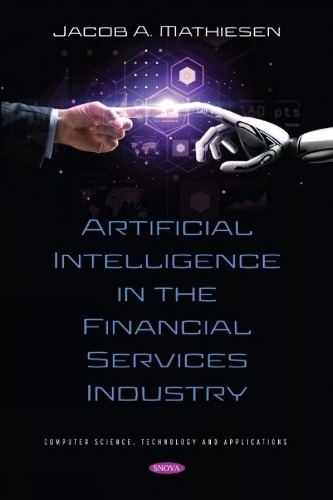
Artificial intelligence in the financial services industry
Today, the financial services sector is facing a period of rapid disruption and innovation, and artificial intelligence (AI) is at the heart of these changes. Artificial intelligence can be used to gather enormous amounts of data, detect abnormalities, and solve complex problems. Financial institutions are already experimenting extensively with AI strategies to enhance and streamline financial institutions, BSA and AML compliance, CRA requirements, fraud detection, and real estate valuations, all while reducing cost levels. This book looks at how artificial intelligence is affecting the financial services industry.

Architecting Systems with Trustworthy Components ; International Seminar, Dagstuhl Castle, Germany, December 12-17, 2004. Revised Selected Papers
This book constitutes the thoroughly refereed post-proceedings of the International Dagstuhl-Seminar on Architecting Systems with Trustworthy Components, held in Dagstuhl Castle, Germany, in December 2004. The 10 revised full papers presented together with 5 invited papers contributed by outstanding researchers were carefully selected and included in the book reflecting ongoing impovement from the seminar. Core problems addressed by the seminar are measurement and normalization of non-functional properties, modular reasoning over non-functional properties, capture of component requirements in interfaces and protocols, interference and synergy of top-down and bottom-up aspects, duality of componentization and architecture, system properties, and opportunities for correctness by construction/static checking.
AI in learning : Designing the future
AI (artificial intelligence) is predicted to radically change teaching and learning in both schools and industry causing radical disruption of work. AI can support well-being initiatives and lifelong learning but educational institutions and companies need to take the changing technology into account. Moving towards AI supported by digital tools requires a dramatic shift in the concept of learning, expertise and the businesses built off of it. Based on the latest research on AI and how it is changing learning and education, this book will focus on the enormous opportunities to expand educational settings with AI for learning in and beyond the traditional classroom. This book also introduces ethical challenges related to learning and education, while connecting human learning and machine learning.
