



Page 2
Page 2

Metalearning : Applications to Automated Machine Learning and Data Mining
This book as one of the fastest-growing areas of research in machine learning, metalearning studies principled methods to obtain efficient models and solutions by adapting machine learning and data mining processes. This adaptation usually exploits information from past experience on other tasks and the adaptive processes can involve machine learning approaches. As a related area to metalearning and a hot topic currently, automated machine learning (AutoML) is concerned with automating the machine learning processes. Metalearning and AutoML can help AI learn to control the application of different learning methods and acquire new solutions faster without unnecessary interventions from the user.

Metainformatics ; International Symposium, MIS 2004, Salzburg, Austria, September 15-18, 2004, Revised Selected Papers
Constitutes the refereed post-proceedings of the Metainformatics Symposium, MIS 2004, held in Salzburg, Austria. This book reviews 17 papers that are devoted to finding useful abstractions, analytical frameworks, and systems that improve the understanding of the underlying structure of disciplines and families of systems within computer science.

Medical Image Computing and Computer-Assisted Intervention - MICCAI 2008 ; 11th International Conference, New York, NY, USA, September 6-10, 2008, Proceedings, Part II
The program committee carefully selected 258 revised papers from numerous submissions for presentation in two volumes, based on rigorous peer reviews. The first volume includes 127 papers related to medical image computing, segmentation, shape and statistics analysis, modeling, motion tracking and compensation, as well as registration. The second volume contains 131 contributions related to robotics and interventions, statistical analysis, segmentation, intervention, modeling, and registration.
Medical Image Computing and Computer-Assisted Intervention - MICCAI 2008 ; 11th International Conference, New York, NY, USA, September 6-10, 2008, Proceedings, Part I
The program committee carefully selected 258 revised papers from numerous submissions for presentation in two volumes, based on rigorous peer reviews. The first volume includes 127 papers related to medical image computing, segmentation, shape and statistics analysis, modeling, motion tracking and compensation, as well as registration. The second volume contains 131 contributions related to robotics and interventions, statistical analysis, segmentation, intervention, modeling, and registration.

Integrated Circuit and System Design. Power and Timing Modeling, Optimization and Simulation ; Vol. 4148 ; 16th International Workshop, PATMOS 2006, Montpellier, France, September 13-15, 2006, Proceedings
Welcome to the proceedings of PATMOS 2006, the 16th in a series of international workshops. PATMOS 2006 was organized by LIRMM with CAS technical - sponsorship and CEDA sponsorship. Over the years, the PATMOS workshop has evolved into an important European event, where researchers from both industry and academia discuss and investigate the emerging challenges in future and contemporary applications, design methodologies, and tools required for the development of upcoming generations of integrated circuits and systems. The technical program of PATMOS 2006 contained state-of-the-art technical contributions, three invited talks, a special session on hearing-aid design, and an embedded tutorial. The technical program focused on timing, performance and power consumption, as well as architectural aspects with particular emphasis on modeling, design, characterization, analysis and optimization in the nanometer era. The Technical Program Committee, with the assistance of additional expert reviewers, selected the 64 papers presented at PATMOS. The papers were organized into 11 technical sessions and 3 poster sessions. As is always the case with the PATMOS workshops, full papers were required, and several reviews were received per manuscript.

Integrated circuit and system design : Power and timing modeling, optimization and simulation ; 17th International Workshop, PATMOS 2007, Gothenburg, Sweden, September 3-5, 2007, Proceedings
Papers cover high level design, low power design techniques, low power analog circuits, statistical static timing analysis, power modeling and optimization, low power routing optimization, security and asynchronous design, low power applications, modeling and optimization, and more.

Innovative approaches for learning and knowledge sharing ; 1st European Conference on Technology Enhanced Learning, EC-TEL 2006, Crete, Greece, October 1-4, 2006, Proceedings
This book constitutes the refereed proceedings of the First European Conference on Technology Enhanced Learning, EiTEL 2006, held in Crete, Greece in October 2006. The 32 revised full papers, 13 revised short papers and 31 poster papers presented together with 2 keynote talks were carefully reviewed and selected from 192 submissions. The conference provides a unique forum for all research related to technology-enhanced learning, as well as its interactions with knowledge management, business processes and work environments. Topics addressed are collaborative learning, personalized learning, multimedia content, semantic web, metadata and learning, workplace learning, learning repositories and infrastructures for learning, as well as experience reports, assesment, and case studies.

Information theory and machine learning
The recent successes of machine learning, especially regarding systems based on deep neural networks, have encouraged further research activities and raised a new set of challenges in understanding and designing complex machine learning algorithms. New applications require learning algorithms to be distributed, have transferable learning results, use computation resources efficiently, convergence quickly on online settings, have performance guarantees, satisfy fairness or privacy constraints, incorporate domain knowledge on model structures, etc. A new wave of developments in statistical learning theory and information theory has set out to address these challenges.

Information systems and e-business technologies ; 2nd International United Information Systems Conference UNISCON 2008 Klagenfurt, Austria, April 22–25, 2008 Proceedings
This book constitutes the refereed proceedings of UNISCON 2008 held in Klagenfurt, Austria, during April 22-25, 2008.UNISCON combines the ECOMO workshop series and the ISTA conference series. The 19 papers dealing with conceptual modeling, model-driven software development and information systems applications represent a 30% selection from the original set of submissions.

Information Sharing on the Semantic Web
The more information is available, the harder it is to locate any particular piece of it. And even when it has been successfully found, it is even harder still to usefully combine it with other information we may already possess. It is commonly understood that this problem of information sharing can only be solved by giving computers better access to the semantics of the information. While it has been recognized that ontologies play a crucial role in solving the open problems, most approaches rely on the existence of well-established data structures. To overcome these shortcomings, Stuckenschmidt and van Harmelen describe ontology-based approaches for resolving semantic heterogeneity in weakly structured environments, in particular the World Wide Web. Addressing problems like missing conceptual models, unclear system boundaries, and heterogeneous representations, they design a framework for ontology-based information sharing in weakly structured environments like the Semantic Web. For researchers and students in areas related to the Semantic Web, the authors provide not only a comprehensive overview of the State of the art, but also present in detail recent research in areas like ontology design for information integration, metadata generation and management, and representation and management of distributed ontologies. For professionals in areas such as e-commerce and knowledge management, the book provides decision support on the use of novel technologies, information about potential problems, and guidelines for the successful application of existing technologies.
Information context : Nature, impact, and role ; 5th International conference on Conceptions of Library and Information Sciences, CoLIS 2005, Glasgow, UK, June 4-8, 2005 Proceedings
.CoLIS examinesthehistorical,theoretical,empiricalandtechnicalissuesrelatingtoour understanding and use of information, promoting an interdisciplinary approach to research. CoLIS seeks to provide a broad platform for the examination of context as it relates to our theoretical, empirical and technical development of information-centered disciplines. The theme for CoLIS 5 was the nature, impact and role of context within information-centered research. Context is a complex, dynamic and multi- - mensional concept that in?uences both humans and machines: how they behave individually and how they interact with each other. In CoLIS 5 we took an interdisciplinary approach to the issue of context to help us understand and the theoretical approaches to modelling and understanding context, incorporate contextual reasoning within technology, and develop a shared framework for promoting the exploration of context.
Informatics in the Future ; Proceedings of the 11th European Computer Science Summit (ECSS 2015), Vienna, October 2015
This volume discusses the prospects and evolution of informatics (or computer science), which has become the operating system of our world, and is today seen as the science of the information society. Its artifacts change the world and its methods have an impact on how we think about and perceive the world. Classical computer science is built on the notion of an “abstract” machine, which can be instantiated by software to any concrete problem-solving machine, changing its behavior in response to external and internal states, allowing for self-reflective and “intelligent” behavior. However, current phenomena such as the Web, cyber physical systems or the Internet of Things show us that we might already have gone beyond this idea, exemplifying a metamorphosis from a stand-alone calculator to the global operating system of our society.

Hybrid metaheuristics ; Vol. 4030 ; 3rd International Workshop, HM 2006, Gran Canaria, Spain, October 13-14, 2006, Proceedings
The selection of papers for HM 2006 consolidated some of the mainstream issues that have emerged from the past editions. Firstly, there are prominent examples of e?ective hybrid techniques whose design and implementation were motivated by challenging real-world applications. We believe this is particularly important for two reasons: on the one hand, researchers are conscious that the primary goal of developing algorithms is to solve relevant real-life problems; on the other hand, the path towarde?cient solving methods for practical problems is a source of new outstanding ideas and theories. A second important issue is that the research community on metaheur- tics has become increasingly interested in and open to techniques and methods known from arti?cial intelligence (AI) and operations research (OR). So far, the most representative examples of such integration have been the use of AI/OR techniques as subordinates of metaheuristic methods. As a historical and - ymological note, this is in perfect accordance with the original meaning of a metaheuristic as a “general strategy controlling a subordinate heuristic. ” The awareness of the need for a sound experimental methodology is a third keypoint.

Hybrid metaheuristics ; Vol. 3636 ; 2nd International Workshop, HM 2005, Barcelona, Spain, August 29-30, 2005. Proceedings
Constitutes the refereed proceedings of the Second International Workshop on Hybrid Metaheuristics, HM 2005, held in Barcelona, Spain, in August 2005. In this book, the papers addresses topics such as: low-level hybridization, high-level hybridization, portfolio techniques, expert systems, co-operative search, taxonomy, terminology, and more.

Hybrid metaheuristics ; 5th International Workshop, HM 2008, Málaga, Spain, October 8-9, 2008. Proceedings
This book constitutes the refereed proceedings of the 5th International Workshop on Hybrid Metaheuristics, HM 2008, held in Malaga, Spain, in October 2008.The 14 revised full papers presented were carefully reviewed and selected from 33 submissions. The papers discuss specific aspects of combinations of metaheuristics and other solving techniques for tackling particular relevant constrained optimization problems, such as fiber optic networks, time tabling and freight train scheduling problems.

Hybrid metaheuristics ; 4th International Workshop,HM 2007, Dortmund, Germany, October 8-9, 2007, Proceedings
This book constitutes the refereed proceedings of the 4th International Workshop on Hybrid Metaheuristics, HM 2007, held in Dortmund, Germany. The 14 revised full papers discuss specific aspects of hybridization of metaheuristics, hybrid metaheuristics design, development and testing.
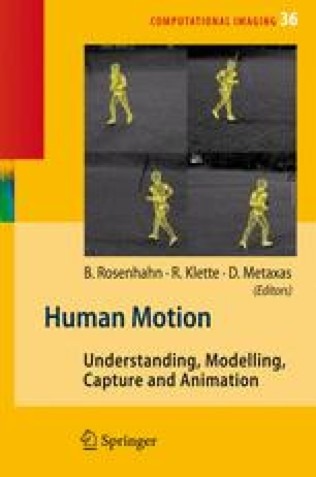
Human motion : Understanding, modeling, capture and animation
Edward Muybridge (1830–1904) is known as the pioneer in motion capt- ing with his famous experiments in 1887 called “Animal Locomotion”. Since then, the feld of animal or human motion analysis has grown in many dir- tions. However, research and results that involve human-like animation and the recovery of motion is still far from being satisfactory. Progress in human motion analysis depends on empirically anchored and grounded research in computer vision, computer graphics, and biomechanics. This book is based on a June 2006 workshop held in Dagstuhl, Germany. This workshop brought together for the frst time researchers from the afo- mentioned disciplines.
Graph Transformations ; 3rd International Conference, ICGT 2006, Rio Grande do Norte, Brazil, September 17-23, 2006, Proceedings
ICGT 2006 was the 3rd International Conference on Graph Transformation, following the previous two in Barcelona (2002) and Rome (2004), and a series of six international workshops between 1978 and 1998. The scope of the conference concerned graphical structures of various kinds (like graphs, diagrams and visual sentences) that are useful when describing complex structures and systems in a direct and intuitive way. These structures are often enriched with formalisms that model their evolution via suitable kinds of transformations. The ?eld of the conference was concerned with the theory, applications, and implementation issues of such formalisms. Particularemphasis wasputonmetamodelswhichcanaccommodateavarietyofgraphicalstructures within the same abstract theory.

Genetic programming IV : Routine human-competitive machine intelligence
Genetic Programming IV: Routine Human-Competitive Machine Intelligence presents the application of GP to a wide variety of problems involving automated synthesis of controllers, circuits, antennas, genetic networks, and metabolic pathways. The book describes fifteen instances where GP has created an entity that either infringes or duplicates the functionality of a previously patented 20th-century invention, six instances where it has done the same with respect to post-2000 patented inventions, two instances where GP has created a patentable new invention, and thirteen other human-competitive results. The book additionally establishes: GP now delivers routine human-competitive machine intelligence GP is an automated invention machine GP can create general solutions to problems in the form of parameterized topologies GP has delivered qualitatively more substantial results in synchrony with the relentless iteration of Moore's Law
Generative and transformational techniques in software engineering ; International Summer School, GTTSE 2005, Braga, Portugal, July 4-8, 2005. Revised Papers
This tutorial book presents an augmented selection of material presented at the International Summer School on Generative and Transformational Techniques in Software Engineering, GTTSE 2005. The book comprises 7 tutorial lectures presented together with 8 technology presentations and 6 contributions to the participants workshop.
