



Page 2
Page 2
Interactive technologies and sociotechnical systems; 12th International Conference, VSMM 2006, Xi'an, China, October 18-20, 2006, Proceedings
This book constitutes the refereed proceedings of the 13th International Conference on Interactive Technologies and Sociotechnical Systems, VSMM 2006, held in Xi'an, China in October 2006. The 59 revised full papers presented together with one keynote paper were carefully reviewed and selected from more than 180 submissions.

Interactive Media : The Semiotics of Embodied Interaction
Human Computer Interaction has been looking at versions of these questions for a long time now, but as technology advances so quickly it is hard to keep pace with the changes. In reflecting on some of these issues and by providing a way to relate some of the disparate threads of theory from fields such as phenomenology, cognitive science, semiotics and the ecological theory of perception, Shaleph O’Neill provides an exploration of the theories that impact our understanding over a spectrum of interactive media.

Interactive drink machine company - (IDM company)
This project is a continuation of our previous project for a hot drink machine by adding the capability for electronic payment and developing the company's management system and making the hot drink machine linkable with the company's server via the Internet and more interactive with the customer through the development of this project according to several aspects. On the software level: An integrated system that allows recording customer requests and executed operations, in addition to information about users, including their personal information, current balance, and executed requests. On the level of employees, their personal information, their work tasks and the operations carried out by them (Receipt and delivery of materials and servicing of machines).

Intelligent Virtual Agents ; Vol.3661 : 5th International Working Conference, IVA 2005, Kos, Greece, September 12-14, 2005, Proceedings
The origin of the Intelligent Virtual Agents conference dates from a successful workshop on Intelligent Virtual Environments held in Brighton at the 13th European Conference on Artificial Intelligence (ECAI'98). This workshop was followed by a second one held in Salford in Manchester in 1999. Subsequent events took place in Madrid, Spain in 2001 and Irsee, Germany in 2003 and attracted participants from both sides of the Atlantic as well as Asia. th This volume contains the proceedings of the 5 International Working Conference on Intelligent Virtual Agents, IVA 2005, held on Kos Island, Greece, September 12–14, 2005, which highlighted once again the importance and vigor of the research field. A half-day workshop under the title “Socially Competent IVA’s: We are not alone in this (virtual) world!” also took place as part of this event. IVA 2005 received 69 submissions from Europe, North and South America, Africa and Asia. The papers published here are the 26 full papers and 14 short papers presented at the conference, as well as one-page descriptions of the 15 posters and the descriptions of the featured invited talks by Prof. Justine Cassell, of Northwestern University and Prof. Kerstin Dautenhahn, of the University of Hertfordshire. We would like to thank a number of people that have contributed to the success of this conference. First of all, we thank the authors for their high-quality work and their willingness to share their ideas.

Intelligent Interactive multimedia systems for e-healthcare applications
It looks at how the latest technologies (artificial intelligence, deep learning, machine learning, big data, IoT, smart device, etc.) help to manage health data, diagnose health issues, monitor treatment, predict pandemic diseases, and more. It covers several important applications of multimedia in healthcare, including for data visualization purposes, for computer vision for elder healthcare monitoring, for detection of lung nodules, for health monitoring and management systems using machine learning techniques, and for fusion applications in medical image processing. The book goes into detail on the various methods and techniques for supporting multimedia systems for e-healthcare.

Intelligent connectivity : AI, IoT, and 5G
Explores the economics and technology of AI, IOT, and 5G integration. Delivers a comprehensive technological and economic analysis of intelligent connectivity and the integration of artificial intelligence, Internet of Things (IoT), and 5G. It covers a broad range of topics, including Machine-to-Machine (M2M) architectures, edge computing, cybersecurity, privacy, risk management, IoT architectures, and more. Will also get access to: A thorough introduction to technology adoption and emerging trends in technology, including business trends and disruptive new applications / Comprehensive explorations of telecommunications transformation and intelligent connectivity, including learning algorithms, machine learning, and deep learning / Practical discussions of the Internet of Things, including its potential for disruption and future trends for technological development / In-depth examinations of 5G wireless technology, including discussions of the first five generations of wireless tech

Information Security Handbook
Provides a comprehensive collection of knowledge for emerging multidisciplinary research areas such as cybersecurity, IoT, Blockchain, Machine Learning, Data Science, and AI. This book brings together, in one resource, information security across multiple domains. It explores basic and high-level concepts and serves as a manual for industry while also helping beginners to understand both basic and advanced aspects in security-related issues. The handbook explores security and privacy issues through the IoT ecosystem and implications to the real world and, at the same time, explains the concepts of IoT-related technologies, trends, and future directions.

Healthcare solutions using machine learning and informatics
Covers novel and innovative solutions for the healthcare that apply machine learning and biomedical informatics technology. The healthcare sector is one of the most critical in society. This book presents a series of artificial intelligence, machine learning, intelligent IoT-based solutions for medical image analysis, medical big data processing, disease predictions. Machine learning and artificial intelligence use cases in healthcare presented in the book give researchers, practitioners, and students a wide range of practical examples of cross-domain convergence. The wide variety of topics covered include: Artificial Intelligence in healthcare Machine learning solutions for such disease as diabetes, arthritis, cardiovascular disease, and COVID-19 Big data analytics solutions for healthcare data processing Reliable biomedical applications using AI models Intelligent IoT in healthcare. The book explains fundamental concepts as well as the advanced use cases illustrating how to apply emerging technologies such as machine learning, AI models, data informatics into practice to tackle challenges in the field of healthcare with real-world scenarios. Chapters contributed by noted academicians and professionals examine various solutions, frameworks, applications, case studies, and best practices in the healthcare domain

Handbook of Biochips : Integrated Circuits and Systems for Biology and Medicine
This book provides a broad survey of the field of biochips, including fundamentals of microelectronics and biomaterials interaction with various, living tissues, as well as numerous, diverse applications. Although a wide variety of biochips will be described, there will be a focus on those at the brain-machine interface. Analysis is included of the relationship between different categories of biochips and their interactions with the body and coverage includes wireless remote control of biochips and arrays of microelectrodes, based on new biomaterials.

Handbook of big data analytics ; Vol.2 : Applications in ICT, security and business analytics
Big Data analytics is the complex process of examining big data to uncover information such as correlations, hidden patterns, trends and user and customer preferences, to allow organizations and businesses to make more informed decisions. These methods and technologies have become ubiquitous in all fields of science, engineering, business and management due to the rise of data-driven models as well as data engineering developments using parallel and distributed computational analytics frameworks, data and algorithm parallelization, and GPGPU programming. However, there remain potential issues that need to be addressed to enable big data processing and analytics in real time.

From GSM to LTE-Advanced Pro and 5G: An Introduction to Mobile Networks and Mobile Broadband
Offers an authoritative guide to the technical descriptions of the various wireless technologies currently in use. Explains the rationale behind their differing mechanisms and implementations while exploring the advantages and limitations of each technology. Reflects the significant changes in mobile network technology that have taken place since the third edition was published. Offers a new chapter on 5G NR that explores its non-standalone and standalone architecture. In the Wi-Fi chapter, additional sections focus on the new WPA3 authentication protocol, the new 802.11ax air interface and protocol extensions like 802.11k and 11v for meshed networks.

From Digital Twins to Digital Selves and Beyond : Engineering and Social Models for a Trans-humanist World
This book aims at deepening the understanding of the relation between cyber-physical systems (CPSs) as socio-technical systems and their digital representations with intertwined artificial intelligence (AI). The authors describe why it is crucial for digital selves to be able to develop emotional behavior and why a humanity-inspired AI is necessary so that humans and humanoids can coexist.
Foundations of Multi-Paradigm Modelling for Cyber-Physical Systems
This book coherently gathers well-founded information on the fundamentals of and formalisms for modelling cyber-physical systems (CPS). Highlighting the cross-disciplinary nature of CPS modelling, it also serves as a bridge for anyone entering CPS from related areas of computer science or engineering.

Formal Approaches to Agent-Based Systems ; 3rd International Workshop, FAABS 2004, Greenbelt, MD, April 26-27, 2004, Revised Selected Papers
The 3rd Workshop on Formal Approaches to Agent-Based Systems (FAABS-III) was held at the Greenbelt Marriott Hotel (near NASA Goddard Space Flight Center) in April 2004 in conjunction with the IEEE Computer Society. The first FAABS workshop was help in April 2000 and the second in October 2002. Interest in agent-based systems continues to grow and this is seen in the wide range of conferences and journals that are addressing the research in this area as well as the prototype and developmental systems that are coming into use. Our third workshop, FAABS-III, was held in April, 2004. This volume contains the revised papers and posters presented at that workshop. The Organizing Committee was fortunate in having significant support in the planning and organization of these events, and were privileged to have wor- renowned keynote speakers Prof. J Moore (FAABS-I), Prof. Sir Roger Penrose (FAABS-II), and Prof. John McCarthy (FAABS-III), who spoke on the topic of se- aware computing systems, auguring perhaps a greater interest in autonomic computing as part of future FAABS events. We are grateful to all who attended the workshop, presented papers or posters, and participated in panel sessions and both formal and informal discussions to make the workshop a great success. Our thanks go to the NASA Goddard Space Flight Center, Codes 588 and 581 (Software Engineering Laboratory) for their financial support and to the IEEE Computer Society (Technical Committee on Complexity in Computing) for their sponsorship and organizational assistance.

Evaluation of text summaries based on linear optimization of content metrics
Covers both theoretical contributions and practical applications in security system design by applying the Internet of Things (IoT) and CI. It further explains the application of IoT in the design of modern security systems and how IoT blended with computational intel- ligence can make any security system improved and realizable. Key features: Focuses on the computational intelligence techniques of security system design Covers applications and algorithms of discussed computational intelligence techniques Includes convergence-based and enterprise integrated security systems with their applications Explains emerging laws, policies, and tools affecting the landscape of cyber security Discusses application of sensors toward the design of security systems This book will be useful for graduate students and researchers in electrical, computer engineering, security system design and engineering
Enabling things to talk : Designing IoT solutions with the IoT architectural reference model
The Internet of Things (IoT) is an emerging network superstructure that will connect physical resources and actual users. It will support an ecosystem of smart applications and services bringing hyper-connectivity to our society by using augmented and rich interfaces. Whereas in the beginning IoT referred to the advent of barcodes and Radio Frequency Identification (RFID), which helped to automate inventory, tracking and basic identification, today IoT is characterized by a dynamic trend toward connecting smart sensors, objects, devices, data and applications. The next step will be “cognitive IoT,” facilitating object and data re-use across application domains and leveraging hyper-connectivity, interoperability solutions and semantically enriched information distribution.

Emerging Technologies in Computing ; 3rd EAI International Conference, iCETiC 2020, London, UK, August 19–20, 2020, Proceedings
This book constitutes the refereed conference proceedings of the Third International Conference on Emerging Technologies in Computing, iCEtiC 2020, held in London, UK, in August 2020. Due to VOVID-19 pandemic the conference was helt virtually.The 25 revised full papers were reviewed and selected from 65 submissions and are organized in topical sections covering blockchain and cloud computing; security, wireless sensor networks and IoT; AI, big data and data analytics; emerging technologies in engineering, education and sustainable development.
Electronic Devices and Circuit Design : Challenges and Applications in the Internet of Things
Offers a broad view of the challenges of electronic devices and circuits for IoT applications. The book presents the basic concepts and fundamentals behind new low power, high-speed efficient devices, circuits, and systems in addition to CMOS. It provides an understanding of new materials to improve device performance with smaller dimensions and lower costs. It also looks at the new methodologies to enhance system performance and provides key parameters for exploring the devices and circuit performance based on smart applications.
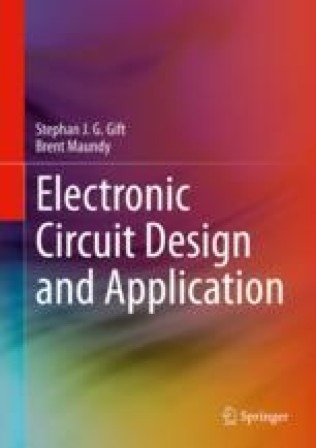
Electronic Circuit Design and Application
This textbook for core courses in Electronic Circuit Design teaches students the design and application of a broad range of analog electronic circuits in a comprehensive and clear manner. Readers will be enabled to design complete, functional circuits or systems. The authors first provide a foundation in the theory and operation of basic electronic devices, including the diode, bipolar junction transistor, field effect transistor, operational amplifier and current feedback amplifier. They then present comprehensive instruction on the design of working, realistic electronic circuits of varying levels of complexity, including power amplifiers, regulated power supplies, filters, oscillators and waveform generators. Many examples help the reader quickly become familiar with key design parameters and design methodology for each class of circuits. Each chapter starts from fundamental circuits and develops them step-by-step into a broad range of applications of real circuits and systems.

E-Learning Methodologies : Fundamentals, technologies and applications
Covers state of the art topics including user modeling for e-learning systems and cloud, IOT, and mobile-based frameworks. It also considers security challenges and ethical conduct using Blockchain technology. E-learning has become an important part of our educational life with the development of e-learning systems and platforms and the need for online and remote learning. ICT and computational intelligence techniques are being used to design more intelligent and adaptive systems. However, the art of designing good real-time e-learning systems is difficult as different aspects of learning need to be considered including challenges such as learning rates, involvement, knowledge, qualifications, as well as networking and security issues. The earlier concepts of standalone integrated virtual e-learning systems have been greatly enhanced with emerging technologies such as cloud computing, mobile computing, big data, Internet of Things (IoT), AI and machine learning, and AR/VT technologies.
