



Page 16
Page 16
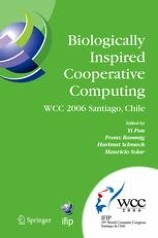
Biologically inspired cooperative computing ; IFIP 19th World Computer Congress, TC 10: 1st IFIP International Conference on biologically inspired cooperative computing, August 21-24, 2006, Santiago, Chile
The IFIP series publishes state-of-the-art results in the sciences and technologies of information and communication. The scope of the series includes: foundations of computer science; software theory and practice; education; computer applications in technology; communication systems; systems modeling and optimization; information systems; computers and society; computer systems technology; security and protection in information processing systems; artificial intelligence; and human-computer interaction.
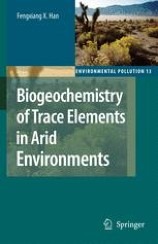
Biogeochemistry of Trace Elements in Arid Environments
Global warming has worsened the water resource crisis in many arid zones worldwide, from Africa to Asia, affecting millions of people and putting them at risk of hunger. Effective management of arid zone resources, including understanding the risks of toxic trace and heavy elements to humans, coupled with the need to produce more food to feed the world’s growing population, has thus become increasingly important. This very timely book, the only one of its kind on the market, fills the gap of our knowledge of trace elements in these regions. This book begins by introducing the nature and properties of arid zone soil, followed by an updated overview and comprehensive coverage of the major aspects of the trace elements and heavy metals of most concern in the world’s arid and semi-arid soils. These aspects include: - content and distribution - solution chemistry - solid-phase chemistry - selective sequential dissolution techniques - transfer fluxes - bioavailability - pollution and remediation In order to illustrate the themes, a comprehensive and focused case study on transfer fluxes of trace elements in Israeli arid soils is presented. Finally it closes with the global perspectives on anthropogenic interferences in the natural trace elements’ distribution.
Bioethics in Cultural Contexts : Reflections on Methods and Finitude
This book discusses a range of methodological issues for an interdisciplinary bioethics. How can bioethics be an enterprise that does not only isolate issues and moral reasons but also (re)contextualises them? What are the strengths and weaknesses of different traditional and innovative modes of ethical work in terms of these tasks?
Bioethics in a Small World
Bioethics has addressed many of the issues that arise in the context of globalisation. This book presents the results of a conference the Europaische Akademie held in 2003 which developed its thesis in open discussions of foundational and applied problems of bioethics from an interdisciplinary and international perspective.
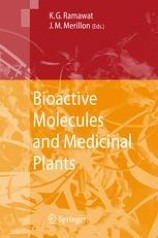
Bioactive Molecules and Medicinal Plants
Use of medicinal plants is as old as human civilization and continuous efforts are being made to improve medicinal plants or produce their products in high amounts through various technologies. About 200,000 natural products of plant origin are known and many more are being identifed from higher plants and microorganisms. Some plant-based drugs have been used for centuries and there is no alternative medicine for many drugs, such as cardiac glycosides. However, natural products research was sidelined to pave the way for com- natorial chemistry, which was expected to produce large numbers of synthetic compounds for high-throughput screening (HTS). This line of work has failed to deliver desirable results. Moreover, it is not possible for all pharmaceutical companies and institutions to adopt costly HTS technology. Therefore, medi- nal plants and their bioactive molecules are always in demand and are a central point of research. While planning this book, we endeavored to incorporate - ticles that cover the entire gamut of current medicinal plants research.
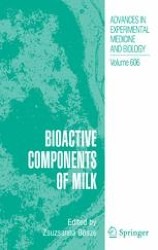
Bioactive components of milk
Of all food products dairy foods have the most potential concerning functional foods. Therefore, there is a tremendous amount of interest in value-added milk products and the identification of components in food which have health benefits. Bioactive Components of Milk provides an overview of these derived components and their diverse activities including: the stimulation of beneficial microflora, alerting the immune system to the presence of potential pathogens and allergens, binding and eliminating toxins, etc. The book is divided into four parts. The first part focuses on bioactive milk lipid components, which very widely among mammalian species. The second part describes different aspects of biological active colostrums and milk proteins and their derivatives, with special concern on species specific effects. The third part reviews the production of recombinant human proteins in the milk of livestock animals - including ethical issues - and the aims of altering milk composition for the benefit of both the animals themselves and the consumers. The final part focuses on the influence of ruminants nutrition on the biological activity of milk.
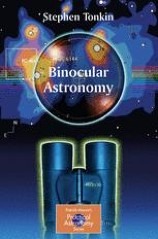
Binocular astronomy
Anyone who has used a binocular telescope or even wide-field binoculars to look at the night sky will know just how breathtakingly beautiful the view can be when you observe with both eyes. Observing galaxies and nebulae with ‘regular’ prismatic binoculars is just a beginning. Binocular eyepieces and adapters can be added to almost any commercially-made astronomical telescope, and of course specialized astronomical binoculars can be assembled or purchased complete. These range from modest instruments to giants that are basically two large telescopes mounted together. Binocular Astronomy contains everything you’ll need to know about this exciting branch of astronomical observing.

Big Data : An Art of Decision Making
Manipulating and processing masses of digital data is never a purely technical activity. It requires an interpretative and exploratory outlook - already well known in the social sciences and the humanities - to convey intelligible results from data analysis algorithms and create new knowledge. Big Data is based on an inquiry of several years within Proxem, a software publisher specializing in big data processing. The book examines how data scientists explore, interpret and visualize our digital traces to make sense of them, and to produce new knowledge. Grounded in epistemology and science and technology studies, Big Data offers a reflection on data in general, and on how they help us to better understand reality and decide on our daily actions.
Beyond the apparent Banality of the mathematics classroom
New research in mathematics education deals with the complexity of the mathematics’ classroom. The classroom teaching situation constitutes a pertinent unit of analysis for research into the ternary didactic relationship which binds teachers, students and mathematical knowledge. The classroom is considered as a complex didactic system, which offers the researcher an opportunity to gauge the boundaries of the freedom that is left with regard to choices about the knowledge to be taught and the ways of organizing the students’ learning, while giveing rise to the study of interrelations between three main elements of the teaching process the: mathematical content to be taught and learned, management of the various time dimensions, and activity of the teacher who prepares and manages the class, to the benefit of the students' knowledge and the teachers' own experience.
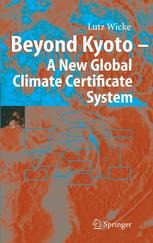
Beyond Kyoto : A new global climate certificate system : Continuing Kyoto commitsments or a global ´Cap and Trade´ scheme for a sustainable climate policy?
This book shows how humankind can ‘prevent dangerous interference with the c- mate system’ without dangerous interference with the global economic system. In the two underlying studies on behalf of the Ministry of Environment and Transport of i the German federal state of Baden-Württemberg, the results have been elaborated through scientific evaluation of different climate protection systems and intensive developmental work on an efficient climate protection system. The results will be presented in nine chapters according to the following nine basic R&D steps: 1. Quantifying the ‘ultimate climate objective’ of the world community in order ‘to prevent dangerous interference with the climate system,’ thus achieving climate sustainability; 2. Development of a comprehensive standard system for evaluating the prospect of success for different climate protection systems; 3. Based on this scientific standard system, evaluation of the current Kyoto system and of the most important proposals for ‘incremental regime evolution’ of the Kyoto system. Unfortunately, it must be noted that these systems are incapable of achi- ing climate sustainability; 4. Evaluating three proposals for ‘structural regime change’ of the Kyoto system. Following this objective evaluation process and numeric comparison of the diff- ent proposals, 5. Description of the eight basic elements of GCCS and its in-depth ‘critical asse- ment;’ 6.
Beyond knowledge : The legacy of competence : Meaningful computer-based learning environments
The edited and peer reviewed volume presents selected papers of the conference "Beyond knowlegde: the legacy of competence" It reflects the current state-of-the-art work of scholars worldwide within the area of learning and instruction with computers. Mainly, areas of computer-based learning environments supporting competence-focused knowledge acquisition but also foundational scientific work are addressed. More specific, contents cover cognitive processes in hypermedia and multimedia learning, social issues in computer-supported collaborative learning, motivation and emotion in Blended Learning and e-Learning.
Beyond Cartesian Dualism : Encountering affect in the teaching and learning of science.
There is surprisingly little known about affect in science education. Despite periodic forays into monitoring students’ attitudes-toward-science, the effect of affect is too often overlooked. Beyond Cartesian Dualism gathers together contemporary theorizing in this axiomatic area. In fourteen chapters, senior scholars of international standing use their knowledge of the literature and empirical data to model the relationship between cognition and affect in science education. Their revealing discussions are grounded in a broad range of educational contexts including school classrooms, universities, science centres, travelling exhibits and refugee camps, and explore an array of far reaching questions. What is known about science teachers’ and students’ emotions? How do emotions mediate and moderate instruction? How might science education promote psychological
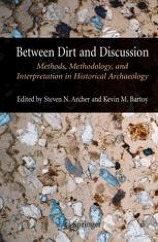
Between dirt and discussion : Methods, methodology and interpretation in historical archaeology
The cases presented in this volume revisit old methods and previous scholarly approaches with new perspectives, along with incorporating the newest technologies available to understanding the past.

Berufliche passagen im lebenslauf : berufsbildungs- und transitionsforschung in der Schweiz = Vocational passages in the CV : Vocational training and transition research in Switzerland
During the transition from school to work, important groundwork is laid that prepares the further course of a person's life. In addition, this volume presents new results from diverse transition research from all over Switzerland, which are based on various disciplines such as psychology, sociology, educational sciences or educational economics. For this purpose, theoretical foundations and empirical evidence for the analysis and control of significant passages in the life course are developed.
Beliefs about SLA : New Research Approaches
This edited collection of articles illustrates more recent work on beliefs about SLA, drawing on the thinking of (educational) philosophers and (discursive) psychologists, including Dewey, Bakhtin, Vygotsky, and Potter.
Being apart from reasons : The role of reasons in public and private moral decision-making
The book presents objections to the most common response given by contemporary legal and political theorists to the moral complexity of decision-making in modern societies, namely: the attempt to release public agents from their argumentative burden by insulating a particular set of reasons from the general.
Becoming an urban physics and math teacher : Infinite potential
What happens as beginning urban teachers transition through their first few years in the classroom? This book captures one teacher's journey through the first three years of teaching science and mathematics in a large urban district in the US. The authors focus on Ian's agency as a beginning teacher and explore his success in working with diverse students. Using critical ethnography combined with first-person narrative, they investigate Ian's teaching practices in four contexts: his student teaching experience, his work with students on a summer curriculum development project, his first year of teaching in a small, urban high school, and his second year of teaching in a large, comprehensive high school. In each field, the authors describe the structural changes Ian encounters and the ways in which he re-utilizes the practices he used successfully in previous fields.
Becoming a teacher educator : Theory and practice for teacher educators
It is the first book that addresses a range of important topics related to the work of teacher educators, the induction of teacher educators and their further professional development.Becoming a Teacher Educator has a practical focus and it provides theoretical insights, experiences of experts and practical recommendations. The book is rooted in the Association of Teacher Education in Europe (ATEE) and many of the chapters are written by authors who are active members of the ATEE. Distinguished researchers and practitioners from different parts of Europe, and beyond, joined their efforts to write a book that is truly international and combines research, practice and reflection.
Beauty’s Appeal : Measure and Excess
Beauty fulfils human existence. As it registers in our aesthetic experience, beauty enhances nature’s enchantment around us and our inward experience lifting our soul toward moral elevation. Carried by creative imagination (Imaginatio Creatrix), beauty participates in the moulding of the forms of the intellective constitution of the mind in tandem with praxis and seeks deeper enigmas of the real in the labyrinth of the cosmos. Yet with the evolution of human development and in technological inventions, beauty, while suffusing all modalities of experience, seems to undergo transformations and expansion. Are there perduring norms and modalities of beauty or are we carried along blindly by human development? Is there a measure intrinsic to our human ontopoietic unfolding and the growth of human life that we may follow instead of the whim of fancy and excess? The present collection of art-explorations seeks the elemental ties of Human Condition. Together, the authors aim to answer the questions posed above.
Barriers and Biases in Computer-Mediated Knowledge Communication : And How They May Be Overcome
This books deals with computer-mediated cooperation and communication scenarios in teaching and learning situations, leisure activities (e.g. laypersons looking for expert information on the internet), and net-based communication at work. Such scenarios will become increasingly important. But the successful use of such computer-mediated settings is not trivial. Cooperative learning and work itself requires special skills and strategies. And the technical settings with sometimes restricted, sometimes new possibilities for communication add problems on top of the cooperation itself. What are the barriers in computer-mediated communication for cooperative learning and work? Which are the most relevant biases in computer-mediated information processing? Based on empirical research the contributors from psychology, education and computer sciences offer different perspectives on the nature and causes of such barriers.
