



Page 11
Page 11
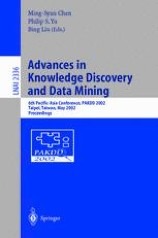
Advances in Knowledge Discovery and Data Mining ; 6th Pacific-Asia Conference, PAKDD 2002, Taipei, Taiwan, May 6-8, 2002 : Proceedings
Knowledge discovery and data mining have become areas of growing significance because of the recent increasing demand for KDD techniques, including those used in machine learning, databases, statistics, knowledge acquisition, data visualization, and high performance computing. In view of this, and following the success of the five previous PAKDD conferences, the sixth Pacific-Asia Conference on Knowledge Discovery and Data Mining (PAKDD 2002) aimed to provide a forum for the sharing of original research results, innovative ideas, state-of-the-art developments, and implementation experiences in knowledge discovery and data mining among researchers in academic and industrial organizations. Much work went into preparing a program of high quality. We received 128 submissions.

Advances in Knowledge Discovery and Data Mining ; 12th Pacific-Asia Conference, PAKDD 2008 Osaka, Japan, May 20-23, 2008 : Proceedings
This book constitutes the refereed proceedings of the 12th Pacific-Asia Conference on Knowledge Discovery and Data Mining, PAKDD 2008, held in Osaka, Japan, in May 2008.

Advances in Knowledge Discovery and Data Mining ; 11th Pacific-Asia Conference, PAKDD 2007, Nanjing, China, May 22-25, 2007 : Proceedings
This book covers new ideas, original research results and practical development experiences from all KDD-related areas including data mining, machine learning, data warehousing, data visualization, automatic scientific discovery, knowledge acquisition and knowledge-based systems.

Advances in intelligent data analysis XIX ; 19th International Symposium on Intelligent Data Analysis, IDA 2021, Porto, Portugal, April 26–28, 2021, Proceedings
Constitutes the proceedings of the 19th International Symposium on Intelligent Data Analysis, IDA 2021, which was planned to take place in Porto, Portugal. Due to the COVID-19 pandemic the conference was held online during April 26-28, 2021. The 35 papers included in this book were carefully reviewed and selected from 113 submissions. The papers were organized in topical sections named: modeling with neural networks; modeling with statistical learning; modeling language and graphs; and modeling special data formats.

Advances in Intelligent Data Analysis VII ; 7th International Symposium on Intelligent Data Analysis, IDA 2007, Ljubljana, Slovenia, September 6-8, 2007, Proceedings
There su- ing oral presentations were then scheduled in a single-track, two-and-a-half-day conference program, summarized in the book that you have before you. In accordance with the stated IDA goal of "bringing together researchers from diverse disciplines," we believe we have achieved an excellent balance of presentationsfromthemoretheoretical-both statistical and machine learning- to the more application-oriented areas that illustrate how these techniques can beusedinpractice. Forexample, the proceeding sinclude papers withth eoretical contributions dealing with statistical approaches to sequence alignment as well as papers addressing practical problems in the areas of text classification and medical data analysis. It is reassuring to see that IDA continues to bring such diverse areas together, thus helping to cross-fertilize these fields

Advances in intelligent data analysis VI ; 6th International symposium on intelligent data analysis, IDA 2005, Madrid, Spain, September 8-10, 2005, Proceedings
One of the superb characteristics of Intelligent Data Analysis (IDA) is that it is an interdisciplinary ?eld in which researchers and practitioners from a number of areas are involved in a typical project. This also creates a challenge in which the success of a team depends on the participation of users and domain experts who need to interact with researchers and developers of any IDA system. All this is usually re?ected in successful projects and of course on the papers that were evaluated by this year’s program committee from which the ?nal program has been developed. In our call for papers, we solicited papers on (i) applications and tools, (ii) theory and general principles, and (iii) algorithms and techniques. We received a total of 184 papers, In the end 46 papers were accepted, which are all included in the proceedings and presented at the conference. This year’s papers re?ect the results of applied and theoretical researchfrom a number of disciplines all of which are related to the ?eld of Intelligent Data Analysis. To have the best combination of theoretical and applied research and also provide the best focus.

Advances in image enhancement
In the era of the internet of things, images have played important roles in human–computer interactions, and with the arrival of big data technology, people have higher requirements regarding image quality, especially for images collected in dark light. This can be addressed through the development of camera hardware quality, i.e., the resolution and exposure time of cameras, which may require high computational costs. As an alternative, image enhancement techniques can exact salient features to improve the quality of captured images according to the differences in diverse features, although they suffer from some challenges, i.e., a low contrast, artifacts, and overexposure, thus making it decidedly necessary to determine how to use advanced image enhancement techniques.

Advances in Energy System Optimization : Proceedings of the 2nd International Symposium on Energy System Optimization
The papers presented in this book address diverse challenges in decarbonizing energy systems, ranging from operational to investment planning problems, from market economics to technical and environmental considerations, from distribution grids to transmission grids, and from theoretical considerations to data provision concerns and applied case studies.

Advances in Discrete Differential Geometry
On a newly emerging field of discrete differential geometry and an excellent way to access this exciting area. It surveys the fascinating connections between discrete models in differential geometry and complex analysis, integrable systems and applications in computer graphics. The authors take a closer look at discrete models in differential geometry and dynamical systems. Their curves are polygonal, surfaces are made from triangles and quadrilaterals, and time is discrete. Nevertheless, the difference between the corresponding smooth curves, surfaces and classical dynamical systems with continuous time can hardly be seen. This is the paradigm of structure-preserving discretizations. Current advances in this field are stimulated to a large extent by its relevance for computer graphics and mathematical physics.

Advances in bioinformatics and computational biology ; 3rd Brazilian symposium on bioinformatics, BSB 2008, Santo André, Brazil, August 28-30, 2008. Proceedings
Constitutes the refereed proceedings of the Third Brazilian Symposium on Bioinformatics, BSB 2008, held in Sao Paulo, Brazil, in August 2008 - co-located with IWGD 2008, the International Workshop on Genomic Databases.

Advances in bioinformatics and computational biology ; 2nd Brazilian symposium on bioinformatics, BSB 2007, Angra dos Reis, Brazil, August 29-31, 2007, Proceedings
This book address a broad range of current topics in computationl biology and bioinformatics featuring original research in computer science, mathematics and statistics as well as in molecular biology, biochemistry, genetics, medicine, microbiology and other life sciences.
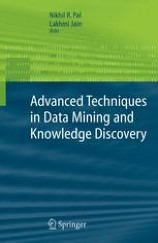
Advanced Techniques in Knowledge Discovery and Data Mining
This explosion is a result of the growing use of electronic media. But what is data mining (DM)? A Web search using the Google search engine retrieves many (really many) definitions of data mining. We include here a few interesting ones. One of the simpler definitions is: “As the term suggests, data mining is the analysis of data to establish relationships and identify patterns” [1]. It focuses on identifying relations in data. Our next example is more elaborate: An information extraction activity whose goal is to discover hidden facts contained in databases. Using a combination of machine learning, statistical analysis, modeling techniques and database technology, data mining finds patterns and subtle relationships in data and infers rules that allow the prediction of future results. Typical applications include market segmentation, customer profiling, fraud detection, evaluation of retail promotions, and credit risk analysis .

Advanced engineering mathematics : A second course with MatLab
Presents a wide variety of topics needed by today's engineers. The fifth edition of that book, available now, has been broken into two parts: topics currently needed in mathematics courses and a new stand-alone volume presenting topics not often included in these courses and consequently unknown to engineering students and many professionals.

Advanced Data Mining and Applications ; 3rd International Conference, ADMA 2007, Harbin, China, August 6-8, 2007 Proceedings
The Third International Conference on Advanced Data Mining and Applications (ADMA) organized in Harbin, China continued the tradition already established by the first two ADMA conferences in Wuhan in 2005 and Xi’an in 2006. One major goal of ADMA is to create a respectable identity in the data mining research com- nity. This feat has been partially achieved in a very short time despite the young age of the conference, thanks to the rigorous review process insisted upon, the outstanding list of internationally renowned keynote speakers and the excellent program each year. The impact of a conference is measured by the citations the conference papers receive. Some have used this measure to rank conferences.

Ad-hoc Networks : Fundamental Properties and Network Topologies
This book clearly demonstrates how the Medium Access Control protocols impose a limit on the level of interference in ad-hoc networks. It has been shown that interference is upper bounded, and a new accurate method for the estimation of interference power statistics in ad-hoc and sensor networks is introduced here. Furthermore, this volume shows how multi-hop traffic affects the capacity of the network. In multi-hop and ad-hoc networks there is a trade-off between the network size and the maximum input bit rate possible per node. Large ad-hoc or sensor networks, consisting of thousands of nodes, can only support low bit-rate applications.
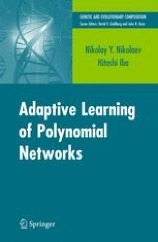
Adaptive Learning of Polynomial Networks : Genetic Programming, Backpropagation and Bayesian Methods
This book provides theoretical and practical knowledge for develop ment of algorithms that infer linear and nonlinear models. It offers a methodology for inductive learning of polynomial neural network mod els from data. The design of such tools contributes to better statistical data modelling when addressing tasks from various areas like system identification, chaotic time-series prediction, financial forecasting and data mining. The main claim is that the model identification process involves several equally important steps: finding the model structure, estimating the model weight parameters, and tuning these weights with respect to the adopted assumptions about the underlying data distrib ution. When the learning process is organized according to these steps, performed together one after the other or separately, one may expect to discover models that generalize well.

A General introduction to data analytics
A guide to the principles and methods of data analysis that does not require knowledge of statistics or programming. A guide to the reasoning behind data mining techniques. A unique illustrative example that extends throughout all the chapters. Exercises at the end of each chapter and larger projects at the end of each of the text’s two main parts
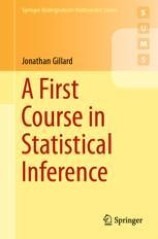
A First Course in Statistical Inference
Offers a modern and accessible introduction to Statistical Inference, the science of inferring key information from data. Aimed at beginning undergraduate students in mathematics, it presents the concepts underpinning frequentist statistical theory. Written in a conversational and informal style, this concise text concentrates on ideas and concepts, with key theorems stated and proved. Detailed worked examples are included and each chapter ends with a set of exercises, with full solutions given at the back of the book. Examples using R are provided throughout the book, with a brief guide to the software included. Topics covered in the book include: sampling distributions, properties of estimators, confidence intervals, hypothesis testing, ANOVA, and fitting a straight line to paired data.
