



Page 11
Page 11

Human-computer interaction - HCI : Applications and services ; 12th International Conference, HCI International 2007, Beijing, China, July 22-27, 2007, Proceedings, Part IV
The 12th International Conference on Human-Computer Interaction, HCI Inter- tional 2007, was held in Beijing, P.R. This volume, edited by Julie A. Jacko, contains papers in the thematic area of - man-Computer Interaction, addressing the following major topics: • Business Applications • Learning and Entertainment • Health Applications • Work and Collaboration Support • Web-Based and Mobile Applications and Services • Advanced Design and Development Support.
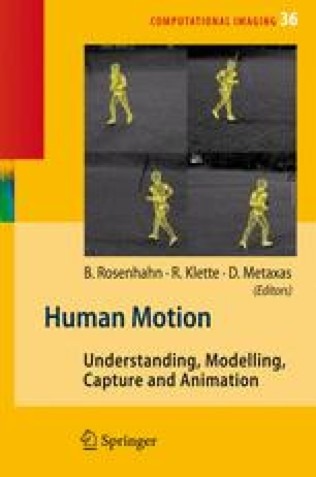
Human motion : Understanding, modeling, capture and animation
Edward Muybridge (1830–1904) is known as the pioneer in motion capt- ing with his famous experiments in 1887 called “Animal Locomotion”. Since then, the feld of animal or human motion analysis has grown in many dir- tions. However, research and results that involve human-like animation and the recovery of motion is still far from being satisfactory. Progress in human motion analysis depends on empirically anchored and grounded research in computer vision, computer graphics, and biomechanics. This book is based on a June 2006 workshop held in Dagstuhl, Germany. This workshop brought together for the frst time researchers from the afo- mentioned disciplines.

History of Nordic computing ; IFIP WG9.7 ; 1st Working conference on the history of Nordic computing (HiNC1), June 16-18, 2003, Trondheim, Norway
The IFIP series publishes state-of-the-art results in the sciences and technologies of information and communication. The scope of the series includes: foundations of computer science; software theory and practice; education; computer applications in technology; communication systems; systems modeling and optimization; information systems; computers and society; computer systems technology; security and protection in information processing systems; artificial intelligence; and human-computer interaction. Proceedings and post-proceedings of referred international conferences in computer science and interdisciplinary fields are featured. These results often precede journal publication and represent the most current research. The principal aim of the IFIP series is to encourage education and the dissemination and exchange of information about all aspects of computing.
History of Computing and Education 3 (Hce3) ; IFIP 20th World Computer Congress, Proceedings of the Third IFIP Conference on the History of Computing and Education WG 9.7/TC9, History of Computing, September 7–10, 2008, Milano, Italy
The IFIP series publishes state-of-the-art results in the sciences and technologies of information and communication. The scope of the series includes: foundations of computer science; software theory and practice; education; computer applications in technology; communication systems; systems modeling and optimization; information systems; computers and society; computer systems technology; security and protection in information processing systems; artificial intelligence; and human-computer interaction. Proceedings and post-proceedings of refereed international conferences in computer science and interdisciplinary fields are featured. These results often precede journal publication and represent the most current research.
High-Performance Computing ; 6th International Symposium, ISHPC 2005, Nara, Japan, September 7-9, 2005, First International Workshop on Advanced Low Power Systems, ALPS 2006, Revised Selected Papers
This is the joint post-proceedings of the 6th International Symposium on High Performance Computing (ISHPC-VI) and the First International Workshop on Advanced Low Power Systems 2006 (ALPS2006). The post-proceedings also contain the papers presented at the Second HPF International Workshop: - periences and Progress (HiWEP2005) and the Workshop on Applications for PetaFLOPS Computing (APC2005), which are workshops of ISHPC-VI. ISHPC-VI, HiWEP2005 and APC2005 were held in Nara, Japan during September 7–9, 2005. Fifty-eight papers from 11 countries were submitted to ISHPC-VI. After the reviews of the submitted papers, the ISHPC-VI Program Committee selected 15 regular (12-page) papers for oral presentation. In ad- tion, several other papers with favorable reviews were recommended for poster presentation, and 14 short (8-page) papers were also selected.

Higher Education in the Era of the Fourth Industrial Revolution
This collection examines how higher education responds to the demands of the automation economy and the fourth industrial revolution. Considering significant trends in how people are learning, coupled with the ways in which different higher education institutions and education stakeholders are implementing adaptations, it looks at new programs and technological advances that are changing how and why we teach and learn. The book addresses trends in liberal arts integration of STEM innovations, the changing role of libraries in the digital age, global trends in youth mobility, and the development of lifelong learning programs.

High performance embedded architectures and compilers ; 3rd International Conference, HiPEAC 2008, Göteborg, Sweden, January 27-29, 2008. Proceedings
This book constitutes the refereed proceedings of the Third International Conference on High Performance Embedded Architectures and Compilers, HiPEAC 2008, held in Göteborg, Sweden, January 27-29, 2008. The 25 revised full papers presented together with 1 invited keynote paper were carefully reviewed and selected from 77 submissions. The papers are organized in topical sections on Multithreaded and Multicore Processors, Reconfigurable - ASIP, Compiler Optimizations, Industrial Processors and Application Parallelization, Power-Aware Techniques, High-Performance Processors, Profiles: Collection and Analysis as well as Optimizing Memory Performance.

High performance embedded architectures and compilers ; 2nd International Conference, HiPEAC 2007, Ghent, Belgium, January 28-30, 2007. Proceedings
This book constitutes the refereed proceedings of the Second International Conference on High Performance Embedded Architectures and Compilers, HiPEAC 2007, held in Ghent, Belgium, in January 2007. The 19 revised full papers presented together with one invited keynote paper were carefully reviewed and selected from 65 submissions.

High performance embedded architectures and compilers ; 1st International Conference, HiPEAC 2005, Barcelona, Spain, November 17-18, 2005, Proceedings
The ProgramCommittee received a total of 84 submissions; only 17 were selected for presentation as full-length papers and another one as an invited paper. Each paper was rigorously reviewed by three ProgramCommittee members and at least one external referee. Many reviewers spent a great amount of e?ort to provide detailed feedback. In many cases, such feedback along with constructive shepherding resulted in dramatic improvement in the quality of accepted papers. The names of the Program Committee m- bers and the referees are listed in the proceedings. The net result of this team e?ort is that the symposium proceedings include outstanding contributions by authors from nine countries in three continents. In addition to paper presentations, this ?rst HiPEAC conference featured two keynotes delivered by prominent researchers from industry and academia.

High performance computing for computational science - VECPAR 2008 ; 8th International Conference, Toulouse, France, June 24-27, 2008. Revised Selected Papers
This book constitutes the thoroughly refereed post-conference proceedings of the 8th International Conference on High Performance Computing for Computational Science, VECPAR 2008, held in Toulouse, France, in June 2008.The 51 revised full papers presented together with the abstract of a surveying and look-ahead talk were carefully reviewed and selected from 73 submissions. The papers are organized in topical sections on parallel and distributed computing, cluster and grid computing, problem solving environment and data centric, numerical methods, linear algebra, computing in geosciences and biosciences, imaging and graphics.

High performance computing and communications ; Vol. 4208 : 2nd International Conference, HPCC 2006, Munich, Germany, September 13-15, 2006, Proceedings
HPCC has moved into the mainstream of c- puting and has become a key technology in future research and development activities in many academic and industrial branches, especially when the so- tion of large and complex problems must cope with very tight time constraints. The HPCC 2006 conference provides a forum for engineers and scientists in academia, industry, and governmentto address all resulting profound challenges and to present and discuss their new ideas, research results, applications, and experience on all aspects of HPCC.
High performance computing and communications ; 3rd International Conference, HPCC 2007, Houston, USA, September 26-28, 2007, Proceedings
The 75 revised full papers address all current issues of parallel and distributed systems and high performance computing and communication, including networking protocols, embedded systems, wireless, mobile and pervasive computing, Web services and internet computing, and programming interfaces for parallel systems.

High performance computing ; 4th International Symposium, ISHPC 2002, Kansai Science City, Japan, May 15-17, 2002. Proceedings
The objective of this symposium is to exchange the latest research results in software, architecture, and applications in HPC in a more informal and friendly atmosphere. I am delighted that the symposium is, like past successful ISHPCs, comprised of excellent invited talks, panels, workshops, as well as high-quality technical papers on various aspects of HPC. We hope that the symposium will provide an excellent opportunity for lively exchange and discussion about - rections in HPC technologies and all the participants will enjoy not only the symposium but also their stay in Kansai Science City.
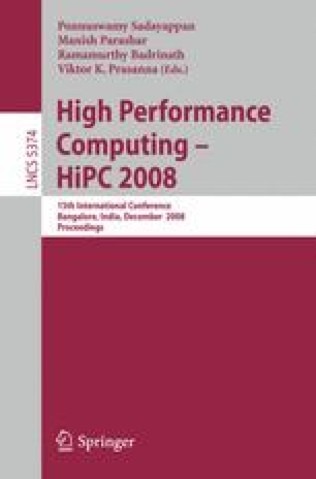
High performance computing - HiPC 2008 ; 15th International Conference, Bangalore, India, December 17-20, 2008. Proceedings
This book constitutes the refereed proceedings of the 15th International Conference on High-Performance Computing, HiPC 2008, held in Bangalore, India, in December 2008.The 46 revised full papers presented together with the abstracts of 5 keynote talks were carefully reviewed and selected from 317 submissions. The papers are organized in topical sections on applications performance optimizazion, parallel algorithms and applications, scheduling and resource management, sensor networks, energy-aware computing, distributed algorithms, communication networks as well as architecture.

High Confidence Software Reuse in Large Systems ; 10th International Conference on Software Reuse, ICSR 2008, Beijing, China, May 25-29, 2008 Proceedings
This book constitutes the refereed proceedings of the 10th International Conference on Software Reuse, ICSR 2008, held in Beijing, China, in May 2008.The 40 revised full papers presented together with 5 workshop summaries and 5 tutorials were carefully reviewed and selected from numerous submissions. The papers are organized in topical sections on architecture and reuse approaches, high confidence and reuse, component selection and reuse repository, product line, domain models and analysis, service oriented environment, components and services, reuse approaches and frameworks, as well as reuse approaches and methods.

HCI related papers of Interacción 2004 ; Conference proceedings
The present book contains a collection of the best papers presented at the 5th International Conference on Interacción Persona Ordenador (IPO) (which is Human Computer Interaction in Spanish), which took place in th th Lleida on May 5 -7 , 2004. . The main goals of Interacción 2004 were: To expand the conference scope with internationally recognised invited speakers. The plenary talks were presented by Alan Dix, Yvonne Rogers, Geritt van der Veer, and Angel Puerta. To open the participation to Spanish speaker worldwide in order to be a point of reference of this discipline not only in Spain but also in the wider Spanish speaking community. This goal was reached through a very diverse program which included panels and posters sessions, where many different aspect of the Human Computer Interaction (HCI) were presented. All through the program, research from outside Spain was reflected through the contributions from people of other countries.

Hardware and software : Verification and testing ; 3rd International Haifa Verification Conference, HVC 2007, Haifa, Israel, October 23-25, 2007. Proceedings
These are the conference proceedings of the 4th Haifa Verifcation Conference, held October 27–30, 2008 in Haifa, Israel. This international conference is a unique venue that brings together leading researchers and practitioners of both formal and dynamic verifcation, for both hardware and software systems. This year’s conference extended the successes of the previous years, with a largejumpinthenumberofsubmitted papers. with many more high-quality papers than we had room to accept. Submissions came from 19 di?erent countries, re?ecting the growing international visibility of the conference. Of the 49 submissions, 43 were regular papers, 2 of which were later withdrawn, and 6 were tool papers. After a rigorous review process.

Hands-On Software Architecture with Java - Learn key architectural techniques and strategies to design efficient and elegant Java applications
Starts with the fundamentals of architecture and takes you through the basic components of application architecture. You'll cover the different types of software architectural patterns and application integration patterns and learn about their most widespread implementation in Java. You'll then explore cloud-native architectures and best practices for enhancing existing applications to better suit a cloud-enabled world. Later, the book highlights some cross-cutting concerns and the importance of monitoring and tracing for planning the evolution of the software, foreseeing predictable maintenance, and troubleshooting. The book concludes with an analysis of the current status of software architectures in Java programming and offers insights into transforming your architecture to reduce technical debt.

Hands-on question answering systems with BERT : Applications in neural networks and natural language processing
Begins with an overview of the technology landscape behind BERT. It takes you through the basics of NLP, including natural language understanding with tokenization, stemming, and lemmatization, and bag of words. Next, you’ll look at neural networks for NLP starting with its variants such as recurrent neural networks, encoders and decoders, bi-directional encoders and decoders, and transformer models. Along the way, you’ll cover word embedding and their types along with the basics of BERT. After this solid foundation, you’ll be ready to take a deep dive into BERT algorithms such as masked language models and next sentence prediction. You’ll see different BERT variations followed by a hands-on example of a question answering system. You will: Examine the fundamentals of word embeddings / Apply neural networks and BERT for various NLP tasks / Develop a question-answering system from scratch / Train question-answering systems for your own data

Hands-On Design Patterns with Java : Learn Design Patterns That Enable the Building of Large-Scale Software Architectures
Java design patterns are reusable and proven solutions to software design problems. This book covers over 60 battle-tested design patterns used by developers to create functional, reusable, and flexible software. Hands-On Design Patterns with Java starts with an introduction to the Unified Modeling Language (UML), and delves into class and object diagrams with the help of detailed examples. You'll study concepts and approaches to object-oriented programming (OOP) and OOP design patterns to build robust applications. As you advance, you'll explore the categories of GOF design patterns, such as behavioral, creational, and structural, that help you improve code readability and enable large-scale reuse of software. You’ll also discover how to work effectively with microservices and serverless architectures by using cloud design patterns, each of which is thoroughly explained and accompanied by real-world programming solutions. By the end of the book, you’ll be able to speed up your software development process using the right design patterns, and you’ll be comfortable working on scalable and maintainable projects of any size.
