



Page 59
Page 59

Fast Track to MDX
Fast Track to MDX gives you all the necessary background to let you to write useful, powerful MDX expressions and introduces the most frequently used MDX functions and constructs. No prior knowledge is assumed and examples are used throughout the book to rapidly develop your MDX skills to the point where you can solve real business problems.
Fast software encryption ; Vol. 4047 ; 13th international workshop, FSE 2006, Graz, Austria, March 15-17, 2006, Revised Selected Papers
Fast Software Encryption (FSE) 2006 is the 13th in a series of workshops on symmetric cryptography. It has been sponsored for the last ?ve years by the International Association for Cryptologic Research (IACR), and previous FSE workshops have been held around the world: 1993 Cambridge, UK 1994 Leuven, Belgium 1996 Cambridge, UK 1997 Haifa, Israel 1998 Paris, France 1999 Rome, Italy 2000 New York, USA 2001 Yokohama, Japan 2002 Leuven, Belgium 2003 Lund, Sweden 2004 New Delhi, India 2005 Paris, France The FSE workshop is devoted to research on fast and secure primitives for symmetric cryptography, including the design and analysis of block ciphers, stream ciphers, encryption schemes, analysis and evaluation tools, hash fu- tions, and message authentication codes.

Fast software encryption ; Vol. 3557 ; 12th International Workshop, FSE 2005, Paris, France, February 21-23, 2005, Revised Selected Papers
The Fast Software Encryption 2005 Workshop was the twelfth in a series of annual workshops on symmetric cryptography, sponsored for the fourth year by the International Association for Cryptologic Research (IACR). The workshop concentratedonallaspectsoffastprimitivesforsymmetriccryptology, including thedesign, cryptanalysisandimplementationofblockandstreamciphersaswell as hash functions and message authentication codes. The ?rst FSE workshop was held in Cambridge in 1993, followed by Leuven in 1994, Cambridge in 1996, Haifain1997, Parisin1998, Romein1999, NewYorkin2000, Yokohamain2001, Leuven in 2002, Lund in 2003, and New Delhi in 2004. This year, a total of 96 submissions were received. After an extensive review by the Program Committee, 30 submissions were accepted.

Fast software encryption ; 15th International Workshop, FSE 2008, Lausanne, Switzerland, February 10-13, 2008, Revised Selected Papers
Constitutes the thoroughly refereed proceedings of the 15th International Workshop on Fast Software Encryption, FSE 2008, held in Lausanne, Switzerland in February 2008.The 26 revised full papers presented together with 4 short papers were carefully reviewed and selected from 72 submissions. The papers address all current aspects of fast and secure primitives for symmetric cryptology and are organized in topical sections on SHA collisions, new hash function designs, block cipher cryptanalysis, implementation aspects, hash function cryptanalysis, stream cipher cryptanalysis, security bounds, and entropy.

Fast Software Encryption ; 14th International Workshop, FSE 2007, Luxembourg, Luxembourg, March 26-28, 2007, Revised Selected Papers
It addresses all current aspects of fast and secure primitives for symmetric cryptology, covering hash function cryptanalysis and design, stream ciphers cryptanalysis, theory, block cipher cryptanalysis, block cipher design, theory of stream ciphers, side channel attacks, and macs and small block ciphers.

Fashionity
This project is an AI fashion design system to generate fashion images based on user textual description. The proposed system incorporates advanced technology for dissemination and machine translation with the aim of facilitating a seamless user experience for input in both Arabic and English languages. Moreover, the project encompasses the incorporation of a recommendation system that proposes appropriate visual content based on user style. The primary objective of this project is to develop a robust framework capable of generating high-quality images based on textual descriptions, providing recommendations for similar clothing items, and facilitating the retrieval of photographic and apparel articles through image search.

Fashion forge
"Fashion forge" revolutionizes clothing shopping with a cutting-edge mobile application. This AI-powered platform empowers users to describe their dream garment and visualize it instantly, bridging the gap between imagination and reality for fashion-forward users and designers. A recommendation system tailors clothing suggestions based on user preferences, while stores leverage a dedicated social platform for effective marketing. "Fashion Forge" fosters a connected fashion community, empowering users, designers, and stores alike.

Fadfada
Sharing personal problems and true feeling on social media has a lot of fears and is not likable nowadays, because of bullying, shaming, and making fun of the user by other users, Fadfada is a multi-platform social networking service, that aims to give the users the ability to share their problems or feeling via written newsfeed (posts) or videos (stories) that had an impact on their psychological health without revealing their true identity, by putting a mask on their faces and changing their voices after recording the story. In addition to extracting features from posts and stories to match users based on it.
Factories of the Future : The Italian Flagship Initiative
This book presents results relevant in the manufacturing research field, that are mainly aimed at closing the gap between the academic investigation and the industrial application, in collaboration with manufacturing companies. Several hardware and software prototypes represent the key outcome of the scientific contributions that can be grouped into five main areas, representing different perspectives of the factory domain
Facelets Essentials : Guide to JavaServer™ Faces View Definition Framework
Facelets is a templating language developed from the ground up with JavaServer Faces in mind. Created in response to the many concerns involving JavaServer Pages (JSP) when building JavaServer Faces (JSF) views, Facelets steps outside of the JSP specification and provides a highly performant, JSF–centric view technology. Facelets' top properties, templating, reuse, and ease of development, allow it to help making JSF a technology suitable for large–scale projects. One of the first things a developer using Facelets finds is that it immediately leads to a reduction in user interface code.
Facebook API Developers Guide
The Facebook API allows web developers to create Facebook applications and access Facebook data from other applications. Facebook API Developers Guide covers the use and implementation of the Facebook API—what the key features are and how you can access them. You will learn, through practical examples, the main features of the Facebook API including an introduction to the API–specific languages FQL and FBML. These examples are further supported by the introduction of other technologies like language libraries, relational database management systems, and XML. Covers all key features of the Facebook API Explains the API languages FQL and FBML Teaches by example, with useful code and tips you can use in your own applications
Face Biometrics for Personal Identification : Multi-Sensory Multi-Modal Systems
This book provides an ample coverage of theoretical and experimental state-of-the-art work as well as new trends and directions in the biometrics field. It offers students and software engineers a thorough understanding of how some core low-level building blocks of a multi-biometric system are implemented. While this book covers a range of biometric traits including facial geometry, 3D ear form, fingerprints, vein structure, voice, and gait, its main emphasis is placed on multi-sensory and multi-modal face biometrics algorithms and systems. "Multi-sensory" refers to combining data from two or more biometric sensors, such as synchronized reflectance-based and temperature-based face images. "Multi-modal" biometrics means fusing two or more biometric modalities, like face images and voice timber. The first part addresses new and emerging face biometrics. Emphasis is placed on biometric systems where single sensor and single modality are employed in challenging imaging conditions. The second part on multi-sensory face biometrics deals with the personal identification task in challenging variable illuminations and outdoor operating scenarios by employing visible and thermal sensors. The third part of the book focuses on multi-modal face biometrics by integrating voice, ear, and gait modalities with facial data. The last part presents generic chapters on multi-biometrics fusion methodologies and performance prediction techniques.
Eye Tracking Methodology : Theory and Practice
Despite the availability of cheap, fast, accurate and usable eye trackers, there is still little information available on how to develop, implement and use these systems. This second edition of Andrew Duchowski’s successful guide to these systems contains significant additional material on the topic and fills this gap in the market with this accessible and comprehensive introduction. Opening with useful background information, including an introduction to the human visual system and key issues in visual perception and eye movement, the second part surveys eye-tracking devices and provides a detailed introduction to the technical requirements necessary for installing a system and developing an application program. The book focuses on video-based, corneal-reflection eye trackers – the most widely available and affordable type of system, before closing with a look at a number of interesting and challenging applications in human factors, collaborative systems, virtual reality, marketing and advertising.
Extreme Programming and Agile Processes in Software Engineering ; Vol.4044 ; 7th International Conference, XP 2006, Oulu, Finland, June 17-22, 2006, Proceedings
In its first editions, this conference was a get-together of a few pioneers who - bated about how to make agile processes and methods accepted by the mainstream researchers and practitioners in software engineering. Now agile approach to software development has been fully accepted by the software engineering community and this event has become the major forum for understanding better the implications of agility in software development and proposing extensions to the mainstream approaches. These two aspects were fully reflected in this year’s conference. They were - flected in the keynote speeches, which covered the background work done starting as early as the early eighties by Barry Boehm, definition of the field by Kent Beck, a successful industrial application in a success story by Sean Hanly, the perspective and the future of agile methods in large corporations by Jack Järkvik, and even some - sightful views from a philosopher, Pekka Himanen.
Extreme Programming and Agile Processes in Software Engineering ; Vol.3556 ; 6th International Conference, XP 2005, Sheffield, UK, June 18-23, 2005, Proceedings
Extreme Programming has come a long way since its ?rst use in the C3 project almost 10 years ago. Agile methods have found their way into the mainstream, and at the end of last year we saw the second edition of Kent Beck’s book on Extreme Programming, containing a major refactoring of XP. This year, the 6th International Conference on Extreme Programming and Agile Processes in Software Engineering took place June 18–23 in She?eld. As in the yearsbefore, XP 2005provideda unique forum for industry and academic professionals to discuss their needs and ideas on Extreme Programming and - ile methodologies. These proceedings re?ect the activities during the conference which ranged from presentation of research papers, invited talks, posters and demonstrations, panels and activity sessions, to tutorials and workshops. - cluded are also papers from the Ph.D. and Master’s Symposium which provided a forum for young researchers to present their results and to get feedback. Asvariedastheactivities werethe topicsofthe conferencewhichcoveredthe presentationofnewandimprovedpractices,empiricalstudies,experiencereports and case studies, and last but not least the social aspects of agile methods. The papers and the activities went through a rigorous reviewing process. Each paper was reviewed by at least three Program Committee members and wasdiscussedcarefullyamongtheProgramCommittee.Of62paperssubmitted, only 22 were accepted as full papers.
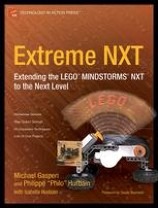
Extreme NXT : Extending the LEGO MINDSTORMS NXT to the Next Level
Extreme NXT: Extending the LEGO MIDSTORMS NXT to the Next Level is for intermediate-level users of NXT who would like to advance their capabilities by learning some of the basics of electronics. Plenty of examples are provided, and easy-to-follow instructions are included for building over 15 different sensors.
Explosively Driven Pulsed Power : Helical Magnetic Flux Compression Generators
While the basic operating principles of Helical Magnetic Flux Compression Generators are easy to understand, the details of their construction and performance limits have been described only in government reports, many of them classified. Conferences in the field of flux compression are also dominated by contributions from government (US and foreign) laboratories. And the government-sponsored research has usually been concerned with very large generators with explosive charges that require elaborate facilities and safety arrangements. This book emphasizes research into small generators (less than 500 grams of high explosives) and explains in detail the physical fundamentals, construction details, and parameter-variation effects related to them.
Exploring Resilience : A Scientific Journey from Practice to Theory
Resilience has become an important topic on the safety research agenda and in organizational practice. Most empirical work on resilience has been descriptive, identifying characteristics of work and organizing activity which allow organizations to cope with unexpected situations. Fewer studies have developed testable models and theories that can be used to support interventions aiming to increase resilience and improve safety. In addition, the absent integration of different system levels from individuals, teams, organizations, regulatory bodies, and policy level in theory and practice imply that mechanisms through which resilience is linked across complex systems are not yet well understood. Scientific efforts have been made to develop constructs and models that present relationships; however, these cannot be characterized as sufficient for theory building. There is a need for taking a broader look at resilience practices as a foundation for developing a theoretical framework that can help improve safety in complex systems.
Exploratory Analysis of Spatial and Temporal Data : A Systematic Approach
Exploratory data analysis (EDA) is about detecting and describing patterns, trends, and relations in data, motivated by certain purposes of investigation. As something relevant is detected in data, new questions arise, causing specific parts to be viewed in more detail. So EDA has a significant appeal: it involves hypothesis generation rather than mere hypothesis testing.
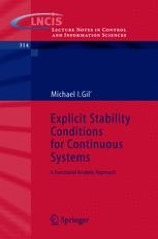
Explicit Stability Conditions for Continuous Systems : A Functional Analytic Approach
Explicit Stability Conditions for Continuous Systems deals with non-autonomous linear and nonlinear continuous finite dimensional systems. Explicit conditions for the asymptotic, absolute, input-to-state and orbital stabilities are discussed. This monograph provides new tools for specialists in control system theory and stability theory of ordinary differential equations, with a special emphasis on the Aizerman problem. A systematic exposition of the approach to stability analysis based on estimates for matrix-valued functions is suggested and various classes of systems are investigated from a unified viewpoint.
