



الصفحة 1
الصفحة 1
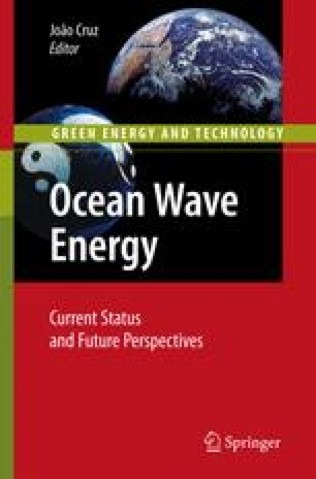
Ocean Wave Energy : Current Status and Future Prespectives
The authors of this reference provide an updated and global view on ocean wave energy conversion for wave energy developers as well as for students and professors. The book is orientated to the practical solutions that this new industry has found so far and the problems that any device needs to face. It describes the actual principles applied to machines that convert wave power in electricity. Additionally, an historical review, state of the art of modern systems, a full scale prototype experience, and future perspectives are given.

Nanoscale Devices - Fundamentals and Applications
This book contains a collection of papers giving insight into the fundamentals and applications of nanoscale devices. The main focus is on the synthesis and characterization of nanoscale magnetic materials, the fundamental physics and materials aspects of solid-state nanostructures, the development of novel device concepts and design principles for nanoscale devices, as well as on applications in electronics with special emphasis on defence against the threat of terrorism.

Model Based Learning and Instruction in Science
This book describes new, model based teaching methods for science instruction. It presents research that describes these new methods in a very diverse group of settings: middle school biology, high school physics, and college chemistry classrooms. Mental models in these areas such as understanding the structure of the lungs or cells, molecular structures and reaction mechanisms in chemistry, or causes of current flow in electricity are notoriously difficult for many students to learn. Yet these lie at the core of conceptual understanding in these areas. The studies focus on a variety of teaching strategies such as discrepant questioning, analogies, animations, model competition, and hands on activities.

Mission AI: the new system technology
Offers a strategic perspective on AI and the process of embedding it in society. After decades of research, Artificial Intelligence (AI) is now entering society at large. Due to its general purpose character, AI will change society in multiple, fundamental and unpredictable ways. Therefore, the Netherlands Scientific Council for Government Policy (WRR) characterizes AI as a system technology: a rare type of technologies that have a systemic impact on society. Earlier system technologies include electricity, the combustion engine and the computer. The history of these technologies provides us with useful insights about what it takes to direct the introduction of AI in society.

Microscale Diagnostic Techniques
Microscale Diagnostic Techniques highlights the most innovative and powerful developments in microscale diagnostics. It provides a resource for scientists and researchers interested in learning about the techniques themselves, including their capabilities and limitations.

Micro Cogeneration : Towards Decentralized Energy Systems
The need for replacement is an extremely important driving force for the current transformation, forcing conventional and new technologies to compete for a role in the future energy supply. The overall transformation of electricity systems is neither driven nor shaped by technical or societal modifications alone, but rather by a rich diversity of processes in the realms of technology, politics, society and economy.

Introduction to development engineering
Introduces the emerging field of development engineering and its constituent theories, methods, and applications. It is both an instructional text for students and a resource for researchers and practitioners involved in the design and scaling of technologies for low-resource communities. The scope is broad, ranging from the development of mobile applications for low-literacy users to hardware and software solutions for providing electricity and water in remote environments. It is also highly interdisciplinary, drawing on methods and theories from the social sciences as well as engineering and the natural sciences.

Hydropower Economics
HYDROPOWER ECONOMICS examines sustainable alternate energy sources beginning with modeling hydropower and extending the model to include thermal power and wind power. The book will use various econometric measures, equilibrium metrics, OR methods, and DEA/productivity analyses to analyze and model the optimal use of these alternate energy sources. Because these problems are dynamic in nature, dynamic methods are used to model the problems. The book derives results on the allocation of the amounts of alternate sources of energy (water, thermal, and wind) required to produce electricity at acceptable levels over time. Graphic illustrations of the analytical and mathematical modeling used to reach research conclusions are used throughout the book.

Hydrogen Materials Science and Chemistry of Carbon Nanomaterials
The 2005 International Conference “Hydrogen Materials Science and Chemistry of Carbon Nanomaterials” (ICHMS’2005) was held in September 5-11, 2005 in the remarkable city Sevastopol (Crimea, Ukraine) known for its heroic and unusual th fate. In the tradition of the earlier ICHMS conferences, this 9 ICHMS’2005 meeting served as an multidisciplinary forum for the presentation and discussion of the most recent research on transition to hydrogen-based energy systems, technologies for hydrogen production, storage, utilization, materials processing and chemical behavior, energy and environmental problems. The aim of ICHMS’2005 was to provide the wide overview of the latest scientific results on basic research and technological applications of hydrogen interactions with metals and other materials.

High Tc superconductors and related transition metal oxides : Special Contributions in Honor of K. Alex Müller on the Occasion of his 80th Birthday
This book containing 30 articles the contributions reflect the major research areas of K. Alex Müller which he activated in high temperature superconductivity and phase transitions. They are theoretical as well as experimental ones and focus mainly on high temperature superconductivity. A smaller part deals with ferroelectricity and their applications.

Hans Christian Ørsted and the Romantic Legacy in Science : Ideas, Disciplines, Practices
This volume owes its origin to the perception of a puzzling paradox. Hans Christian Ørsted, the great Danish scientist and philosopher, was one of the founders of modern physics through his experimental discovery in 1820 of the interaction of electricity and magnetism—a key step and model for the further unification of the forces of nature. Followers such as Maxwell and Einstein were, and today searchers worldwide are, enchanted by the hope for a completion of that grand program. In addition to Ørsted’s discovery of electromagnetism, his work in science included other fields, chiefly high-pressure physics and acoustics.
Handbook of ocean wave energy
This book offers a concise, practice-oriented reference-guide to the field of ocean wave energy. The ten chapters highlight the key rules of thumb, address all the main technical engineering aspects and describe in detail all the key aspects to be considered in the techno-economic assessment of wave energy converters. Written in an easy-to-understand style, the book answers questions relevant to readers of different backgrounds, from developers, private and public investors, to students and researchers. It is thereby a valuable resource for both newcomers and experienced practitioners in the wave energy sector.

Global energy supply and emissions : An interdisciplinary view on effects, restrictions, requirements and options
offers an authoritative analysis of the state-of-the art in energy and climate research and policy. It starts by describing the current status of technologies that are expected to have an influence on the energy systems of the future. For an adequate evaluation, it presents the latest findings on the effects of energy supply and consumption as well as of the emissions on both the environment and people’s health. This is followed by an extensive discussion of the economic and social problems related to climate change, the need for energy transitions, and other issues that may require public investment and international agreements. reviews the problem of energy policy from a global perspective, providing readers with the technical, political, economic and ethical background needed to understand the current situation and work at better solutions for a sustainable, just and prospering world.

Generator remote controlling using internet connection
The traditional technique of monitoring the electricity generated through regular checks on the alternator variables: oil, temperature, voltage and current on a daily basis. Therefore, maintaining a normal performance cycle requires hard work and is often imprecise. The idea is to create an application that monitors wireless generators using the popular smartphone Android operating system. Implemented sensors deliver analog signals that provide real-time data on the status of the generator. This data is converted and programmed through the Node MCU microcontroller, which reads the results from the sensors and then converts into a signal, which is transmitted to the android phone, through a router. Thus live feedback of the generator status is ensured. In addition, this project provides a control button that can actually turn this generator on and off. This project is the first step towards bringing systems and control together as it revolutionizes the ideology of monitoring and displaying real-time data that can be implemented in different fields according to different needs. These fields include electricity, mechanics, and communications.

Functionalized Nanoscale Materials, Devices and Systems
The primary objective of the NATO Advanced Study Institute (ASI) titled “Functionalized Nanoscale Materials, Devices, and Systems for Chem. -Bio Sensors, Photonics, and Energy Generation and Storage” was to present a contemporary and comprehensive overview of the field of nanostructured materials and devices and its applications in chem. -bio sensors, nanophotonics, and energy generation and storage devices. The study has become one of the most promising disciplines in science and technology, as it aims at the fundamental understanding of new physical, che- cal, and biological properties of systems and the technological advances arising from their exploration. Such systems are intermediate in size, between the isolated atoms and molecules and bulk material, where the unique transitional characteristics between the two can be understood, controlled, and manipulated.

Fuel Cell Technology : Reaching Towards Commercialization
The Engineering Materials and Processes series focuses on all forms of materials and the processes used to synthesise and formulate them as they relate to the various engineering disciplines.The series deals with a diverse range of materials: ceramics, metals (ferrous and non-ferrous), semiconductors, composites, polymers biomimetics, etc. Each monograph in the series is written by a specialist and demonstrates how enhancements in materials and the processes associated with them can improve performance in the field of engineering in which they are used.

Fuel cell technologies : State and perspectives ; Proceedings of the NATO advanced research workshop on fuel cell technologies: State and perspectives, Kyiv, Ukraine from 6 to 10 June 2004.
This book has brought together a team of world-renowned experts in all aspects of fuel cell development for both SOFC and PEM in a workshop environment. The workshop held between June 6–10, 2004 was held in the capital city of the Ukraine, Kiev. The reason for the venue was that Ukraine is the third largest resource of zircon sands, a major source of material for the solid oxide fuel cell. Ukraine is looking at undertaking a very large effort in the solid oxide fuel cell arena, and hopes, one day, to be an international player in this market, and this book is an outcome from the workshop. The book focuses on the issues related to fuel cells, particularly the state-of-the-art internationally, the issues that were of particular interest for getting fuel cells fully commercialized, and advances in fuel cell materials and technology. The focus was on all types of fuel cells, but the emphasis was particularly on solid oxide fuel cells (SOFC), due to their importance to the host country. The book is an essential reference to researchers, academics and industrialists interested in up-to-date information on SOFC and PEM development.

Fuel Cell Electronics Packaging
Today's commercial, medical and military electronics are becoming smaller and smaller. At the same time, these devices are packed with more functions and demand more power. This power requirement is currently met almost exclusively by battery power. A fuel cell is like a battery converting chemical energy directly to electricity. The convergence of fuel cell technology and microelectronics is enabling the new design and manufacturing of fuel cells.Fuel Cell Electronics Packaging presents the latest developments in the technology convergence of microelectronics and fuel cells. Using the well established manufacturing methods used in microelectronics packaging, fuel cells can be further fabricated in smaller sizes with higher energy density, at a faster pace and lower cost.

Frontiers of Ferroelectricity : A Special Issue of the Journal of Materials Science
The book presents theory, fundamentals and applications of ferroelectricity. It describes the current levels of understanding of various aspects of the subject as presented by authorities in the field. Reviews and research reports cover the spectrum of ferroelectricity. Topics include relaxors, piezoelectrics, microscale and nanoscale studies, polymers and composites, unusual properties, and techniques and devices. The information in this book is intended for physicists, engineers and materials scientists working with ferroelectric materials including ceramics, single crystals, polymers, composites and even some biological materials.

Forecasting and Assessing Risk of Individual Electricity Peaks
The overarching aim of this open access book is to present self-contained theory and algorithms for investigation and prediction of electric demand peaks. A cross-section of popular demand forecasting algorithms from statistics, machine learning and mathematics is presented, followed by extreme value theory techniques with examples.
