



الصفحة 1
الصفحة 1

National Tax Policy in Europe : To Be or Not to Be?
The book is dedicated to the question of how much room for national tax policy Member States of the European Union will find necessary and possible to maintain in the future. It focuses on the possibilities Member States have and the constraints they face, such as the need to enhance competitiveness and attractiveness to inward foreign direct investment, to finance social programmes and the limitations imposed by European and International Law. The research question is looked at from economic as well as from legal points of view. This comprehensive approach and the answers given will be of interest to scholars and policy makers alike and may guide the path for future tax developments in Europe.

Multinational Enterprises, Foreign Direct Investment and Growth in Africa : South African Perspectives
How can Africa, the world’s most lagging region, benefit from globalisation and achieve sustained economic growth? Africa needs greater investment by Multinational Enterprises (MNEs) to improve competitiveness and generate more growth through positive spill-over effects. Despite the fact that Africa’s returns on investment averaged 29% since 1990, Africa has gained merely 1% of global Foreign Direct Investment (FDI) flows. The challenge for African countries is how to be a more desirable destination for FDI. The study integrates three currents of economic research, namely from the literature on (endogenous) economic growth, convergence and regional integration, the explanations for Africa’s poor growth and the growing understanding of the role of MNEs in a global economy. The empirical side of the book is based on an econometric study of the determinants of FDI in Africa as well as a detailed firm-level survey conducted in 2000.

Modelling Regional Scenarios for the Enlarged Europe : European Competitiveness and Global Strategies
The aim of this book is to tackle the question of what the European territory will look like over the next fifteen years by providing quali-quantitative territorial scenarios for the enlarged Europe, under different assumptions on future globalisation strategies of BRIC (Brazil, Russia, India and China) and East and West European countries. The approach is as neutral as possible vis-à-vis the results, leaving to a new forecasting model, the MASST model, built by the authors, to produce the tendencies and behavioural paths of regional GDP and population growth in each individual European region under alternative assumptions on the competitiveness strategies of different blocks of countries. The results are accompanied by strong policy messages intended to encourage long-term strategic thinking among a wide range of actors, scientists and policy makers in response to the risks and opportunities that the European territory will face.

Microbial Activity in the Rhizosphere
The rhizosphere is a very complex environment in which the effects of the plant on soil microorganisms and the effects of the microorganisms on the plant are interacting and are interdependent. Plant root exudates and breakdown products attract microbes and feed them and, in turn, the plants often benefit from the microbes. Interactions among microorganisms and plant roots are essential for nutritional requirements of the plant. Plant growth, development and productivity are largely dependent on the soil environment in the root region rhizosphere. The new techniques of studying the rhizosphere enables us to get a much better understanding of the dynamics of the rhizosphere population, such rhizosphere studies being of interest to agriculturists, soilbiologists, chemists, microbiologists and molecular biologists. The rhizosphere microbes in?uence the root environment in several ways. They may change the oxidation-reduction potential, influence the availability of moisture and nutrients, produce growth inhibiting or growth promoting substances in the form of exudates, provide competition and possibly induce many other effects. My corrhizal associations are beneficial in mineral uptake and in increasing root surface area for effective ion absorption. Antagonism, ompetition and synergism in soil and the rhizoplane (rhizosphere) are the most important microbial interactions to consider in the study of rhizosphere biology. With the growing information on the production of growth regulators, competitiveness of the microbes in the rhizosphere, microsymbionts, and other factors, their effect upon plant growth will become more evident. Experiments on the introduction of microbes or their products in the rhizosphere will help to improve our understandingofthebiologyoftherhizosphere.

Methods and Tools for Effective Knowledge Life-Cycle-Management
This book provides an understanding of what knowledge is and of why it is one of the most strategic issues in future manufacturing competitiveness, which will be based primarily on high-level technologies and innovative products.

Measuring Entrepreneurship : Building a Statistical System
This volume provides a comprehensive review of the theoretical concepts and empirical models of entrepreneurship from a non-conventional perspective. Its main purpose is to contribute to the design of an efficient system of indicators of entrepreneurship and competitiveness. The existence of a gap between the theory of entrepreneurship and the methods and data available for testing its main propositions has been widely recognized. Hence, some of the most prestigious researchers have collaborated to review and develop the statistical sources, indicators and proxies currently available for empirical studies on the phenomena of entrepreneurship. The book thereby makes recent advances in the theory and application of the economics of entrepreneurship accessible to a wider audience, including policy makers, emphasizing data requirements to advance the future research agenda and to allow for a better design and monitoring of entrepreneurial policy.

International Economic Policy Coordination
The book investigates the interplay of brand equity and technological assets at the corporate level. In a grounded theory approach it develops a model of how companies in technology intensive industries can improve the appropriation of the returns of their intangible technological assets with the help of brand equity and thus improve their competitiveness. The theoretical discussions are supported by two extensive case studies on Bayer Aspirin and Cisco Systems as well as an extensive econometric analysis. The developed model points out how the strategic relevance of immaterial technological assets and brand equity develop along the technology-life-cycle and indicates how companies can, by an integrated technology and brand equity management, appropriate the returns of their initial technological advantage in the long-run. The implications of the findings for business companies as well as researchers are clearly revealed.

International Competitiveness in Africa : Policy Implications in the Sub-Saharan Region
The effects of international trade and foreign direct investment on developing economies have always been controversial. With the unstoppable spread of globalization and the supremacy of "open" policies over "closed" ones, the debate between "participating" and "not participating" in the world economy has been superseded by discussions on the best policy measures for expanding participation and enhancing the accrued welfare gains. Policies to strengthen international competitiveness are almost unanimously considered important means towards those ends. This book examines two policies frequently used to enhance international competitiveness in Sub-Saharan African economies: exchange rate policy and productivity-related policy.

Intellectual Property Management : The Role of Technology-Brands in the Appropriation of Technological Innovation
The book investigates the interplay of brand equity and technological assets at the corporate level. In a grounded theory approach it develops a model of how companies in technology intensive industries can improve the appropriation of the returns of their intangible technological assets with the help of brand equity and thus improve their competitiveness. The theoretical discussions are supported by two extensive case studies on Bayer Aspirin and Cisco Systems as well as an extensive econometric analysis. The developed model points out how the strategic relevance of immaterial technological assets and brand equity develop along the technology-life-cycle and indicates how companies can, by an integrated technology and brand equity management, appropriate the returns of their initial technological advantage in the long-run. The implications of the findings for business companies as well as researchers are clearly revealed.

Industrial competitiveness : Cost reduction
The objectives of industrial management are: - Implementation of the policy adopted by the owners or the board of directors - Optimum return on investment - Efficient utilization of Men, Machine and Money. In other words, industry must make profit. Manufacturing represents only one aspect of the activities of industrial management. Present-day manufacturing methodology does not consider making profit as their primary objective. The manufacturing process requires the knowledge of many disciplines, such as design, process planning, costing, marketing, sales, customer relations, costing, purchasing, bookkeeping, inventory control, material handling, shipping, and so on.

Formalizing the Shadow Economy in Serbia : Policy Measures and Growth Effects
The main objective of this book is to develop a strategy and policy measures to enhance the formalization of the shadow economy in order to improve the competitiveness of the economy and contribute to economic growth; it explores these issues with special reference to Serbia. The size and development of the shadow economy in Serbia and other Central and Eastern European countries are estimated using two different methods (the MIMIC method and household-tax-compliance method). Micro-estimates are based on a special survey of business entities in Serbia, which for the first time allows us to explore the shadow economy from the perspective of enterprises and entrepreneurs.

Europes Automotive Industry on the Move : Competitiveness in a Changing World
The automotive industry is a major pillar of the modern global economy and one of Europe’s key industries. There can hardly be any doubt about the important role of this sector as an engine for employment, growth and innovation in Europe, and there are crucial challenges and opportunities ahead. The authors shed light on a broad range of issues – globalisation and restructuring, trade and foreign direct investment, innovation, regulation, and industry policy – and put a special focus on the new member states. While change may be inevitable, progress is not. This book shall serve as a map to all stakeholders: business executives and policy makers, investors and scholars.

Entrepreneurship and Business : A Regional Perspective
This book examines the relationship between entrepreneurship, growth and regional aspects of business. The text offers two broad perspectives of entrepreneurship, a historical one and a comparative perspective. In the historical part, several examples of the co-operation between regional aspects and aspects of entrepreneurship are presented. The second part shows different aspects of entrepreneurship in a more and more globalizing world. Networking, the relationship between clusters and business innovation, economic transition and the links between social capital and business competitiveness are some of the topics.

Entrepreneurial Orientation in Academia
In addition to research and education, today’s role of acadamia in the United States also includes the creation of wealth for society. Universities are active in fostering innovation and transferring technology. However, it should be noted that some universities act more as entrepreneurs than others and are more successful in selling licenses and spinning off companies. Based on the concept of entrepreneurial orientation, Jan Boehm elaborates on the relationship between dimensions of entrepreneurial orientation – such as autonomy, innovativeness, proactiveness, competitiveness, risk-taking, and interdisciplinarity – and technology transfer performance of U.S. universities. Using variance-based multivariate analysis and a survey of principal investigators, the author concludes that entrepreneurial orientation within research organizations has a positive impact on technology transfer.

Design, Automation, and Test in Europe : The Most Influential Papers of 10 Years Date
The Design, Automation and Test in Europe (DATE) conference celebrated in 2007 its tenth anniversary. This provides an excellent historical overview of the evolution of a domain that contributed substantially to the growth and competitiveness of the circuit electronics and systems industry.
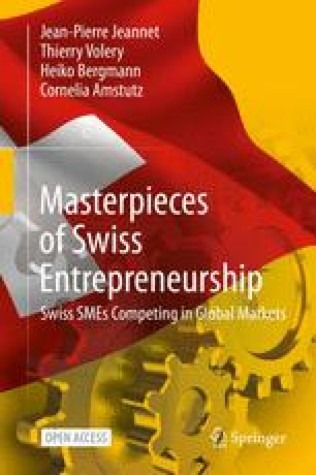
Masterpieces of Swiss Entrepreneurship : Swiss SMEs Competing in Global Markets
This book focuses on Switzerland-based medium-sized companies with a longstanding export tradition and a proven dominance in global niche markets. Based upon in-depth documentation and analysis of 36 Swiss companies over their entire history, an expert team of authors presents several parallels in the pathways and success factors which allowed these firms to become dominant and operate from a high-cost location such as Switzerland.
Managing innovation in organisations : ostering an entrepreneurial approach
Explores how organisations need to manage their innovation processes in order to compete in the global marketplace. Innovation is essential to the ongoing competitiveness of organisations but can be difficult to capture and disseminate. This book states that there needs to be guidelines about how to manage innovation in an organisational context. This includes focusing on different types of innovation from incremental to radical. This book will focus on ways to manage innovation from incorporating it into organisational practices to implementing it into beneficial partnerships.
Managing Global Innovation : Uncovering the Secrets of Future Competitiveness
"Managing Global Innovation is a rich compendium of new concepts of global R&D, enlivened by 18 excellent best-in-class case studies. What is especially impressive, the authors bridge seamlessly theoretical and practical issues about how companies create, transform and implement new technology in an expanding marketplace. This will be intriguing to both the industry and the academic world. The lessons learned are invaluable. The book is a real tour de force, probably destined to become a standard in this field for some time to come." Professor Jeff Huang, Harvard University "This excellent book demonstrates how the dynamics of innovation and creativity can be mastered. Important reading for senior management and a must for R&D leaders."
Management Quality and Competitiveness : Lessons from the Industrial Excellence Award
This book showcases examples of excellent manufacturing companies who have succeeded in creating value and job growth in Western Europe. The examples show managers of industrial firms how a clearly articulated strategic position can be combined with excellent execution to achieve competitiveness in Europe, in spite of the usually cited disadvantage of high labor costs and rigidity. Not every company is alike — strategic positions differ, and the means of execution differ, but what is common is a clear plan together with mobilization of all employees to apply their abilities in supporting this common plan. The book is indispensable reading for all managers that are interested in improving competitiveness.
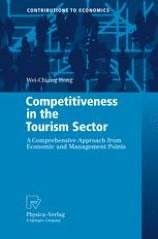
Competitiveness in the Tourism Sector : A Comprehensive Approach from Economic and Management Points
International tourism is expected to be a major vehicle of economic development in industrializing countries in the 21st century, especially for Asia. To generate long-term growth, countries with tourism-based economies must develop strategies for employing their comparative advantages to achieve competitive advantages. However, competitiveness in the tourist industry is multi-dimensional and complex. This study evaluates the competitiveness of the Taiwanese tourism sector by a multi-dimensional framework. The theoretical model proposes that the competitiveness of tourist destinations should be composed of Ricardian comparative advantages (like the conditions of natural endowments and the degree of technological change); Porterian competitive advantages; tourism management, i.e., providing high quality education and job training, public goods, support services and reduced transaction costs to enhance comparative and competitive advantages; and environmental conditions.
