



الصفحة 1
الصفحة 1

Myosins : A Superfamily of Molecular Motors
Application of state-of-the-art cellular and molecular biological, structural biological, genetic, biochemical and biophysical techniques has provided and continues to provide critical information regarding the structure–function relationship; and the cellular roles of various myosins in organisms as diverse as protozoa, yeast, plants and higher animals. The association of myosins with diseases including neurological disorders, immu- deficiencies, cardiomyopathies, hearing and vision loss testify to the importance of understanding the biochemical properties and cellular roles of myosins. The 16 chapters in this volume summarize the tremendous progress made in studying members of the myosin superfamily in recent years and offer critical insight into what future research will yield.

Molecular Biology of Metal Homeostasis and Detoxification : From Microbes to Man
One of the challenges faced by every cell as well as by whole organisms is to maintain appropriate concentrations of essential nutrient metals while excluding nonessential toxic metals. Toward that end, all organisms have developed mechanisms for metal homeostasis and detoxification to maintain metal levels within physiological limits. This book brings together current knowledge of the molecular basis of metal homeostasis and detoxification in various eukaryotic model systems, including yeasts, plants, and mammals. It focuses on the cellular systems controlling metal transport, intracellular distribution, and immobilization as well as on systems regulating metal-dependent transcription. In addition to environmental aspects (including phytoremediation), the book treats the pathophysiology of metal deficiency and overload in relation to disease.

Microbial protein toxins
Since the initial establishment of Robert Koch’s postulates in the nineteenth century, microbial protein toxins have been recognized as a major factor of bacterial and fungal virulence. An increasing number of proteins produced and secreted by various bacteria, yeasts and plants are extremely toxic and most of them developed remarkably "intelligent" strategies to enter, to penetrate and to finally kill a eukaryotic target cell by modifying or blocking essential cellular components. This book describes the strategies employed by protein toxins to render their pro- and eukaryotic producers a selective growth advantage over competitors. In providing an up-to-date overview on the mode of protein toxin actions, it accommodates biomedically and biologically relevant toxin model systems. As a result, it significantly broadens our perspective on biochemical architecture and molecular ploy behind the lethal principles of pro- and eukaryotic toxins.

Homing Endonucleases and Inteins
This book provides detailed summary of the genetics, structure, function, mechanisms of action, evolution and engineering of homing endonucleases and inteins. These two unique protein superfamilies have generated considerable excitement for their fundamental, structural, and functional properties, their evolution as parasitic elements, and their widespread applications as gene targeting agents and as instruments for the generation of modified proteins and novel protein combinations.

Golden gate cloning : Methods and protocols
Provides an overview of the latest protocols that cover the full range of in silico, in vitro, and in vivo approaches to help researchers plan, design, and perform Golden Gate cloning experiments. The chapters in this book cover topics such as Golden Gate cloning of standardized parts; modular DNA construct design for high-throughput Golden Gate Assembly; Golden Gate cloning of Synthetic CRISPR RNA spacer sequences; Golden Gate cloning in Actinobacteria; and YeastFab cloning of toxic genes and protein expression optimization in yeast.

Galactose Regulon of Yeast : From Genetics to Systems Biology
The galactose regulon of yeast is one of the best studied regulons. It is an ideal paradigm for demonstrating fundamental and evolving concepts in biology and is used in this book as a model system to explain various facets of conventional and modern biology. The book starts with a brief historical overview on yeast research, i.e. early observations in enzyme adaptation, classical genetics, formulating hypotheses based on genetic inference. This is followed by molecular genetics of the galactose regulon, isolation of genes and testing of the hypotheses. The power of mutational analysis in deciphering molecular mechanisms is conveyed. Further, contemporary topics such as genomics, evolution, single cell analysis of transcriptional switching, binary and graded responses, biological consequences of feed back regulation in genetic circuits, and stochasticity are addressed.
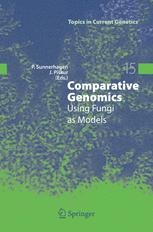
Comparative genomics ; Vol.15 : Using Fungi as Models
Fungal comparative genomics started in 2000 by the genome sequencing of several yeast species other than the canonical Saccharomyces cerevisiae. Since then, over 30 fungal genome sequences have become available. This set represents a total evolutionary divergence comparable to that between vertebrates and arthropods, but also contains closely related genomes. This volume describes how we can use this set of genomes to trace large and small-scale events in genome evolution, to extract information about highly conserved and less conserved sequence elements, and to develop novel methods in genomics that will have an impact on genomics at large.
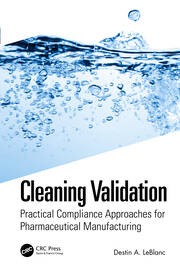
Cleaning validation : Practical compliance approaches for pharmaceutical manufacturing
Timely coverage of cleaning validation for the pharmaceutical industry, a dynamic area in terms of health-based limits. Encourages pharmaceutical manufacturers, and particularly upper management, to meet the challenges of the science-based and riskbased approaches to cleaning validation. Draws on the author’s vast experience in the field of cleaning validation and hazardous materials. Discusses EMA vs. ISPE on Cleaning Limits and revised Risk-MaPP for highly hazardous products in shared facilities. A diverse list of topics from protocol limits for yeasts and molds to cleaning validation for homeopathic drug products.
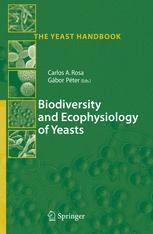
Biodiversity and Ecophysiology of Yeasts
In the last few decades more and more yeast habitats that were not investigated earlier, spanning cold climates to tropical regions and dry deserts to rainforests, have been explored. As a result, a large body of ecological data has been accumulated and the number of known yeast species has increased rapidly. This book provides an overview of the biodiversity of yeasts in different habitats. The recent advances achieved by the application of molecular biological methods in the field of yeast taxonomy and ecology are also incorporated in the book. Wherever possible, the interaction between yeasts and the surrounding environment is discussed.
