



الصفحة 1
الصفحة 1
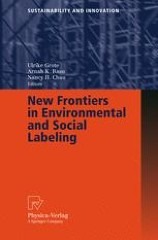
New Frontiers in Environmental and Social Labeling
The attractiveness of product labeling stems from their voluntary nature to achieve environmental and social goals. It is argued that through product price premia which reflect the willingness of consumers to pay more for green and socially conscious products, labels have the potential to generate changes in production techniques. In addition, labeling of products has become the preferred instrument for solving high profile trade disputes amongst members of the World Trade Organization. The contributions in this volume provide an indepth look at labeling and its relation to the governance of global trade. The book aims at bridging the research gaps related to the link between consumers’ perception of a label with their willingness to pay, the impact and the limitations of labeling in the event of food safety hazards, and the trade and development dimensions of labeling.

Measuring the Value of Culture : Methods and Examples in Cultural Economics
Acknowledgement of the value of culture and cultural goods is increasing world-wide. So too is interest in finding methods to quantify this value so that governments and private sponsors can make efficient funding decisions. "Measuring the Value of Culture" documents methods that can be used to put a price on the arts and cultural goods, including theatre, heritage, cultural events (like arts festivals), museums, archaeological sites and libraries. The methods discussed include economic impact studies, which use market data, as well as non-market valuation techniques, like willingness to pay studies, and the newer choice experiments. In addition, advances in more qualitative valuation methods are considered.
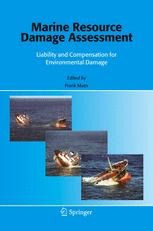
Marine resource damage assessment : Liability and compensation for environmental damage
MARE-DASM research focused on: (i) the estimation and distribution of marine contaminants in order to assess their long term effects (ecotoxicology); (ii) the integration of these result into a Biological Effects SubModel and a mathematical model assessing the risks associated with accidental spillage of oil at sea and the damage this can cause (modelling); (iii) the assessment of the willingness to pay for ecological damage, based on the Contingent Valuation Method (economics); (iv) the development and evaluation of measures to be taken in order to guarantee a sustainable use of the Belgian part of the North Sea, taking into account the economic and social interests and values (social economics); (v) the potential to develop technical and legal procedures that allow ecological damage to the marine environment to be evaluated and compensated, taking into account constraints in national and international liability legislation (legal).
