



الصفحة 1
الصفحة 1

Micromammals and Macroparasites : From Evolutionary Ecology to Management
Small mammals are among the most ubiquitous and important components of terrestrial ecosystems. They have coevolved, and now coexist, with a diverse array of parasites, such that not only are all aspects of their biology influenced by parasitism but they also play key roles in the transmission and maintenance of parasitic diseases. This book provides a comprehensive survey of the diversity and biology of metazoan parasites affecting small mammals, of their impact on host individuals and populations, and of the management implications of these parasites for conservation biology and human welfare. Designed for a broad, multidisciplinary audience, it will be an essential resource for researchers, students, and practitioners alike in the fields of parasitology, evolutionary ecology, wildlife management, and conservation biology.

Habitats and Biota of the Gulf of Mexico : Before the deepwater horizon oil spill ; Vol.2 : Fish resources, fisheries, sea turtles, avian resources, marine mammals, diseases and mortalities
The Gulf of Mexico is an open and dynamic marine ecosystem rich in natural resources but heavily impacted by human activities, including agricultural, industrial, commercial and coastal development. Nutrients and pollutants from coastal communities and dozens of rivers flow into the Gulf, including material from the Mississippi River watershed, which drains over one third of continental United States. The Gulf of Mexico has been continuously exposed to petroleum hydrocarbons for millions of years from natural oil and gas seeps on the sea floor, and more recently from oil drilling and production activities located in the water near and far from shore. Major accidental oil spills in the Gulf are infrequent; two of the most significant include the Ixtoc I blowout in the Bay of Campeche in 1979 and the Deepwater Horizon Oil Spill in 2010.

Genome Mapping and Genomics in Fishes and Aquatic Animals
The series Genome Mapping and Genomics in Animals provides comprehensive and up-to-date reviews on genomic research on a large variety of selected animal systems, contributed by leading scientists from around the world.This volume summarizes the first era of genomic studies of aquaculture species, in which the tools and resources necessary to support whole-genome sequencing were developed. These tools will enhance efforts toward selective breeding of aquaculture species. Included in this volume are summaries of work on salmonids, cyprinids, catfish, tilapias, European sea bass, Japanese flounder, shrimps and oysters.

Fish and Diadromy in Europe (ecology, management, conservation)
This book contains selected papers from an international symposium organised by the Diadfish network held in Bordeaux (France) in 2005. Readers will find up-to-date information on the ecology, ecotoxicology and physiology of several diadromous species (Atlantic salmon, shads, lampreys, eels) and this whole group in Europe. Main impacts are also documented and analysed in case studies, and solutions or remediation actions are presented.
Environmental Governance of the Baltic Sea
This edited volume presents a comprehensive and coherent interdisciplinary analysis of challenges and possibilities for sustainable governance of the Baltic Sea ecosystem by combining knowledge and approaches from natural and social sciences. Focusing on the Ecosystem Approach to Management (EAM) and associated multi-level, multi-sector and multi-actor challenges, the book provides up-to-date descriptions and analyses of environmental governance structures and processes at the macro-regional Baltic Sea level.

Endocrine-Disrupting Chemicals : From Basic Research to Clinical Practice
This book presents a translational approach to EDC research, spanning both basic biology and clinical applications, and provides a critical link between the laboratory and the physicians’ office. Scientists and physicians engaged in EDC studies or practice will find that this volume offers insight across all areas of EDC research, including clarifying the mechanisms for EDC effects, understanding the adverse affects of EDCs on humans and wildlife, and offering solutions to the problems created by exposures to EDCs.

Disease in Wild Animals : Investigation and Management
Wildlife diseases have become increasingly important recently due to their effect upon human health, veterinary medicine, wildlife, and conservation biology. Gary Wobeser's successful book from 1994 has been completely updated and enlarged in a new second edition. An in-depth overview of the available techniques for the investigation and management of disease in free-ranging animals is provided. The subjects are illustrated with examples drawn from around the world, with emphasis on the special requirements involved in working with wild animals. Techniques are assessed critically with regard to their efficacy and effectiveness.
Conservation in the 21st century : Gorillas as a case study
this book is essential reading for primatologists, biologists, and conservationists searching for both a current assessment of the gorilla’s conservation status and, importantly, for ideas and tools that show promise of halting or reversing population declines and putting us on a path to achieving a stable, long-term co-existence of human and wildlife populations.
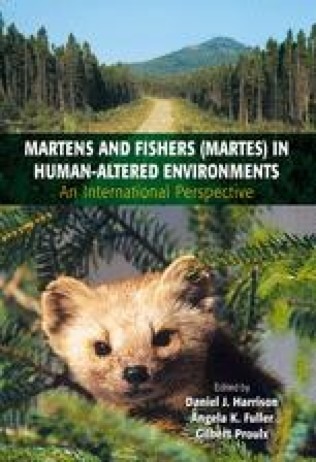
Martens and Fishers (Martes) in human-altered environments : An international perspective
Examines the conditions where humans and martens are compatible and incompatible, and promotes land use practices that allow Martes to be representatively distributed and viable. All Martes have been documented to use forested habitats and 6 species (excluding the stone marten) are generally considered to require complex mid- to late-successional forests throughout much of their geographic ranges. All species in the genus require complex horizontal and vertical structure to provide escape cover protection from predators, habitat for their prey, access to food resources, and protection from the elements. Martens and the fisher have high metabolic rates, have large spatial requirements, have high surface area to volume ratios for animals that often inhabit high latitudes, and often require among the largest home range areas per unit body weight of any group of mammals. Resulting from these unique life history characteristics, this genus is particularly sensitive to human influences on their habitats, including habitat loss, stand-scale simplification of forest structure via some forms of logging, and landscape-scale effects of habitat fragmentation. Given their strong associations with structural complexity in forests, martens and the fisher are often considered as useful barometers of forest health and have been used as ecological indicators, flagship, and umbrella species in different parts of the world. Thus, efforts to successfully conserve and manage martens and fishers are associated with the ecological fates of other forest dependent species and can greatly influence ecosystem integrity within forests that are increasingly shared among wildlife and humans.We have made great strides in our fundamental understanding of how animals with these unique life history traits perceive and utilize habitats, respond to habitat change, and how their populations function and perform under different forms of human management and mismanagement.
Marine Anthropogenic Litter
This book describes how man-made litter, primarily plastic, has spread into the remotest parts of the oceans and covers all aspects of this pollution problem from the impacts on wildlife and human health to socio-economic and political issues. Marine litter is a prime threat to marine wildlife, habitats and food webs worldwide. The book illustrates how advanced technologies from deep-sea research, microbiology and mathematic modelling as well as classic beach litter counts by volunteers contributed to the broad awareness of marine litter as a problem of global significance. The authors summarise more than five decades of marine litter research, which receives growing attention after the recent discovery of great oceanic garbage patches and the ubiquity of microscopic plastic particles in marine organisms and habitats.
Managing Protected Areas in Central and Eastern Europe Under Climate Change
Addresses the need for sharing knowledge and experience in the field of biodiversity conservation and climate change. There is an urgent need to build capacity in protected areas to monitor, assess, manage and report the effects of climate change and their interaction with other pressures. The contributors identify barriers to the adaptation of conservation management, such as the mismatch between planning reality and the decision context at site level. Short and vivid descriptions of case studies, drawn from investigation areas all over Central and Eastern Europe, illustrate both the local impacts of climate change and their consequences for future management.

Management Planning for Nature Conservation : A Theoretical Basis & Practical Guide
The book provides historical and rational background which helps to explain what makes a really effective management plan, and it presents a detailed practical guide to developing such a plan. It concludes with a series of case studies which clearly illustrate the underlying principles drawn out in the text, while highlighting the different approaches demanded by very different sites. Drawing on the expertise of leaders in both conservation research and wildlife management, and with a combined experience from around the world, this book is essential reading for professional conservation managers and any student studying management planning for conservation within a range of degree and postgraduate courses.
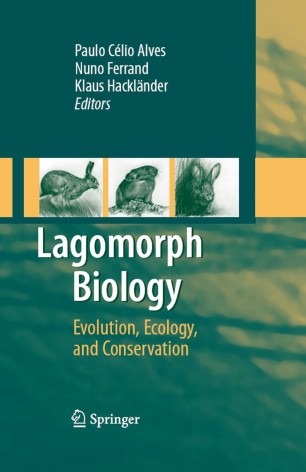
Lagomorph Biology : Evolution, Ecology, and Conservation
Lagomorphs are a mammalian order which includes rabbits, hares and pikas. They are distributed throughout the world and are of both scientific and public interest as they are classified between endangered and pest species. In addition, some have a high economic value as important game species. In the last few decades, a huge amount of information was made available to the scientific community and resulted in remarkable advances on all aspects of Lagomorph biology. However, this information is dispersed in multiple scientific and non-scientific journals. This book provides an updated synthesis of the current knowledge on Lagomorph biology.

Challenges to Marine Ecosystems ; Proceedings of the 41st European Marine Biology Symposium
This volume presents a representative sample of contributions to the 41st European Marine Biology Symposium held in September 2005 in Cork, Ireland. The theme of the symposium was ‘Challenges to Marine Ecosystems’ and this was divided into four sub themes; Genetics, Marine Protected Areas, Global Climate Change and Marine Ecosystems, Sustainable Fisheries and Agriculture.
Biodiversity and Conservation in Europe
This book brings together a selection of original studies submitted to Biodiversity and Conservation that address biodiversity and conservation in Europe. Europe is certainly the most intensively inventoried region of the world; detailed maps are available for species distributions while action plans are being drawn up for species under threat. At the same time, the wildlife of Europe has been subject to enormous human pressures, with limited ‘wilderness’ sites remaining in most countries. Europe consequently presents a case-study of what the human impact on biodiversity has been, and also what can be done to improve the situation.
Aquaponics Food Production Systems : Combined Aquaculture and Hydroponic Production Technologies for the Future
This book, written by world experts in aquaponics and related technologies, provides the authoritative and comprehensive overview of the key aquaculture and hydroponic and other integrated systems, socio-economic and environmental aspects. Aquaponic systems, which combine aquaculture and vegetable food production offer alternative technology solutions for a world that is increasingly under stress through population growth, urbanisation, water shortages, land and soil degradation, environmental pollution, world hunger and climate change.
Animals in Our Midst : The Challenges of Co-existing with Animals in the Anthropocene
This book brings together authoritative voices in animal and environmental ethics, who address the many different facets of changing human-animal relationships in the Anthropocene. As we are living in complex times, the issue of how to establish meaningful relationships with other animals under Anthropocene conditions needs to be approached from a multitude of angles. This book offers the reader insight into the different discussions that exist around the topics of how we should understand animal agency, how we could take animal agency seriously in farms, urban areas and the wild, and what technologies are appropriate and morally desirable to use regarding animals. This book is of interest to both animal studies scholars and environmental ethics scholars, as well as to practitioners working with animals, such as wildlife managers, zookeepers, and conservation biologists.
