



الصفحة 1
الصفحة 1
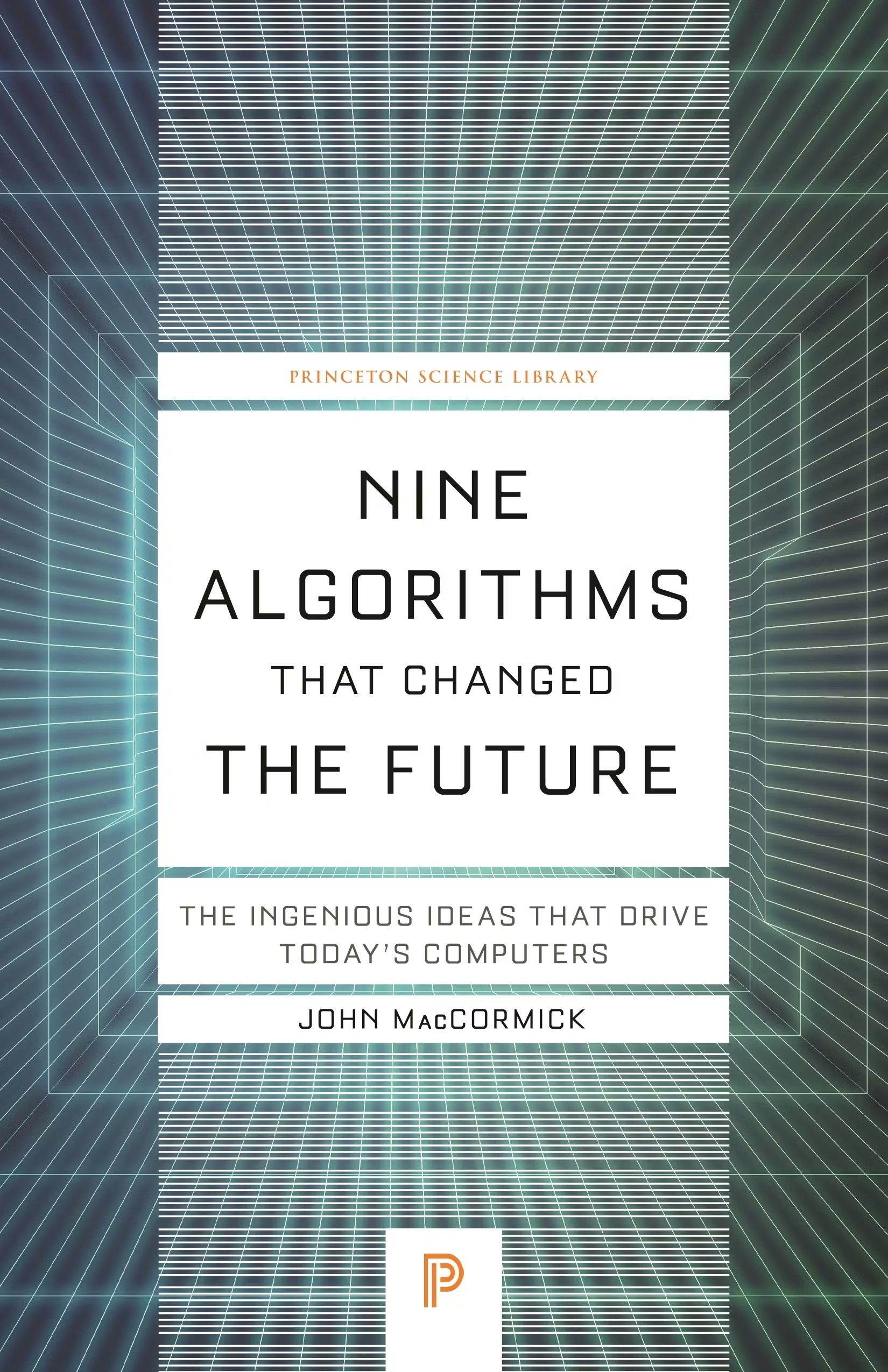
Nine algorithms that changed the future : The ingenious ideas that drive today’s computers
Every day, we use our computers to perform remarkable feats. A simple web search picks out a handful of relevant needles from the world’s biggest haystack. Uploading a photo to Facebook transmits millions of pieces of information over numerous error-prone network links, yet somehow a perfect copy of the photo arrives intact. Without even knowing it, we use public-key cryptography to transmit secret information like credit card numbers, and we use digital signatures to verify the identity of the websites we visit. How do our computers perform these tasks with such ease?
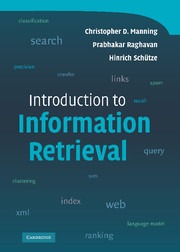
Introduction to information retrieval
Teaches classical and web information retrieval, including web search and the related areas of text classification and text clustering from basic concepts. It gives an up-to-date treatment of all aspects of the design and implementation of systems for gathering, indexing, and searching documents; methods for evaluating systems; and an introduction to the use of machine learning methods on text collections. All the important ideas are explained using examples and figures, making it perfect for introductory courses in information retrieval for advanced undergraduates and graduate students in computer science.

Intelligent Techniques for Web Personalization ; IJCAI 2003 Workshop, ITWP 2003, Acapulco, Mexico, August 11, 2003, Revised Selected Papers
Web personalizationcan be de?ned as any set of actions that can tailor the Web experience to a particular user or set of users. The experience can be something as casualas browsinga Web site oras (economically)signi?cantas tradingstock or purchasing a car. The actions can range from simply making the presentation more pleasing to anticipating the needs of a user and providing customized and relevant information. To achieve e?ective personalization, organizations must rely on all available data, including the usage and click-stream data (re?e- ing user behavior), the site content, the site structure, domain knowledge, user demographics and pro?les. In addition, e?cient and intelligent techniques are needed to mine these data for actionable knowledge, and to e?ectively use the discovered ...

Federation over the Web ; International Workshop, Dagstuhl Castle, Germany, May 1-6, 2005, Revised Selected Papers
The lives of people all around the world, especially in industrialized nations, continue to be changed by the presence and growth of the Internet. Its in?uence is felt at scales ranging from private lifestyles to national economies, boosting thepaceatwhichmoderninformationandcommunicationtechnologiesin?uence personal choices along with business processes and scienti?c endeavors. In addition to its billions of HTML pages, the Web can now be seen as an open repository of computing resources. These resources provide access to computational services as well as data repositories, through a rapidly growing variety of Web applications and Web services.

Entity-Oriented Search
This open access book covers all facets of entity-oriented search—where “search” can be interpreted in the broadest sense of information access—from a unified point of view, and provides a coherent and comprehensive overview of the state of the art. It represents the first synthesis of research in this broad and rapidly developing area. Selected topics are discussed in-depth, the goal being to establish fundamental techniques and methods as a basis for future research and development. Additional topics are treated at a survey level only, containing numerous pointers to the relevant literature. A roadmap for future research, based on open issues and challenges identified along the way, rounds out the book.
Knowledge and Information Visualization : Searching for Synergies
The basic ideas underlying knowledge visualization and information vi- alization are outlined. In a short preview of the contributions of this volume, the idea behind each approach and its contribution to the goals of the book are outlined. 2 The Basic Concepts of the Book Three basic concepts are the focus of this book: "data", "information", and "kno- edge". There have been numerous attempts to define the terms "data", "information", and "knowledge", among them, the OTEC Homepage "Data, Information, Kno- edge, and Wisdom" (Bellinger, Castro, & Mills, see http://www.syste- thinking.org/dikw/dikw.htm): Data are raw. They are symbols or isolated and non-interpreted facts. Data rep- sent a fact or statement of event without any relation to other data. Data simply exists and has no significance beyond its existence (in and of itself). It can exist in any form, usable or not. It does not have meaning of itself.

Algorithms and Models for the Web-Graph ; 5th International Workshop, WAW 2007, San Diego, CA, USA, December 11-12, 2007, Proceedings
The book address a wide variety of topics related to the study of the Web-graph such as random graph models for the Web-graph, PageRank analysis and computation, decentralized search, local partitioning algorithms,and traceroute sampling. The Web-graph has been the focal point of a tremendous amount of research for more than a decade. The view of the Web as a graph has great practical importance and has also generated much interesting theoretical work.

Algorithms and Models for the Web-Graph ; 4th International Workshop, WAW 2006, Banff, Canada, November 30 - December 1, 2006. Revised Papers
his book constitutes the revised papers of the Fourth International Workshop on Algorithms and Models for the Web-Graph, WAW 2006, held in Banff, Canada, November 30 - December 1, 2006.

Ajax in Oracle JDeveloper
The book covers web search and RSS Feed with Ajax as well as form validation with Ajax frameworks for Java, JSP, JSF, and PHP. It discusses using Ajax in Oracle JDeveloper and is IDE based. JDeveloper has the following advantages over Eclipse IDE.

Advances in web-age information management ; Vol. 4016 : 7th International Conference, WAIM 2006, Hong Kong, China, June 17-19, 2006, Proceedings
This book constitutes the refereed proceedings of the 7th International Conference on Web-Age Information Management, WAIM 2006, held in Hong Kong, China in June 2006. The 50 revised full papers presented were carefully reviewed and selected from 290 submissions. The papers are organized in topical sections on, indexing, XML query processing, information retrieval, sensor networks and grid computing, peer-to-peer systems, Web services, Web searching, caching and moving objects, temporal database, clustering, clustering and classification, data mining, data stream processing, XML and semistructured data, data distribution and query processing, and advanced applications.

Advances in information retrieval ; 30th European Conference on IR Research, ECIR 2008, Glasgow, UK, March 30-April 3, 2008. Proceedings
This book constitutes the refereed proceedings of the 30th annual European Conference on Information Retrieval Research, ECIR 2008, held in Glasgow, UK, in March/April 2008.

Advances in information retrieval ; 29th European Conference on IR Research, ECIR 2007, Rome, Italy, April 2-5, 2007, Proceedings
This book presented evaluation, recommendation, optimization, semantics, aggregation, queries, mining social media, digital libraries, efficiency, and information retrieval theory. Also included are 3 tutorial and 4 workshop presentations.
Advanced Techniques in Knowledge Discovery and Data Mining
This explosion is a result of the growing use of electronic media. But what is data mining (DM)? A Web search using the Google search engine retrieves many (really many) definitions of data mining. We include here a few interesting ones. One of the simpler definitions is: “As the term suggests, data mining is the analysis of data to establish relationships and identify patterns” [1]. It focuses on identifying relations in data. Our next example is more elaborate: An information extraction activity whose goal is to discover hidden facts contained in databases. Using a combination of machine learning, statistical analysis, modeling techniques and database technology, data mining finds patterns and subtle relationships in data and infers rules that allow the prediction of future results. Typical applications include market segmentation, customer profiling, fraud detection, evaluation of retail promotions, and credit risk analysis .
