



الصفحة 1
الصفحة 1

Natural Disasters and Extreme Events in Agriculture : Impacts and Mitigation
Agricultural production is highly dependent on weather, climate and water availability and is adversely affected by the weather and climate-related disasters. Droughts and natural disasters such as floods can result in crop failures, food insecurity, famine, loss of property and life, mass migration and negative national economic growth. It may not be possible to prevent the occurrence of these natural disasters, but the resultant disastrous effects can be reduced considerably through proper planning and effective preparation. Vulnerability associated with the hazards of natural disasters can be controlled to some extent by accurate and timely prediction and by taking counter-measures to reduce their impacts on agriculture. This book based on an expert meeting held in Beijing, China should be of interest to all organizations involved in disasters reduction and mitigation of extreme events.

Modeling Solar Radiation at the Earth’s Surface : Recent Advances
Solar radiation data is important for a wide range of applications, e.g. in engineering, agriculture, health sector, and in many fields of the natural sciences. A few examples showing the diversity of applications may include: architecture and building design e.g. air conditioning and cooling systems; solar heating system design and use; solar power generation; weather and climate prediction models; evaporation and irrigation; calculation of water requirements for crops; monitoring plant growth and disease control; skin cancer research.

Extreme Weather Events and Public Health Responses
In February 2004, the WHO Regional Office for Europe and the European Environment Agency organized an expert meeting to exchange information and develop recommendations on public health and environmental responses to weather and climate extremes, floods, heat-waves and cold spells. The meeting was kindly hosted by the Ministry of Health of Slovakia. The meeting recommendations were adopted at the Fourth Ministerial Conference on Environment and Health, Budapest, Hungary, 2004.
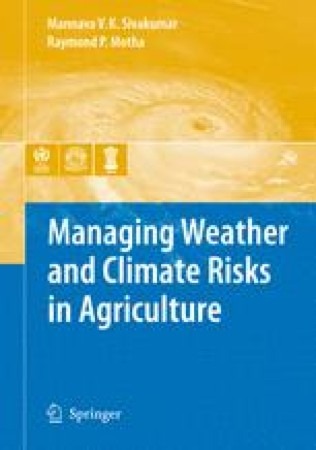
Managing Weather and Climate Risks in Agriculture
In many parts of the world, weather and climate are one of the biggest production risks and uncertainty factors impacting on agricultural systems performance and management. Both structural and non-structural measures can be used to reduce the impacts of the variability (including extremes) of climate resources on crop production. While the structural measures include strategies such as irrigation, water harvesting, windbreaks etc., the non-structural measures include use of seasonal to interannual climate forecasts, improved application of medium-range weather forecasts and crop insurance. This book based on an International Workshop held in New Delhi, India should be of interest to all organizations and agencies interested in improved risk management in agriculture.
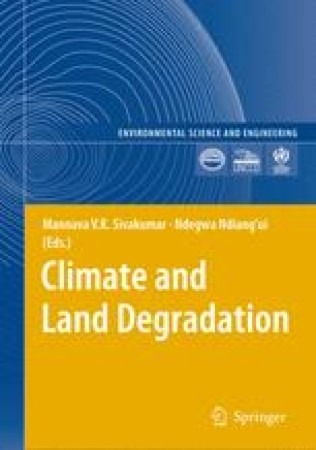
Climate and Land Degradation
In many parts of the world, climatic variations are recognized as one of the major factors contributing to land degradation impacting on agricultural systems performance and management. To accurately assess sustainable land management practices, the climate resources and the risk of climate-related or induced natural disasters in a region must be known. Only when climate resources are paired with management or development practices can the land degradation potential be assessed and appropriate mitigation technologies be developed. This book is based on an International Workshop held in Arusha, Tanzania and should be of interest to all organizations and agencies interested in sustainable land management to arrest land degradation.
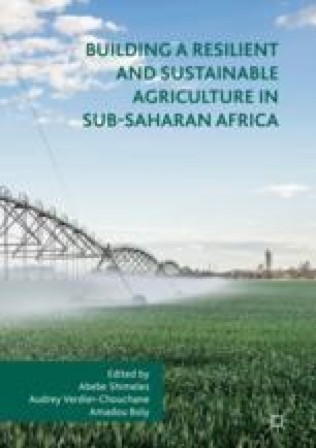
Building a Resilient and Sustainable Agriculture in Sub-Saharan Africa
What are the challenges and action points for agricultural sustainability in Sub-Saharan Africa? This collection of papers offers technical analyses, policy recommendations and an overview of success stories to date. Each carefully selected paper provides valuable insights for improved policy making and defines relevant strategic priorities on Africa’s sustainable transformation process, which is in line with the international development agenda. Although agriculture remains the main source of income for Africa’s population, the sector is rain-fed subjecting it to the vagaries of weather and climate change. This volume demonstrates the rationale of developing a competitive, inclusive and sustainable agribusiness sector for Africa’s food security and structural transformation.
