



الصفحة 1
الصفحة 1

Nuclear back-end and transmutation technology for waste disposal : Beyond the Fukushima accident
Covers essential aspects of transmutation technologies, highlighting especially the advances in Japan. The accident at the Fukushima Daiichi Nuclear Power Plant (NPP) has caused us to focus attention on a large amount of spent nuclear fuels stored in NPPs. In addition, public anxiety regarding the treatment and disposal of high-level radioactive wastes that require long-term control is growing. The Japanese policy on the back-end of the nuclear fuel cycle is still unpredictable in the aftermath of the accident. Therefore, research and development for enhancing the safety of various processes involved in nuclear energy production are being actively pursued worldwide.

New Business Models for the Reuse of Secondary Resources from WEEEs : The FENIX Project
This book summarizes research being pursued within the FENIX project, funded by the EU community under the H2020 programme, the goal of which is to design a new product service paradigm able to promote innovative business models, to open added value to the vessels and to create new market segments. It experiments and validates its approach on three new concepts of added-value specialized vessels able to run requested services for several maritime sectors in the most effective, efficient, economic valuable and eco-friendly way. The three vessels share the same lean design methodology, IoT tools and HPC simulation strategy: a lean fact-based design model approach, which combines real operative data at sea with lean methodology, to support the development and implementation of the vessel concepts; IT customized tools to enable the acquisition, processing and usage of on board and local weather data, through an IoT platform, to provide business services to different stakeholders; HPC simulation, providing a virtual towing tank environment, for early vessel design improvement and testing. The book demonstrates that an integrated LCC analysis and LCC strategy to guarantee sustainability to vessels concepts and the proper environmental attention inside the maritime industry.

Modern Control Systems ; 13th ed.
Presents the structure of feedback control theory and to provide a sequence of exciting discoveries. The book demonstrates various real-world, global engineering problems while touching on evolving design strategies like green technology. Some of the themes at-hand include climate change, clean water, sustainability, waste management, emissions reduction, and minimizing energy. Throughout the text, students apply theory to the design and analysis of control systems.
Mine Wastes : Characterization, Treatment and Environmental Impacts
Provides an overview of the accumulation of wastes at mine, including sulfidic mine wastes, mine water, tailings, cyanidation wastes of gold-silver ores, radioactive wastes of uranium ores, and wastes of phosphate and potash ores. This work presents crucial aspects of mine wastes as scientific issues.

Innovative Models for Sustainable Development in Emerging African Countries
Explores key issues and presents recent case studies in areas of importance for the transition to a circular model of development in emerging African countries that will minimize resource consumption and waste production.

Implementing Strategic Environmental Assessment
More countries are now using Strategic Environmental Assessment (SEA) than ever before. This timely and comprehensive Handbook describes the implementation of SEA in 18 countries around the world, as well as a critical analysis of different SEA methodologies. The Handbook starts by introducing key SEA principles and the legal requirements of the new European SEA Directive (which became law in 2004). It then describes the implementation of SEA in 11 European Union countries, as well as the USA, Canada and New Zealand. This is contrasted with SEA requirements of four developing countries. The Handbook explores public participation issues and the wide-range of SEA methodologies used in terms of resources (soils, water and biodiversity) and sectors of activity (transport, agriculture, waste management and industry). The Handbook concludes with a discussion on best practice, capacity building and the future of SEA.

GeomInt–Mechanical Integrity of Host Rocks
This book summarizes the results of the collaborative project “GeomInt: Geomechanical integrity of host and barrier rocks - experiment, modeling and analysis of discontinuities” within the Program: Geo Research for Sustainability (GEO: N) of the Federal Ministry of Education and Research (BMBF).

Geological Storage of Highly Radioactive Waste : Current Concepts and Plans for Radioactive Waste Disposal
The book describes and assesses current concepts for long-term disposal of highly radioactive waste. Different types of rock are discussed and assessed with respect to practical difficulties in construction of a repository, and the efficiency in isolating radioactive waste. Safety matters are most important and are treated in the respective chapters and in a final, conclusive chapter. Cost issues and related quality matters are discussed for the case of constructing a virgin repository and repositories in the form of converted abandoned mines.

Environmental impact assessment of recycled wastes on surface and ground waters ; Vol.3 : Engineering modeling and sustainability
The state of the art of the impact assessment of recycled hazardous waste materials on surface and ground waters is presented. The topics include chemodynamics, toxicology, modeling and information systems. The book serves as a practical conceptual guide for those who have professional responsibility for the monitoring, design, management, or conduct of environmental impact assessment. It is believed that the book will prove useful to the reader who, regardless of disciplinary background, wants to examine in greater detail the kinds of interdisciplinary contributions to contemporary decision-making processes that characterize modern impact assessment project development.

Environmental Impact Assessment of Recycled Wastes on Surface and Ground Waters ; Vol.2 : Risk analysis
The state of the art of the impact assessment of recycled hazardous waste materials on surface and ground waters is presented. The topics include chemodynamics, toxicology, modeling and information systems. The book serves as a practical conceptual guide for those who have professional responsibility for the monitoring, design, management, or conduct of environmental impact assessment. It is believed that the book will prove useful to the reader who, regardless of disciplinary background, wants to examine in greater detail the kinds of interdisciplinary contributions to contemporary decision-making processes that characterize modern impact assessment project development.

Emerging Environmental Technologies
This book exclusively focuses on the technologies that would be in the forefront in near to far future. Each and every article in the book discusses the current environmental challenges, the novel innovation and future directions. The topics covered in the book include microbial fuel cells, hybrid solar lighting, bacterial swimming for environmental remediation, cleaner engines, nanoparticles for effluent treatment, surface catalysis and proteins as gas hydrates inhibitors.
Efficient Management of Wastewater : Its Treatment and Reuse in Water-Scarce Countries
The book highlights non-conventional solutions within the field of wastewater treatment and reuse predominantly for professionals and decision makers. It focuses on technologies like anaerobic and extensive treatment of municipal, domestic wastewater and grey water which are reliable, sustainable, low cost and suitable for rural and sub urban areas. Additionally, particular innovative on site concepts are presented.

Ecological Risk Assessment for Chlorpyrifos in Terrestrial and Aquatic Systems in the United States
Reviews of Environmental Contamination and Toxicology attempts to provide concise, critical reviews of timely advances, philosophy and significant areas of accomplished or needed endeavor in the total field of xenobiotics, in any segment of the environment, as well as toxicological implications.
Earth Structures : In Transport, Water and Environmental Engineering
This book describes the principles of working with soil as a construction material, including two basic ways of treating it: geosynthetics and stabilization. The book discusses the design logic and ways to control Earth Structures, which differ significantly from other construction materials. Building with Earth involves greater uncertainty and risk, which means that there is a need for better design detailing and improvement in the quality of financial calculations. The general part of the book gives a detailed description of the principles of limit states according to Eurocode 7, after which geotechnical design is also described. Subsequent chapters concentrate on earth structures for transport, water, and environmental projects. The chapter on Earth Structures in transport engineering presents detailed coverage of limit states of stability and deformation. Earth Structures in water engineering prioritizes the limit state of internal erosion. Earth Structures in environmental engineering describes new designs, in which part of the structure is created from non-standard materials which are usually susceptible to internal collapse, double porosity, unsaturation, etc. It also focuses on protecting the surrounding environment from contamination.
Decision Making for Complex Socio-Technical Systems : Robustness from Lessons Learned in Long-Term Radioactive Waste Governance
The long-term governance of radioactive waste continues to be a major complex and contentious socio-technical issue worldwide. Traditionally, it has been considered as mainly a challenge to scientists and engineers to develop technical "solutions" to specific problems. But increasingly these narrow solutions have been enlarged by wider societal considerations such as ethics, public involvement, control and retrievability – needs that have in the meanwhile been recognised by the nuclear community, at least in a general way. In this book, we analyse motives for a broad discourse as well as suggest prerequisites to launch it. The author attempts to give a novel, empirically based and technically sound treatment of fundamental issues in long-term management and governance. Written to be accessible to a wide selection of the interested public, the study proposes a combination of technical design issues, analysis methods and institutional backup in a dynamic procedure, and with involvement at all levels of political, commercial and social life.

Dangerous of Pharmaceutical Waste From Hospitals and Homes on Human and Environment
The occurrence of pharmaceuticals in environment originating from hospitals and household waste has received increased scientific attention during the last decades because more than 100 different drugs have been detected in the aquatic environment at concentrations from the nanogram (ng) to the μg/l range. This research talk about improper disposal of pharmaceutical waste, impacts of some drugs included in like metals, endocrine disruptors, and various compounds that are dangerous for aquatic and human lives. The safe disposal and management of pharmaceutical waste. The origin of this problem begin due to lack of awareness about this issues beside there is no training or courses for pharmacists and people work in medical departments on pharmaceutical waste management during their academic studies.in addition, this research also talk about how to reduce the amount of pharmaceuticals waste and environmentally friendly and cost-effective ways for handling this waste, beside increase the awareness to overcome this problem.
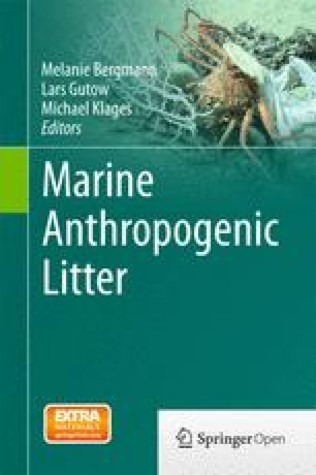
Marine Anthropogenic Litter
This book describes how man-made litter, primarily plastic, has spread into the remotest parts of the oceans and covers all aspects of this pollution problem from the impacts on wildlife and human health to socio-economic and political issues. Marine litter is a prime threat to marine wildlife, habitats and food webs worldwide. The book illustrates how advanced technologies from deep-sea research, microbiology and mathematic modelling as well as classic beach litter counts by volunteers contributed to the broad awareness of marine litter as a problem of global significance. The authors summarise more than five decades of marine litter research, which receives growing attention after the recent discovery of great oceanic garbage patches and the ubiquity of microscopic plastic particles in marine organisms and habitats.
Comprehensive utilization of magnesium slag by pidgeon process
This book introduces the harmless handling/recycling of magnesium slag , the process of magnesium silicothermic reduction (Pidgeon process)which the slag was produced, and . the magnesium resources, layout of the industry of the world. Examples and experimental data in this book are from the author group’s research programs, as well as the rencent researches in China. The book could provide precious reference to scientists and engineers in the field of recycling and environment friendly use of the industrial solid wastes. It could also be used for researchers and students who are interested in relevant field.
Climate Change and Technological Options : Basic facts, Evaluation and Practical Solutions
climate change focussing on technical solutions for the most important and climate relevant economic sectors is presented. It is intended for key decision makers, and administrators within industry, agricultural and energy sectors, as well as masters students and post graduates. The first of three sections covers the scientific basis of climate change and the instruments to prevent or reduce negative climate effects. It includes a survey covering current practices at different levels.It discusses evaluation methods for climate impacts from industrial processes. Climate relevant processes and measures to reduce their impact such as sequestration are defined in the final section, with the main focus being on renewable resources. Details are given on climate impacts of waste prevention, recycling and waste management as well as are proposals for every day solutions.

Chinese water systems ; Vol.4 : Applied water management in China
This book addresses latest Sino-German results of the joint research efforts within Major Water Program of the Chinese Government supported by German research funding. The Major Water Program aims at the restoration of polluted water environments and sustainable management of water resources in China.
