



الصفحة 1
الصفحة 1

Museum Digitisations and Emerging Curatorial Agencies Online : Vikings in the Digital Age
This book explores the multiple forms of curatorial agencies that develop when museum collection digitisations, narratives and new research findings circulate online. Focusing on Viking Age objects, it tracks the effects of antagonistic debates on discussion forums and the consequences of search engines, personalisation, and machine learning on American-based online platforms. Furthermore, it considers eco-systemic processes comprising computation, rare-earth minerals, electrical currents and data centres and cables as novel forms of curatorial actions.

Modern Theatres 1950–2020
Explores in detail 30 of the most significant theatres, concert halls, opera houses and dance spaces that opened between 1950 and 2010. Each theatre is reviewed and assessed by experts in theatre buildings, such as architects, acousticians, consultants and theatre practitioners, and illustrated with full-colour photographs and comparative plans and sections. A further 20 theatres that opened from 2009 to 2020 are concisely reviewed and illustrated. An excellent resource for students of theatre planning, theatre architecture and architectural design, Modern Theatres 1950 – 2020 discusses the role of performing arts buildings in cities, explores their public and performances spaces and examines the acoustics and technologies needed in a great building. This beautifully illustrated book is also a must-read for architects, theater designers, theatre historians, and theatre practitioners.

Introduction to design theory : philosophy, critique, history and practice
Introduces a comprehensive, systematic, and didactic outline of the discourse of design. Designed both as a course book and a source for research, this textbook methodically covers the central concepts of design theory, definitions of design, its historical milestones, and its relations to culture, industry, body, ecology, language, society, gender and ideology.

Interior Design Concept : Critical Practices, Processes and Explorations in Interior Architecture and Design
Combines a comprehensive introduction to design concept, with a reflective examination upon the various ways it can be understood, harnessed, and implemented. Within interior architecture and design, the power of conceptual thinking to fuel creativity, innovation, and collaboration is evident in the use of design concept. Broadly accepted as an essential component in the design process, design concept is a notoriously elusive topic which has, until now, received little critical attention. This book offers a reevaluation of current academic ideas about design methodologies and the nature of inspiration, alongside brand-new data from an international research study to help clarify what creativity really means in the modern world.

Handbook of Visual Communication : Theory, Methods, and Media
Explores the key theoretical areas and research methods of visual communication. With chapters contributed by many of the best-known and respected scholars in visual communication, this volume brings together significant and influential work in the discipline. Thriteen major theories of communication are defined by the top experts in their fields: perception, cognition, aesthetics, visual rhetoric, semiotics, cultural studies, ethnography, narrative, media aesthetics, digital media, intertextuality, ethics, and visual literacy. Each of these theory chapters is followed by an exemplar study or two in the area, demonstrating the various methods used in visual communication research as well as the research approaches applicable for specific media types.

Drawing imagining building : Embodiment in architectural design practices
Drawing Imagining Building focuses on the history of hand-drawing practices to capture some of the most crucial and overlooked parts of the process. Using 80 black and white images to illustrate the examples, it examines architectural drawing practices to elucidate the ways drawing advances the architect’s imagination.

Collage and architecture
This new edition includes: A stronger focus on contemporary practices, including digital methods; New designers and architects, including Marshall Brown, WAI Architecture Think Tank, and Tatiana Bilbao, bringing their methods and work to life; An expanded global and diverse perspective of architecture as collage; Collage is an important instrument for analysis and design. Through its 261 color images, this book shows how this versatile medium can be adapted and transformed in your own work.

Coding, shaping, making : experiments in form and form-making
Combines inspiration from architecture, mathematics, biology, chemistry, physics and computation to look towards the future of architecture, design and art. It presents ongoing experiments in the search for fundamental principles of form and form-making in nature so that we can better inform our own built environment.
Mapping selfies and memes as Touch
This book offers a rich and nuanced analysis of digitally networked socialities as culturally meaningful relationships of Touch. Focusing on the ways Touch is practised in everyday social interactions serves as a basis for understanding how Touch is multiply significant – physically, emotionally, intellectually and politically. Fiona Andreallo initiates a map of the fundamentals of Touch and how they can be considered for future research in considering digitally networked cultures. This map also serves as a basis for closely examining selfies and memes.
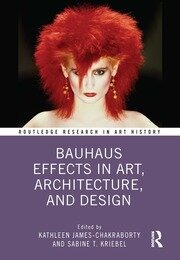
Bauhaus effects in art, architecture, and design
Bringing together an international team of scholars, this book offers new perspectives on the impact that the Bauhaus and its teaching had on a wide range of artistic practices.
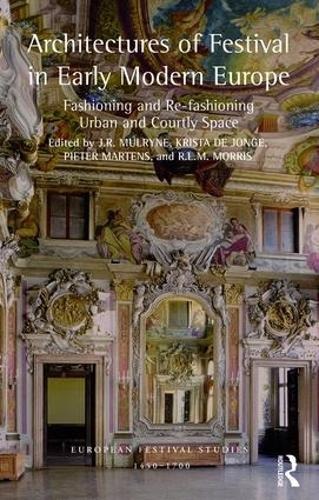
Architectures of festival in early modern Europe : Fashioning and re-fashioning urban and courtly space
Draws on up-to-date research by a Europe-wide group of academic scholars and museum and gallery curators to provide a unique, intellectually-stimulating and beautifully-illustrated account of temporary architecture created for festivals of the sixteenth and seventeenth centuries, together with permanent architecture pressed into service for festival occasions across major European locations including Italian, French, Austrian, Scottish and German.

An Illustrated Guide to Furniture History
Provides upper-level students and instructors with an alternative visual analytical approach to learning about furniture history from Antiquity to Postmodernism. Following an immersive teaching model, it presents a Nine-Step Methodology to help students strengthen their visual literacy and quickly acquire subject area knowledge. Moving chronologically through key periods in furniture history and interior design, such as the Renaissance, the Arts and Crafts Movement, and Modernism, it traverses Europe to America to present a comprehensive foundational guide to the history of furniture design.
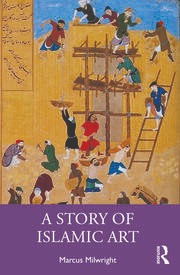
A Story of Islamic Art
The book also provides a detailed introduction, maps, timeline, glossary, and guides for further reading. This book offers accessible answers to key questions in the scholarship on Islamic art and architecture from its earliest times to the present. The issues dealt with in each of the stories include iconography, attitudes towards representation, the role of script, the elaboration of geometric decoration, the creation of sacred and secular spaces in architecture, and the socio-cultural context of art production and consumption.
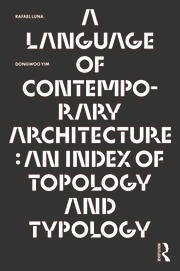
A Language of Contemporary Architecture : An Index of Topology and Typology
Provides an index of ideas, theories, projects, and definitions that string into a methodology for evaluating the contemporary language of architecture described as “contemporism” through a review of topology (form) and typology (system and elements). Trying to answer the postmodern question of how to move beyond modernism through a thread of architectural styles that tried to respond to deficiencies from the modern promise and contextual changes. Yet, the question remains, should this ongoing struggle to move beyond modernism be a stylistic battle? Has the present architectural practice ever left the modernist tendencies, and is there a structure for a contemporary language in architecture?. Presents a collection of highly illustrated projects that have worked under these parameters to break away from modernism in order to present a holistic integration of topology and typology as a language for “contemporism.” The index is illustrated with individual spreads, which can be read sequentially or independently, and encourages the reader to make their own connections. It also includes interviews and contributions from Toyo Ito, Anthony Vidler, Ben van Berkel, Christian Kerez, and Greg Lynn.
