



الصفحة 1
الصفحة 1

Nonlinear Structural Engineering : With Unique Theories and Methods to Solve Effectively Complex Nonlinear Problems
This book is aiming to concentrate on the nonlinear static and dynamic analysis of structures and structural components that are widely used in everyday engineering applications. It approaches a nonlinear problem by mathematically converting it into an exact equivalent pseudolinear one, in contrast to commonly used approaches which are based on linear concepts. The new concepts, theories and methods introduced in this book, simplify a great deal the solution of the complex nonlinear problems, and also allow for the correct usage of the powerful existing linear methods of analysis.

Noise and Vibration Mitigation for Rail Transportation Systems ; Proceedings of the 9th International Workshop on Railway Noise, Munich, Germany, 4 - 8 September 2007
This volume contains the contributions to the 9th International Workshop on Railway Noise, held Sept 04-08, 2007, in Munich, Germany. The workshop featured lectures by international leaders in the field of railway noise and vibration. All subjects relating to railway noise as noise sources (rolling noise, aerodynamic noise, bridge noise, sonic boom), prediction tools and theoretical models, new noise reduction, technology as well as ground-borne vibration are tackled.

Multibody Dynamics : Computational Methods and Applications
Multibody Dynamics is an area of Computational Mechanics which blends together various disciplines such as structural dynamics, multi-physics - chanics, computational mathematics, control theory and computer science, in order to deliver methods and tools for the virtual prototyping of complex mechanical systems. Multibody dynamics plays today a central role in the modeling, analysis, simulation and optimization of mechanical systems in a variety of ?elds and for a wide range of industrial applications.
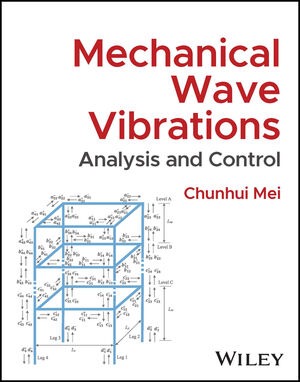
Mechanical Wave Vibrations: Analysis and Control
Delivers an expert discussion of the wave analysis approach (as opposed to the modal-based approach) to mechanical vibrations in structures. The book begins with deriving the equations of motion using the Newtonian approach based on various sign conventions before comprehensively covering the wave vibration analysis approach. It concludes by exploring passive and active feedback control of mechanical vibration waves in structures.

Introduction to Soliton Theory : Applications to Mechanics
This monograph provides the application of soliton theory to solve certain problems selected from the fields of mechanics. The present monograph is not a simple translation of its predecessor appeared in Publishing House of the Romanian Academy in 2002. Improvements outline the way in which the soliton theory is applied to solve some engineering problems. The book addresses concrete resolution methods of certain problems such as the motion of thin elastic rod, vibrations of initial deformed thin elastic rod, the coupled pendulum oscillations, dynamics of left ventricle, transient flow of blood in arteries, the subharmonic waves generation in a piezoelectric plate with Cantor-like structure, and some problems related to Tzitzeica surfaces. This comprehensive study enables the readers to make connections between the soliton physical phenomenon and some partical, engineering problems.

Fundamentals of Structural Dynamics : Theory and Computation
Emphasizes numerical methods, nonlinear response of structures, and the analysis of continuous systems (e.g., wave propagation). Fundamentals of Structural Dynamics: Theory and Computation builds the theory of structural dynamics from simple single-degree-of-freedom systems through complex nonlinear beams and frames in a consistent theoretical context supported by an extensive set of MATLAB codes that not only illustrate and support the principles, but provide powerful tools for exploration. The book is designed for students learning structural dynamics for the first time but also serves as a reference for professionals throughout their careers.

Fundamentals of Structural Dynamics
Explains foundational concepts and principles surrounding the theory of vibrations and gives equations of motion for complex systems. The book presents classical vibration theory in a clear and systematic way, detailing original work on vehicle-bridge interactions and wind effects on bridges. Chapters give an overview of structural vibrations, including how to formulate equations of motion, vibration analysis of a single-degree-of-freedom system, a multi-degree-of-freedom system, and a continuous system, the approximate calculation of natural frequencies and modal shapes, and step-by-step integration methods. Each chapter includes extensive practical examples and problems.

Fractal Geometry, Complex Dimensions and Zeta Functions : Geometry and Spectra of Fractal Strings
Number theory, spectral geometry, and fractal geometry are interlinked in this in-depth study of the vibrations of fractal strings, that is, one-dimensional drums with fractal boundary. Key Features The Riemann hypothesis is given a natural geometric reformulation in the context of vibrating fractal strings Complex dimensions of a fractal string, defined as the poles of an associated zeta function, are studied in detail, then used to understand the oscillations intrinsic to the corresponding fractal geometries and frequency spectra Explicit formulas are extended to apply to the geometric, spectral, and dynamical zeta functions associated with a fractal Examples of such explicit formulas include a Prime Orbit Theorem with error term for self-similar flows, and a geometric tube formula The method of Diophantine approximation is used to study self-similar strings and flows Analytical and geometric methods are used to obtain new results about the vertical distribution of zeros of number-theoretic and other zeta functions Throughout new results are examined. The final chapter gives a new definition of fractality as the presence of nonreal complex dimensions with positive real parts, and discusses several open problems and extensions.

Formulas of Acoustics
This collection of formulas has been written by applied scientists and industrial engineers for design professionals and students who work in engineering acoustics. It is subdivided into the most important fields of applied acoustics, each dealing with a well-defined type of problem.

Femtosecond laser spectroscopy
As concepts and methodologies have evolved over the past two decades, the realm of ultrafast science has become vast and exciting and has impacted many areas of chemistry, biology and physics, and other fields such as materials science, electrical engineering, and optical communication. The field has recently exploded with the announcement of a series of remarkable new developments and advances. This volume surveys this recent growth in eleven chapters written by leading international researchers in the field. It includes sections on femtosecond optical frequency combs, soft x-ray femtosecond laser sources, and attosecond laser sources. In addition, the contributors address real-time spectroscopy of molecular vibrations with sub-5-fs pulses and multidimensional femtosecond coherent spectroscopies for studying molecular and electron dynamics. Novel methods for measuring and characterizing ultrashort laser pulses and ultrashort pulses of light are also described. The topics covered are revolutionizing the fields of biomedical imaging, electron dynamics, ultrahigh precision spectroscopy, and optical frequency metrology. Surveying the latest advances in ultrafast lasers, Femtosecond Laser Spectroscopy will be of interest to both researchers and graduate students.

Electromagnetic Field Matter Interactions in Thermoelasic Solids and Viscous Fluids
This book in two parts delivers a thorough derivation of nonrelativistic interaction models of electromagnetic field theories with thermoelastic solids and viscous fluids, the intention being to derive unique representations for the observable field quantities. Part I, a revised and updated version of LNP 88 "Field Matter Interactions in Thermoelastic Solids," investigates the foundations and the equivalence of various formulations of the interaction of the electromagnetic field with thermoelastic solids in the classical continuum physics limit, while Part II extensively surveys two major fields of applications, namely, magnetoelastic instabilities and vibrations, and electrorheological fluids.

Dynamics of soils and their engineering applications
Offers systematic dynamic analysis of soils and their engineering applications, including machine foundations, and aims to develop a clear understanding of the subject. It comprises sixteen chapters. Chapter 1 introduces the reader to the various problems in soil dynamics. In Chapter 2, concepts of theory of vibrations are discussed along with their applications in designing Vibration Absorbers and Pickups. Wave propagation in elastic medium including wave refraction in layered medium is covered in Chapter 3. Chapter 4 deals with the procedure of determining dynamic properties of soils using various laboratory and field tests. Dynamic earth pressures in retaining walls and dynamic bearing capacity of footings are dealt with in Chapters 5 and 6 respectively

Dynamics of Rods
The book consists of nine chapters and appendices and may be conventionally divided into two parts. That is, Chapters 1 to 6 contain, in the main, theoretical material, whereas Chapters 7 to 9 illustrate the application of the theoretical results to problems of practical interest. Problems for self-study are found in Chapters 3, 5, and 7. The solutions to most of the problems are given in Appendix B.

Dynamics of MEMS : Models, Methods, Experiments and Applications
This work presents a systematic view of the dynamics of MEMS (microelectromechanical systems), microstructures, and their responses. The focus is on the mecahnical/structural micro domain and the compliant nature of mechanical transmission. Features of this work include: An in-depth treatment of problems that involve reliable modeling, analysis and design, Analytical models with correct dependences on service dimensions, Cantilever based systems for nanofabrication researchers and designers, and Dynamics of complex spring and beam microsystems.

Dynamic Analysis of Structures
Reflects the latest application of structural dynamics theory to produce more optimal and economical structural designs. The author includes carefully worked-out examples which are solved utilizing more recent numerical methods. These examples pave the way to more accurately simulate the behavior of various types of structures. The essential topics covered include principles of structural dynamics applied to particles, rigid and deformable bodies, thus enabling the formulation of equations for the motion of any structure.

Continuum Thermomechanics
The general goal of this book is to deduce rigorously, from the first principles, the partial differential equations governing the thermodynamic processes undergone by continuum media under forces and heat. Solids and fluids are considered in a unified framework. Reacting mixtures of fluids are also included for which general notions of thermodynamics are recalled, such as the Gibbs equilibrium theory.Linear approximate models are mathematically obtained by calculating the derivatives of the constitutive response functions. They include the classical models for linear vibrations of thermoelastic solids and also for wave propagation in fluids (dissipative and non-dissipative acoustics and internal gravity waves).
Linearization Methods for Stochastic Dynamic Systems
The aim of this book is to give a systematic introduction to and overview of the relatively simple and popular linearization methods available. The scope is limited to models with continous external and parametric excitations, yet these cover the majority of known approaches. The book contains an application chapter with emphasis on vibration analysis of stochastic mechanical structures as well as a chapter devoted to the assessment of the accuracy of the theoretical methods presented, both with respect to numerical and to experimental studies.

Lie Algebras and Applications
This book, designed for advanced graduate students and post-graduate researchers, provides an introduction to Lie algebras and some of their applications to the spectroscopy of molecules, atoms, nuclei and hadrons. In the first part, a concise exposition is given of the basic concepts of Lie algebras, their representations and their invariants. The second part contains a description of how Lie algebras are used in practice in the treatment of bosonic and fermionic systems. Physical applications considered include rotations and vibrations of molecules (vibron model), collective modes in nuclei (interacting boson model), the atomic shell model, the nuclear shell model, and the quark model of hadrons. One of the key concepts in the application of Lie algebraic methods in physics, that of spectrum generating algebras and their associated dynamic symmetries, is also discussed. The book contains many examples that help to elucidate the abstract algebraic definitions. It provides a summary of many formulas of practical interest, such as the eigenvalues of Casimir operators and the dimensions of the representations of all classical Lie algebras.
Chaos in Structural Mechanics
This volume introduces and reviews novel theoretical approaches to modeling strongly nonlinear behaviour of either individual or interacting structural mechanical units such as beams, plates and shells or composite systems thereof.

Centrifugal Pumps
This book gives an unparalleled, up-to-date, in-depth treatment of all kinds of flow phenomena encountered in centrifugal pumps including the complex interactions of fluid flow with vibrations and wear of materials.
