



الصفحة 1
الصفحة 1

Multiscale Optimization Methods and Applications
One general strategy for dealing with a large or difficult problem is to partition it into smaller ones, which are hopefully much easier to solve, and then work backwards towards the solution of original problem, using a solution from a previous level as a starting guess at the next level.The topics of the chapters selected for this volume are focused on the development of new solution methodologies, including general multilevel solution techniques, for tackling difficult, large-scale optimization problems that arise in science and industry. Applications presented in the book include but are not limited to the circuit placement problem in VLSI design, a wireless sensor location problem, optimal dosages in the treatment of cancer by radiation therapy, and facility location.
Modern Circuit Placement : Best Practices and Results
This book has four unique characteristics. First, it focuses on the most recent highly scalable placement techniques used for multi-million gate circuit designs, with consideration of many practical aspects of modern circuit placement, such as density and routability control, mixed-size placement support, and area I/O support. Second the book addresses dominant techniques being used in the field. Although these tools are developed by academia, many core techniques in these tools are being used extensively in industry and represent today’s advanced placement techniques. Third, the book provides quantitative comparison among the various techniques on common benchmark circuits derived from real-life industrial designs. The book includes significant amounts of analysis on each technique, such as trade-offs between quality-of-results (QoR) and runtime. Finally, analysis of the optimality of the placement techniques is included.
Mixed-Signal Layout Generation Concepts
Mixed-Signal Layout Generation Concepts covers important physical-design issues that exist in contemporary analog and mixed-signal design flows. The fundamental issues in creating a layout are placement and routing.

Introduction to Genetic Algorithms
This book is designed to provide an in-depth knowledge on the basic operational features and characteristics of Genetic Algorithms. The various operators and techniques given in the book are pertinent to carry out Genetic Algorithm Research Projects. The book also explores the different types are Genetic Algorithms available with their importance. Implementation of Genetic Algorithm concept has been performed using the universal language C/C++ and the discussion also extends to Genetic Algorithm MATLAB Toolbox. Few Genetic Algorithm problems are programmed using MATLAB and the simulated results are given for the ready reference of the reader. The applications of Genetic Algorithms in Machine learning, Mechanical Engineering, Electrical Engineering, Civil Engineering, Data Mining, Image Processing, and VLSI are dealt to make the readers understand where the concept can be applied.

High Dielectric Constant Materials : VLSI MOSFET Applications
Issues relating to the high-K gate dielectric are among the greatest challenges for the evolving International Technology Roadmap for Semiconductors (ITRS). More than just an historical overview, this book will assess previous and present approaches related to scaling the gate dielectric and their impact, along with the creative directions and forthcoming challenges that will define the future of gate dielectric scaling technology. Topics include: an extensive review of Moore's Law, the classical regime for SiO2 gate dielectrics; the transition to silicon oxynitride gate dielectrics; the transition to high-K gate dielectrics (including the drive towards equivalent oxide thickness in the single-digit nanometer regime); and future directions and issues for ultimate technology generation scaling. The vision, wisdom, and experience of the team of authors will make this book a timely, relevant, and interesting, resource focusing on fundamentals of the 45 nm Technology Generation and beyond.
Fully-Depleted SOI CMOS Circuits and Technology for Ultralow-Power Applications
Fully-depleted SOI CMOS Circuits and Technology for Ultralow-Power Applications addresses the problem of reducing the supply voltage of conventional circuits for ultralow-power operation and explains power-efficient MTCMOS circuit design for FD-SOI devices at a supply voltage of 0.5 V. The topics include the minimum required knowledge of the fabrication of SOI substrates; FD-SOI devices and the latest developments in device and process technologies; and ultralow-voltage circuits, such as digital circuits, analog/RF circuits, and DC-DC converters. Each ultra-low-power technique related to devices and circuits is fully explained using figures to help understanding.

Full-Chip Nanometer Routing Techniques
From a manufacturability standpoint, nanometer routers must explicitly deal with the ever increasing design complexity, and be capable of adapting to the constraint requirements of timing, signal integrity, process antenna effect, and new interconnect architecture such as X-architecture. In the nanometer era, we must look into new-generation routing technologies that combine high performance and capacity with the integration of congestion, timing, SI prevention, and DFM algorithms as the best means of getting to design closure quickly. In this book, we present a novel multilevel full-chip router, namely mSIGMA for SIGnal-integrity and MAnufacturability optimization. And these routing technologies will ensure faster time-to-market and time-to-profitability

Evolvable systems : From biology to hardware ; 6th International Conference, ICES 2005, Sitges, Spain, September 12-14, 2005, Proceedings
The flying machines proposed by Leonardo da Vinci in the fifteenth century, the se- reproducing automata theory proposed by John von Neumann in the middle of the twentieth century and the current possibility of designing electronic and mechanical systems using evolutionary principles are all examples of the efforts made by humans to explore the mechanisms present in biological systems that permit them to tackle complex tasks. These initiatives have recently given rise to the emergent field of b- inspired systems and evolvable hardware. The inaugural workshop, Towards Evolvable Hardware, took place in Lausanne in October 1995, followed by the successive events of the International Conference on Evolvable Systems: From Biology to Hardware, held in Tsukuba (Japan) in October 1996, in Lausanne (Switzerland) in September 1998, in Edinburgh (UK) in April 2000, in Tokyo (Japan) in October 2001, and in Trondheim (Norway) in March 2003. Following the success of these past events the sixth international conference was aimed at presenting the latest developments in the field, bringing together researchers who use biologically inspired concepts to implement real systems in artificial intelligence, artificial life, robotics, VLSI design, and related domains. The sixth conference consolidated this biennial event as a reference meeting for the community involved in bio-inspired systems research. All the papers received were reviewed by at least three independent reviewers, thus guaranteeing a high-quality bundle for ICES 2005.

ESD Protection Device and Circuit Design for Advanced CMOS Technologies
ESD Protection Device and Circuit Design for Advanced CMOS Technologies is intended for practicing engineers working in the areas of circuit design, VLSI reliability and testing domains.

Embedded Software and Systems ; Vol. 3820 ; 2nd International Conference, ICESS 2005, Xi'an, China, December 16-18, 2005, Proceedings
Welcome to the proceedings of the 2005 International Conference on Emb- ded Software and Systems (ICESS 2005) held in Xian, China, December 16-18, 2005. With the advent of VLSI system level integration and system-on-chip, the center of gravity of the computer industry is now moving from personal c- puting into embedded computing. Embedded software and systems are incre- ingly becoming a key technological component of all kinds of complex technical systems, ranging from vehicles, telephones, aircraft, toys, security systems, to medical diagnostics, weapons, pacemakers, climate control systems, etc. The ICESS 2005 conference provided a premier international forum for - searchers, developers and providers from academia and industry to address all resulting profound challenges; to present and discuss their new ideas, - search results, applications and experience; to improve international com- nication and cooperation; and to promote embedded software and system - dustrialization and wide applications on all aspects of embedded software and systems.
Embedded Computer Systems : Architectures, Modeling, and Simulation ; 7th International Workshop, SAMOS 2007, Samos, Greece, July 16-19, 2007, Proceedings
The book is unique in the sense that not only solved research problems are presented and discussed but also (partly) unsolved pr- lems and in-depth topical reviews can be unleashed in the scientific arena. C- sequently, it provides the participants with an environment where collaboration rather than competition is fostered.
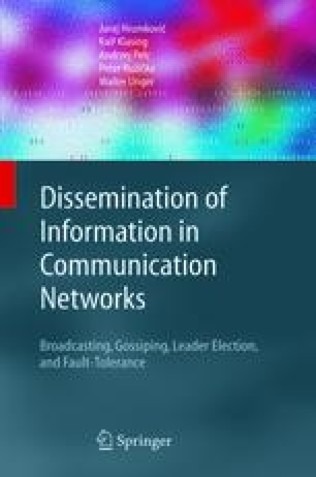
Dissemination of information in communication networks : Broadcasting, gossiping, leader election, and fault-tolerance
Preface Due to the development of hardware technologies (such as VLSI) in the early 1980s, the interest in parallel and distributive computing has been rapidly growingandinthelate1980sthestudyofparallelalgorithmsandarchitectures became one of the main topics in computer science. To bring the topic to educatorsandstudents,severalbooksonparallelcomputingwerewritten. The involvedtextbook“IntroductiontoParallelAlgorithmsandArchitectures”by F. Thomson Leighton in 1992 was one of the milestones in the development of parallel architectures and parallel algorithms. But in the last decade or so the main interest in parallel and distributive computing moved from the design of parallel algorithms and expensive parallel computers to the new distributive reality – the world of interconnected computers that cooperate (often asynchronously) in order to solve di?erent tasks.

Digital VLSI Systems Design : A Design Manual for Implementation of Projects on FPGAs and ASICs Using Verilog
The book presents new material and theory as well as synthesis of recent work with complete Project Designs using industry standard CAD tools and FPGA boards, enabling the serious readers to design VLSI Systems on their own. The reader is taken step by step through the design right from implementing a single digital gate to a massive design consuming well over 100,000 gates. The Verilog codes developed for these designs are universal and can work on any FPGA or ASIC and are technology independent. The book presents the development of novel algorithms and architectures for optimum realization of high tech. products. All the design codes developed in this book are Register Transfer Level (RTL) compliant and can be readily used or amended to suit new projects.

Digital VLSI Design with Verilog : A Textbook from Silicon Valley Technical Institute
Digital VLSI Design With Verilog is all an engineer needs for in-depth understanding of the verilog language: Syntax, synthesis semantics, simulation, and test. For a reader with access to appropriate electronic design tools, all solutions can be developed, simulated, and synthesized as described in the book.

Defect-Oriented Testing for Nano-Metric CMOS VLSI Circuits
Failures of nano-metric technologies owing to defects and shrinking process tolerances give rise to significant challenges for IC testing. As the variation of fundamental parameters such as channel length, threshold voltage, thin oxide thickness and interconnect dimensions goes well beyond acceptable limits, new test methodologies and a deeper insight into the physics of defect-fault mappings are needed. In Defect-Oriented Testing for Nano-Metric CMOS VLSI Circuits state of the art of defect-oriented testing is presented from both a theoretical approach as well as from a practical point of view. Step-by-step handling of defect modeling, defect-oriented testing, yield modeling and its usage in common economics practices enables deeper understanding of concepts.

Cryptographic Algorithms on Reconfigurable Hardware
This book covers the study of computational methods, computer arithmetic algorithms, and design improvement techniques needed to implement efficient cryptographic algorithms in FPGA reconfigurable hardware platforms. The concepts and techniques reviewed in this book will make special emphasis on the practical aspects of reconfigurable hardware design, explaining the basic mathematics related and giving a comprehensive description of state-of-the-art implementation techniques. The authors show how high-speed cryptographic algorithms implementations can be achieved on reconfigurable hardware devices without posing prohibited high requirements for hardware resources. The material in this book will be of interest to engineering professionals, programmers, hardware designers, and graduate students interested in the development of security and cryptographic mechanisms at a beginning/intermediate level.
Low-Power High-Level Synthesis for Nanoscale CMOS Circuits
Low-Power High-Level Synthesis for Nanoscale CMOS Circuits addresses the need for analysis, characterization, estimation, and optimization of the various forms of power dissipation in the presence of process variations of nano-CMOS technologies. The authors show very large-scale integration (VLSI) researchers and engineers how to minimize the different types of power consumption of digital circuits.
Algorithmes dapproximation
Le champ des algorithmes d'approximation est aujourd'hui l'un des domaines de recherche les plus actifs en informatique. Il allie la profondeur de la théorie mathématique aux promesses d'applications pratiques d'un intérêt considérable. La plupart des problèmes issus d'applications relevant de domaines aussi différents que la conception de circuits VLSI, la conception et la planification de réseaux, l'ordonnancement, la théorie des jeux, la biologie ou la théorie des nombres, sont des problèmes NP-difficiles. Leur résolution exacte demanderait des ressources informatiques inaccessibles et ne peut donc être envisagée. Pour faire face à cette situation, un grand nombre d'algorithmes proposant des solutions approchées à ces problèmes ont été développés.
Advances in Electrical and Computer Technologies ; Select Proceedings of ICAECT 2019
Contains the papers presenting the latest developments in the areas of Electrical, Electronics, Communication systems and Computer Science such as smart grids, soft computing techniques in power systems, smart energy management systems, power electronics, feedback control systems, biomedical engineering, geo informative systems, grid computing, data mining, image and signal processing, video processing, computer vision, pattern recognition, cloud computing, pervasive computing, intelligent systems, artificial intelligence, neural network and fuzzy logic, broad band communication, mobile and optical communication, network security, VLSI, embedded systems, optical networks and wireless communication.

Advances in Computer and Information Sciences and Engineering
Advances in Computer and Information Sciences and Engineering includes a set of rigorously reviewed world-class manuscripts addressing and detailing state-of-the-art research projects in the areas of Computer Science, Software Engineering, Computer Engineering, and Systems Engineering and Sciences.
