



الصفحة 1
الصفحة 1

Forest Policies and Social Change in England
The book stresses how values and perceptions shape policies, and conversely how policies can modify perceptions, and also how policies can fail if they do not take perceptions into account. She concludes that many of the issues facing English forestry in the 21st century – from leisure, health and amenity provision, through education and rural as well as urban regeneration, to biodiversity conservation – go well beyond both national borders and the scope of forestry. This novel synthesis provides a valuable resource for advanced students and researchers from all areas of natural resource studies, including those interested in social history, socio-economics, cultural geography and environmental psychology, as well as those studying landscape ecology, environmental history, policy analysis and natural resource management.

Designing Democracy : Ideas for Better Rules
While liberal democracies are the best systems of self-governance for societies, they rarely invoke great enthusiasm. On the one hand, democracies have been known to fail in achieving efficient or fair allocations. On the other hand, many citizens take the democratic system for granted as they have yet to experience an alternative. In this book the vision we propose is that the potential of democ racies has not yet been exhausted, and that optimal democracies are both the Utopia for societies and the aim that scientists should be committed to. We present a number of ideas for drawing up new rules to im prove the functioning of democracies. The book falls into two parts. The first part examines ways of combining incentive contracts with democratic elections. We suggest that a judicious combina tion of these two elements as a dual mechanism can alleviate a wide range of political failures, while at the same time adhering to the founding principles of democracies. The second part presents new rules for decision-making and agenda setting. Together with modern communication devices, these rules can sometimes transcend the limitations of liberal VI Preface democracies in achieving desirable outcomes. Examples of such rules include the flexible majority rule where the size of the ma jority required depends on the proposal, or the rule that only those belonging to the winning majority can be taxed.

Data rights in transition
Maps the development of data rights that formed and reformed in response to the socio-technical transformations of the postwar twentieth century. The authors situate these rights, with their early pragmatic emphasis on fair information processing, as different from and less symbolically powerful than utopian human rights of older centuries

Constitutionalism and Legal Reasoning
This book of legal philosophy contends that positive law is better understood if it is not too easily equated with power, force, or command.
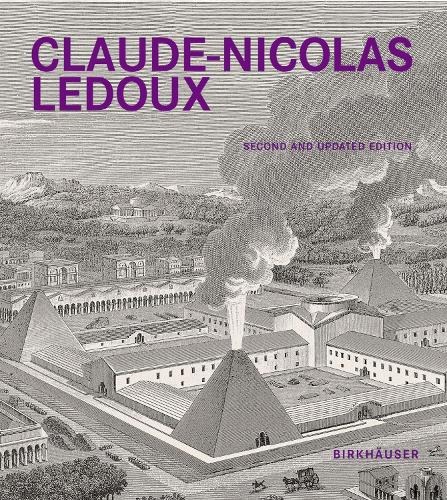
Claude-Nicolas Ledoux : Architecture and uopia in the era of the French revolution
Claude-Nicolas Ledoux (1736-1806) is today regarded as chief representative of French revolutionary architecture. With his extraordinary inventiveness he projected the architectural ideals of his era. Ledoux's influential buildings and projects are presented and interpreted both aesthetically and historically in this book. His best-known projects - the Royal Saltwords of Arc-et-Senans, the tollgates of Paris, the ideal city of Chaux - reveal the architect's allegiance to the principles of antiquity and Renaissance but also illustrate the evolution of his own utopian language. With the French Revolution, Ledoux ceased building as his contemporaries perceived him as a royal architect. He focused on the development of his architectural theory and redefined the vision of the modern architect
A Rosicrucian Utopia in Eighteenth-Century Russia : The Masonic Circle of N.I. Novikov
The author undertakes an investigation into the history of Russian Freemasonry that has not been attempted previously. Her premise is that the Russian Enlightenment shows peculiar features, which prevent the application of the interpretative framework commonly used for the history of western thought. The author deals with the development of early Russian masonry, the formation of the Novikov circle in Moscow, the ‘programme’ of Rosicrucianism and the character of its Russian variant and, finally, the clash between the Rosicrucians and the State. The author concludes that the defenders of the Ancien Régime were not wrong. In fact the democratic behaviour, the critical attitude, the practice of participation, the freedom of thought, the tolerance for the diversity, the search for a direct communication with the divinity.
